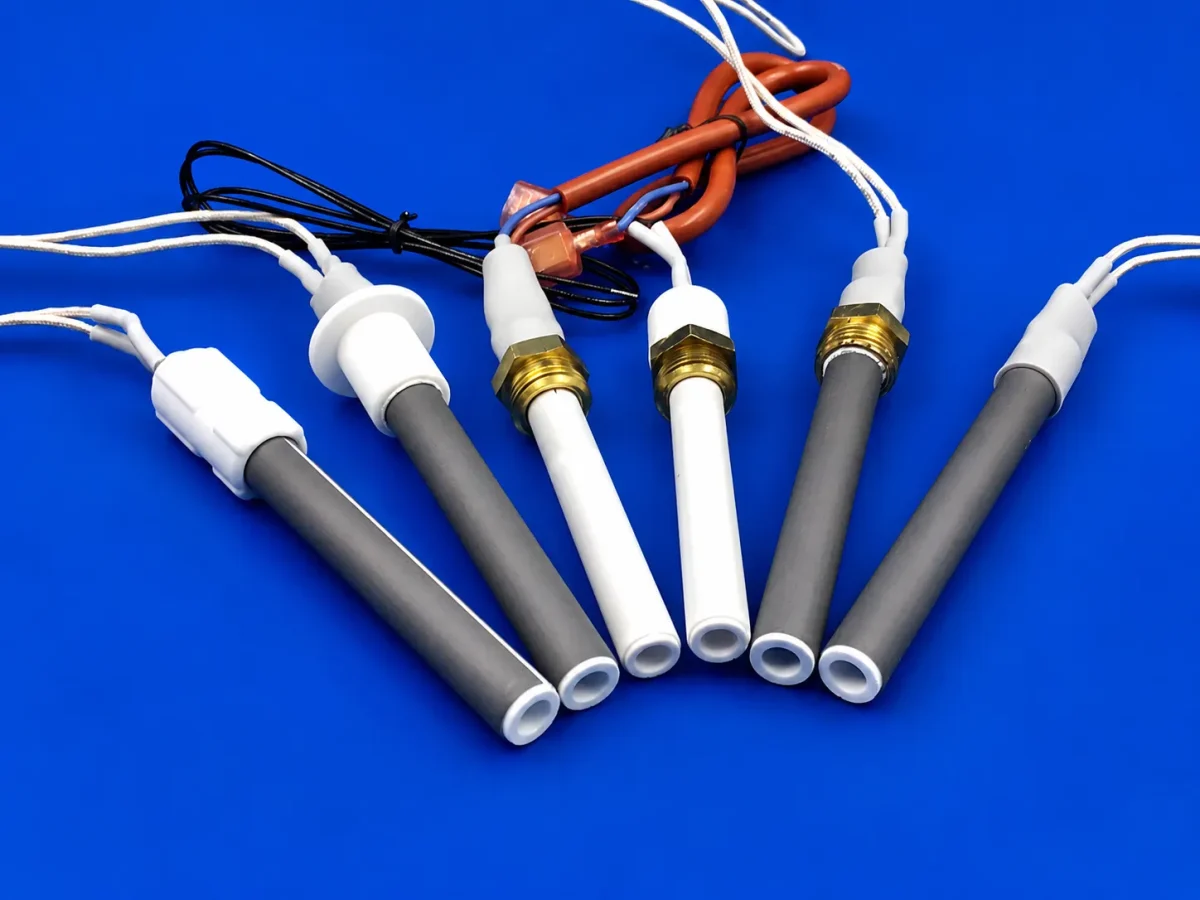
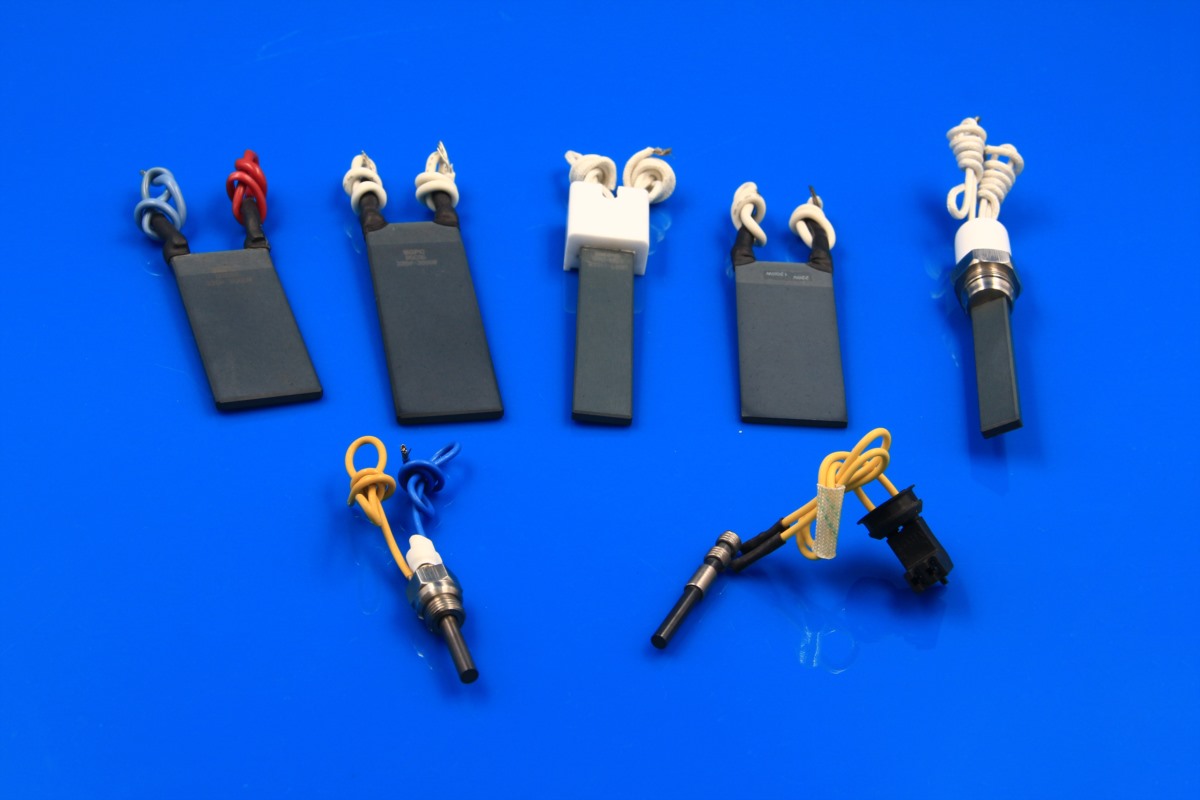
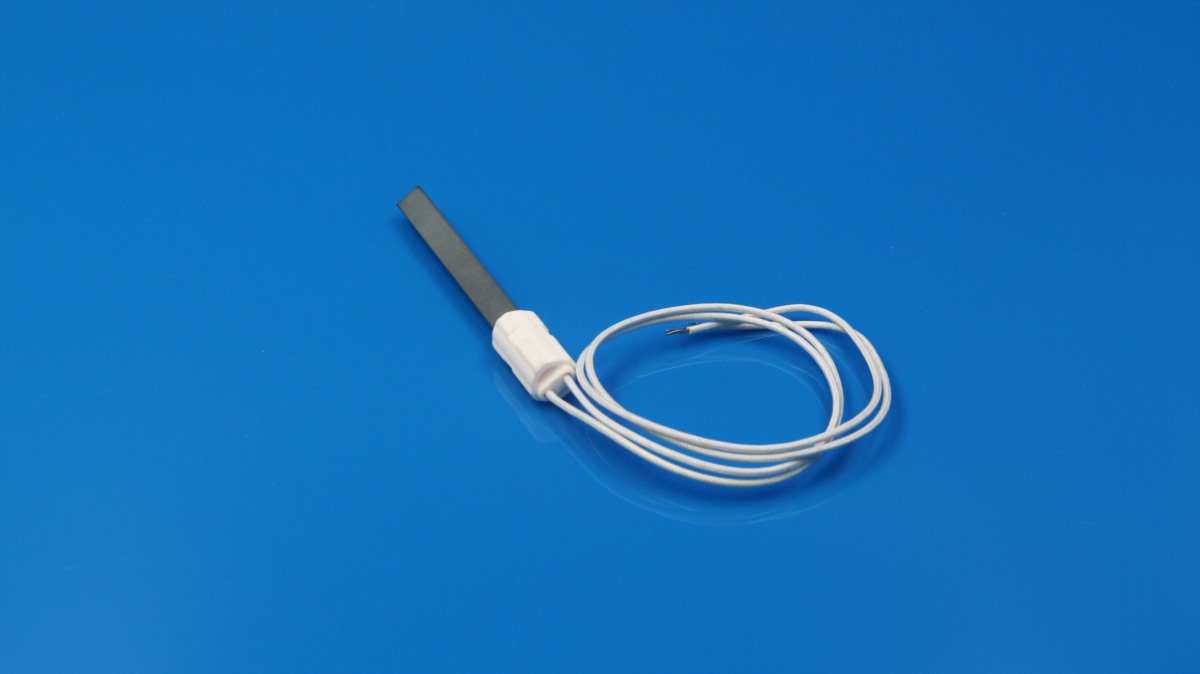
For pellet grills and pellet smokers, the ceramic igniter is a small component with a direct impact on the ignition system.
Its operating voltage, power, dimensions, heating zone and connection method all need to match the complete appliance.
In this project, INNOVACERA supported a product development and engineering design company with ceramic igniter
sample evaluation for a new pellet grill / pellet smoker design. The customer first tested two different igniter
configurations and later requested additional higher-power options as the prototype requirements became clearer.
| Application | Pellet grills and pellet smokers |
| Customer Profile | Product development and engineering design company (identity confidential) |
| Development Path | Initial sample evaluation → prototype testing → higher-power options |
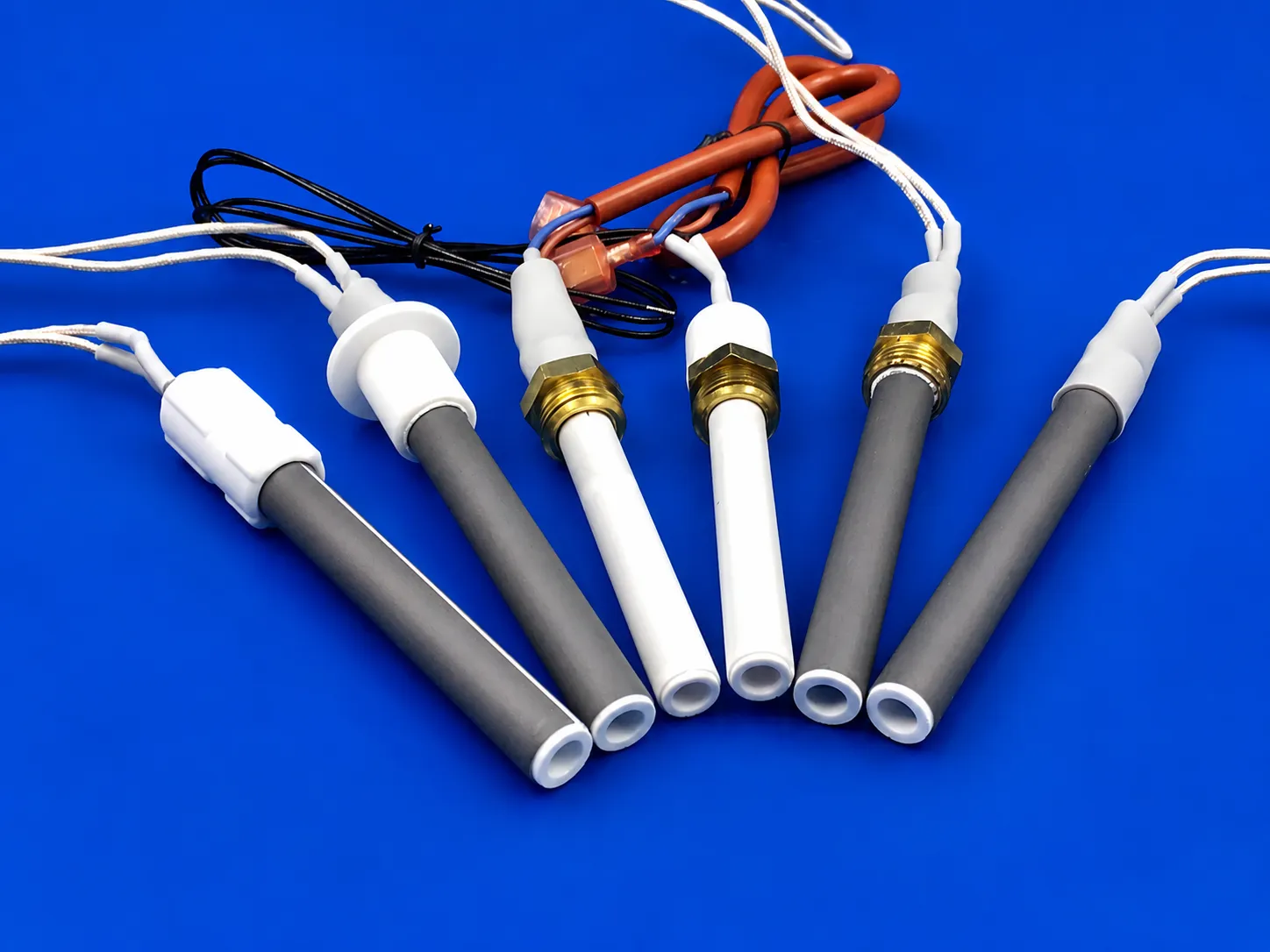
Representative ceramic igniter products for pellet and biomass ignition applications.
Project Background
For a pellet grill or pellet smoker, the igniter specification has to match the electrical system,
combustion structure and available installation space of the appliance.
During new product development, engineers may need to evaluate more than one igniter configuration before
determining the final design. Operating voltage, power, overall dimensions, heating-zone position and
electrical connection can all affect how well the igniter integrates with the complete system.
The project began with two different ceramic igniter sample configurations. As the customer’s prototype
testing progressed, the requirement was refined and additional higher-power options were evaluated.
Why Prototype Testing Matters
A ceramic igniter does not operate independently of the equipment around it. Once installed in a pellet grill
or smoker, its performance can be influenced by several application-specific factors:
- Igniter position
- Combustion chamber design
- Distance from the pellet fuel
- Available installation space
- Electrical supply
- Control strategy
- Overall appliance operating conditions
For this reason, selecting an igniter only from a catalogue specification may not be sufficient for a new
equipment design. Prototype testing allows engineers to verify the selected configuration in the actual
appliance and determine whether any parameters need to be adjusted before the design is finalized.
Development Process: From Initial Samples to Higher-Power Options
Stage 1: Evaluating Two Ceramic Igniter Samples
At the beginning of the project, the customer discussed its equipment requirements with INNOVACERA and
selected two ceramic igniter configurations for testing.
The two samples represented different technical approaches in terms of ceramic material, operating voltage,
power and dimensions. One of the evaluated designs used a 120V AC operating voltage.
The customer needed to evaluate several practical questions in the prototype:
- Does the operating voltage match the appliance power system?
- Is the available power suitable for the intended ignition process?
- Does the igniter fit within the available installation space?
- Is the heating zone positioned correctly relative to the pellet fuel?
- Can the mounting and electrical connection be integrated into the existing design?
Stage 2: Moving to Higher-Power Options
After the initial samples entered testing, the customer returned with an additional requirement:
higher power.
Instead of restarting the project with a completely different design, INNOVACERA continued from the existing
configurations and matched two additional ceramic igniter options with higher power ratings for further evaluation.
| Development Stage | Customer Requirement | INNOVACERA Support |
|---|---|---|
| Initial evaluation | Compare different ceramic igniter configurations | Supplied two igniter samples with different specifications |
| Prototype testing | Evaluate integration with the equipment | Supported sample-based engineering evaluation |
| Design adjustment | Higher power required | Matched two additional higher-power options |
Engineering note: A higher-power igniter is not automatically the better solution.
Power should still be evaluated together with the appliance electrical system, ignition requirements,
mounting conditions and overall thermal design.
Key Parameters When Selecting a Ceramic Igniter
For pellet grills, pellet smokers and other pellet-fueled equipment, engineers should normally review the
following information before moving toward a final igniter specification.
| Parameter | Engineering Consideration |
|---|---|
| Operating Voltage | Must match the appliance power supply and control system. |
| Power / Resistance | Selected according to electrical design and ignition requirements. |
| Overall Dimensions | Must fit the available installation space. |
| Heating Zone | Should correspond to the actual position of the fuel and ignition area. |
| Mounting Method | Must be compatible with the internal mechanical structure. |
| Lead Wire & Connection | Must match the electrical interface of the appliance. |
For a new product development project, these parameters do not always need to be finalized before the first
sample is ordered. In many cases, it is more practical to start with one or more suitable sample configurations,
conduct prototype testing and then refine the specification according to the results.
Ceramic Igniter Testing Before Delivery
Before ceramic heating products are supplied for equipment testing, their electrical performance and basic
product condition also need to be verified. The exact test items and acceptance requirements depend on the
product specification and application.
Factory testing and equipment-level prototype testing serve different purposes. Factory testing helps confirm
that the ceramic heating component meets its specified requirements, while prototype testing allows the customer
to determine whether the selected igniter works correctly within the complete appliance.
Watch the INNOVACERA ceramic heating product test video on YouTube
Supporting Ceramic Igniter Development from Sample to Final Specification
This project followed a practical development path:
Initial requirement → Sample selection → Prototype testing → Updated requirement → Revised sample solution
For equipment manufacturers and R&D teams, the final igniter specification may only become clear after the
first round of testing. A supplier therefore needs to do more than offer a fixed list of standard products.
It should also be able to respond when engineers need to change power, dimensions, heating zones, mounting
structures or electrical connections during development.
For a ceramic igniter development project, customers can provide:
- An existing igniter sample
- A technical drawing
- Target operating voltage and power
- Required dimensions
- Heating-zone requirements
- Mounting information
- Lead wire and connection requirements
Need a Ceramic Igniter for a New Equipment Design?
If you are developing a pellet grill, pellet smoker or other ignition system, send us your existing igniter, drawing or basic technical requirements to sales@innovacera.com. INNOVACERA can help evaluate suitable ceramic igniter configurations
and support sample development for prototype testing.