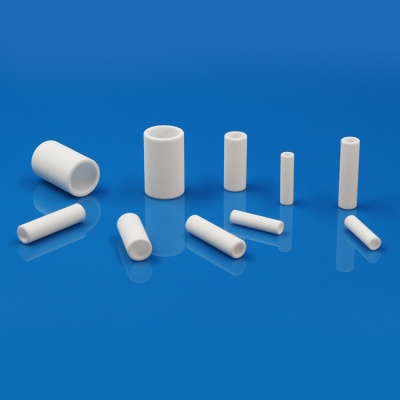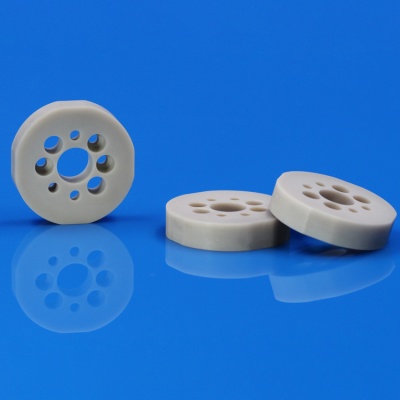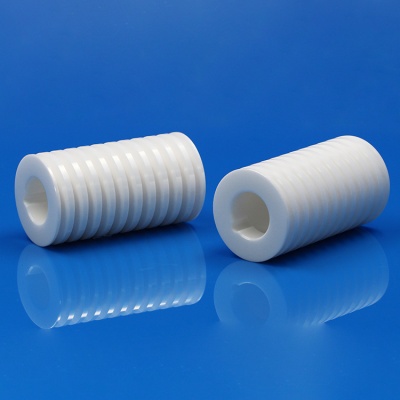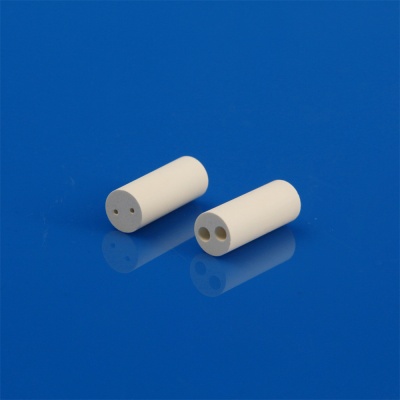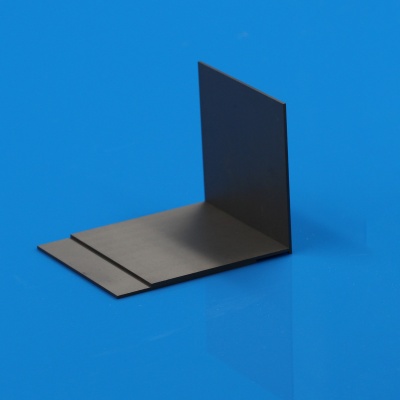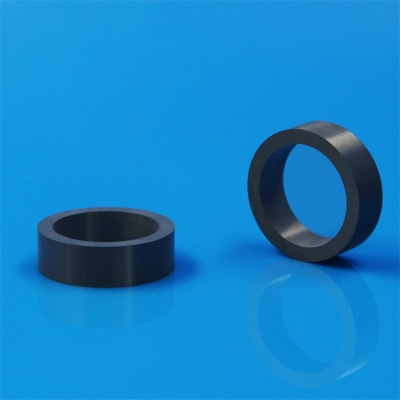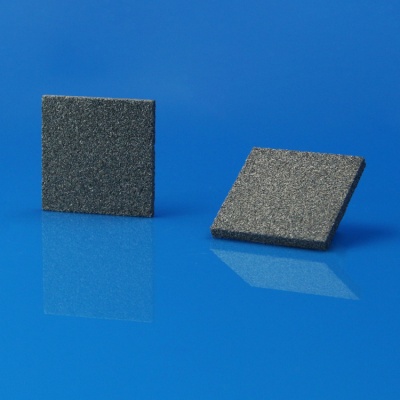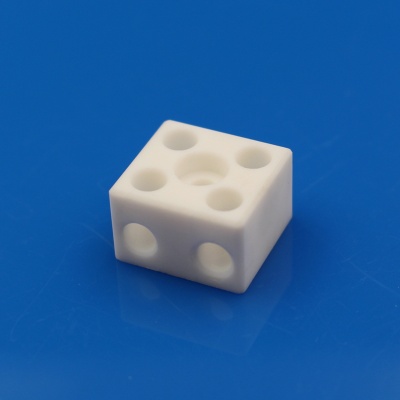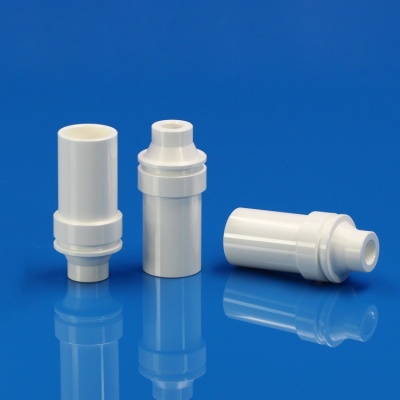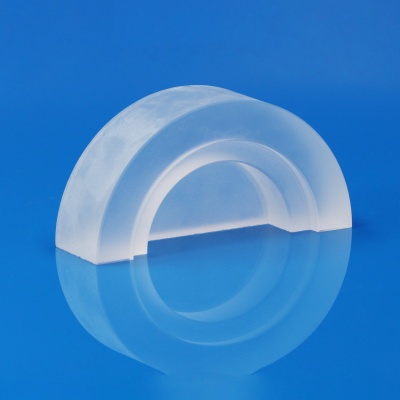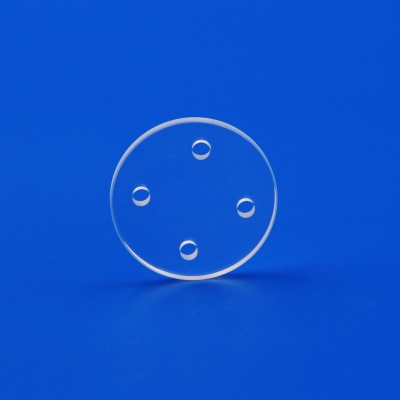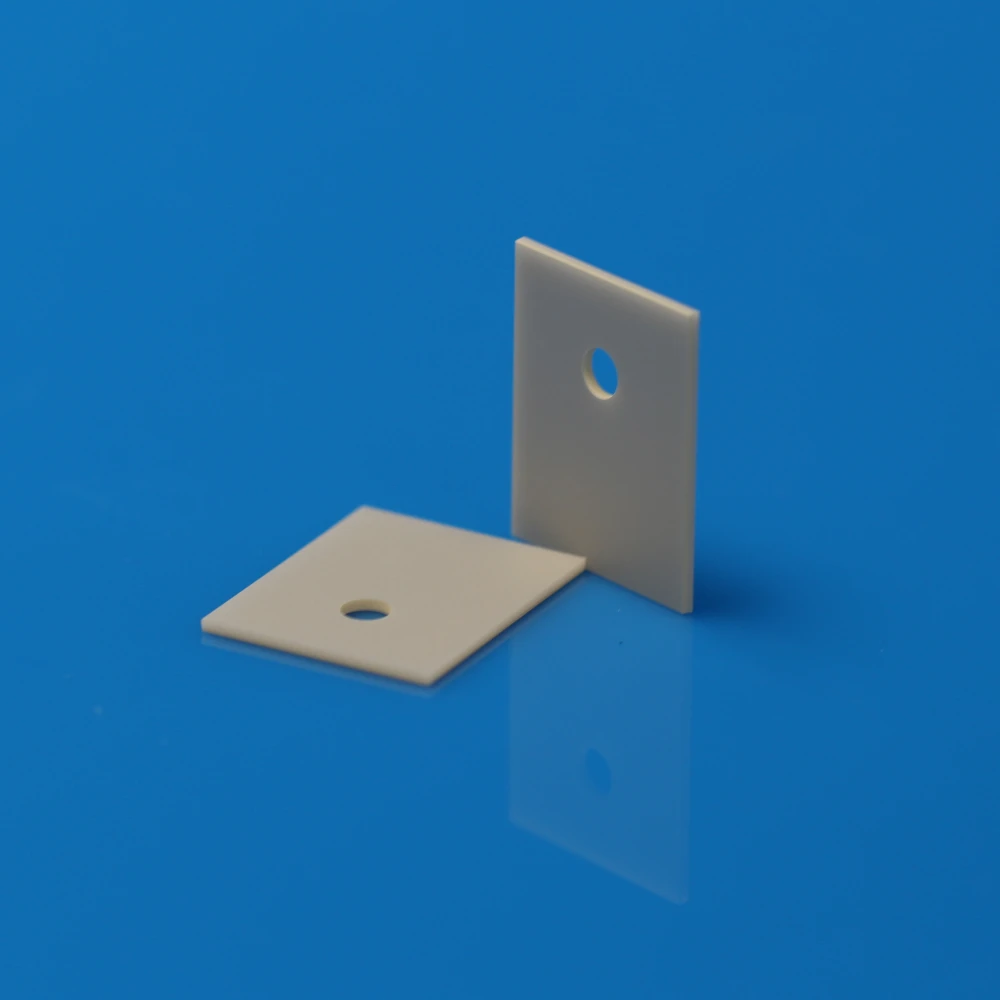
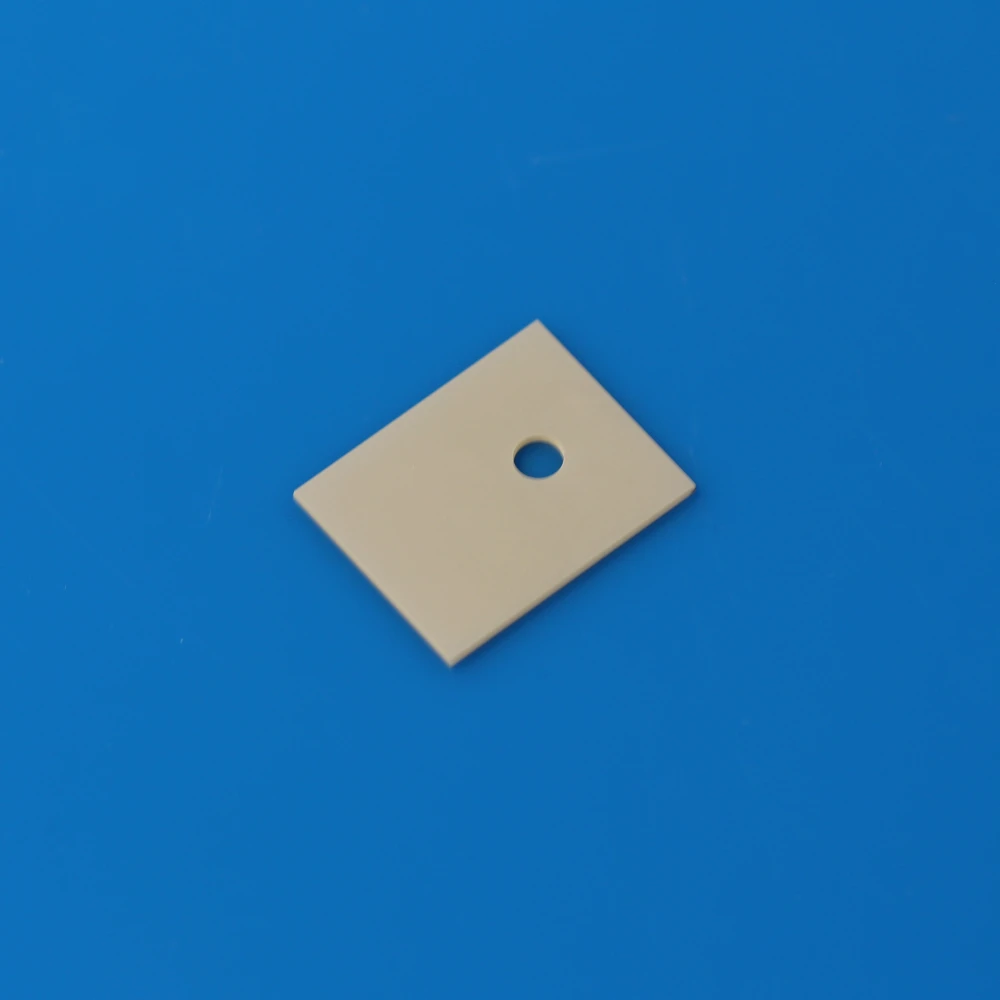
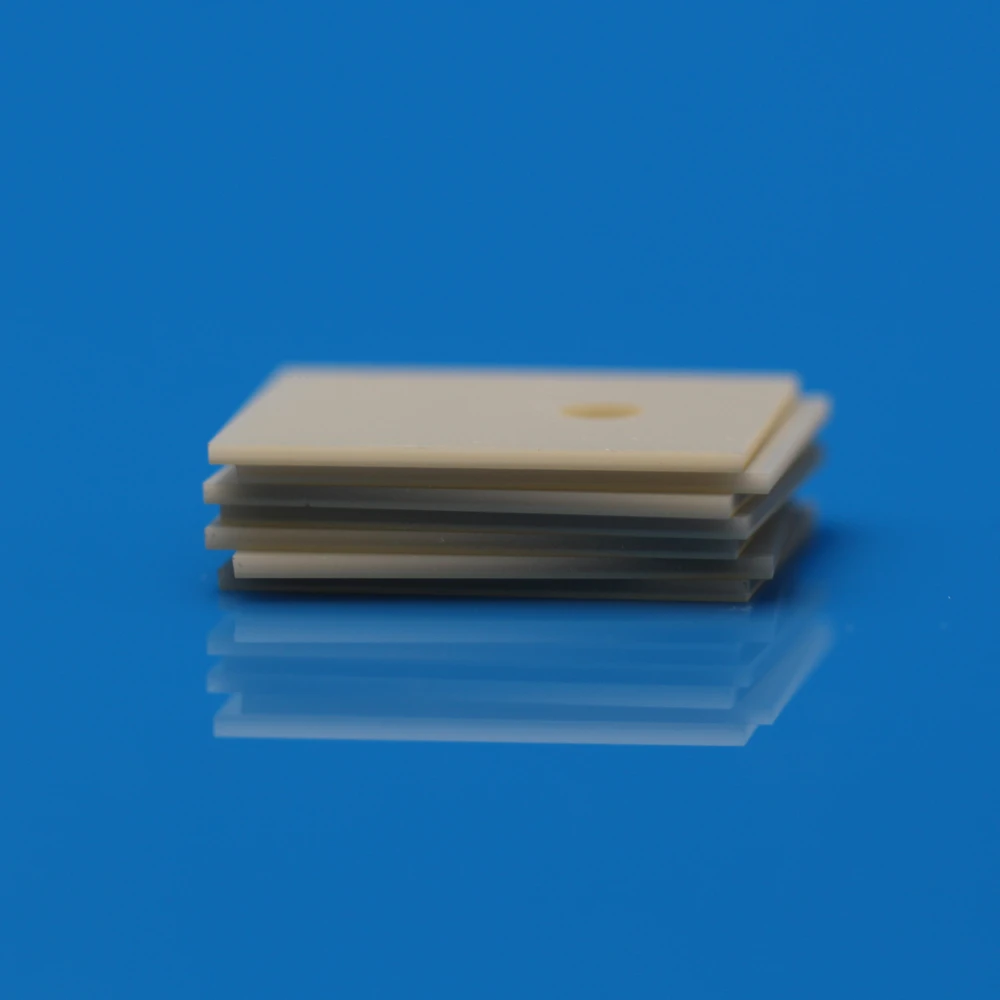
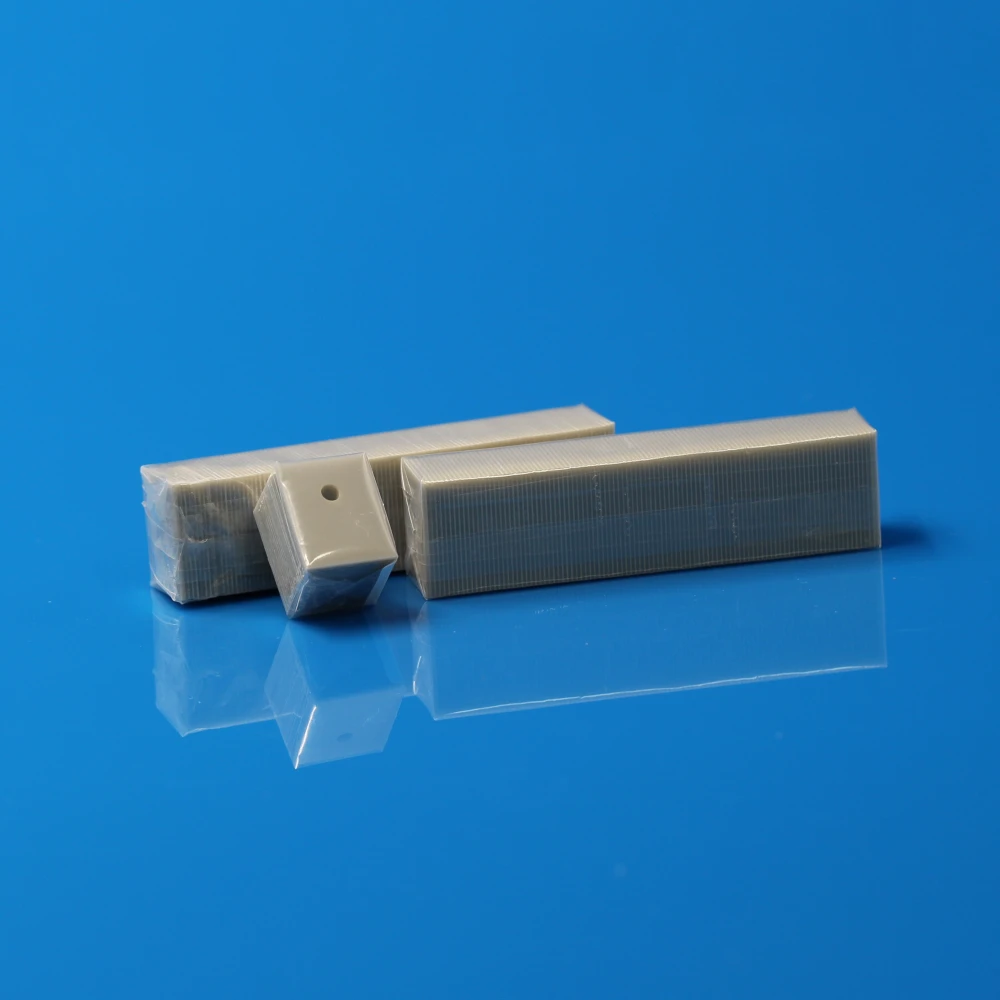
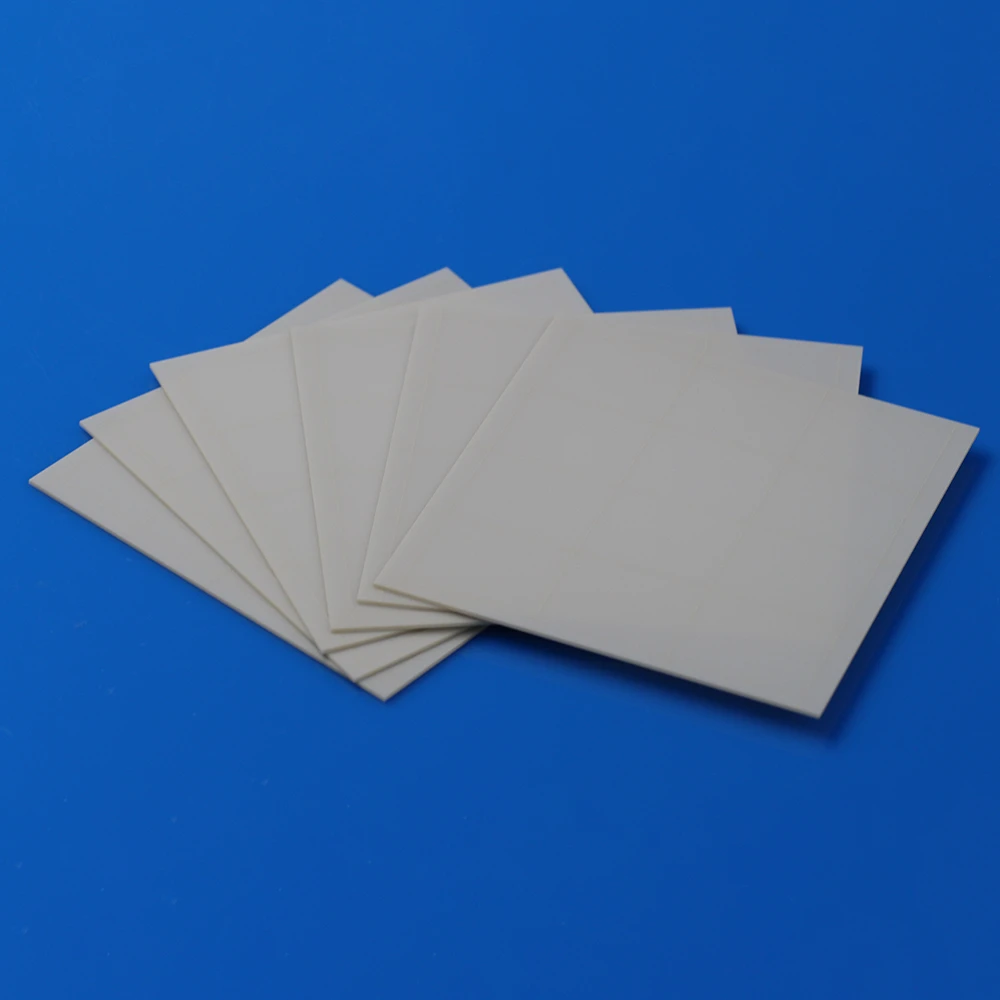

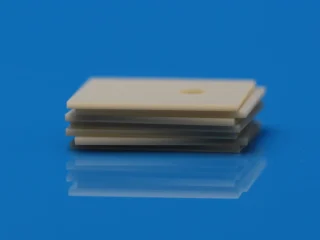
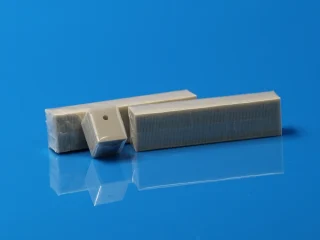
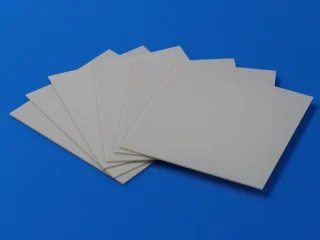
INNOVACERA make the AlN ceramic insulating heat sinks for MOSFET, IGBT, SiC and other power packages. Standard TO shapes are available. Custom parts are avaialble. Why not just mount the device straight to the heat sink? Because in many packages, the metal mounting surface is live. Direct contact is out. You need something that blocks voltage but lets heat through.
When thermal load goes up, then need to consider the AlN which is much higher thermal conductivity. For standard power electronics, alumina may already be enough. AlN starts to pay off when heat transfer through the insulating layer begins to affect device temperature.
AlN vs. alumina
| Material | Thermal Conductivity | Electrical Insulation | Best For |
|---|---|---|---|
| Alumina (Al2O3) | Moderate | Good | General power electronics |
| Aluminum Nitride (AlN) | High | Good | High-power and high-heat applications |
Packages we cover
INNOVACERA supplies ceramic insulators for common semiconductor packages, including:
- TO-220
- TO-247 Ceramic Insulating Sheet
- TO-3P Ceramic Heat Sink
- TO-264
- TO-254
- TO-257
- TO-258
- Custom designs
Mounting stack
Power semiconductor
↓
Thermal grease / TIM
↓
AlN ceramic insulator
↓
Thermal grease / TIM
↓
Heat sink
The ceramic grade is only one part of the thermal path. Thickness, contact area, TIM, surface flatness and mounting pressure all matter in the final assembly. We’ve seen good AlN parts underperform because the interface or flatness was off. So yes — the material matters. But the stack matters too.
170, 200, or 230 W/m·K?
170 W/m·K — a common choice for power semiconductor insulation where good heat transfer is required.
200 W/m·K — used when the design has higher heat flux or tighter temperature requirements.
230 W/m·K — for higher-power-density designs, especially where cooling area is limited and thermal resistance needs to be kept low.
Most designs don’t need 230. Start with 170 or 200 unless cooling area is tight and thermal resistance has to stay low.
With hole or without hole
With-hole: commonly used for screw-mounted semiconductor packages.
Without-hole: suitable for spring clips, pressure plates and other clamping structures.
We can adjust dimensions, thickness and hole position to match the actual assembly. If you have a drawing, send it. Hole position and flatness are two things we check early — they cause more assembly problems than people expect.
Application:
Industrial inverters, motor drives, power supplies, UPS systems. Solar and energy storage inverters. EV charging equipment. SiC power electronics. Induction heating equipment. Different applications, same basic need: get heat through an insulating layer without pushing device temperature too high.
Custom AlN ceramic insulators
Not every heat sink or semiconductor package uses the same mounting layout. INNOVACERA can manufacture AlN ceramic insulators from your drawing, package dimensions or heat sink design. Custom size, thickness, holes, surface finish and AlN thermal conductivity grade are available.
Declaration: This is an original article of INNOVACERA®. Please indicate the source link when reprinting: https://www.innovacera.com/product/aln-ceramic-insulating-heat-sinks-for-power-semiconductors
Frequently Asked Questions
Do all MOSFETs and IGBTs need an AlN insulator?
How should I choose between AlN and alumina?
The choice depends on required thermal performance, electrical insulation, ceramic thickness, mechanical conditions, mounting method, and cost. Alumina is often suitable for general insulation, while AlN is preferred when higher thermal conductivity is required.