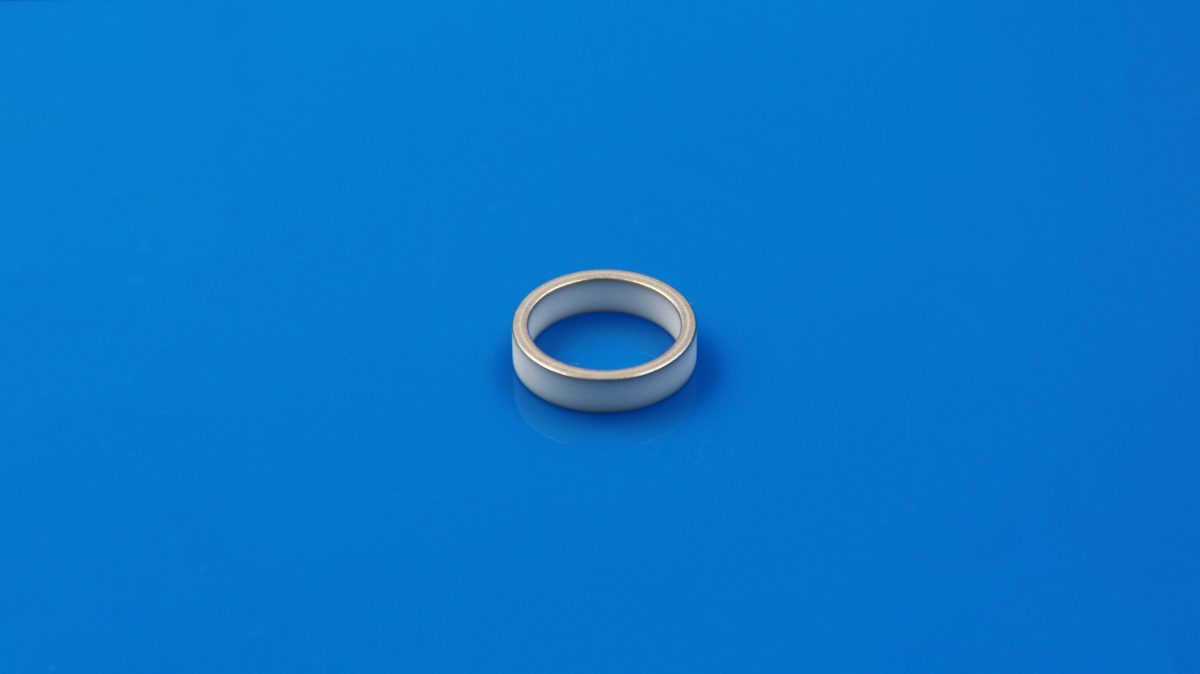
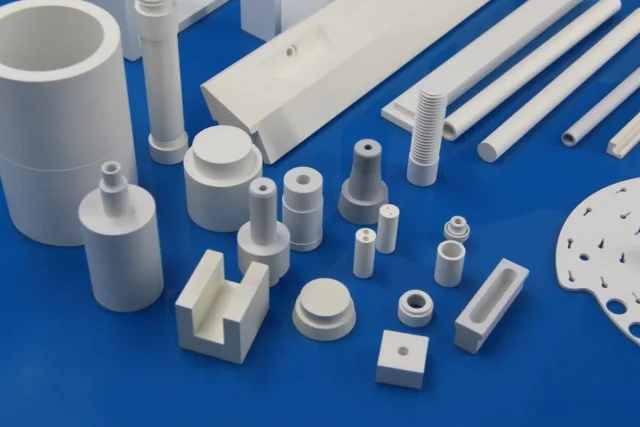
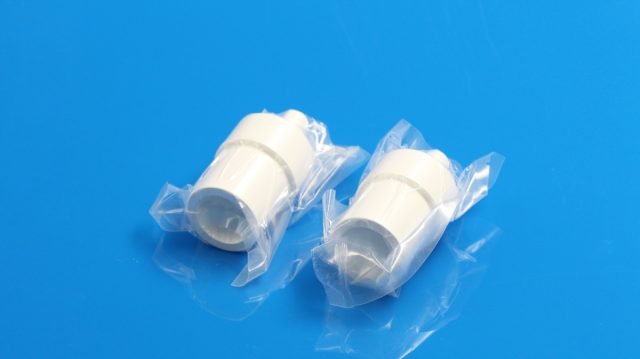
A boron nitride ceramic nozzle is a specialized tool used in the production of amorphous alloy strips. Amorphous alloys are a class of materials with a disordered atomic structure that offers unique electric, magnetic and mechanical properties, and their history counts approximately 40 years.
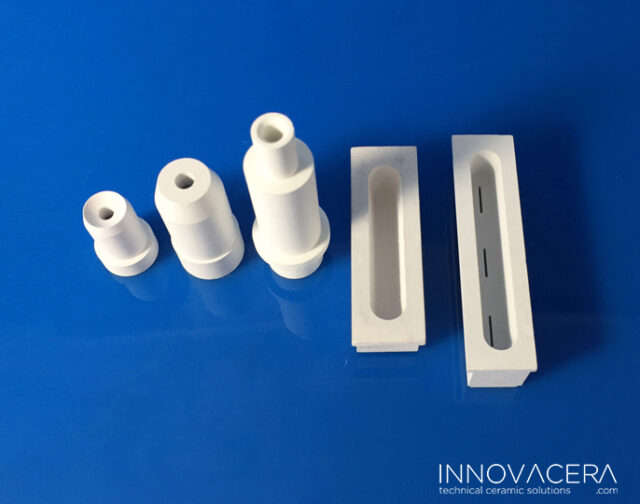
In recent years, amorphous alloy industry technology have developed rapidly, so higher requirements have been put forward on the nozzle materials used in the key of tape production. The boron nitride composite ceramic material developed for amorphous strip production has excellent high temperature resistance, corrosion resistance, thermal shock resistance, creep resistance and easy processing properties, which can meet the production of various amorphous strips, especially suitable for the needs of broadband amorphous strip production.
During amorphous alloy strips production process, a boron nitride ceramic nozzle is employed to deliver a precise and controlled flow of molten amorphous alloy onto a rotating wheel. The nozzle can withstand high temperatures, corrosive environments and boron nitride ceramic provides excellent thermal conductivity, ensuring proper heat transfer and cooling of the alloy strip. This helps to maintain consistent material properties and prevent deformation during production. The smooth surface of the nozzle also assists in the smooth and uniform deposition of the alloy onto the wheel, resulting in a high-quality final product.
Additionally, boron nitride ceramic has a low coefficient of friction, reducing frictional wear and tear on the nozzle. This results in increased nozzle lifespan and minimized maintenance requirements, contributing to overall cost-efficiency.
Amorphous metal alloy strip is produced by rapidly cooling the melt on a rapidly rotating drum. The manufacturing process is briefly described as follows: Put the “master alloy” into an induction furnace and heat it to the melt temperature of 1200-1300°C, and keep it at this temperature for a certain period of time. The melt is poured into the rotating copper drum through the nozzle, cooled and Separate the ribbon from the roller. The cooling speed reaches 106K/s, and the drum linear speed is 30m/s. Such high melt cooling rates and the presence of amorphizing agents in the melt allow “freezing” of liquid metal without producing crystals. The manufacturing scheme is shown in Figure 1.
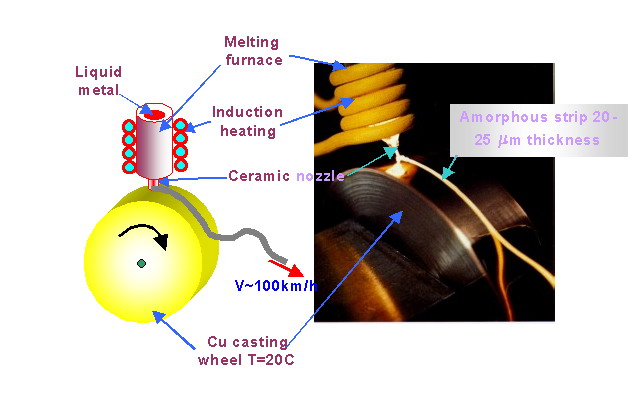
(Figure 1)
Performance:
1.The optimized formula and unique process make it highly resistant to thermal shock and high-temperature creep. Maximum using temperature 1700 ℃.
2.Low thermal expansion coefficient, no cracking or deformation during use.
3.Strong erosion resistance, wear resistance and metal corrosion resistance. Long service life.
4.Good raw materials, process control, product stability.
| Density (g/cm3) |
Operating temperature |
Bending strength |
Leeb hardness |
Thermal expansion |
Thermal conductivity |
Compressive strength |
Compostion |
| 2.3 | 1700°C | 60 Mpa | 450 HL | 1.9*10-6/k | 35 W/mk | 145 Mpa | BN+ZrO2+SiC |
Boron nitride ceramic nozzle is a crucial component in the production of amorphous alloy strips. Its excellent thermal conductivity, corrosion resistance, and low friction characteristics improve process reliability, product quality, and overall efficiency.