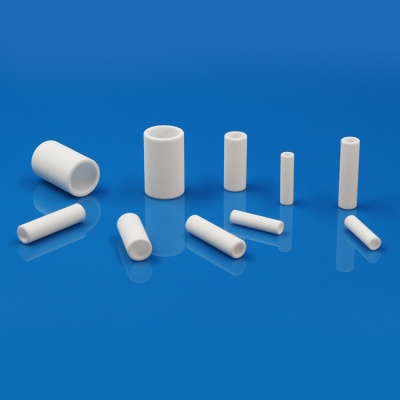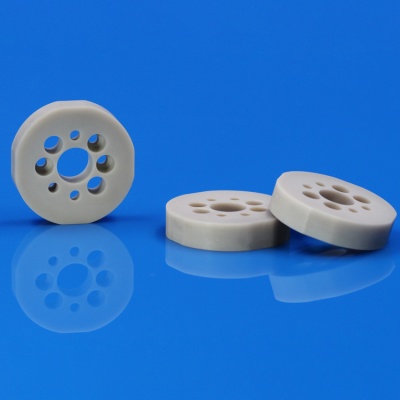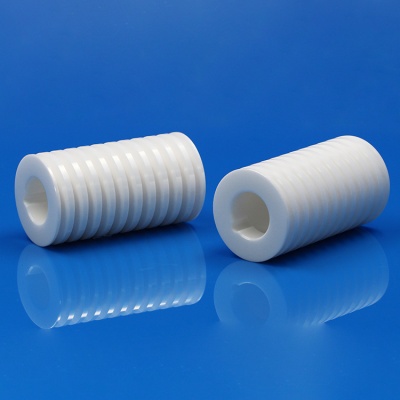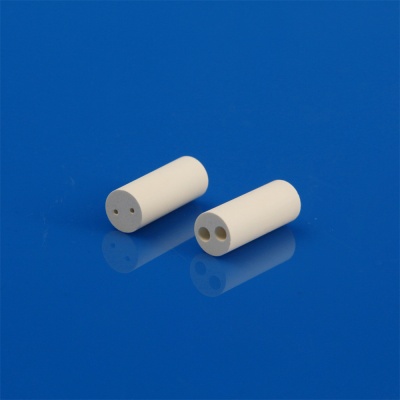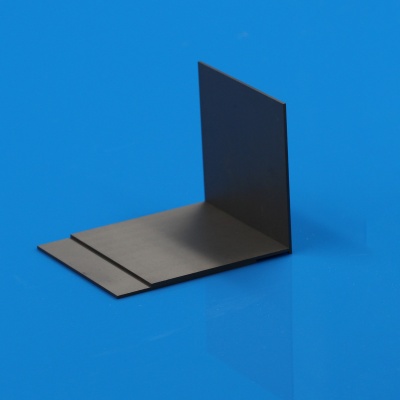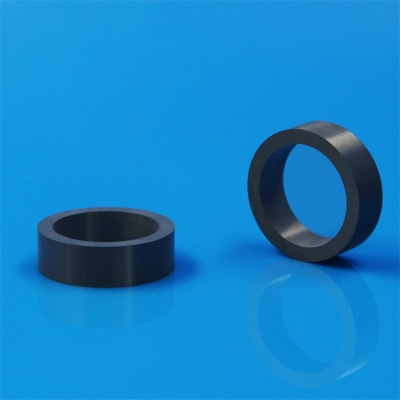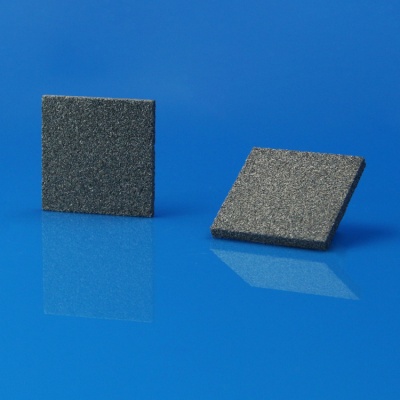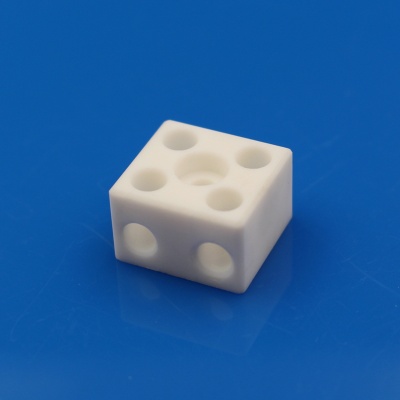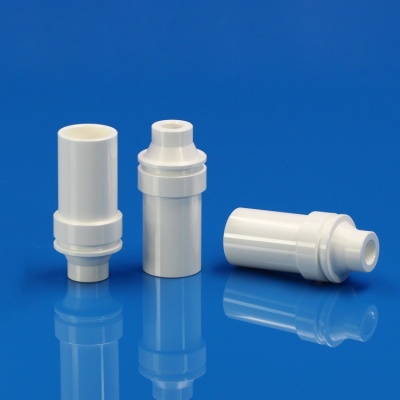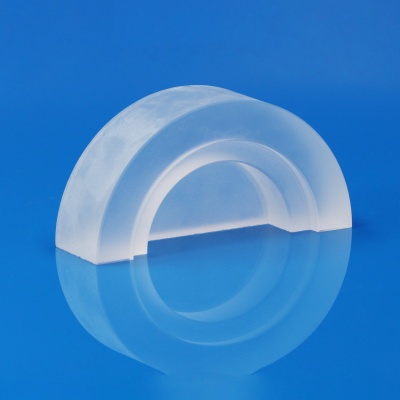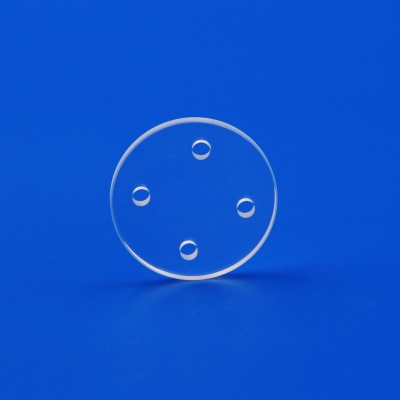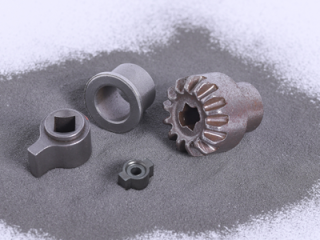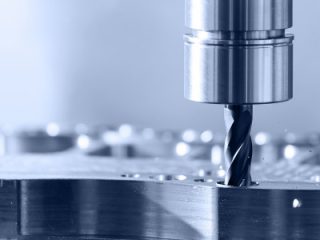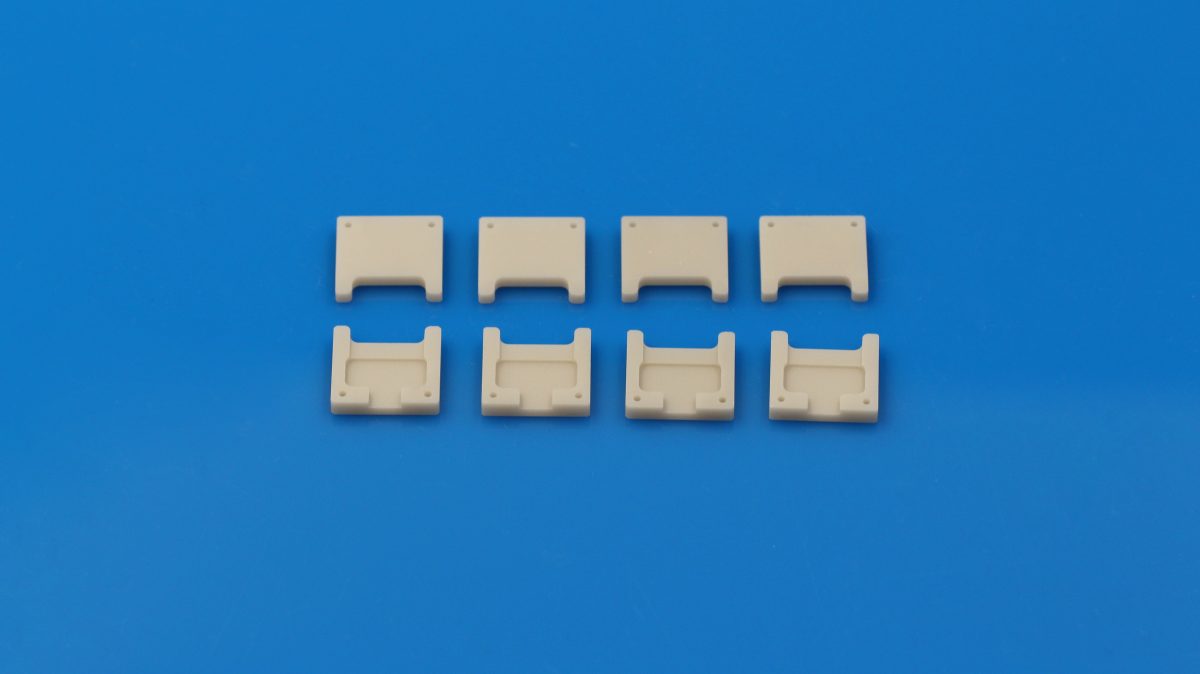
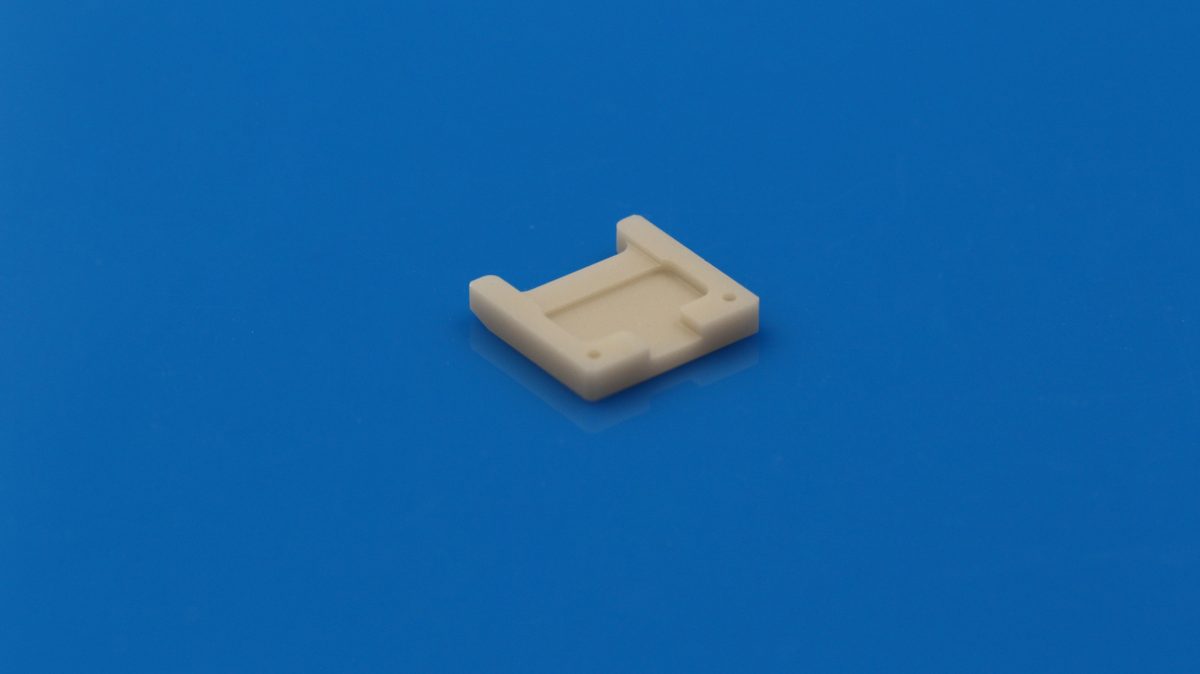
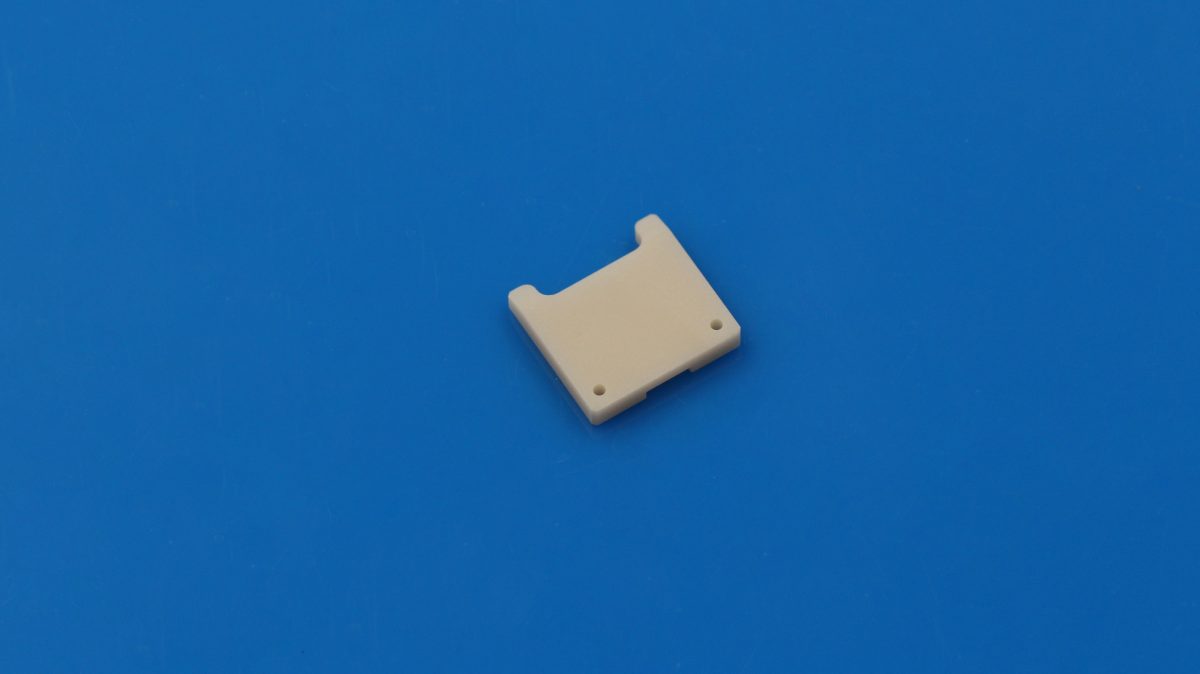
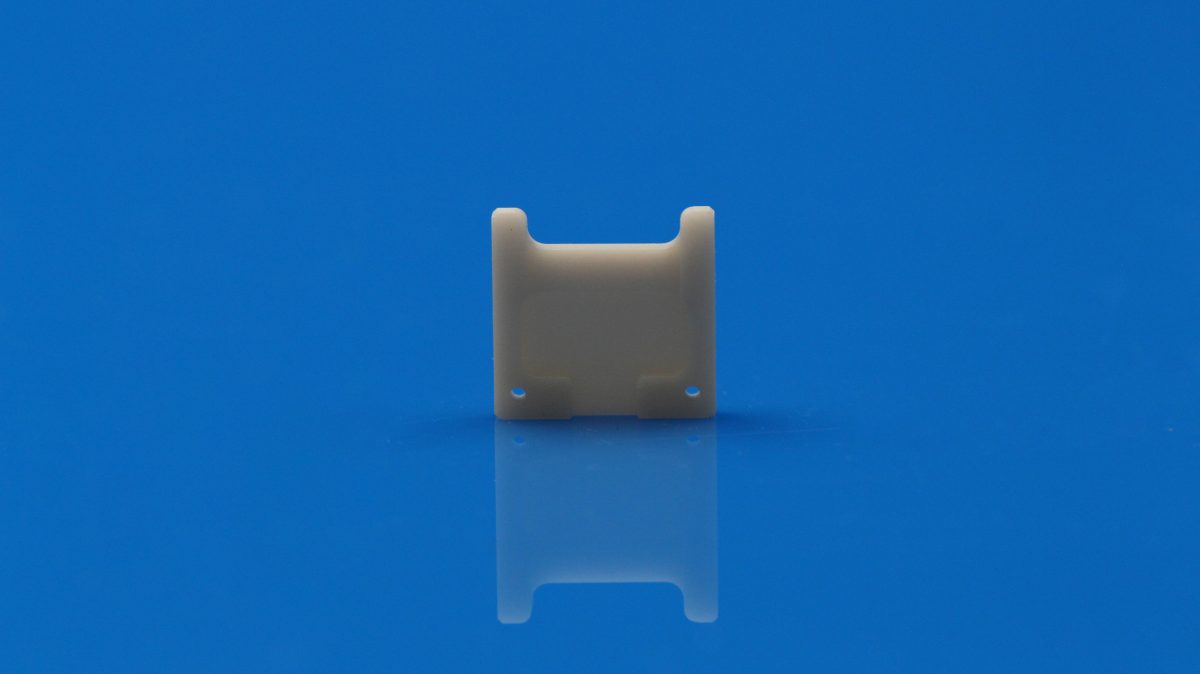
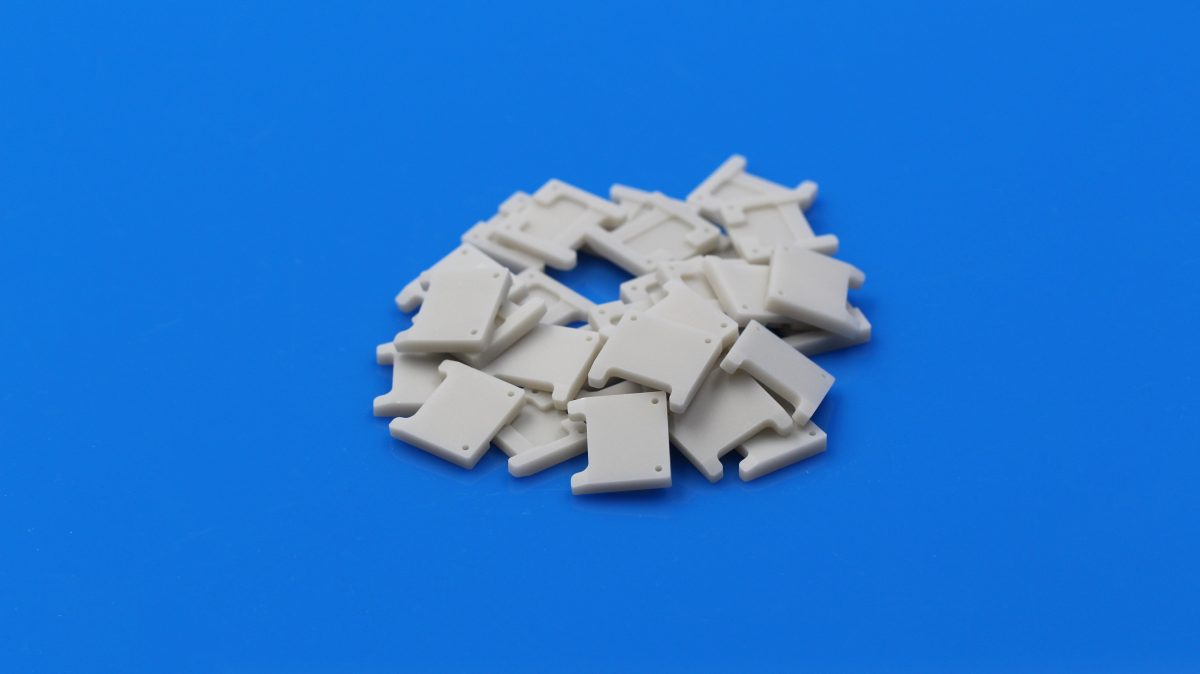
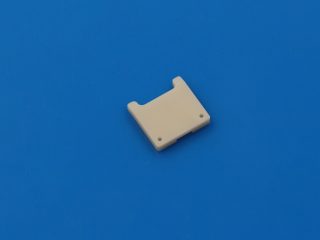
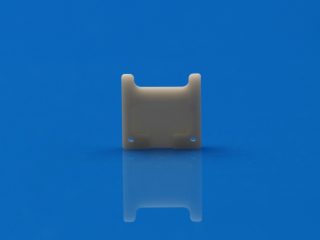
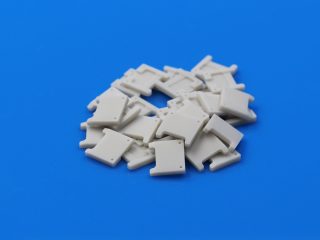
Aluminum nitride ceramic combines high thermal conductivity,excellent electrical insulation,low dielectric loss and a coefficient of thermal expansion that is relatively well matched to semiconductor materials such as Si and InP.It can provide efficient and stable heat-conduction paths for heat-generating chips inside optical modules while also serving electrical insulation and mechanical support functions.Therefore,AlN is widely used in LD/PD submounts,TIA package substrates,SiP system level substrates,and thermal management structural components for optical modules.
Why Aluminum Nitride for High Speed Optical Modules?
AlN combines high thermal conductivity,electrical insulation,mechanical strength and suitable thermal expansion characteristics for compact,high power optical packaging.
| Property | Typical Value | Benefit for Optical Modules |
|---|---|---|
| Thermal Conductivity | 170–230 W/(m·K) | Supports rapid heat transfer and heat spreading from high power devices |
| Coefficient of Thermal Expansion | 4.5–5.5 × 10⁻⁶/°C | Helps reduce thermal stress due to good compatibility with Si and InP |
| Volume Resistivity | ≥ 10¹⁴ Ω·cm | Provides reliable electrical insulation while maintaining thermal performance |
| Flexural Strength | ≥ 350 MPa | Offers stable mechanical support for chips and package structures |
| Dielectric Loss Tangent | < 0.001 | Suitable for high speed and high-frequency signal environments |
Typical AlN Applications in Optical Modules
LD Submount
Used for laser diode mounting and heat dissipation in the transmitter optical sub-assembly (TOSA), providing a stable thermal path for LD/EML chips and helping reduce the impact of temperature rise on device performance.
PD Submount
Used for photodetector mounting in the receiver optical sub-assembly (ROSA), providing good thermal stability and mechanical support for PD chips.
TIA Package Substrate
Used for packaging high-speed signal devices such as transimpedance amplifiers, helping meet thermal-management requirements while supporting high-frequency electrical performance.
SiP System Level Substrate
Designed for highly integrated optical modules and can be combined with multilayer ceramic processes to integrate thermal management, packaging, and internal electrical interconnection.
AlN Ceramic Thermal Management Components
Used as local heat sinks, heat spreaders, or mechanical support structures inside optical modules. Complex three-dimensional geometries can be customized to match internal space requirements. In structures that require both heat conduction and electrical insulation, AlN can also serve as one alternative to traditional tungsten-copper heat sinks.
From 400G to 1.6T: The Growing Value of AlN
| Data Rate | Material Trend | Application Notes |
|---|---|---|
| 400G and Below | Al₂O₃ still offers cost and process-maturity advantages | For applications with relatively lower power density, alumina remains a common material choice. |
| 800G | AlN becomes a key high-thermal-conductivity material | As module power consumption and heat density rise, requirements for heat dissipation and high-frequency signal integrity increase, driving wider adoption of AlN. |
| 1.6T / 3.2T | The importance of AlN continues to increase | Higher integration and higher heat flux place stricter demands on thermal conductivity, electrical insulation, and thermal-expansion matching, further promoting AlN in next-generation optical modules. |
Reference Properties of Aluminum Nitride:
| Property | Unit | Typical Value | High-End Value |
|---|---|---|---|
| Thermal Conductivity (20°C) | W/(m·K) | ≥ 170 | ≥ 230 |
| Bulk Density | g/cm³ | ≥ 3.29 | ≥ 3.33 |
| Flexural Strength | MPa | ≥ 350 | ≥ 450 |
| Coefficient of Thermal Expansion | 10⁻⁶/°C | 4.5–5.5 | 4.2–4.8 |
| Volume Resistivity | Ω·cm | ≥ 10¹⁴ | ≥ 10¹⁵ |
| Dielectric Strength | kV/mm | ≥ 17 | ≥ 20 |
| Dielectric Loss Tangent | — | < 0.001 | < 0.0005 |
Need AlN ceramic components for 800G,1.6T,or next-generation optical modules? Send us your drawings,3D models,or application requirements.INNOVACERA provides custom AlN substrates and precision ceramic components for optical module thermal management.
Declaration: This is an original article of INNOVACERA®. Please indicate the source link when reprinting: https://www.innovacera.com/product/aluminum-nitride-ceramic-components-for-optical-modules
Frequently Asked Questions
Why is aluminum nitride (AlN) essential for 800G and 1.6T optical transceivers? How does it solve high-power laser thermal bottlenecks?
As optical modules upgrade from 400G to 800G, 1.6T, and 3.2T, high heat fluxes from EML lasers, photodetectors, and DSPs threaten wavelength stability and signal integrity. Aluminum nitride (AlN) delivers high thermal conductivity (170–230 W/m·K) and low dielectric loss (<0.001) alongside a CTE (4.5–5.5 × 10⁻⁶/°C) closely matching InP and Si. Used as LD/PD submounts and heat spreaders, AlN provides rapid heat dissipation and electrical isolation, eliminating thermal stress and preventing laser drift.
Can I order custom AlN submounts and SiP substrates for optical packaging? What specifications are required by the manufacturer?
Yes, as an advanced precision ceramic manufacturer, INNOVACERA supplies custom-machined and metallized AlN LD/PD submounts, TIA package carriers, and 3D micro-machined thermal spreaders. We support tight dimensional tolerances, high-frequency metallization patterns, and complex geometry layouts for TOSA/ROSA assemblies. To request a price quote and DFM analysis, please submit your 2D/3D CAD drawings, required metallization specs (e.g., Ti/Pt/Au, AuSn), and thermal requirements.