In 800G and 1.6T high-speed optical module design, thermal management has become a core challenge restricting module performance and reliability. The increasing power density consumption of laser drivers, DSP chips, and optical engines generates significant heat within compact OSFP and QSFP packages. Inadequate heat dissipation can lead to excessively high temperatures, reduced signal integrity, accelerated component aging, and shortened module lifespan.
Alumina (Al2O3) substrates have insufficient thermal conductivity, which can’t meet the heat dissipation requirements of the high-density heat generated by DSP and laser driver chips; while copper tungsten (WCu) substrates have excellent thermal conductivity, but poor electrical insulation, which increases the complexity and cost of packaging.
Why Traditional Alumina Ceramic Are Reaching Their Limits
As we know, alumina (Al₂O₃) ceramics have been widely used in optical modules due to their good electrical insulation and relatively low cost. But for modern 800G and future 1.6T modules, this thermal conductivity of 24–30 W/m·K can’t quickly dissipate heat from high-power chips. As heat density increases, designers need materials with significantly higher thermal conductivity while maintaining electrical insulation.
How Aluminum Nitride Improves Heat Dissipation
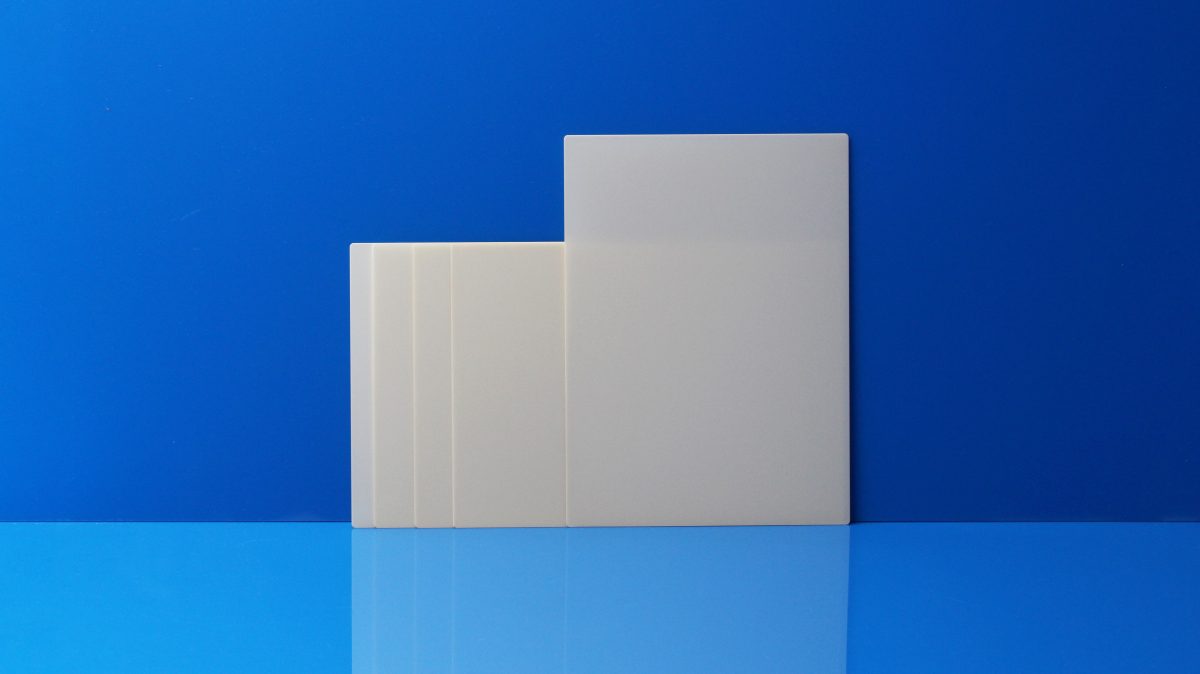
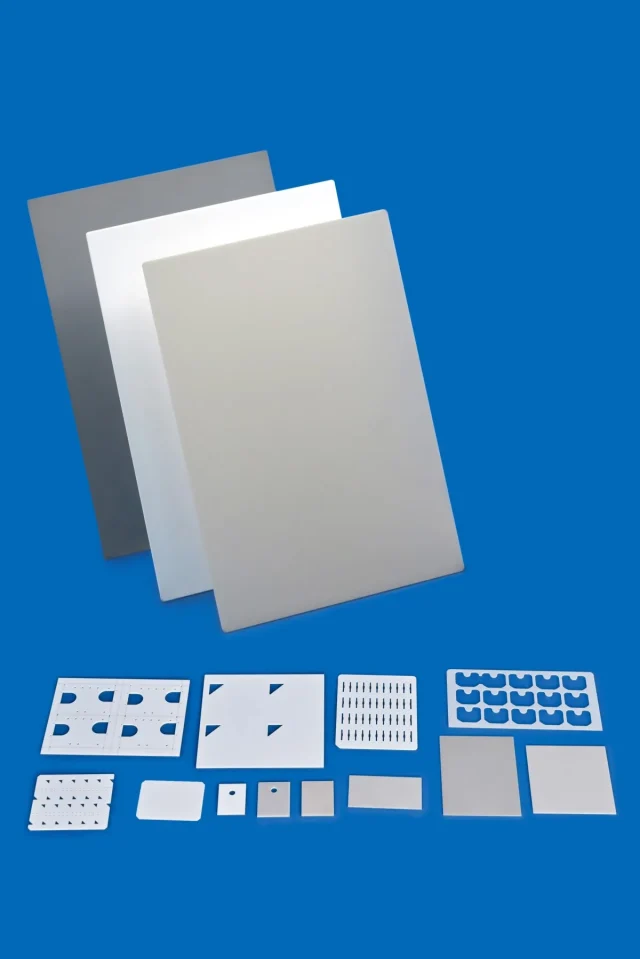
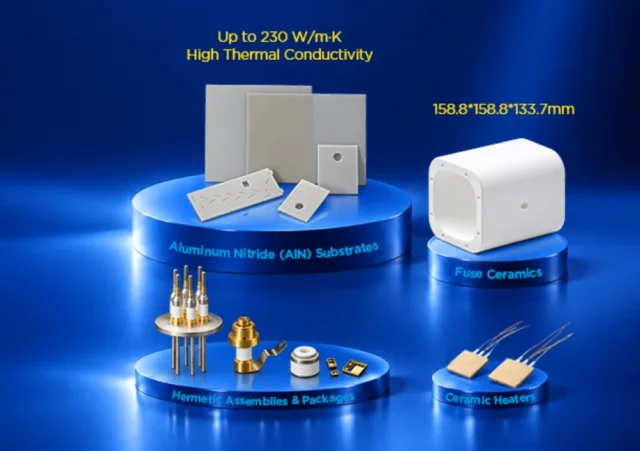
Aluminum Nitride (AlN) combines several characteristics that make it particularly suitable for optical communication applications.
High Thermal Conductivity
AlN offers thermal conductivity of: 170–220 W/m·K. This is approximately 6-8 times higher than conventional alumina ceramics. The higher thermal conductivity allows heat generated by DSPs and laser drivers to be transferred more efficiently to the module heat sink.
Excellent Electrical Insulation
Unlike metal-based thermal materials, AlN maintains excellent electrical insulation while providing superior heat dissipation. This simplifies module packaging and reduces design complexity.
Low Coefficient of Thermal Expansion
AlN exhibits a coefficient of thermal expansion (CTE) close to that of silicon and gallium arsenide devices. Benefits include:
- Reduced thermal stress
- Improved die attachment reliability
- Enhanced silicon photonics compatibility
- Longer service life
Alumina vs Aluminum Nitride: A Technical Comparison
| Performance | Aluminum Oxide (Al₂O₃) | Aluminum Nitride (AlN) | Practical Value for Optical Modules |
|---|---|---|---|
| Thermal Conductivity W/m·K | 24 ~ 30 | 170-220 | Faster heat dissipation |
| Coefficient of Thermal Expansion (ppm/K) | 7.2 | 4.5 | Better chip matching |
| Dielectric Constant (1 MHz) | 9.8 | 8.5 | Improved high-frequency performance |
| Volume Resistivity (Ω·cm) | >10¹⁴ | >10¹⁴ | Excellent insulation |
| Flexural Strength (MPa) | 300 ~ 350 | 350 ~ 450 | Better mechanical reliability |
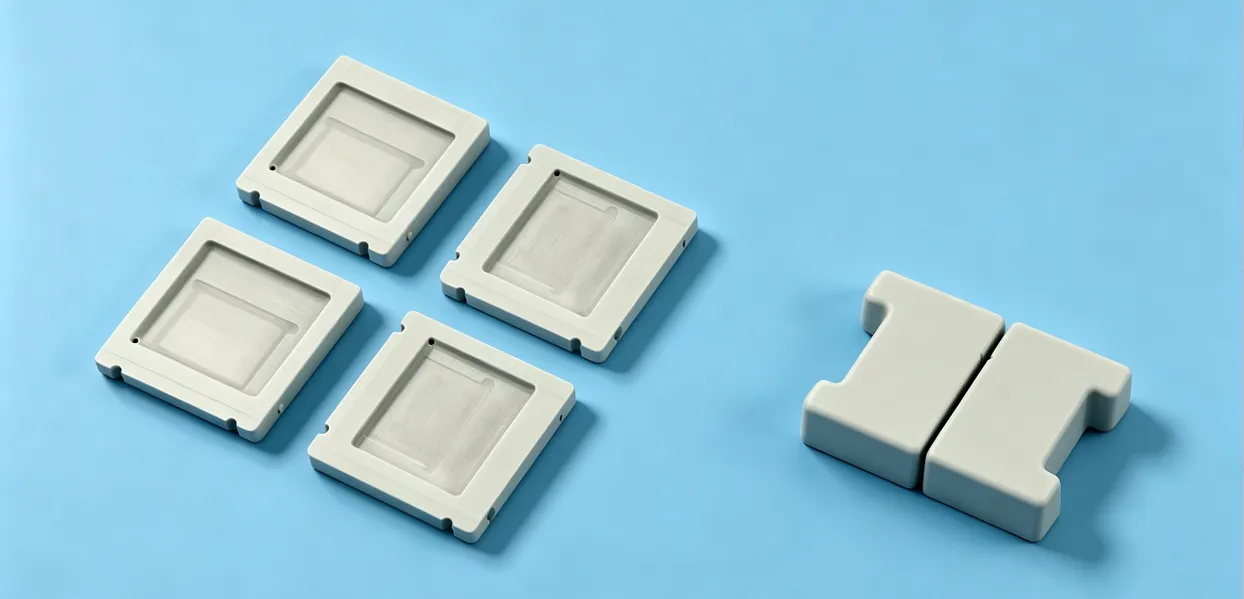
That’s why many optical module designers are turning to Aluminum Nitride (AlN) ceramics as a high-performance thermal management solution. We employ aluminum nitride (AlN) ceramic components, simultaneously covering the DSP main control chip and laser driver chip areas, fully leveraging its advantages of high thermal conductivity (170–220 W/m·K), electrical insulation, and low coefficient of thermal expansion. This enables rapid heat dissipation to the module’s metal heat sink, ensuring stable chip operation under high power. It effectively manages the high heat densities generated by 800G optical components while matching the thermal expansion of silicon photonics. Furthermore, we utilize AlN components on both sides of the LD Driver, below the DSP, and in the power management chip area, thereby reducing localized hotspot temperatures and improving the module’s overall reliability and lifespan.
Typical Applications of AlN Components in 800G QSFP-DD and OSFP Modules
AlN ceramic components can be integrated into multiple heat-generating regions inside optical transceivers, including:
- DSP thermal interface structures
- Laser driver support components
- Power management areas
- Silicon photonics assemblies
- High-power optical engine packages
Through aluminum nitride ceramic components, the QSFP/OSFP optical module achieves an industry breakthrough by combining high power density, high reliability, and long lifespan, providing robust thermal management protection for data centers, high-speed communications, and cloud computing networks.
Looking for custom AlN ceramic components for optical transceiver applications? Contact Innovacera’s engineering team for design support.