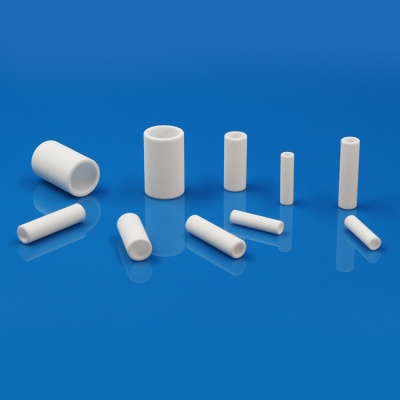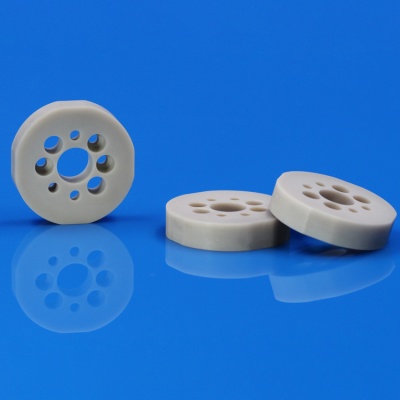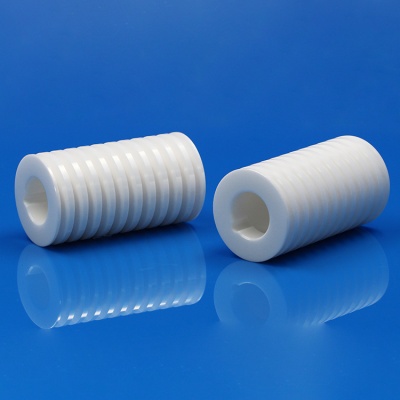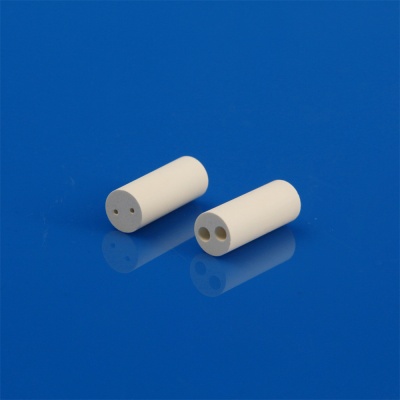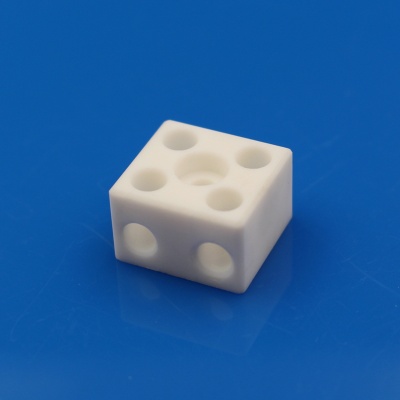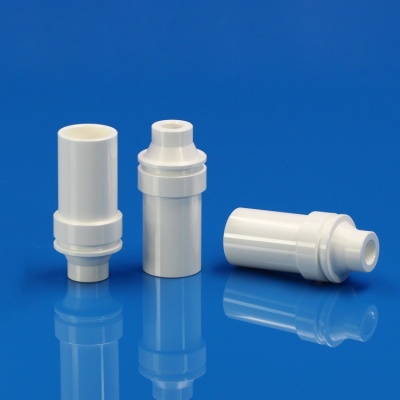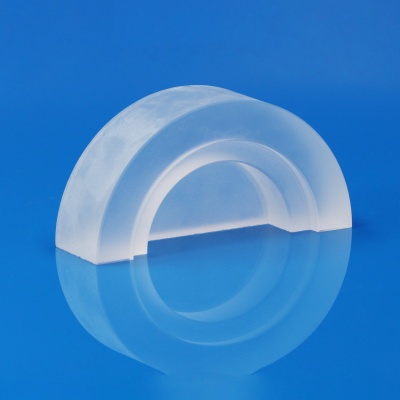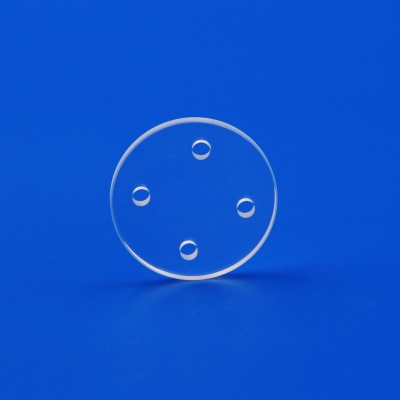




The alumina ceramic body helps position energized filaments or heater leads while electrically separating them from adjacent metal parts at different potentials.
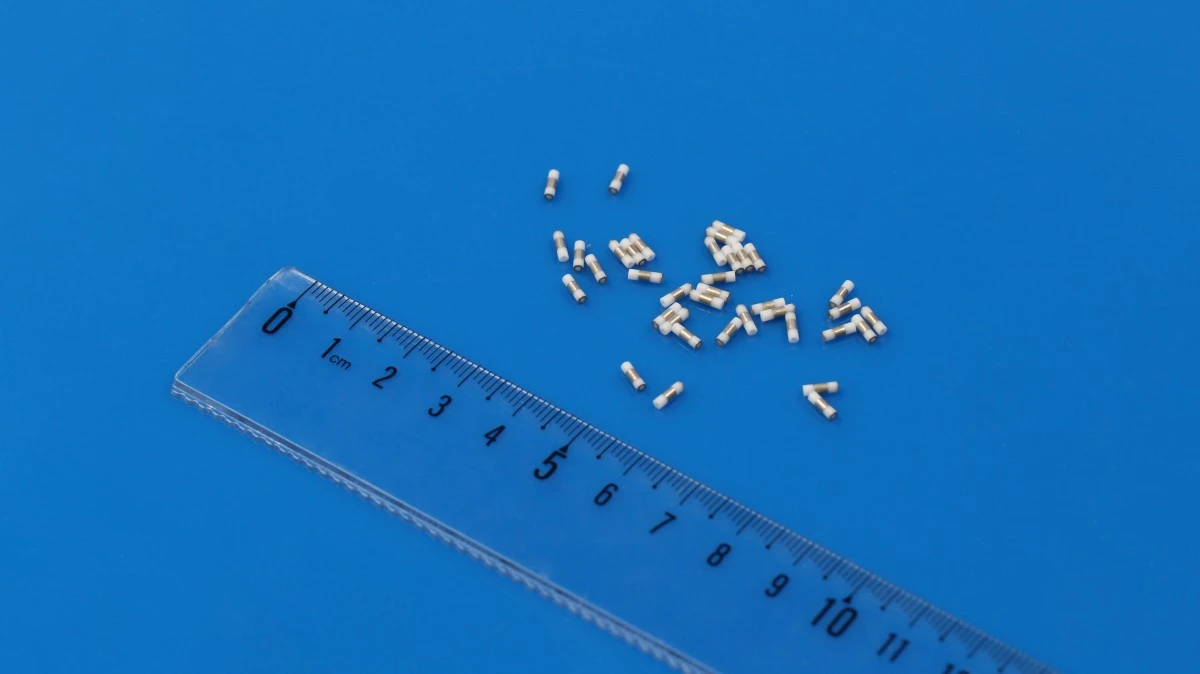
Selected areas of the alumina tube are metallized with molybdenum-manganese (Mo-Mn) to provide an interface for ceramic-to-metal joining. Surface finish and brazing requirements are specified according to the mating metal and assembly design. Unmetallized areas provide the electrical insulation required between conductive sections.
Product dimensions: 1.6 mm OD × 0.76 mm ID × 5.08 mm length.
Custom dimensions, hole features, shoulders and metallization patterns can also be evaluated according to customer drawings.
Filament Support Function
Directly Heated Cathode Filaments
In a directly heated cathode, the filament itself is heated electrically to emit electrons. The ceramic support positions the filament or its leads and provides insulation from adjacent electrodes and mounting structures.
Heaters for Indirectly Heated Cathodes
In an indirectly heated cathode, a separate heater supplies heat to the electron-emitting cathode. Depending on the assembly design, the ceramic tube supports the heater or its leads and provides the required electrical separation.
Engineering Advantages
- Electrical insulation: The alumina body separates conductive parts. Material grade, operating temperature, voltage and insulation geometry must be considered together.
- Mechanical positioning: Custom tube geometry helps locate filaments, heater leads and mounting components within the assembly.
- Localized metallization: Selected Mo-Mn metallized areas define joining interfaces while leaving designated insulating surfaces unmetallized.
- Ceramic-to-metal joining: The metallized interface supports a specified brazing process. Mo-Mn metallization is commonly nickel plated to improve braze wettability; the required surface finish should be confirmed for each design.
- Custom joining geometry: Metallization coverage and interface dimensions can be specified to suit mating parts, electrical separation and assembly requirements.
Vacuum Assembly and Hermetic Sealing
A filament support located inside a vacuum chamber does not necessarily form part of the vacuum seal. Where the ceramic tube is incorporated into a vacuum boundary, a suitably designed ceramic-to-metal brazed joint can provide a hermetic connection.
Hermeticity is a property of the completed assembly and must be verified against the specified leak-rate requirement. Operating limits also depend on the ceramic grade, metallization, braze alloy, mating metal and thermal cycle.
Potential Applications
The following are candidate applications for custom designs. Suitability depends on the electron-source configuration, mounting method and operating environment.
Electron Guns and Electron Beam Evaporation Sources
Filament or heater support in thermionic electron-source assemblies, including electron beam evaporation equipment, where ceramic insulation and defined metal joining interfaces are required.
SEM and Electron Beam Welding Systems
Custom insulating supports for compatible thermionic electron guns. The component must be matched to the specific cathode and source design.
Filament-Based Ion Sources
Support and insulation for filament leads in ion-source assemblies, including compatible ion implantation systems. Exposure to process gases, plasma and deposited material should be considered during design review.
Microwave Tubes and Other Vacuum Electronic Devices
Custom supports for cathode heaters and associated leads where compact ceramic insulation and ceramic-to-metal joining are needed.
Discuss Your Metallized Ceramic Tube Requirements
Please send your drawing and required quantity for technical review. The drawing better includes the complete dimensions, metallization areas, metallization inspection standards, and metallization tensile adhesion strength requirements.
Declaration: This is an original article of INNOVACERA®. Please indicate the source link when reprinting: https://www.innovacera.com/product/metallized-alumina-ceramic-tube-for-filament-support
Frequently Asked Questions
What is this metallized alumina ceramic tube used for?
It provides mechanical support and electrical insulation for filaments or heater leads in vacuum electronic assemblies. Localized metallization provides joining interfaces for metal components, while the unmetallized ceramic sections maintain electrical separation. Suitability depends on the specific cathode or heater design.
What are the dimensions, and can the tube be customized?
This tube measures 1.6 mm outer diameter × 0.76 mm inner diameter × 5.08 mm length. Custom dimensions, hole features and metallization patterns can be evaluated according to your drawing. Please send your drawing and required quantity for an initial feasibility review.
Does the metallized ceramic tube provide a hermetic vacuum seal?
Metallization alone does not create a hermetic seal. When the tube forms part of a vacuum boundary, the ceramic-to-metal joint must be properly designed and brazed, and the completed assembly must be tested against the specified leak-rate requirement. A filament support installed entirely inside a vacuum chamber may not require a hermetic joint.