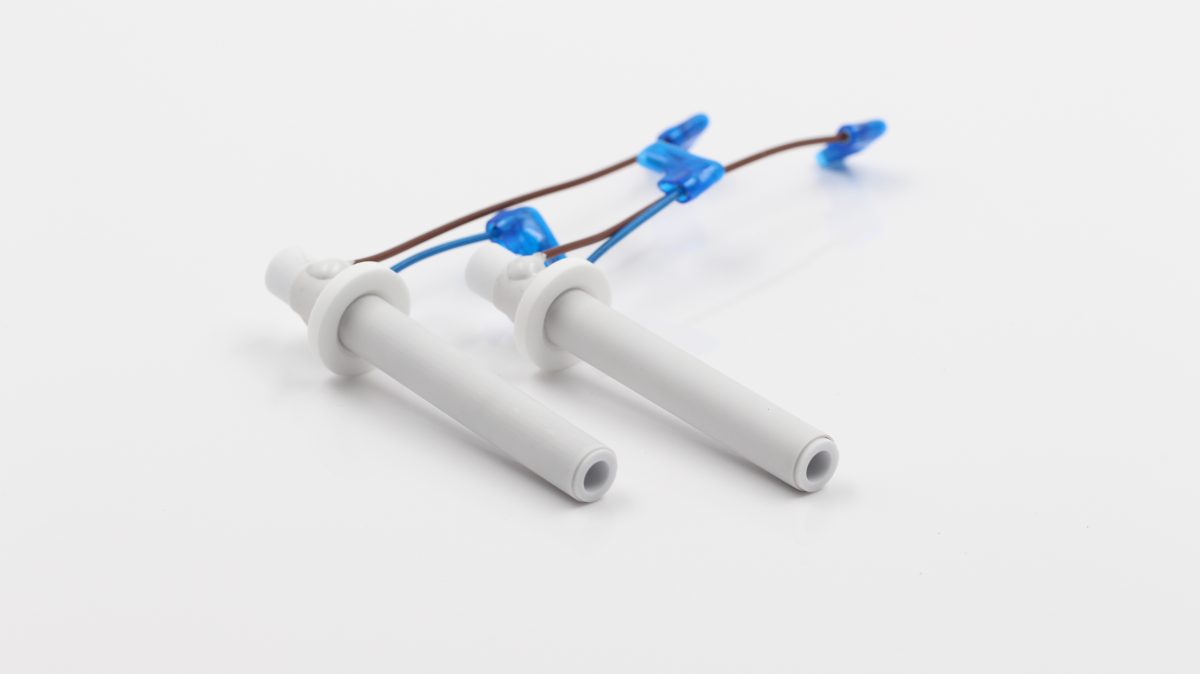
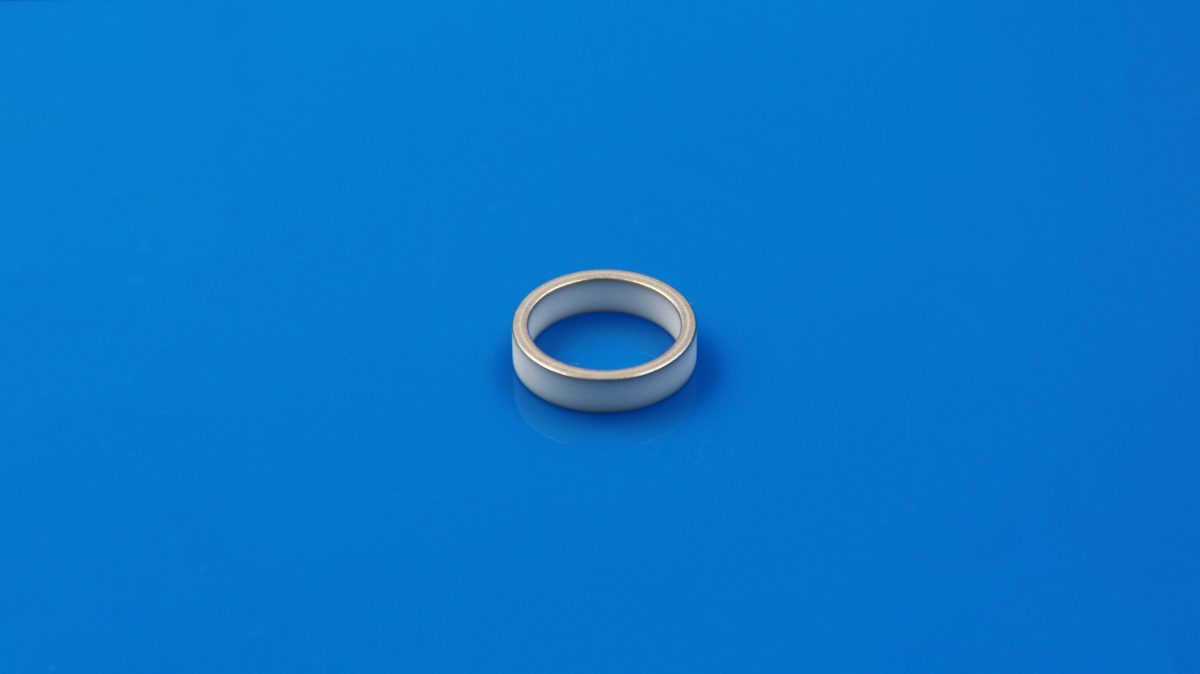
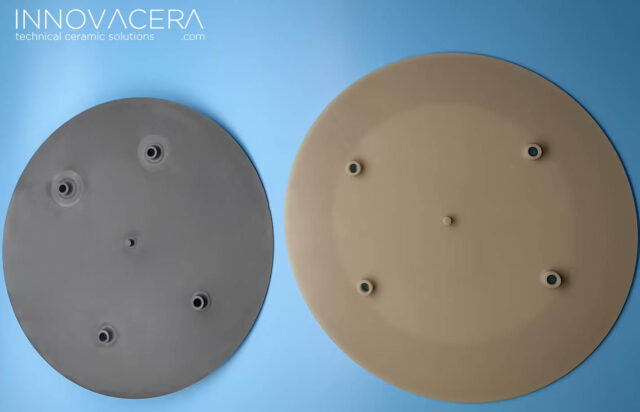
Aluminum nitride is a non-natural existence of man-made crystals, with a hexagonal crystal system of fibrous zincite crystal structure, for the covalent bond is very strong compounds, lightweight, high strength, high heat resistance, corrosion resistance, has been used as a crucible for melting aluminum, but also an excellent performance of electronic ceramic materials.
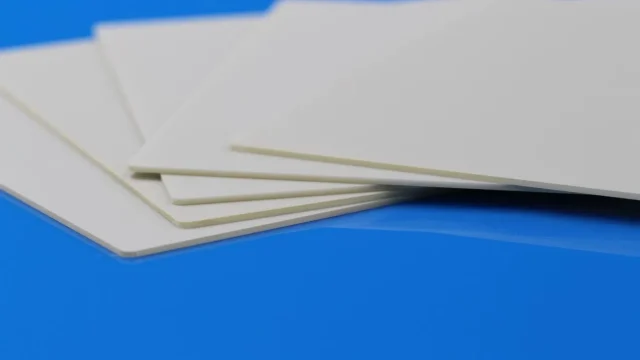
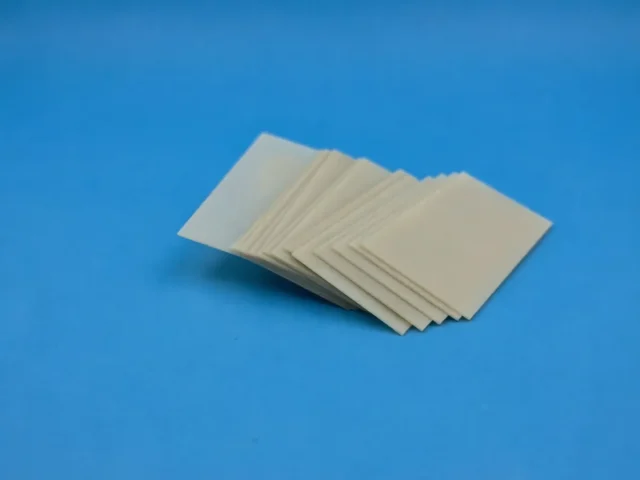
Aluminum nitride ceramics with high thermal conductivity, low coefficient of expansion, high strength, high temperature resistance, chemical corrosion resistance, high resistivity, low dielectric loss, is the ideal large-scale integrated circuit heat dissipation substrate and packaging materials, the main raw material for the manufacture of high thermal conductivity aluminum nitride ceramic substrate.
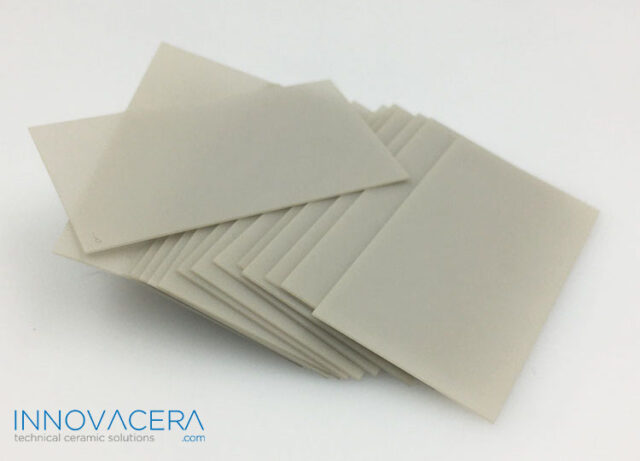
Aluminum Nitride Ceramic Substrate Advantages:
1. Excellent thermal conductivity
2. Low dielectric constant
3. Low dielectric loss
4. Reliable insulation properties
5. Excellent mechanical properties non-toxic
6. High temperature resistance and chemical corrosion resistance;
Due to the above performance, with the rapid development of microelectronic devices, high thermal conductivity aluminum nitride substrate, can be widely used in communication devices, high brightness LED, power electronics.
The thermal conductivity of aluminum nitride single crystal is about 250W, theoretically speaking, the thermal conductivity of aluminum nitride single crystal at room temperature can reach 320W, so the aluminum nitride material is very suitable for the manufacture of high heat dissipation substrate. Aluminum nitride ceramic substrate is a new type to solve the problem of high heat dissipation density, the most suitable for high integration, high heat dissipation hybrid integrated circuits with ceramic substrate and semiconductor chip mounting ceramic substrate.
Innovacera Ceramic Thermally Conductive Interface Pads are designed to provide a preferential heat-transfer path between heat-generating components, heat sinks, and other cooling devices. The pads are used to fill air gaps caused by imperfectly flat or smooth surfaces which should be in thermal contact.
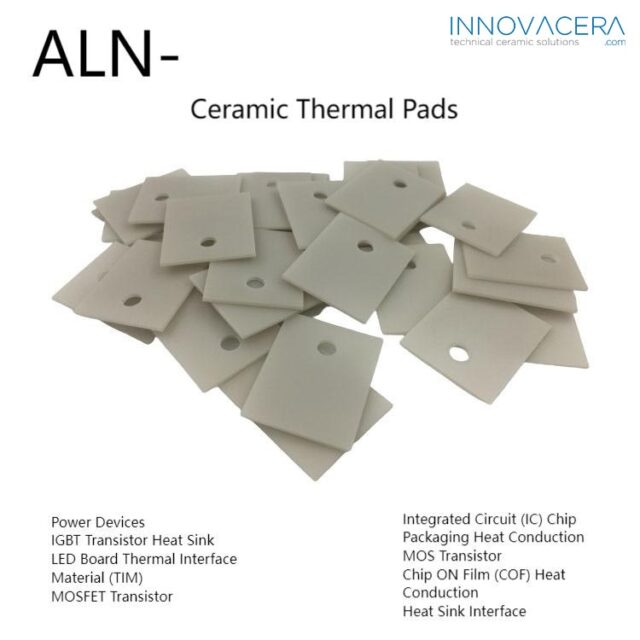
The pads are made by ceramic material such as alumina ceramic and aluminum nitride, which help in providing enhanced thermal conductivity and excellent insulation performance.
Applications of Aluminum Nitride Ceramic Substrates:
Power Devices
MOSFET Transistor
Heat Sink Interface
Integrated Circuit (IC) Chip
Packaging Heat Conduction
LED Board Thermal Interface Material (TIM)
MOS Transistor
Chip ON Film (COF) Heat Conduction
IGBT Transistor Heat Sink