Here’s a habit I see over and over in substrate plants: the firing plate gets booked as auxiliary material, procurement compares two quotes, picks the cheaper one, done. And for regular ceramics? Fine. Genuinely fine. AlN and Si3N4 don’t work that way. These substrates are touchy about impurities to a degree that surprises people coming from the alumina side, and one firing run runs north of ten hours with the plate sitting right against the green body the entire time. So the plate’s composition, its purity, whether it reacts — that stuff ends up in your yield number whether it’s on the spec sheet or not. Why does boron nitride come up so often in this context? Simple. Hot BN doesn’t react, and it doesn’t give anything off into the substrate.
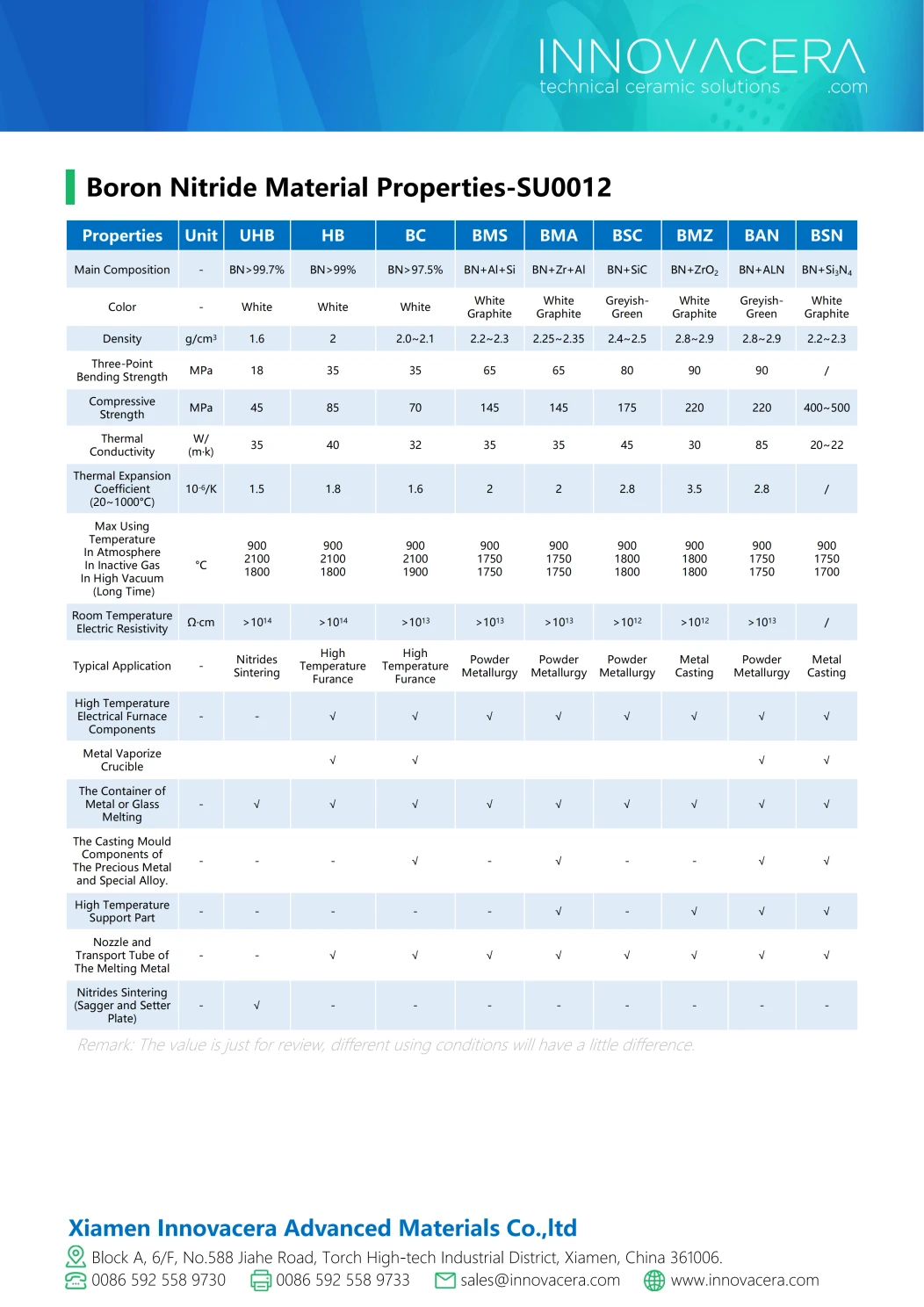
Start with the chemistry. AlN loses thermal conductivity fast once lattice oxygen climbs — oxygen substitutes in, aluminum vacancies form, phonons scatter off them, and the conductivity you paid for quietly drops. Si3N4 worries about different things: surface glassy phase, trace metals. Either one can kick off abnormal grain growth or leave the tile densifying unevenly. BN under inert atmosphere avoids the whole mess. It doesn’t shed oxygen, carbon, or metals. Spec-wise, BN firing plates are already being called out at >99.5% BN and <0.15% oxygen.
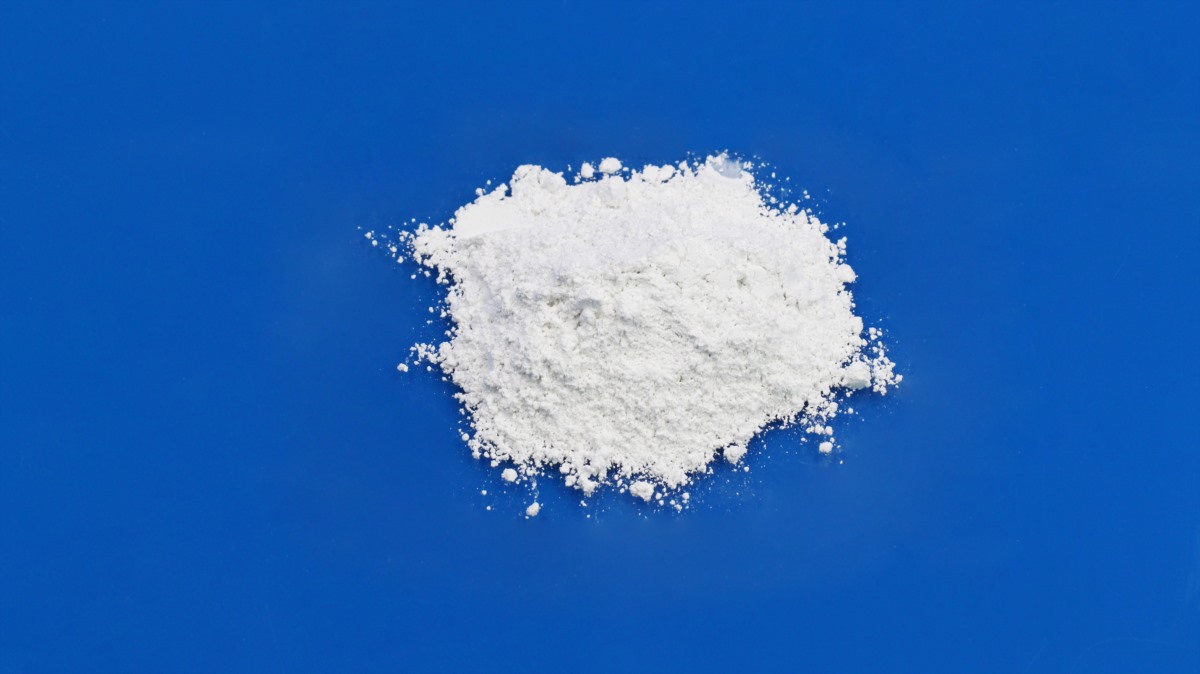
Powder sticking is its own headache. BN barely wets most melts and nitride green bodies, so powder tends to lift off clean. If you’ve ever watched a plate grab the green body partway through shrinkage, you know the sequel: dragging, warpage, densification that ends up uneven across the tile. Stuck parts also chip when you lift them off, and every cleaning pass between runs is furnace time you’re not selling.
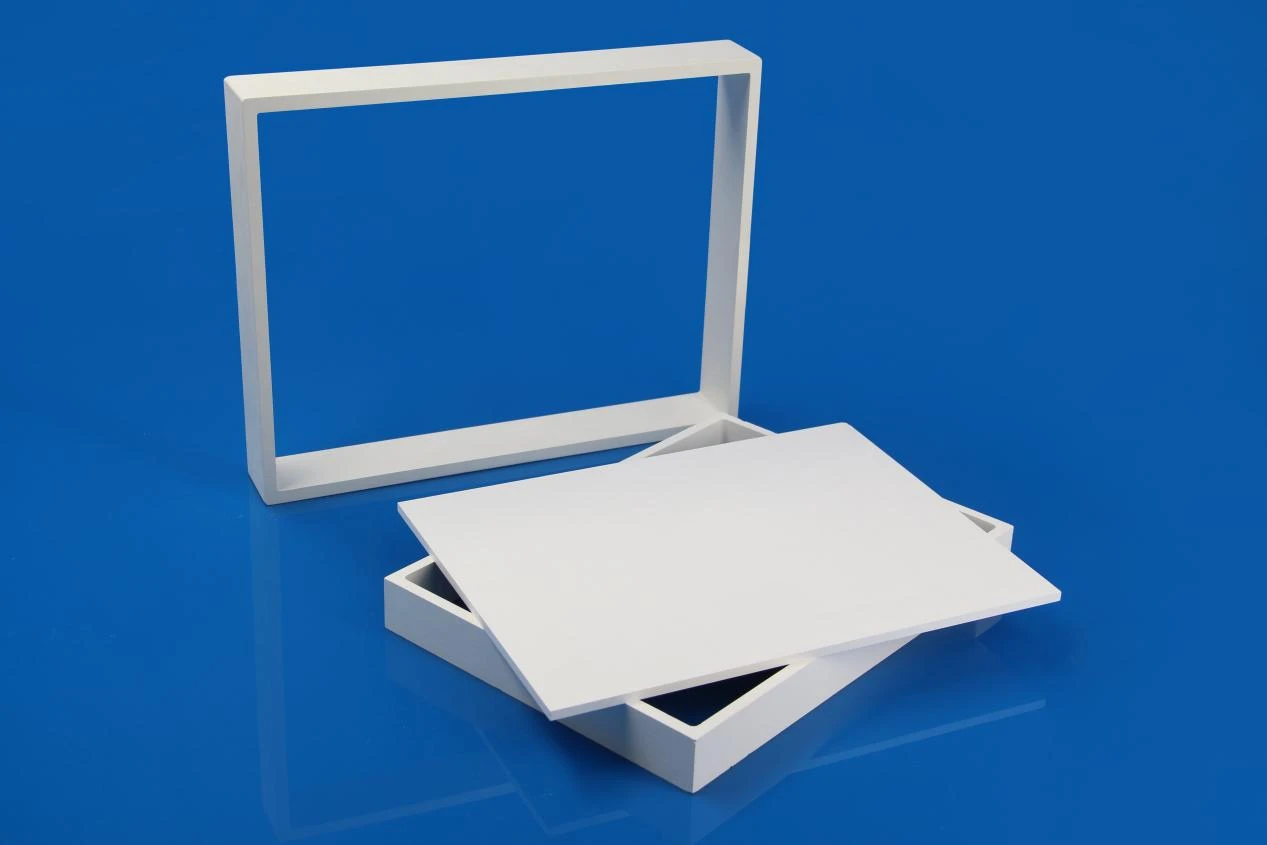
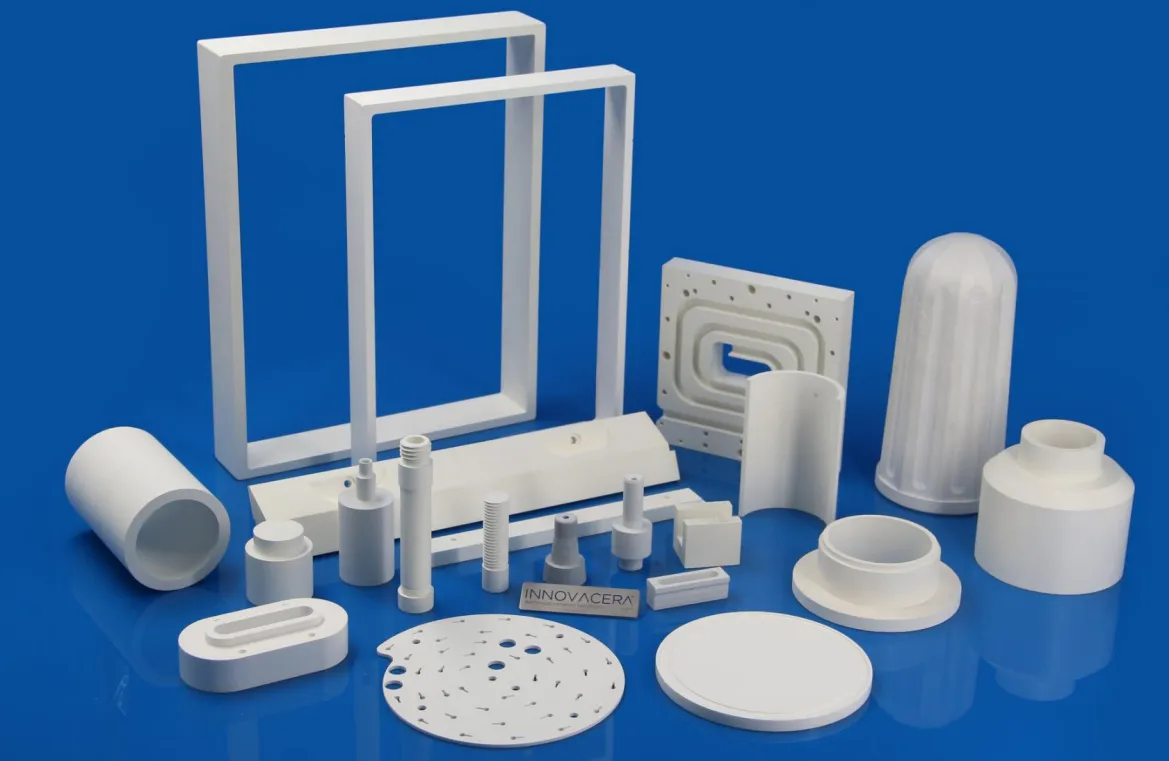
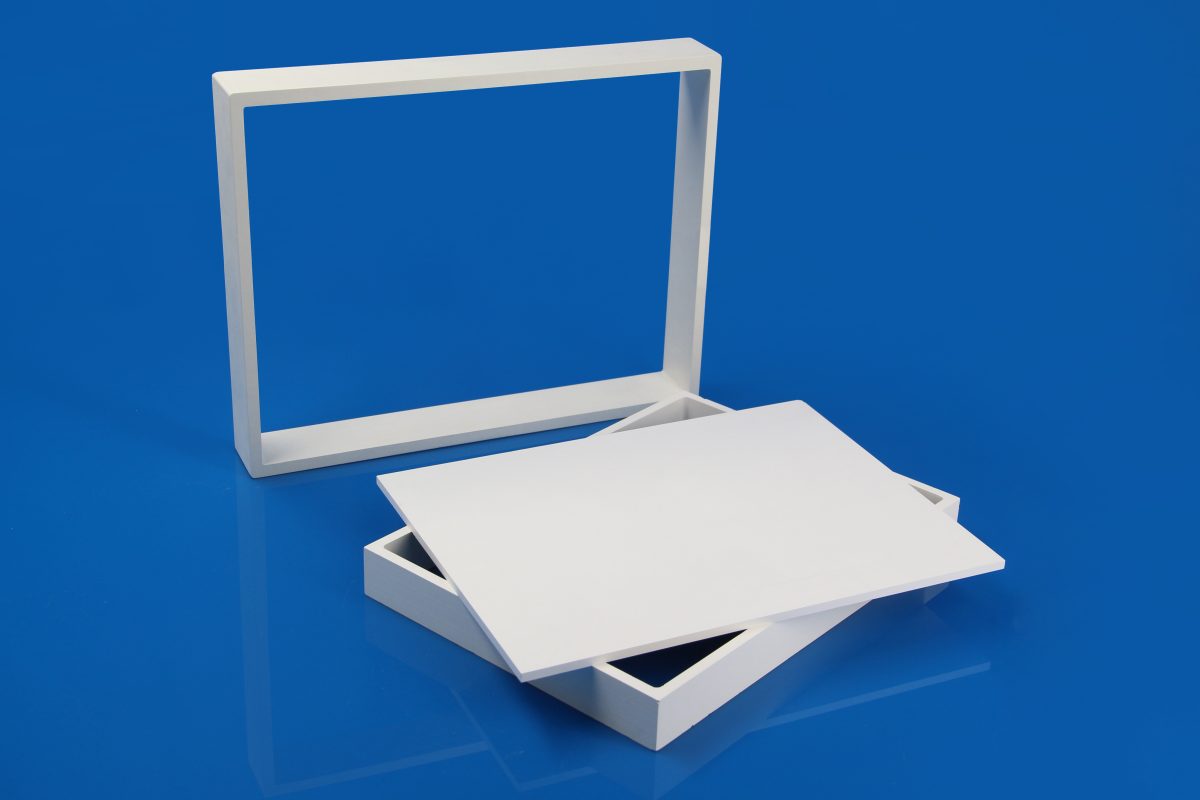
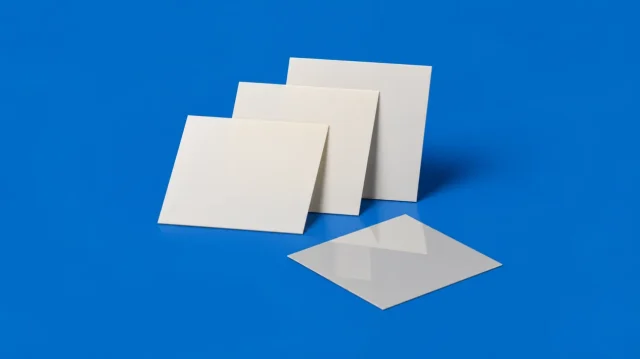
BN setter plates
Thermal shock, meanwhile, is really a question about money. A production plate lives through hundreds of heat-up and cool-down cycles. Hexagonal BN expands about as much as quartz does but moves heat roughly ten times faster; it’ll take hundreds of cycles at 2000 degrees without cracking. And when a plate does let go mid-production, the fallout is ugly — spalled flakes land on the substrate surface as point defects, and one written-off batch costs more than the plate ever did.
Sintering windows are covered too. AlN and Si3N4 typically fire at 1600 to 1900 degrees, with soak times from a few hours to past ten. BN holds about 2100 degrees in inert gas without softening or creeping. Volume-grade BN parts run above 99.7% purity with oxygen held under 0.15%. One caution, though: stretch the soak past ten hours and even a modest bump in oxygen means more oxygen diffusing into the substrate, which can show up in the final thermal conductivity number.
A fair word on limits, because the marketing copy won’t give you one: BN is not magically inert everywhere. Some sintering aid chemistries will still nibble at the interface at extreme temperatures, so compatibility has to be proven against a real furnace profile — no skipping that step. INNOVACERA Company runs low-volume production specifically for customer trials, so you can validate the process before committing to volume buying. And when comparing suppliers, don’t stop at “is it BN”. Ask for oxygen data batch by batch, strength retention after thermal shock cycling, and warpage tolerance on large plates. For a line chasing batch-to-batch consistency, a plate that never causes trouble beats a plate with flashy specs that occasionally does.