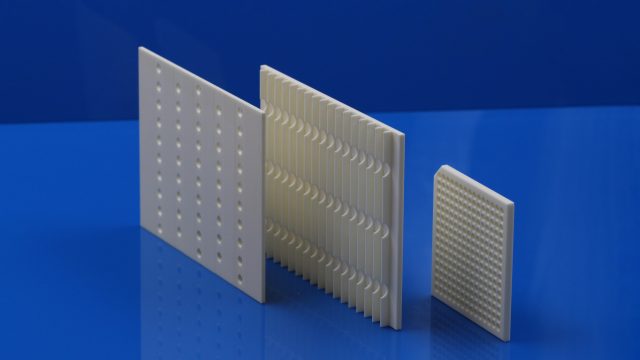
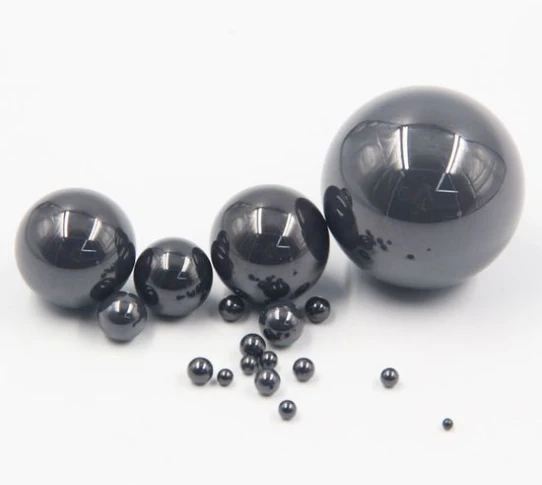
In powder metallurgy, ceramics are often more suitable than metals, graphite, or conventional refractory materials for critical applications involving high temperatures, molten metal, severe corrosion, powder contamination control, and the production of high-precision structural components.
The powder metallurgy production chain comprises:
Metal melting → Atomization → Powder processing → Pressing/Forming → Debinding/Sintering → Heat treatment → Post-processing
Ceramic components are primarily utilized in the melting, atomization, sintering, and heat treatment stages.
I. Why Does Powder Metallurgy Require Ceramics?
The core reason can be summarized as follows:
Ceramics can simultaneously address the challenges of high temperatures, corrosion, contamination-free operation, dimensional stability, and wear resistance—requirements that ordinary metallic materials can typically only partially satisfy.
1. High-temperature stability
Powder metallurgy involves numerous high-temperature processes:
- Metal melting: Typically ranging from several hundred to over 1,700°C
- Gas atomization: High-speed spraying of molten metal
- Vacuum sintering: Approximately 1,000–1,600°C
- Special alloy sintering: Potentially higher temperatures
- Production of ceramics, cemented carbides, and superalloys: Even higher temperatures
At high temperatures, ordinary steels are prone to:
- Softening
- Creep
- Oxidation
- Corrosion
- Dimensional changes
In contrast, engineering ceramics—such as alumina, zirconia, silicon nitride, silicon carbide, and boron nitride—maintain excellent performance characteristics within these temperature ranges.
II. Why Not Use Metal?
This is one of the key competitive factors for powder metallurgy ceramic components.
| Comparison Item | Metal | Ceramic |
|---|---|---|
| High-temperature strength | Drops significantly at high temperatures | Ceramics remain stable at high temperatures |
| High-temperature oxidation | Prone to oxidation | Most ceramics are stable |
| Molten metal corrosion | Some metals are susceptible to erosion/corrosion | More corrosion-resistant |
| Reaction with molten metal | Reactions will occur | Low-reactivity |
| Thermal expansion | Relatively high | Low |
| Electrical insulation | Conductive | Insulating |
| Wear resistance | Average to excellent | Excellent performance |
| High-temperature dimensional stability | Average | Excellent |
| Powder contamination | Causes metal contamination | Minimizes metal contamination |
| High-temperature vacuum environment | Some suffer from volatilization / outgassing | Suitable for vacuum use |
Contamination control is particularly critical for high-purity metal powders, 3D printing spherical powders, and cemented carbide materials.
III. Why Not Use Graphite?
Graphite is a common alternative material in powder metallurgy fixtures. Its advantages include high-temperature resistance, relatively low cost, ease of machining, and good thermal shock resistance.
However, graphite presents significant limitations in critical metallurgical environments:
1. Carbon contamination
If the materials being produced include high-purity alloys, nickel-based superalloys, titanium alloys, specialty stainless steels, or advanced MIM components, the migration of carbon into the melt alters final alloy chemistry and degrades mechanical integrity.
2. Reaction with reactive metals
Graphite easily reacts with active metal elements, forming carbides that damage both the fixture and the alloy purity.
3. Oxidation vulnerability
Graphite rapidly oxidizes in atmospheres containing oxygen or trace moisture at elevated temperatures.
Therefore, where carbon pickup cannot be tolerated, high-temperature ceramics replace graphite. In particular, boron nitride ceramics, alumina, zirconia ceramics, and silicon nitride ceramics offer indispensable value.
IV. Why Not Use Ordinary Refractory Materials?
The disadvantages of conventional refractory ceramics include:
- High impurity levels leading to powder contamination
- High porosity and rough surface finish
- Low dimensional accuracy and wide tolerances
- Insufficient high-temperature mechanical strength
- Particle shedding under molten metal erosion or thermal cycling
Modern powder metallurgy equipment requires components with high thermal shock resistance, tight dimensional precision, fine surface finishes, and extended service lifetimes. Precision-machined advanced technical ceramics fulfill these rigorous criteria where coarse refractories fail.
V. In Which Powder Metallurgy Steps Are Ceramics Most Essential?
| Ceramic Material | Key Powder Metallurgy Applications | Typical Components | Key Performance Characteristics |
|---|---|---|---|
| Boron Nitride (BN) | Molten metal handling, gas atomization | Atomization nozzles, break rings, crucibles, melt delivery tubes | Non-wetting to melt, superior thermal shock resistance, easy precision machining |
| Zirconia (ZrO₂) | Melt spraying, wear-prone flow guidance | Atomization nozzle inserts, metering nozzles, valve seats | Exceptional fracture toughness, erosion resistance, high molten-metal corrosion resistance |
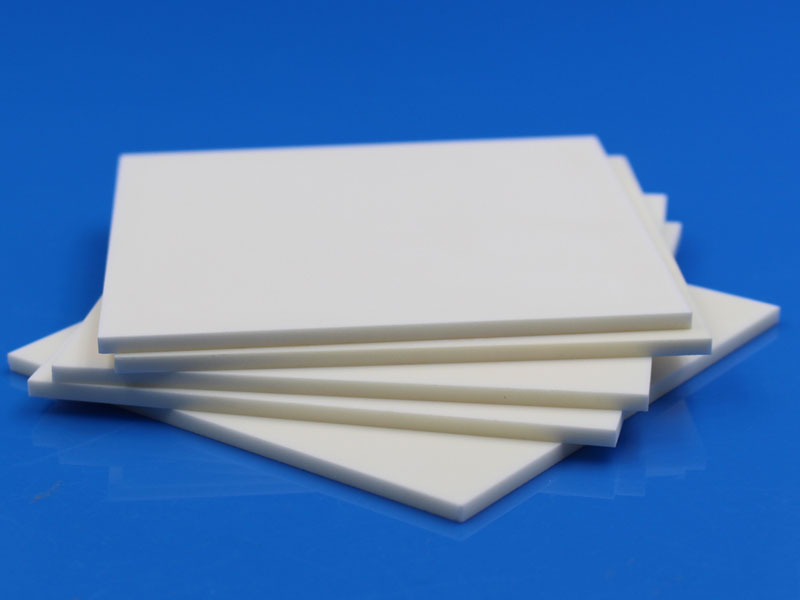
| Alumina (Al₂O₃) | High-temperature sintering, furnace thermal barriers | Ceramic setter plates, sintering boats, furnace tubes, electrical insulators | Cost-effective thermal stability, high volume resistivity, oxidation resistance |
| Silicon Carbide (SiC) | High-load sintering structures, furnace internals | Kiln beams, support rollers, load-bearing pillars, saggers | High mechanical strength at extreme temperatures, superior creep resistance, high thermal conductivity |
| Silicon Nitride (Si₃N₄) | Precision structural tooling, rapid thermal cycling | Positioning pins, roller guides, high-wear bearings, welding sleeves | Unmatched thermal shock resistance, high mechanical toughness, anti-spalling |
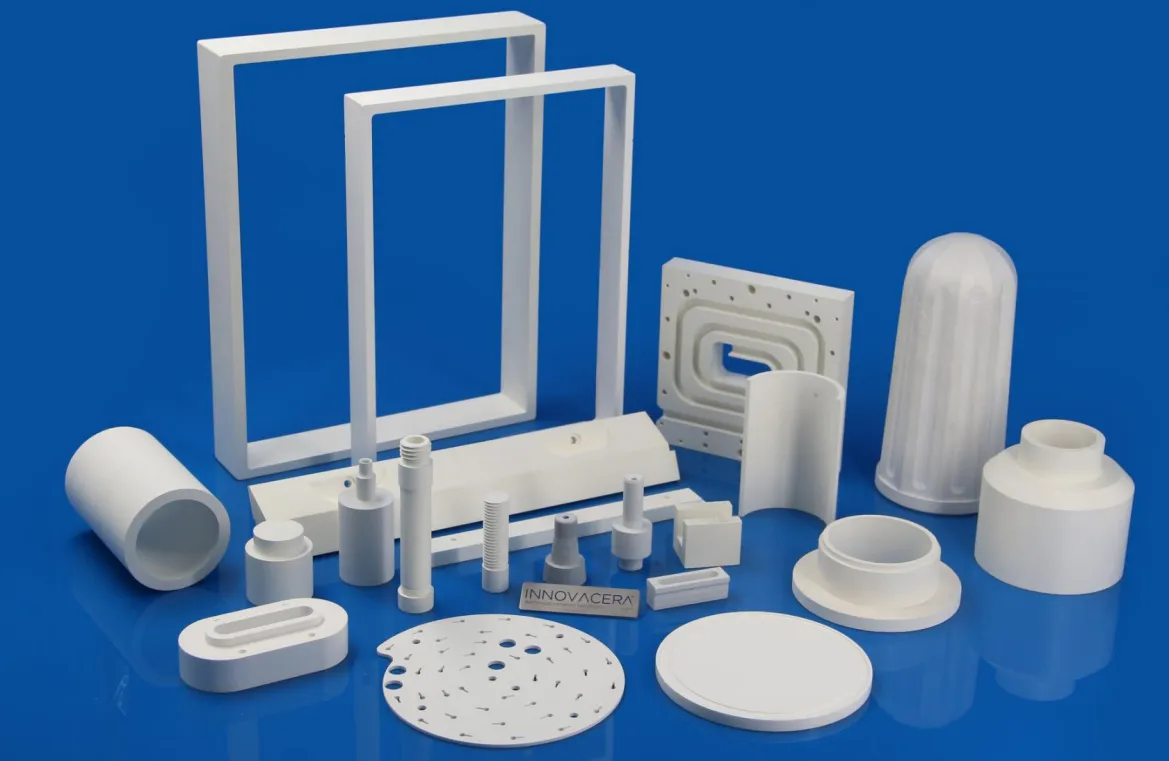
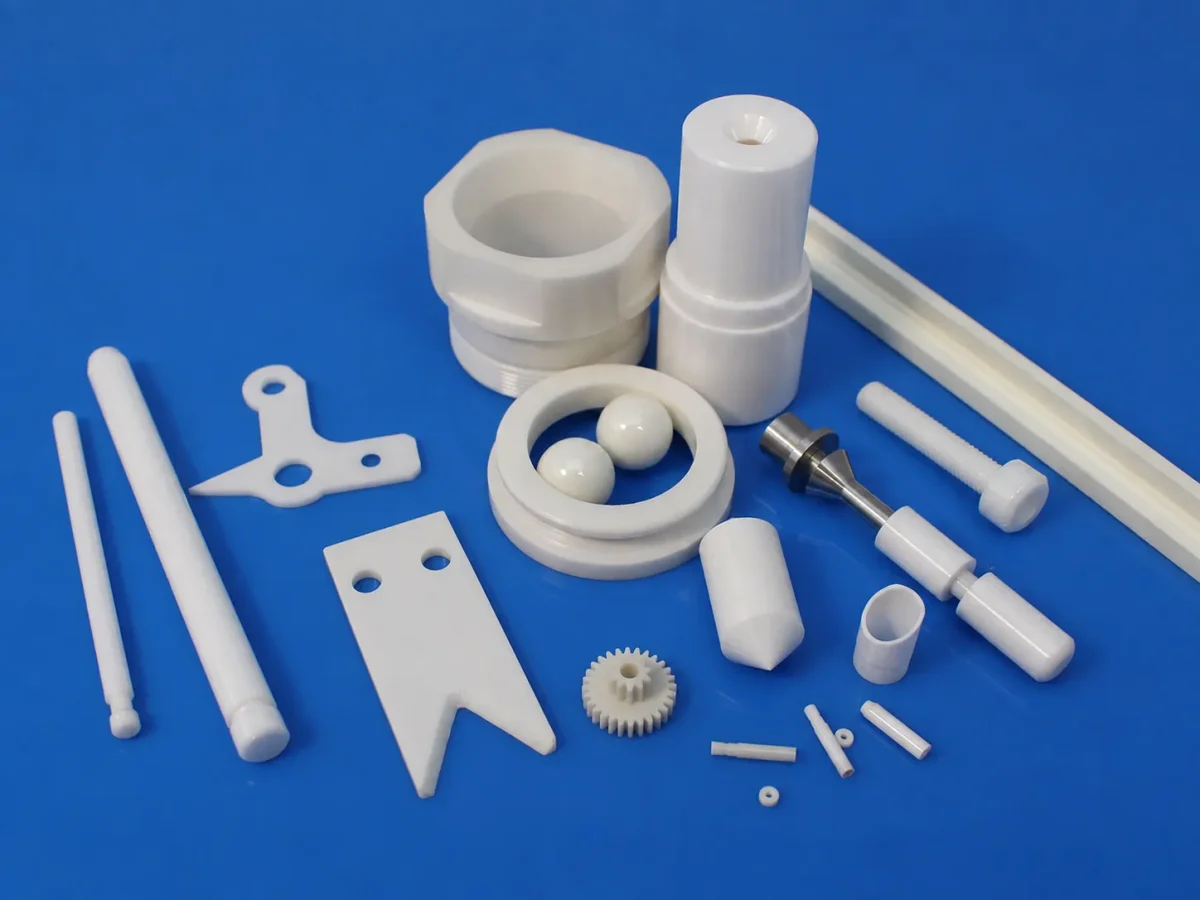
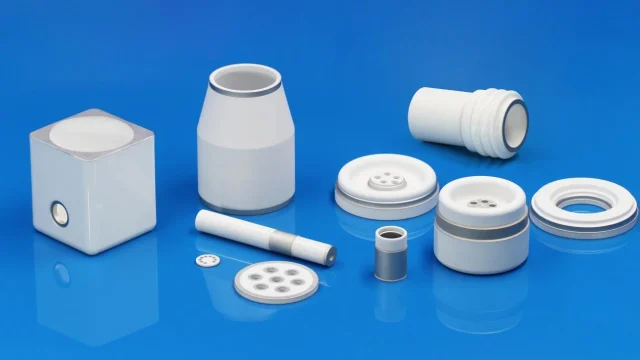
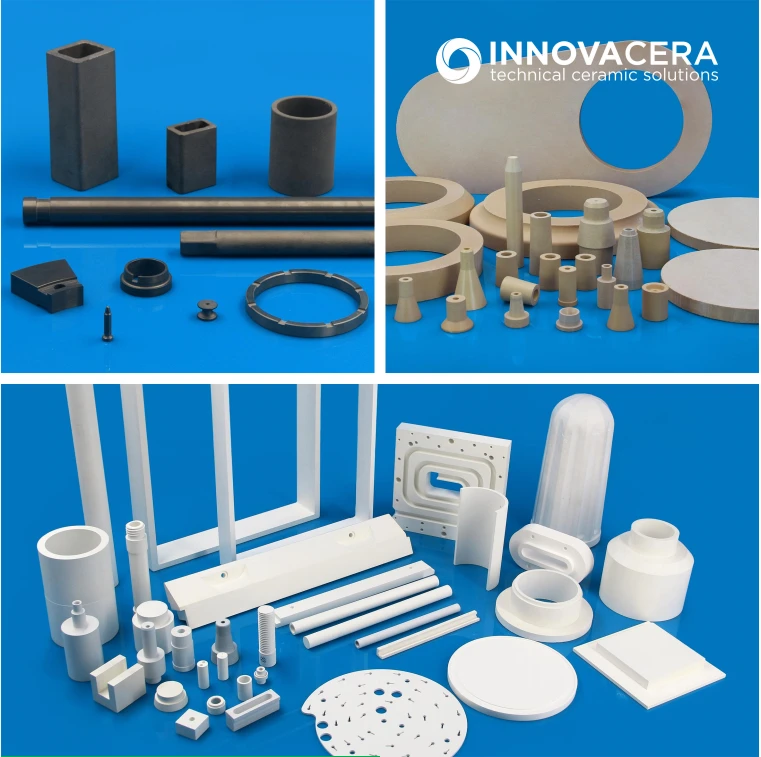
Precision Powder Metallurgy Ceramics from INNOVACERA
INNOVACERA specializes in engineering and manufacturing advanced ceramic components for demanding powder metallurgy and additive manufacturing processes. From non-wetting boron nitride gas atomization nozzles to high-flatness ceramic setter plates for vacuum debinding and sintering, we provide customized solutions tailored to your furnace temperatures, atmosphere chemistry, and dimensional tolerances.
For technical inquiries or custom component evaluations, please contact our engineering team at sales@innovacera.com.