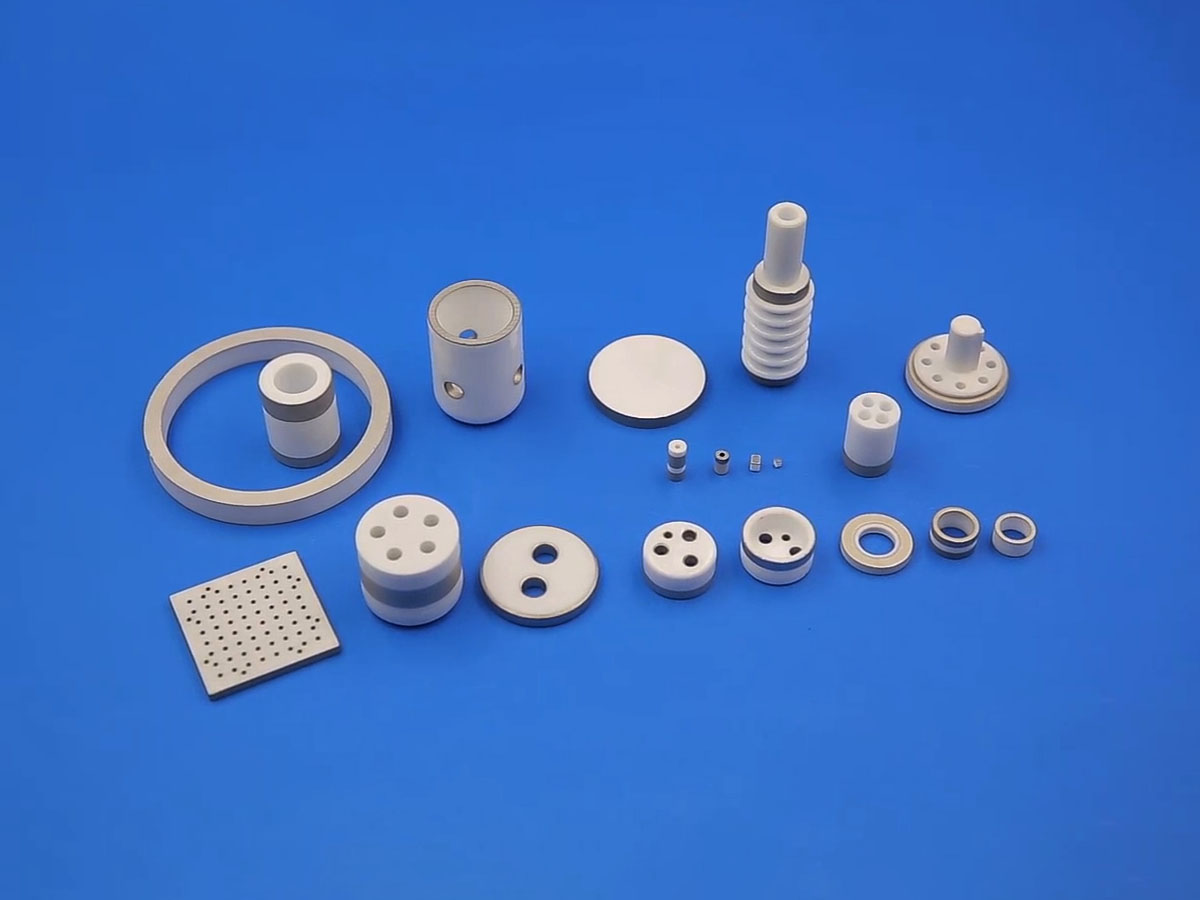
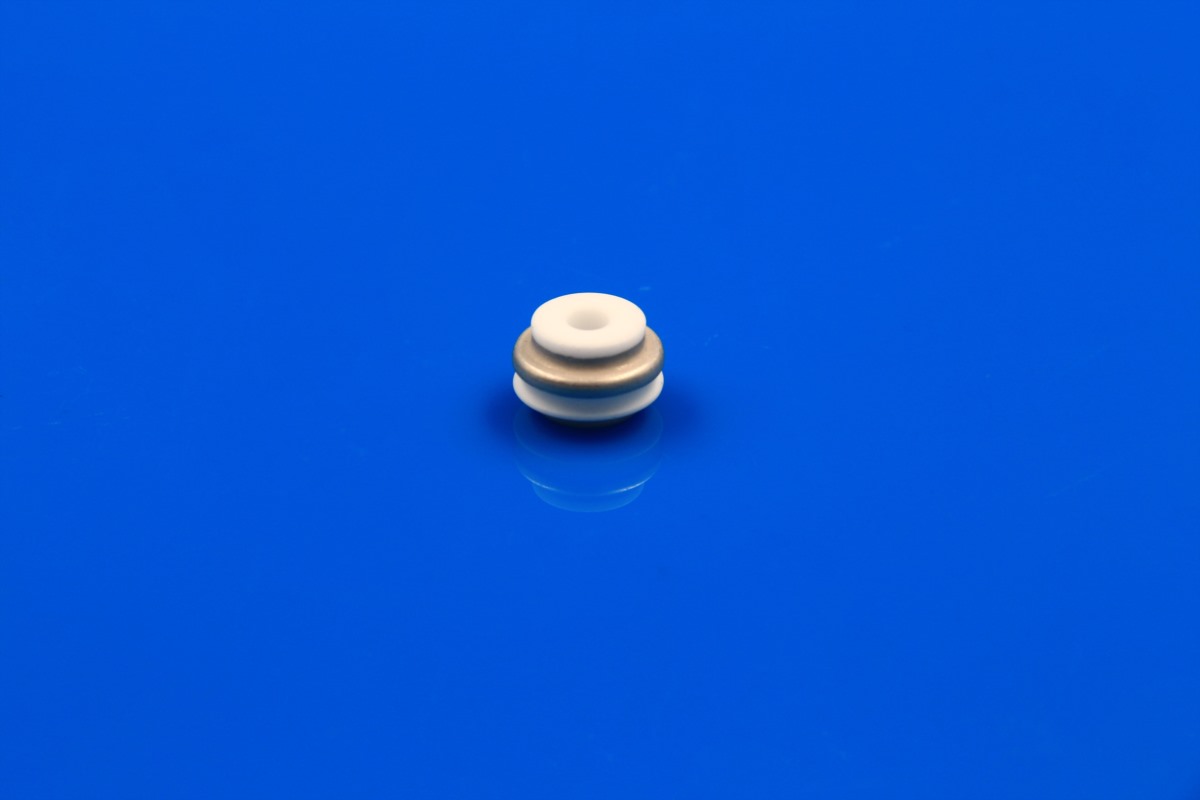
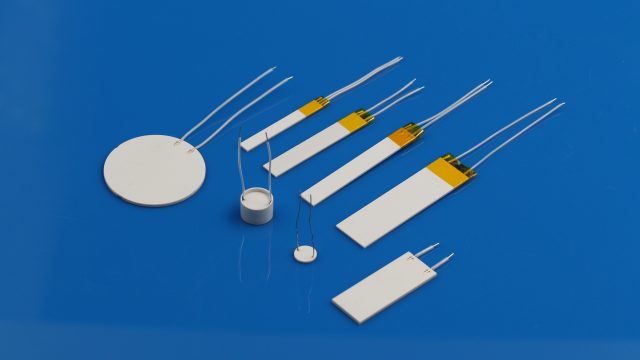
When brazing alumina ceramics to metal parts, Mo-Mn metallization plus nickel plating is a standard surface treatment. The process first creates a Mo-Mn metallized layer on alumina, then adds a nickel coating on top. The ceramic and metal are then joined by brazing.
People new to this process often ask: if Mo-Mn already metallizes the ceramic surface, why add nickel plating? These two layers have separate jobs. The Mo-Mn layer bonds to the ceramic and forms the metallized base. The nickel layer protects this metallized surface and improves brazing between ceramic and metal.

1. Mo-Mn metallization is intended to enable ceramic materials to meet the conditions required for metal bonding.
Alumina delivers good electrical insulation and thermal resistance, but unlike metals, its surface cannot be brazed directly. Most ceramic‑to‑metal seals and brazed assemblies require prior surface metallization of the ceramic.
Mo‑Mn is a common metallization option for alumina. When processed correctly, the Mo‑Mn layer bonds firmly to alumina, forming a foundation for plating and ceramic‑metal joining. Mo‑Mn metallization is not just depositing a metal film; its main purpose is to create a robust metallized interface on ceramic. Without a proper metallized layer, standard brazing cannot form reliable joints between ceramics and metal parts.
2. Why is nickel plating still required on Mo-Mn?
Once Mo-Mn metallization is finished, the surface has to be ready for brazing — and this is where nickel plating matters most. Nickel shields the Mo-Mn layer and provides a braze-friendly metal surface.
Brazing requires the filler alloy to wet and spread over mating surfaces to form sound joints. Joint quality depends on surface condition, metal chemistry and brazing-alloy compatibility. Nickel plating modifies the top surface of Mo-Mn metallization to work well for brazing.
Mo-Mn and nickel handle distinct tasks with no redundant overlap. To put it simply: Mo-Mn builds the metallized interface onto ceramic, while nickel protects and optimizes that interface for metal joining.
For hermetic vacuum parts, insulating feedthroughs and other precision ceramic-to-metal assemblies, performance does not hinge on one single metal layer. What counts is a stable, continuous bond across ceramic, Mo-Mn layer, nickel plating, braze filler and metal counterpart.
3. Is it better for the nickel layer to be thicker?
No, that’s not the case. The thickness of the nickel layer needs to be determined based on the specific product and subsequent processes, and it cannot be simply assumed that a thicker layer will be more reliable.
In actual projects, factors such as the Mo-Mn metallization area, nickel layer thickness, brazing filler type, mating metal materials, brazing temperature and atmosphere need to be considered simultaneously. If the product also has requirements for gas tightness, electrical performance, dimensional accuracy, etc., these factors also need to be included in the process evaluation.
Especially for precision ceramic-metal components, metallization and plating are not independent processes. For example, for the same alumina ceramic, if the subsequent connection is with Kovar alloy, stainless steel or other metals, the brazing filler and brazing process may be different, and the requirements for metallization and nickel layer may also change accordingly.
Therefore, when determining the thickness of the nickel layer, a more reasonable approach is to determine it from the perspective of the final connection structure rather than setting a fixed value for the nickel layer alone.
4. The metallization of Mo-Mn and nickel plating need to be considered in conjunction with the entire brazing process.
From the perspective of the complete ceramic-metal connection structure, it can be understood as:
Al2O3 ceramic → Mo-Mn metallization layer → nickel layer → brazing filler → metal part
Here, alumina ceramic provides electrical insulation and mechanical support. The Mo-Mn layer creates the metallized interface on the ceramic surface. Nickel plating further conditions this metallized surface to create a suitable interface for brazing. The brazing filler then joins the ceramic piece to the metal component.
There is no universal answer to why nickel plating is needed after Mo-Mn metallization — it always depends on the actual application scenario. What really needs to be determined is what kind of interface and process conditions are needed for the entire ceramic-metal connection structure. For different ceramic materials, metal parts, brazing fillers, and usage environments, the metallization and plating schemes may vary.
INNOVACERA can provide metallized Al2O3 ceramic parts and ceramic-metal brazed components based on customer drawings and specific application requirements, and conduct scheme evaluation by combining ceramic materials, Mo-Mn metallization, a nickel layer, and subsequent brazing processes.
Email: sales@innovacera.com