Against the backdrop of semiconductor manufacturing, vacuum optical experiments, and high-end industrial equipment continuously advancing toward higher precision and stability, internal system signal transmission methods are undergoing significant upgrades. Particularly in high-vacuum and ultra-high-vacuum (UHV) environments, achieving stable, leak-free, and low-loss optical signal introduction and transmission has become one of the key technical challenges.
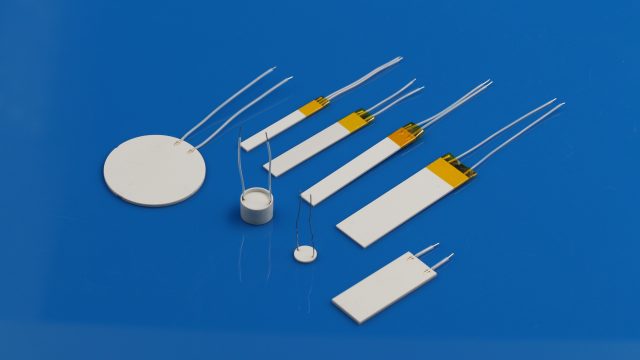
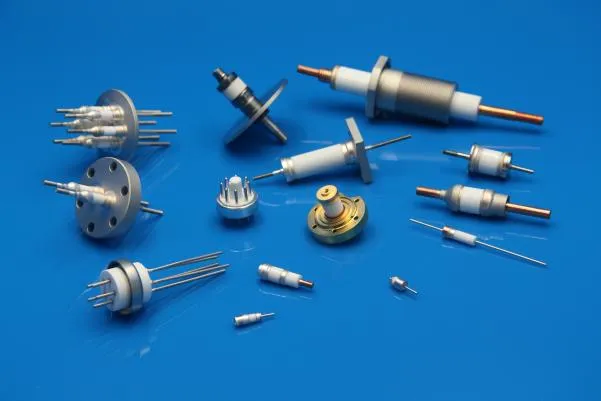
Ceramic-to-metal brazing technology, as an advanced hermetic sealing solution, is becoming a key foundational process for high-reliability vacuum electronic and optical components. Among these applications, optical fiber vacuum feedthroughs represent a significant example of this technology in the field of precision optical transmission.
I. Technical Challenges in High-Vacuum Optical Signal Transmission
Traditional vacuum system designs face significant hurdles when routing fiber-optic signals from atmospheric environments into vacuum chambers.
First, vacuum applications require rigorous sealing performance. Even tiny air leaks can compromise overall system stability or cause chamber failure. Second, optical fibers are inherently sensitive to mechanical stress. Feedthrough installation through chamber walls easily induces micro-bending or structural damage, resulting in degraded optical signal quality.
Furthermore, advanced equipment including semiconductor processing tools, laser detection systems and plasma reaction chambers must endure continuous temperature fluctuations, mechanical vibration, and demanding long-term operational reliability.
Therefore, traditional rubber seals or simple metal compression structures can no longer meet the demands of modern high-end vacuum systems.
II. Core Advantages of Ceramic-Metal Brazing Sealing Technology
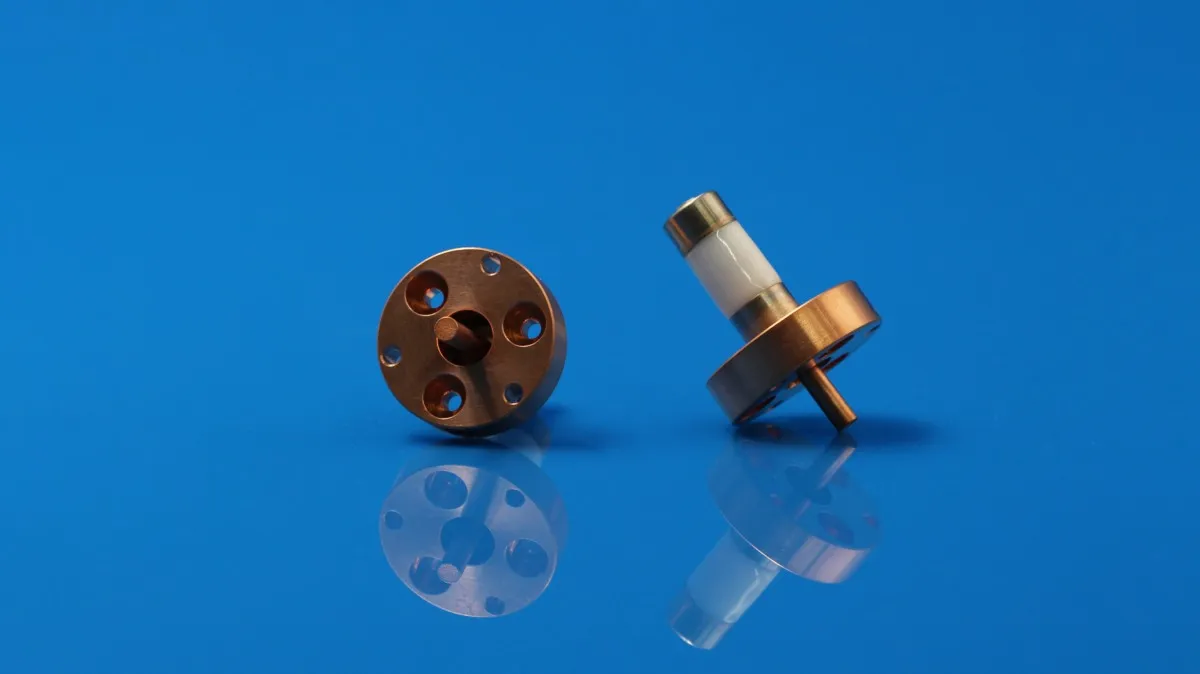
The ceramic-metal brazing sealing structure achieves a metallurgical-level bonding between the ceramic material and the metal structure through a high-temperature brazing process, thereby forming a stable and reliable airtight connection interface.
Its main advantages include:
1. High gas-tight structure
The brazing sealing interface can achieve long-term stable vacuum sealing performance and is suitable for high vacuum and ultra-high vacuum environments.
2. Thermal Expansion Matching Design
By optimizing the matching relationship between ceramic and metal materials, thermal stress can be effectively reduced, thereby enhancing the structural reliability.
3. High mechanical strength and environmental adaptability
It possesses excellent high-temperature resistance, corrosion resistance and vibration resistance properties, and is suitable for complex industrial conditions.
4. Long-term operational stability
Compared to traditional sealing methods, the brazing sealing structure demonstrates a significantly lower failure risk during long-term operation.
III. Structural Design Characteristics of Optical Fiber Vacuum Feedthrough Components
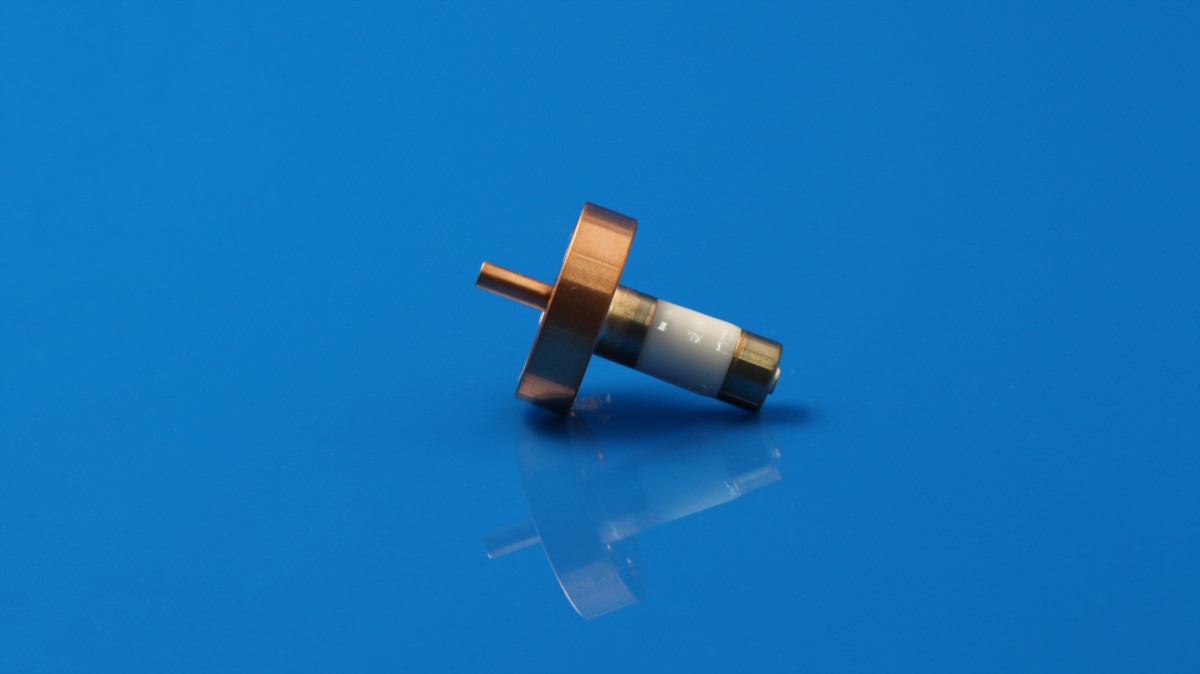
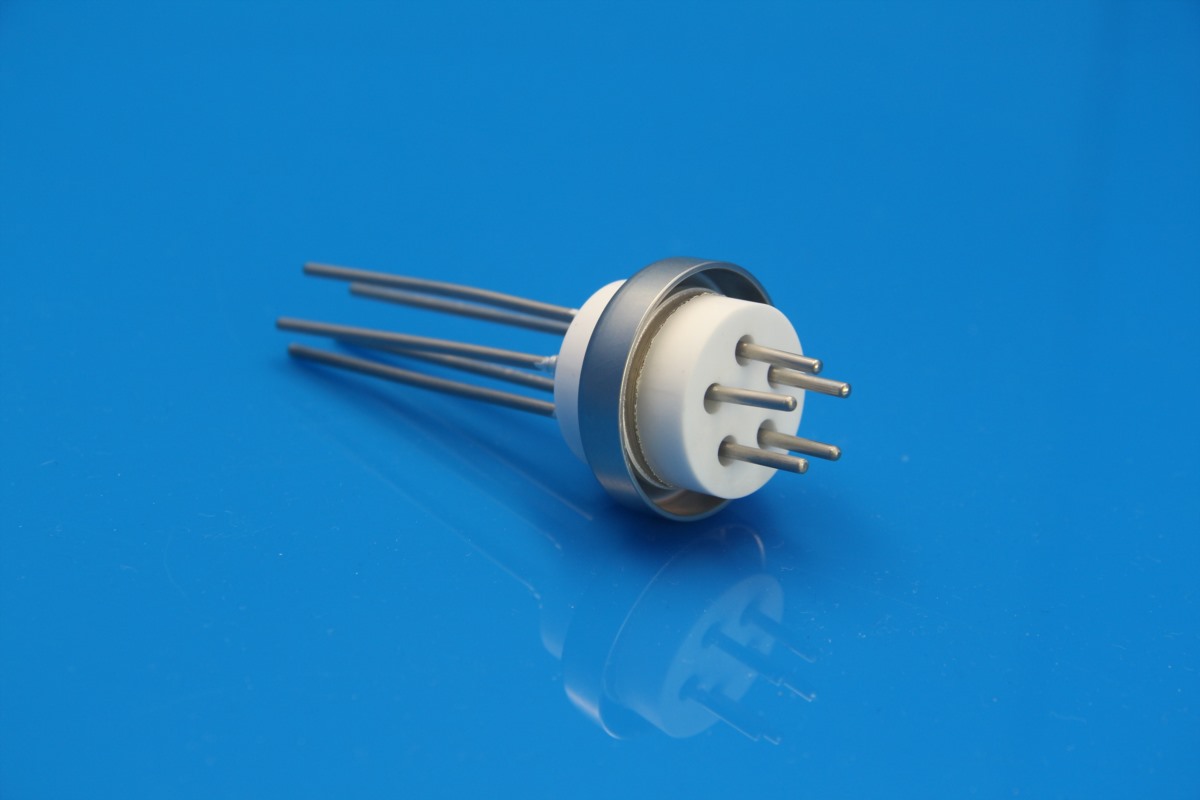
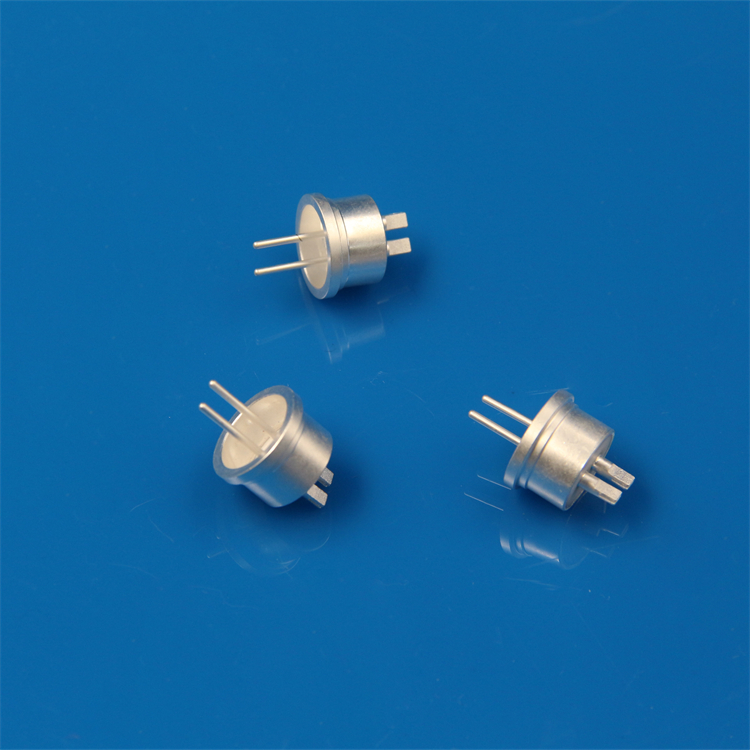
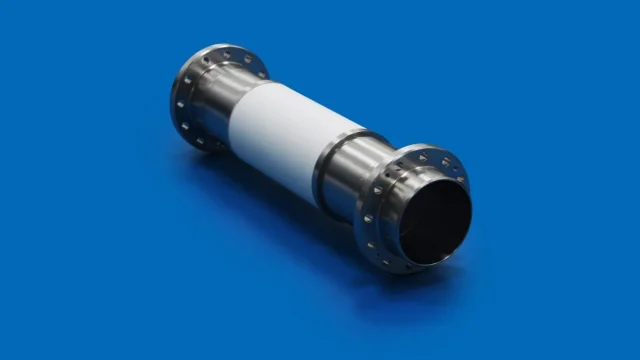
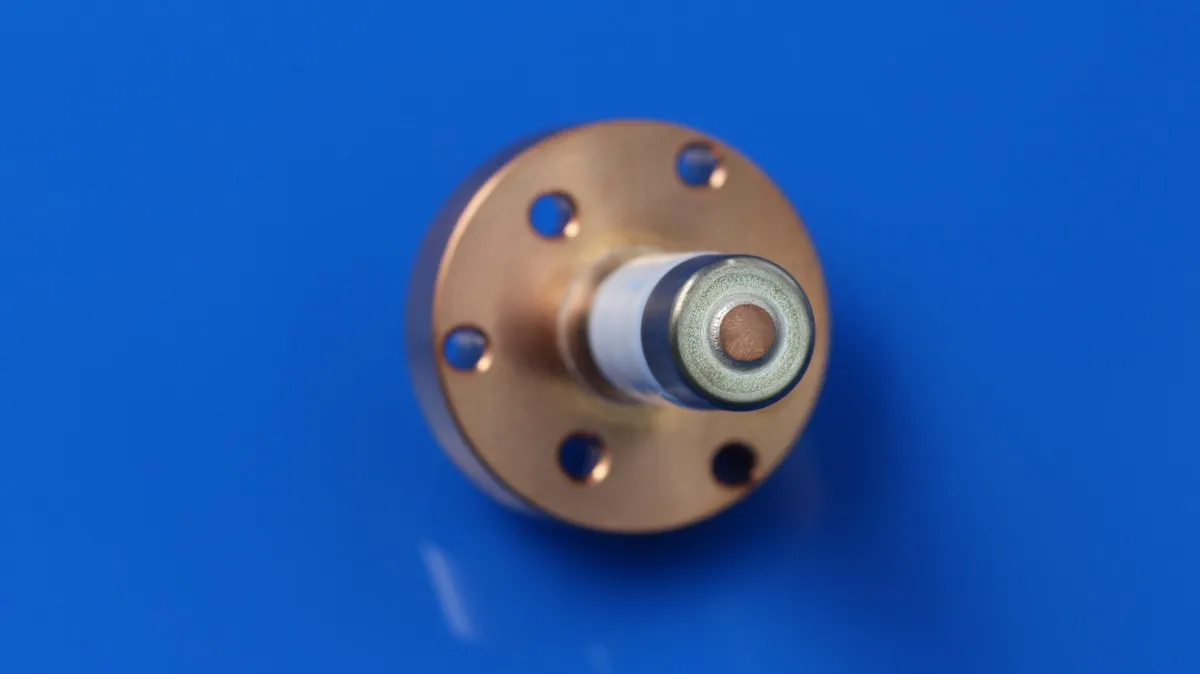
The optical vacuum feedthrough component based on ceramic-metal brazing sealing technology achieves the integration of optical transmission and vacuum isolation through precise structural design.
Its core structure usually consists of:
• High-strength ceramic insulator (for achieving a core airtight barrier)
• Metal flange structure (for system integration and mechanical fixation)
• Precise optical fiber alignment channel (to ensure low-loss signal transmission)
• Soldering sealing interface (for achieving a permanent airtight connection)
This structure not only ensures the integrity of the vacuum but also guarantees that the optical signal can pass through the encapsulation interface stably without significant attenuation.
IV. Typical Application Domains
This type of ceramic-metal brazed optical fiber vacuum feedthrough components is widely used in high-end technical fields, including:
• Semiconductor manufacturing equipment
Used for etching (Etching), deposition (Deposition), and vacuum chamber monitoring systems, achieving optical detection and process feedback.
• High vacuum optical and laser system
Used for laser diagnosis, optical measurement and high-precision optical path introduction system.
• Plasma and Vacuum Experiment Device
Suitable for complex plasma reaction chambers and research-grade vacuum equipment.
• Thin film deposition and vacuum coating system
Used for process monitoring and optical signal acquisition, improving process control accuracy.
V. Summary of Technical Advantages
Compared with the traditional vacuum signal introduction method, this product series has the following advantages:
• Excellent vacuum sealing reliability
• Stable low-loss transmission performance of optical signals
• Suitable for high vacuum and ultra-high vacuum environments
• Strong resistance to thermal shock and long-term operational stability
• Compatible with semiconductor and high-end research equipment requirements
VI. Industry Insights: Development Trends of High Vacuum Optics and Advanced Packaging Technologies
As semiconductor and high-end vacuum equipment continue to evolve towards higher integration and greater reliability, the demand for stable transmission of optical signals in a vacuum environment is continuously increasing.
01 Trend of Multi-functional Vacuum System Integration
Modern equipment is moving from single process chambers to multi-functional integrated platforms, placing higher demands on optical detection and signal transmission interfaces.
02 Ceramic-Metal Bonding Becomes a Key Packaging Method
Due to its excellent airtightness and long-term stability, ceramic-metal brazing has become an important technical route for high-reliability vacuum packaging.
03 Expansion of Optical Detection Applications in Vacuum Equipment
The application of optical fibers in semiconductor manufacturing, plasma systems, and research equipment continues to increase, driving the standardization of vacuum optical interfaces.
VII. Conclusion
Ceramic-metal brazing sealing of optical vacuum feedthrough components is a key component in high-end vacuum and optical systems. By integrating advanced ceramic materials with precise sealing technology, and through ceramic-metal brazing and fiber integration design, it achieves stable and low-loss optical signal transmission in high vacuum and ultra-high vacuum environments. Innovacera offers customized ceramic-metal brazing components. Please contact us for more information by sales@innovacera.com.