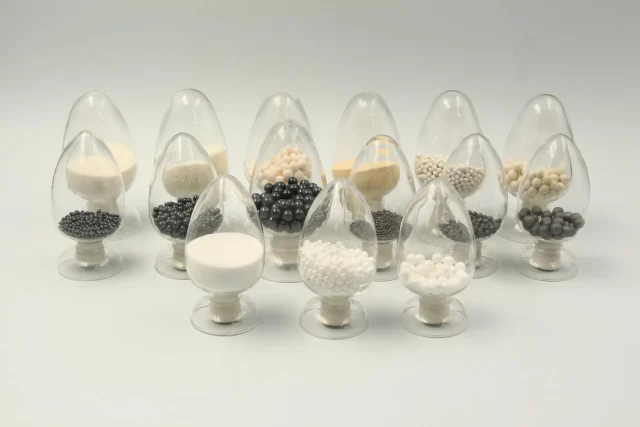
For lithium battery material manufacturers, selecting grinding media is not simply a question of choosing the hardest or highest-purity ceramic bead.
The wrong grinding media can increase wear, introduce unwanted impurities, extend milling time, affect particle-size distribution or create problems with the bead mill separator.
For cathode materials, anode materials, conductive additives and other high-value battery powders, engineers and purchasing teams therefore need to evaluate several factors together: bead material, bead size, density, wear rate, contamination risk, mill compatibility and batch consistency.
This guide explains how to evaluate zirconia grinding beads for lithium battery material processing and what information should be confirmed before approving a supplier.
Why Are Zirconia Grinding Beads Used for Battery Materials?
Fine and ultra-fine grinding of battery materials places demanding requirements on the grinding media.
During wet milling, millions of contacts occur between the media, slurry and internal mill components. Media wear therefore becomes part of the contamination-control problem.
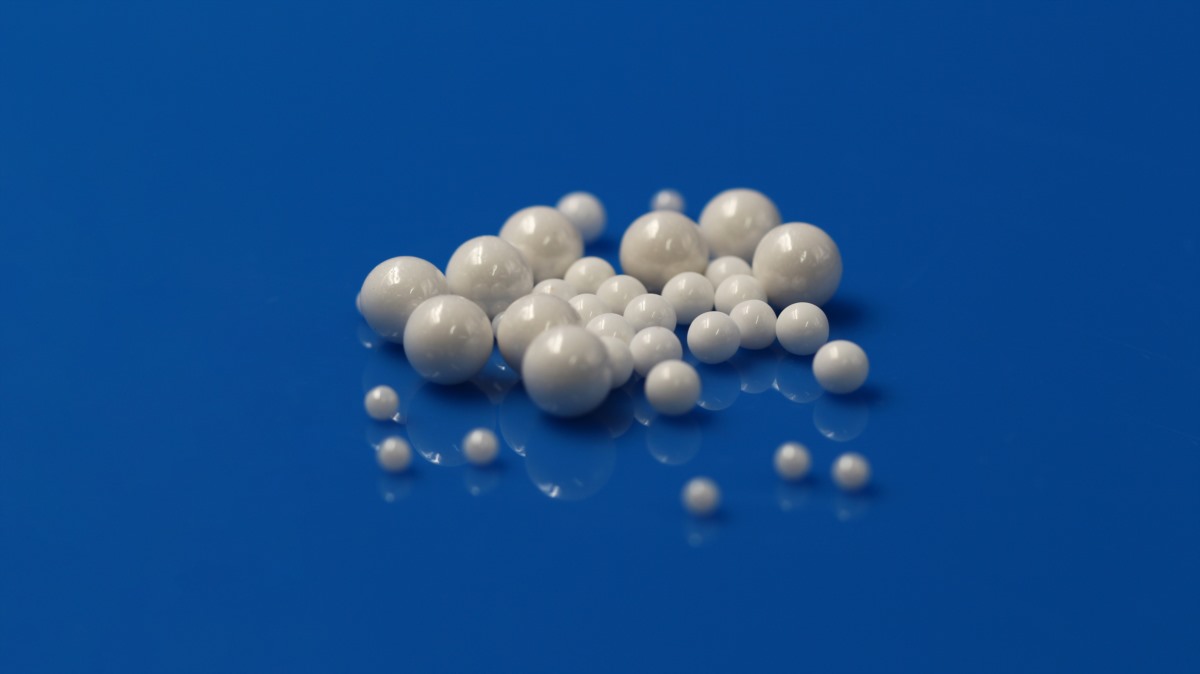
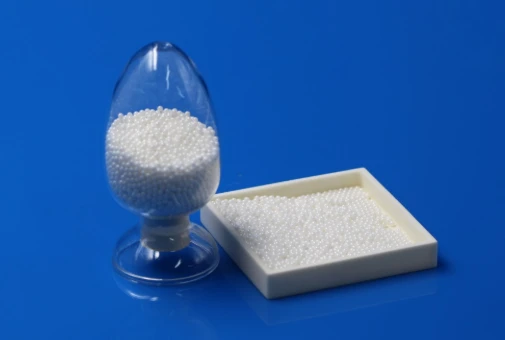
Zirconia grinding beads are commonly considered for battery-material processing because their relatively high density provides effective energy transfer, while their good wear resistance helps limit media-related contamination during extended milling.
Typical applications include:
- Lithium iron phosphate (LFP)
- NCM/NCA and other cathode materials
- Graphite and silicon-carbon anode materials
- Conductive additives
- Ceramic coating powders
- Advanced energy-storage materials
However, simply specifying “zirconia beads” is not enough. Different zirconia compositions, bead sizes and manufacturing qualities can produce very different results in the same grinding process.
1. Start with the Material Being Ground
The first question should not be:
“What is your highest-purity zirconia bead?”
It should be:
“What material are we grinding, and what result do we need?”
Before selecting grinding media, engineers should define:
- Material composition
- Initial particle size
- Target D50/D90
- Slurry solids content
- Slurry viscosity
- Water-based or solvent-based system
- Allowable contamination elements
- Required throughput
- Grinding time or number of passes
For example, a process intended primarily for dispersion may require a different bead size and operating condition from a process intended to reduce relatively coarse particles to submicron sizes.
2. How Should Zirconia Bead Size Be Selected?
Bead diameter is one of the most important parameters in grinding performance.
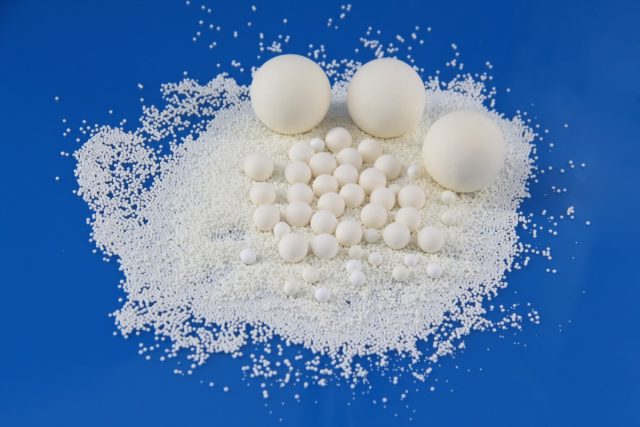
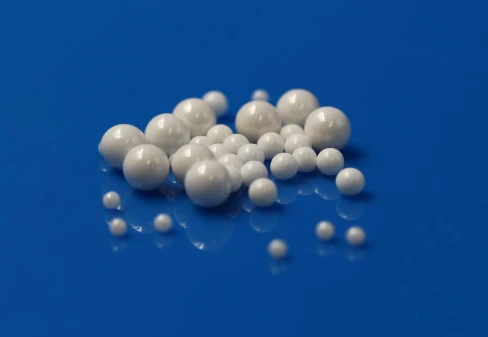
Smaller grinding beads provide more contact points within the same mill volume and are commonly used when finer particle sizes or dispersion are required.
Larger beads provide greater impact energy per bead and may be more appropriate for larger initial particles or preliminary grinding.
However, using the smallest available bead is not automatically better.
Very small beads may create several practical issues:
- Insufficient impact energy for relatively coarse particles
- Increased separator requirements
- Greater sensitivity to mill design
- More difficult bead separation
- Changes in slurry temperature and operating conditions
The correct bead size therefore depends on the combination of initial particle size, target particle size, mill design and separator specification.
For production projects, laboratory or pilot-scale trials are recommended before changing bead size in a commercial grinding line.
3. Why Density Matters
Grinding-media density affects the kinetic energy transferred during milling.
Higher-density ceramic media can provide greater impact energy under comparable operating conditions.
This is one reason zirconia grinding media are widely evaluated for high-energy bead mills and fine grinding.
However, higher density is not automatically beneficial in every process.
Excessive impact energy may:
- Increase equipment wear
- Generate additional heat
- Change particle morphology
- Increase unnecessary energy consumption
The grinding medium therefore needs to be matched to both the powder and the equipment.
4. Contamination Control: Look Beyond “Purity”
For lithium battery materials, contamination control is often one of the most important selection criteria.
Purchasers frequently compare suppliers based on zirconia purity alone.
This is not sufficient.
Engineers should also evaluate:
- Actual chemical composition
- Stabilizer system
- Trace impurity levels
- Wear rate
- Bead breakage
- Surface quality
- Batch-to-batch consistency
Even a high-purity ceramic grinding medium will experience some wear.
Therefore, technically accurate supplier qualification should focus on how much contamination enters the material under defined grinding conditions, rather than accepting claims such as “zero contamination.”
Where impurity limits are critical, the ground material should be analyzed before and after the milling trial.
5. Check Bead Roundness and Surface Quality
Grinding-media geometry also affects process stability.
Poorly finished or irregular beads may:
- Increase bead-to-bead wear
- Produce unstable grinding behavior
- Increase the risk of fragmentation
- Affect mill separator operation
Purchasers should therefore ask suppliers for information relating to:
- Bead diameter tolerance
- Size distribution
- Sphericity or roundness
- Surface condition
- Broken bead rate where applicable
For continuous production, consistency between production lots is particularly important.
A single good sample does not necessarily demonstrate stable mass-production capability.
6. Confirm Compatibility with Your Bead Mill
Grinding media should always be evaluated together with the mill.
Before ordering, confirm:
- Bead mill type and model
- Grinding chamber material
- Separator type
- Minimum allowable bead diameter
- Recommended media filling ratio
- Operating speed
- Cooling capability
A bead that performs well in one grinding system may not provide the same results in another.
This is especially important when switching from larger to significantly smaller grinding beads.
7. Zirconia vs. Alumina Grinding Media
For some battery material processes, purchasers may evaluate both alumina and zirconia media.
The decision should not simply be based on purchase price.
Alumina grinding media can provide an economical solution for applications where contamination requirements are less stringent and very high grinding energy is not required.
Zirconia grinding media are generally considered when the process requires a combination of:
- Higher media density
- Fine or ultra-fine grinding
- Lower media wear
- More stringent contamination control
The most meaningful comparison is therefore total grinding cost, rather than price per kilogram of media.
This includes media consumption, grinding time, production throughput, product losses and contamination-related rejection risks.
8. What Should Be Tested During a Grinding Trial?
Before approving a new grinding-media supplier for mass production, a controlled trial is recommended.
The trial should ideally compare:
Before grinding
- Initial particle-size distribution
- Slurry condition
- Relevant impurity levels
After grinding
- D50/D90 or other target PSD values
- Grinding time
- Slurry temperature
- Media consumption
- Changes in key impurity elements
- Broken or abnormal beads
- Equipment or separator condition
Where possible, compare the new grinding media against the currently approved media under the same process conditions.
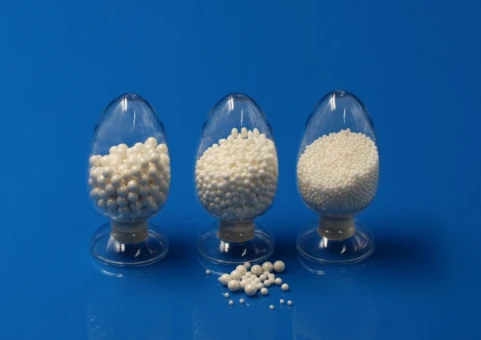
9. What Should Purchasing Teams Ask a Supplier?
A supplier qualification process should go beyond asking for price, purity and bead diameter.
Purchasing and engineering teams should request information such as:
Product Data
- Ceramic composition
- Stabilizer system
- Density
- Available bead sizes
- Size tolerance
- Wear data and test method
- Relevant impurity information
Quality Control
- Inspection method
- Batch traceability
- Lot-to-lot consistency controls
- Certificate of Analysis availability
Supply Capability
- Standard and customized sizes
- Sample availability
- Production capacity
- Lead time
- Change-control procedure
Suppliers should also be able to discuss grinding conditions rather than simply recommend the highest-priced grade.
Quick Supplier Qualification Checklist
Before approving zirconia grinding beads for lithium battery materials, confirm:
- Is the ceramic composition clearly specified?
- Is the bead size compatible with the mill separator?
- Has the bead been tested with the actual battery material?
- Is wear measured under defined test conditions?
- Have contamination levels been evaluated after milling?
- Is batch traceability available?
- Can the supplier maintain consistent specifications between lots?
- Can samples be provided before mass production?
Zirconia Grinding Media from INNOVACERA
INNOVACERA supplies ceramic grinding media for battery materials, advanced ceramics and other high-value powder-processing applications.
Rather than recommending grinding media based only on purity, we can evaluate the application according to the material being processed, target particle size, grinding equipment and contamination requirements.
For a faster technical evaluation, please provide:
Material being ground + current particle size + target particle size + mill model + current bead size + slurry system + contamination requirements.
Our team can then evaluate an appropriate grinding-media specification for sampling and process verification.