Digital inkjet inks have high requirements for particle fineness, particle size distribution, and dispersion stability. For ink systems containing pigments, ceramic powders, or other functional particles, wet grinding is necessary to further reduce particle size, minimize agglomeration, and maintain a relatively uniform dispersion state.
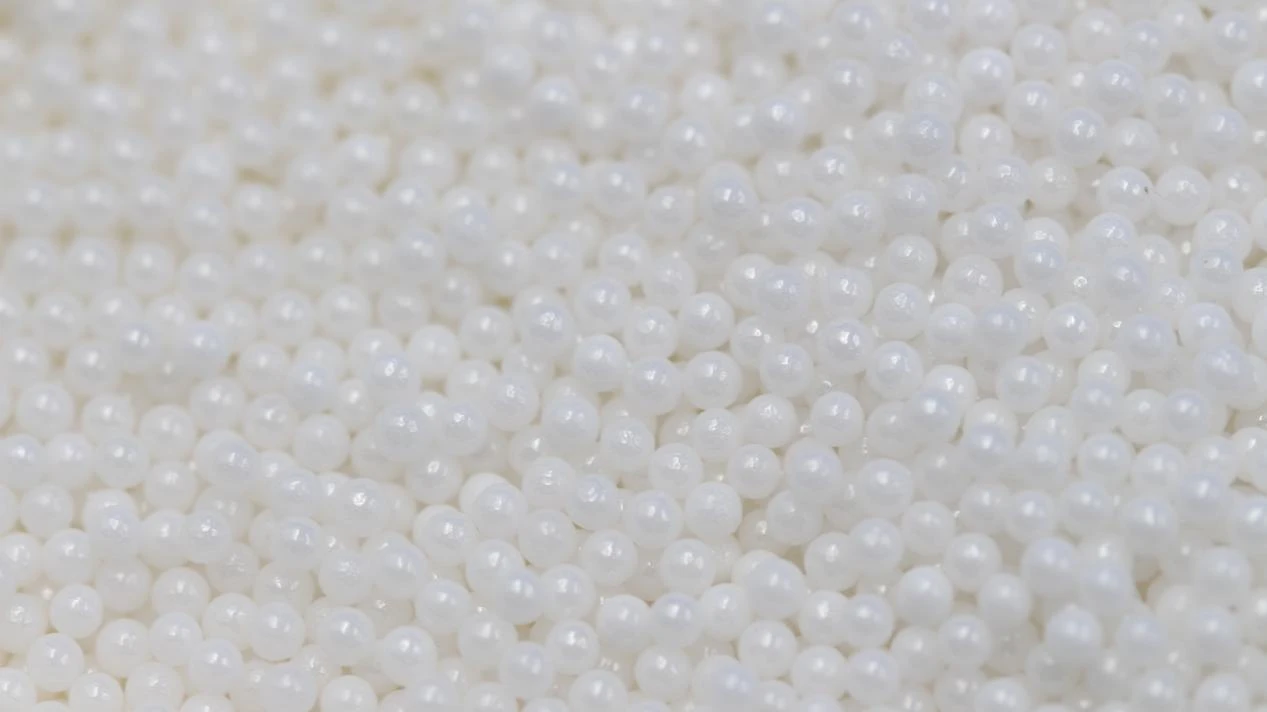
The selection of grinding media directly affects grinding efficiency, particle size distribution, media wear, and production stability. Zirconia beads, with their high density, hardness, and wear resistance, are suitable for wet grinding systems requiring fine grinding and dispersion. However, in practical production, no fixed bead size works universally for all digital inkjet inks. The choice among zirconia beads of 0.1 mm, 0.2 mm, 0.3 mm, and other sizes must be determined by comprehensively considering the material properties, target particle size, and grinding equipment.
1. Why Does Digital Inkjet Ink Require Fine Grinding?
For pigment-based digital inkjet inks, the original pigment particles may agglomerate during dispersion, necessitating further control of particle size and distribution through grinding and dispersion. Systems containing inorganic functional powders, such as ceramic inks, also require controlled particle characteristics according to the requirements of the subsequent inkjet process.
The presence of large particles or agglomerates in the system increases the difficulty of filtration and inkjet process control. During grinding, it is also essential to manage media wear to prevent impurities generated by abrasion from affecting ink quality. For such precision grinding applications, the grinding media must balance grinding efficiency, particle size distribution, dispersion performance, wear resistance, contamination control, and batch consistency.
This is one of the reasons why small-sized zirconia grinding beads have attracted significant attention.
2. Why Are Small-Sized Zirconia Beads Suitable for Fine Grinding?
When the volume of grinding media and other conditions are similar, reducing the bead size increases the number of grinding media particles per unit volume, thereby increasing the contact opportunities between the particles and the grinding media. For materials that have already been pre-dispersed and require further particle size reduction, smaller zirconia beads provide more frequent grinding interactions, making them commonly used in the fine grinding stage.
However, a smaller bead diameter does not necessarily mean better grinding performance. As bead size decreases, the mass of individual beads and the energy associated with each individual grinding interaction typically also decrease. If large particles or agglomerates are still present in the feed material, excessively small beads may not provide sufficient grinding action. Additionally, small-sized grinding beads impose higher demands on mill operating conditions and media separation systems.
The bead size therefore needs to be selected by balancing the number of media particles, contact frequency, and the grinding action provided by each bead.
3. How Should the Size of Zirconia Beads Be Selected for Digital Inkjet Ink?
In the grinding process of digital inkjet ink, 0.1 mm, 0.2 mm, and 0.3 mm zirconia beads can be considered as key sizes for evaluation, but not all digital inkjet inks are suitable for these sizes.
The actual selection should first consider the condition of the material as it enters the sand mill. If there are still large particles or agglomerates in the feed, it is necessary to consider whether the grinding beads can provide sufficient grinding action. If the material has already been pre-dispersed and the main task of the subsequent process is to further reduce the particle size, smaller grinding beads can be considered.
The target particle size is also an important reference factor. For more precise grinding requirements, if the equipment conditions permit, it is possible to gradually evaluate 0.3 mm, 0.2 mm, 0.1 mm, or other suitable sizes instead of directly choosing the smallest size.
It should be noted that 0.3 mm cannot simply be defined as “coarse grinding beads,” 0.2 mm as “fine grinding beads,” and 0.1 mm as “precision grinding beads.” The same bead size can produce significantly different grinding results when used with different materials and different sand mills.
4. When Choosing Small-Sized Zirconia Beads, the Sand Mill Also Needs to Be Considered
After determining the appropriate grinding bead size for a sand mill, it is equally important to check whether the equipment can operate reliably with that media size. The sand mill needs to have a separation system that is compatible with the size of the grinding media. Especially when using 0.1 mm or smaller grinding beads, it is necessary to confirm that the separation system can effectively retain the grinding media, preventing the beads from entering the product slurry while maintaining stable equipment operation.
When the size of the grinding beads changes, the operating parameters of the equipment may also need to be adjusted. Speed, media filling rate, slurry flow rate, grinding time, and temperature can all affect the final grinding result. A smaller target particle size does not necessarily mean that the smallest grinding beads compatible with the equipment should be selected.
In practice, the material condition, grinding bead size, and equipment capabilities need to be considered together, followed by process testing to determine the appropriate combination.
5. Besides Bead Diameter, What Else Should Be Considered When Selecting Zirconia Beads?
For precision grinding applications such as digital inkjet ink, bead diameter is only one part of grinding media selection.
Size consistency affects the stability of the grinding process. For small-sized grinding beads, a consistent size distribution helps maintain stable grinding conditions and facilitates compatibility with the media separation system of the equipment.
Sphericity and surface quality are also worth considering. Grinding beads need to remain stable during high-speed operation and continuous collisions. Good surface quality can help reduce abnormal wear and breakage.
Wear resistance is related to service life and contamination control. Digital inkjet inks can be sensitive to particle conditions and impurities, so wear of the grinding media itself needs to be taken into account when selecting the media.
In addition, compatibility between the grinding media and the material should be evaluated based on the specific ink system. Comparing hardness or density alone cannot determine whether a particular zirconia bead is suitable for a specific ink.
6. How to Determine the Right Grinding Bead Size Based on Target Particle Size and Equipment Conditions
When choosing grinding beads for digital inkjet ink, it is not advisable to start by selecting a fixed bead diameter. A more practical approach is to determine the appropriate media size based on the actual process requirements.
The material type, incoming particle condition, and presence of agglomerates should be evaluated first. The target particle size and particle size distribution requirements should then be defined, along with the grinding media sizes supported by the sand mill and its media separation capability.
Once these conditions are clear, different bead sizes and materials can be tested and compared. The final grinding effect is not determined by bead diameter alone. Factors such as material properties, initial particle size, solid content, dispersion system, equipment type, energy input, media filling rate, slurry flow rate, grinding time, and temperature can all affect the results.
The key question in digital inkjet ink grinding is therefore not simply “0.1 mm or 0.2 mm?” but which grinding bead specification can provide the appropriate grinding efficiency, particle size control, and production stability under the given material, target particle size, and equipment conditions.
7. INNOVACERA Grinding Beads
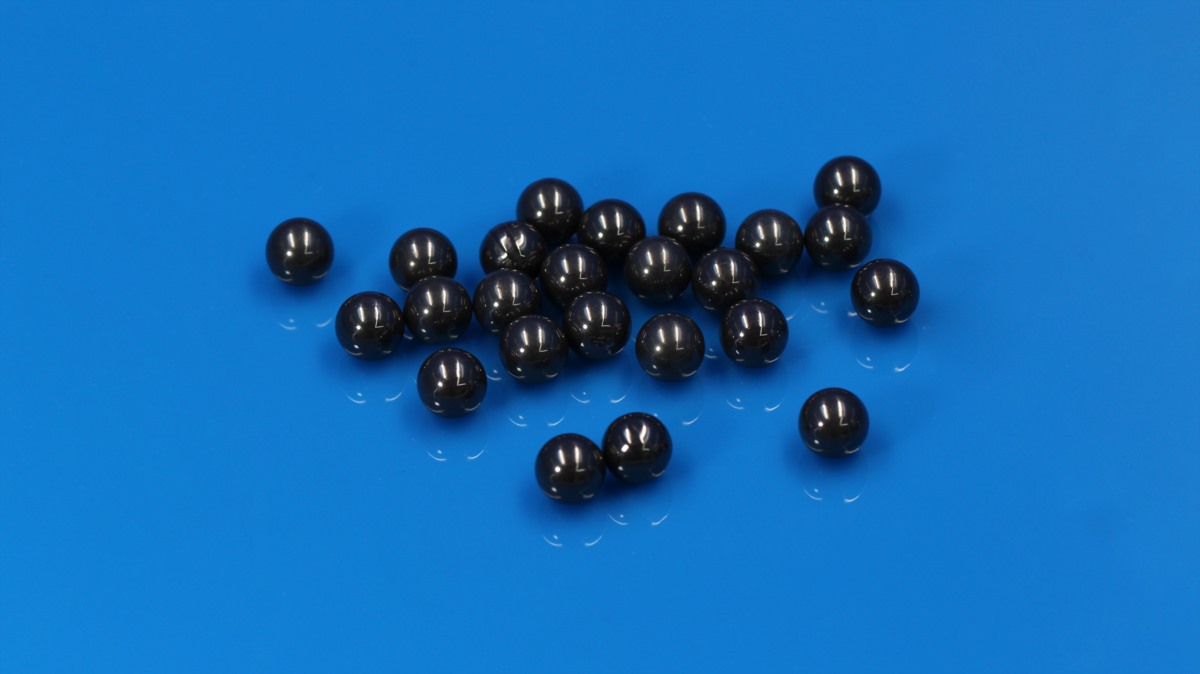
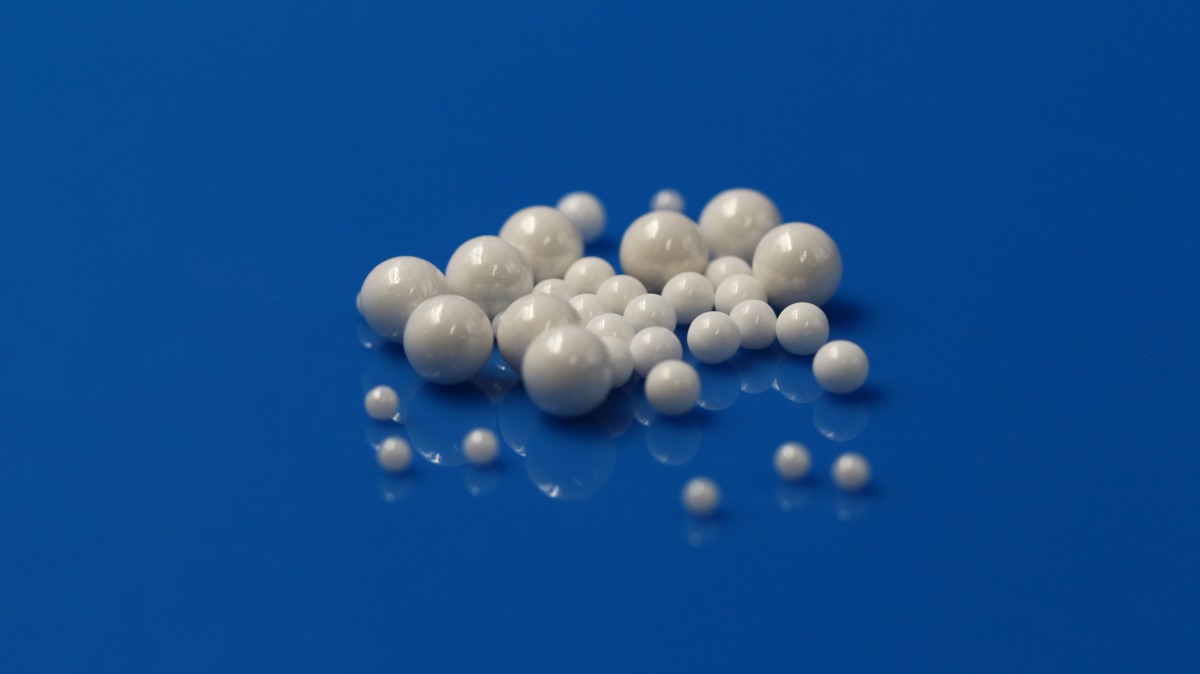
INNOVACERA provides grinding beads made from different materials, including zirconia, alumina, and silicon nitride. Different grinding media can be evaluated according to the material being processed and the requirements of the grinding process. For fine grinding applications such as digital inkjet ink, small-sized zirconia beads can be one option. Other materials can also be considered based on material characteristics, equipment conditions, wear resistance requirements, and contamination control requirements.
The selection of grinding beads can be evaluated based on material, bead diameter, incoming particle size, target particle size, sand mill type, and the bead sizes supported by the equipment, rather than simply selecting a grinding medium based on the application or a single material parameter.
For more information about INNOVACERA’s grinding beads in different materials and sizes, please contact sales@innovacera.com to discuss the appropriate product specifications.
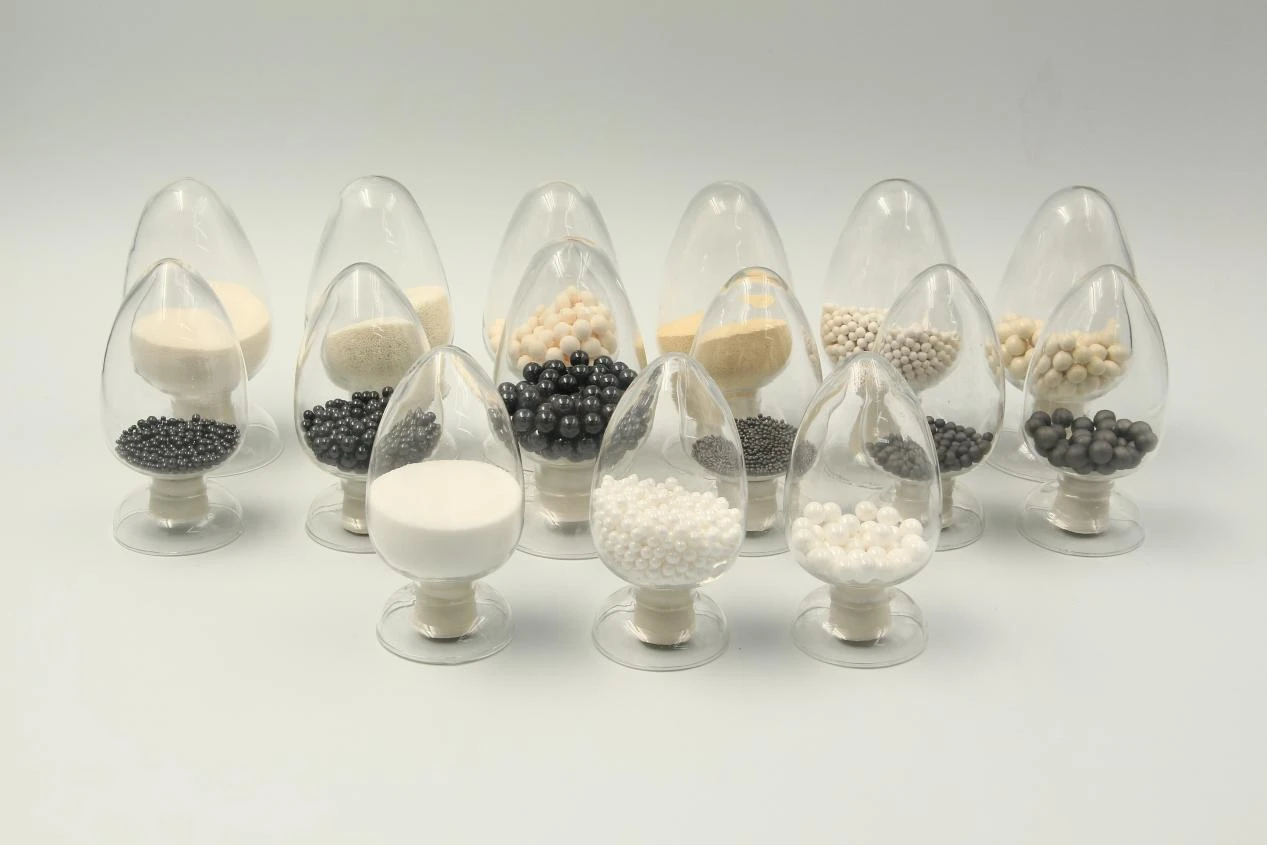
Zirconia Grinding Bead Size Chart
| Size (mm) | |||||
|---|---|---|---|---|---|
| Ø0.05‑0.1 | Ø0.1‑0.15 | Ø0.1‑0.2 | Ø0.2‑0.3 | Ø0.2‑0.4 | Ø0.3‑0.4 |
| Ø0.4‑0.5 | Ø0.4‑0.6 | Ø0.5‑0.7 | Ø0.6‑0.8 | Ø0.7‑0.8 | Ø0.7‑0.9 |
| Ø0.8‑1.0 | Ø0.9‑1.0 | Ø0.9‑1.1 | Ø1.0‑1.2 | Ø1.2‑1.4 | Ø1.4‑1.6 |
| Ø1.6‑1.8 | Ø1.8‑2.0 | Ø2.0‑2.2 | Ø2.2‑2.5 | Ø2.5‑2.8 | Ø2.8‑3.2 |
| Ø3.2‑3.5 | Ø4 | Ø5 | Ø6 | Ø7 | Ø8 |
| Ø10 | Ø15 | Ø20 | Ø30 |
*Custom sizes available