Gas Chromatography–Mass Spectrometry (GC/MS) separates compounds by gas chromatography and then performs qualitative and quantitative analysis by mass spectrometry. Electron Ionization (EI) is one of the commonly used ionization methods. In an EI ion source, a filament emits electrons when heated, providing the electron source required for subsequent ionization.
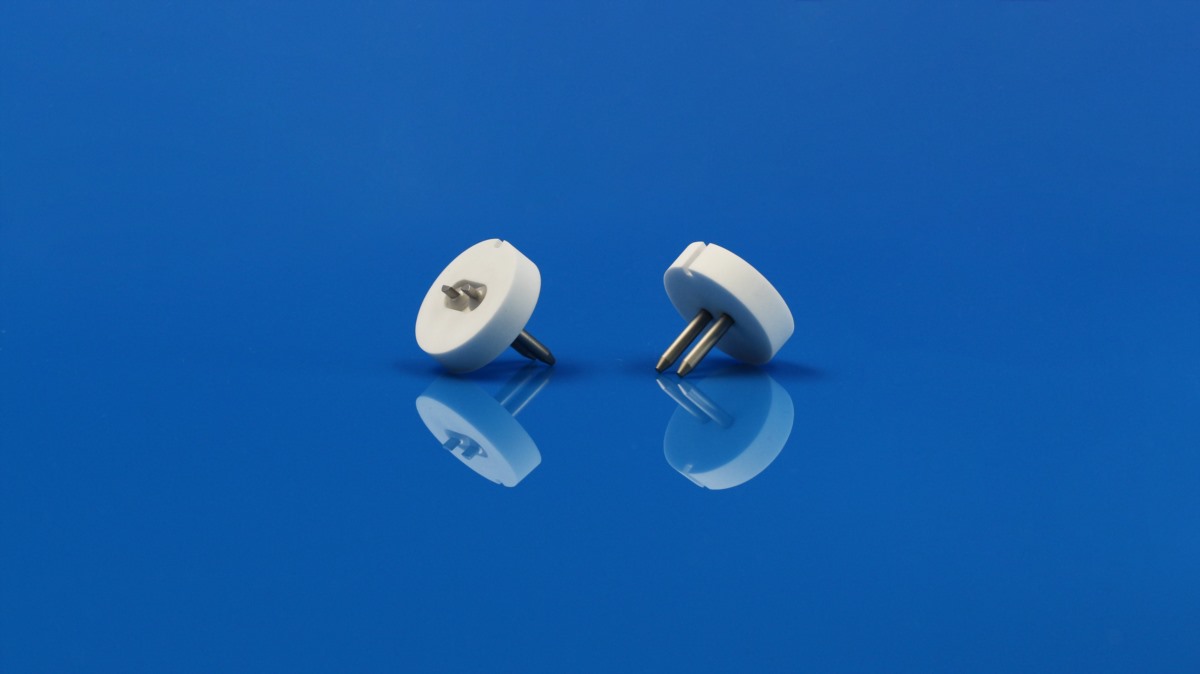
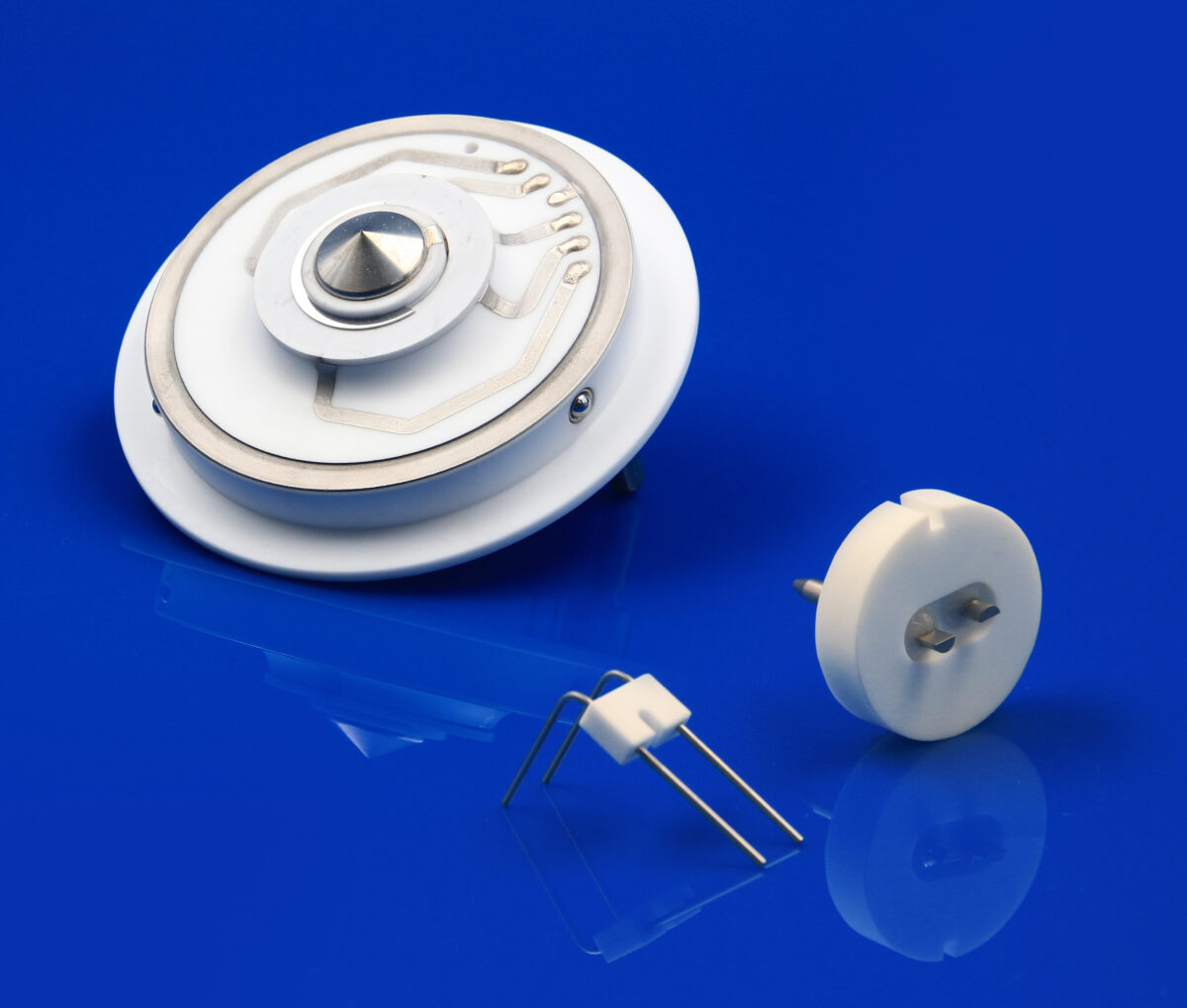
For precision EI filament assemblies, the filament itself is only one component. A complete assembly typically also includes ceramic insulation structures, metal leads, and corresponding connection structures. In designs that use alumina ceramic as the insulating and supporting element, the method of joining ceramic to metal directly affects the assembly’s dimensional accuracy and long-term reliability. In certain precision EI filament assemblies, ceramic-to-metal brazing can be used to join the insulating ceramic structure with conductive metal components.
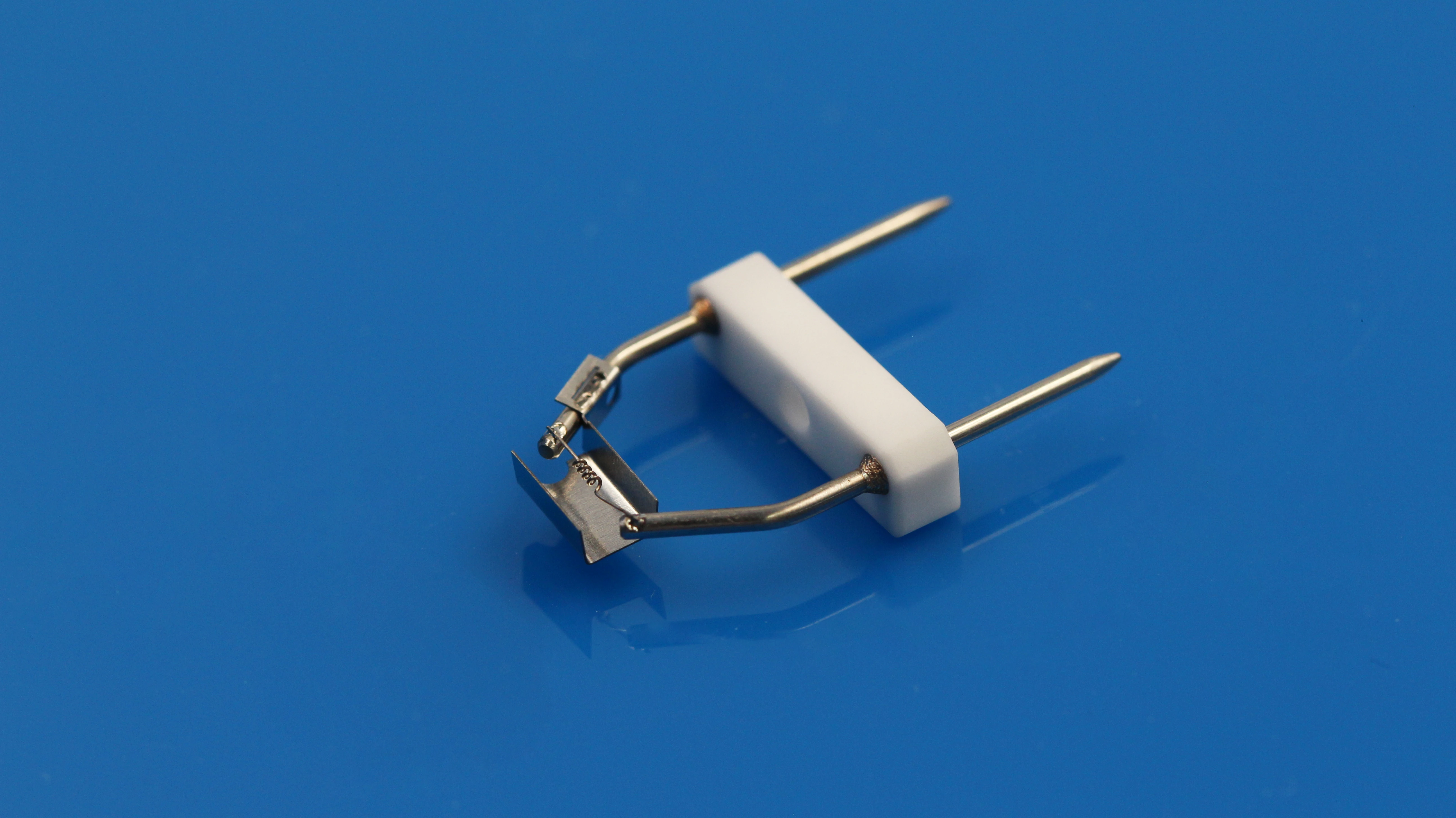
1. Function of the EI Filament: Heating to Generate a Stable Electron Supply
The filament in an EI ion source must be heated during operation to produce thermionic emission. The emitted electrons enter the ionization region of the ion source, where they interact with the molecules to be analyzed, thereby forming ions for subsequent mass spectrometry analysis.
Therefore, the design of the filament assembly involves not only optimizing the filament’s emission performance but also ensuring a stable structural relationship among the filament, insulating ceramic, and metallic connecting components. For smaller-sized assemblies, the precision of ceramic supports, metal pins, and connection areas significantly affects the final assembly quality.
2. Why Is Alumina Ceramic Used as an Insulating and Supporting Component?
In this type of filament assembly, alumina ceramic can simultaneously perform the functions of insulation and structural support.
Firstly, alumina ceramic has excellent electrical insulation properties, which can effectively isolate the metal conductive components from each other; secondly, alumina ceramic also offers good heat resistance and dimensional stability, which can be used in positions close to the filament and other electrode structures; moreover, precise processing of ceramic holes and mounting structures can help position the metal pins, providing a stable geometric reference for subsequent assembly.
Therefore, in the EI filament assembly, alumina ceramic is not merely a simple insulating pad, but rather a structural component that may also participate in insulation, support, and precise positioning.
3. Why Use Ceramic-to-Metal Brazing?
Alumina ceramics mainly serve the functions of insulation and support, while metal pins need to perform the roles of conducting electricity and connecting. The properties and connection requirements of the two materials are different. How to achieve a stable and reliable connection between the ceramic and the metal while maintaining the insulation performance of the ceramic is one of the key issues in the manufacturing of such components.
In the design of brazing connections, it is necessary to comprehensively consider the thermal expansion differences between alumina ceramics and metal materials, as well as the thermal stresses generated during the brazing process. Reasonable selection of ceramic, metal, and brazing material systems, and control of brazing temperature, connection area, and assembly conditions can reduce the stress and defect risks during the connection process.
For precision EI filament components, connection reliability not only relates to whether the ceramic and metal are securely joined, but also needs to take into account the insulation performance, the position of the metal pins, and the overall size after brazing.
4. Why Are the Manufacturing Requirements for Small EI Filament Components Quite High?
EI filament components are relatively small in size, but the internal components usually have a relatively tight spatial relationship. Variations in dimensions such as ceramic holes, metal pin positions, pin spacing, angles, and extension lengths can further affect the assembly state of the component.
Therefore, the manufacturing of such products usually involves multiple steps including ceramic precision processing, metal component processing, positioning assembly, Ceramic-to-Metal Sealing, and final product inspection. Especially in mass production, in addition to the single-piece size accuracy, attention also needs to be paid to the consistency of dimensions between different batches and the connection quality.
For ceramic structural components, the control of hole diameters, hole positions, and external dimensions will affect the positioning of metal components; for brazed components, attention also needs to be paid to the consistency of the brazing area and the size changes of the component after brazing. Consistency throughout these processes helps ensure that the final component meets the requirements of subsequent assembly.
5. Observing Ceramic-Metal Precision Components from the EI Filament
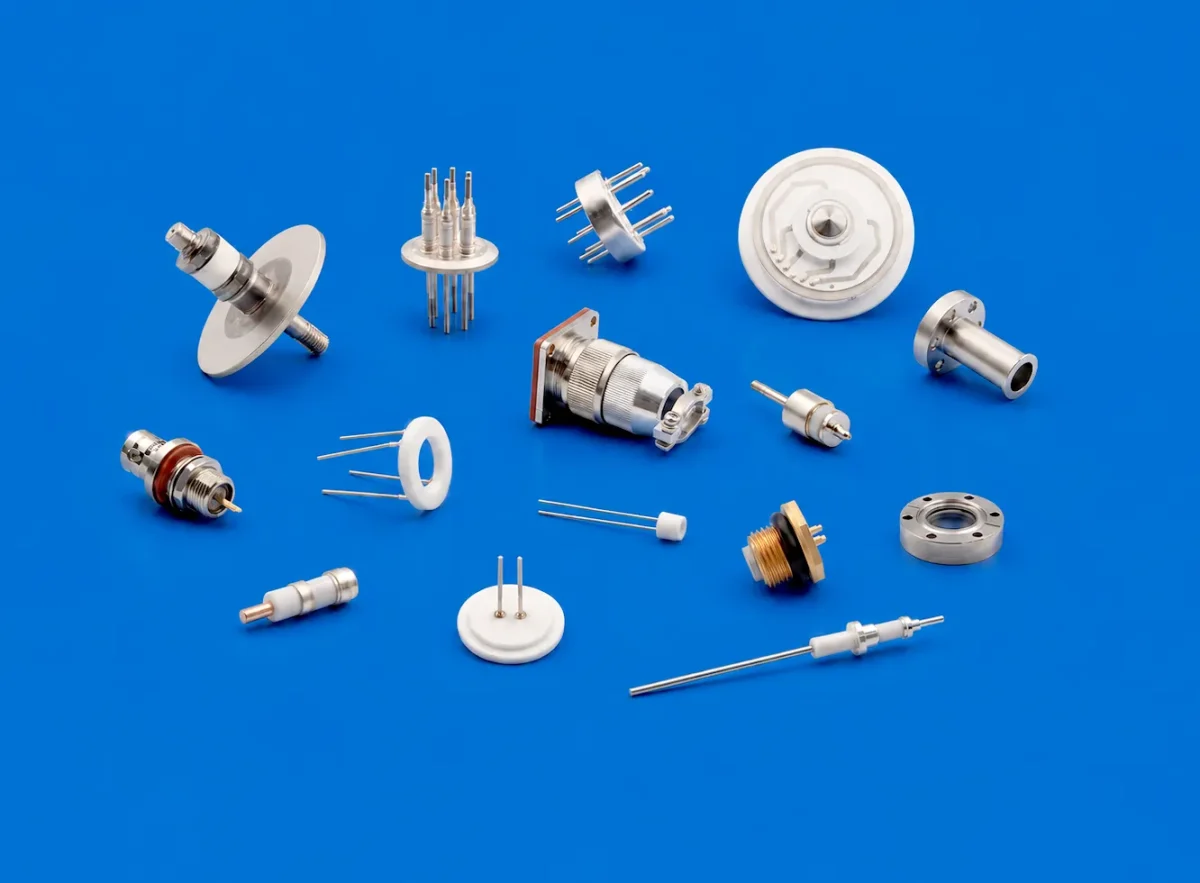
The EI filament component is just one specific structure in the application of combining ceramics and metals. In mass spectrometers, analytical instruments, vacuum electrical components, and some sensor structures, ceramics may also be used for insulation, support, or positioning, while metals are used for conducting electricity, connection, or mechanical fixation.
The common feature of these products is that they have a small structural size, but they have high requirements for material matching, processing accuracy, and connection reliability. During the actual manufacturing process, the ceramic materials, metal materials, and connection processes used need to be determined based on the product structure, working temperature, electrical requirements, and usage environment, and there is no unified material or process solution applicable to all products.
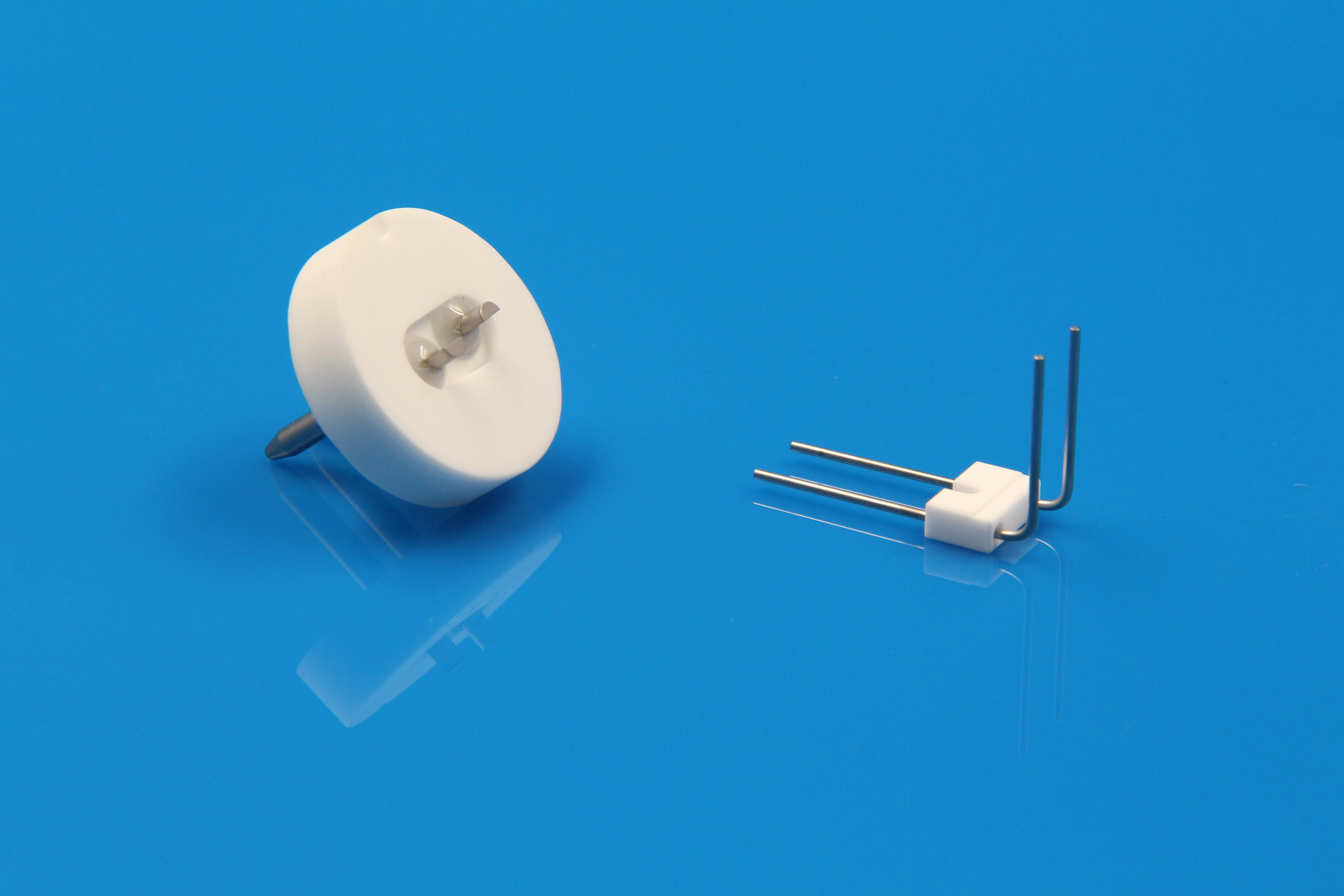
6. INNOVACERA Precision Ceramic-Metal Brazed Components
INNOVACERA can provide precision ceramic structural components and ceramic-metal components. It can also evaluate materials, insulation performance, working environment, metal materials, and connection methods based on product drawings and specific usage requirements.
For precision components like EI filaments, the focus can be on evaluating ceramic hole diameters and positions, metal pin sizes and positions, brazing areas, and size and connection consistency during batch production.
If you are developing or purchasing GC/MS EI ion source filament components, ceramic insulation parts, or other ceramic-metal connection components, please provide product drawings, material requirements, working temperature, electrical parameters, and assembly requirements so that we can further evaluate suitable ceramic and ceramic-metal connection solutions.
Email:sales@innovacera.com