Silicon nitride (Si₃N₄) ceramic heating elements are used in gas ignition systems, burners, boilers, and other equipment requiring rapid high-temperature heating. Silicon nitride ceramics offer good high-temperature mechanical properties and thermal shock resistance, allowing them to withstand rapid temperature increases as well as repeated heating and cooling cycles. These properties make silicon nitride a suitable material choice for high-temperature ignition and heating applications.
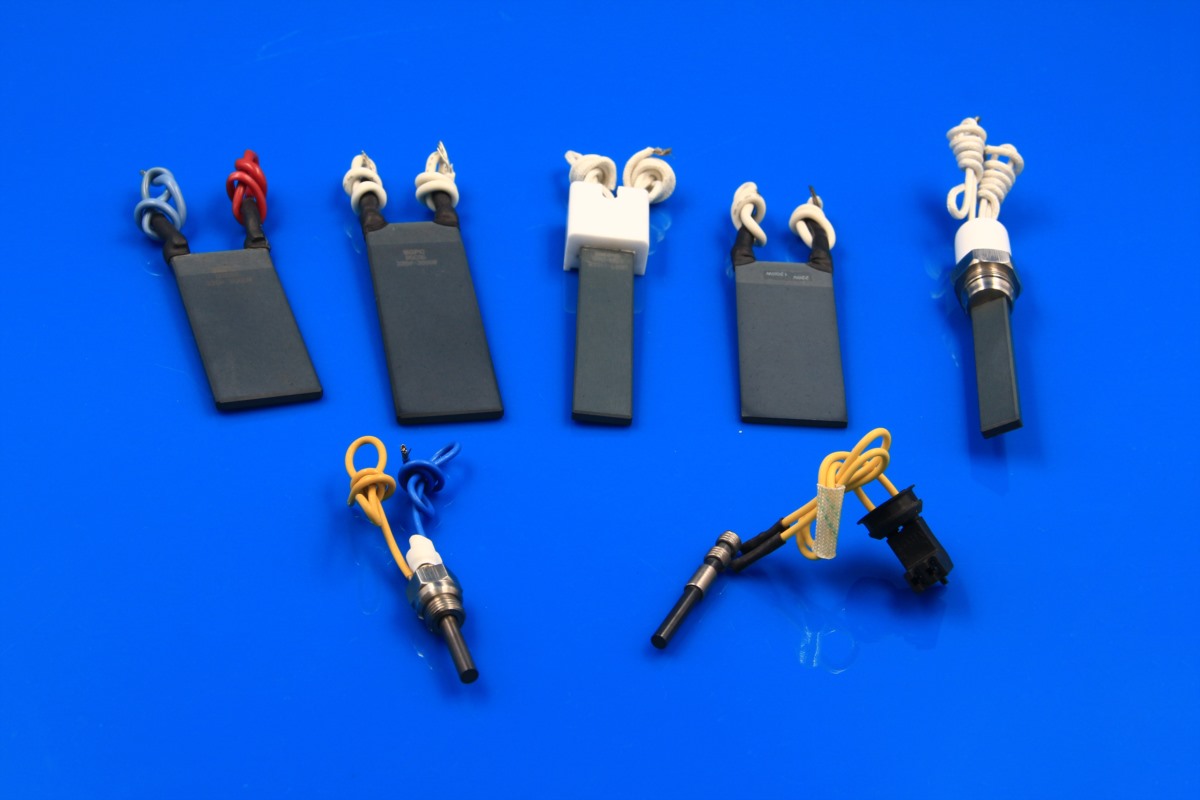
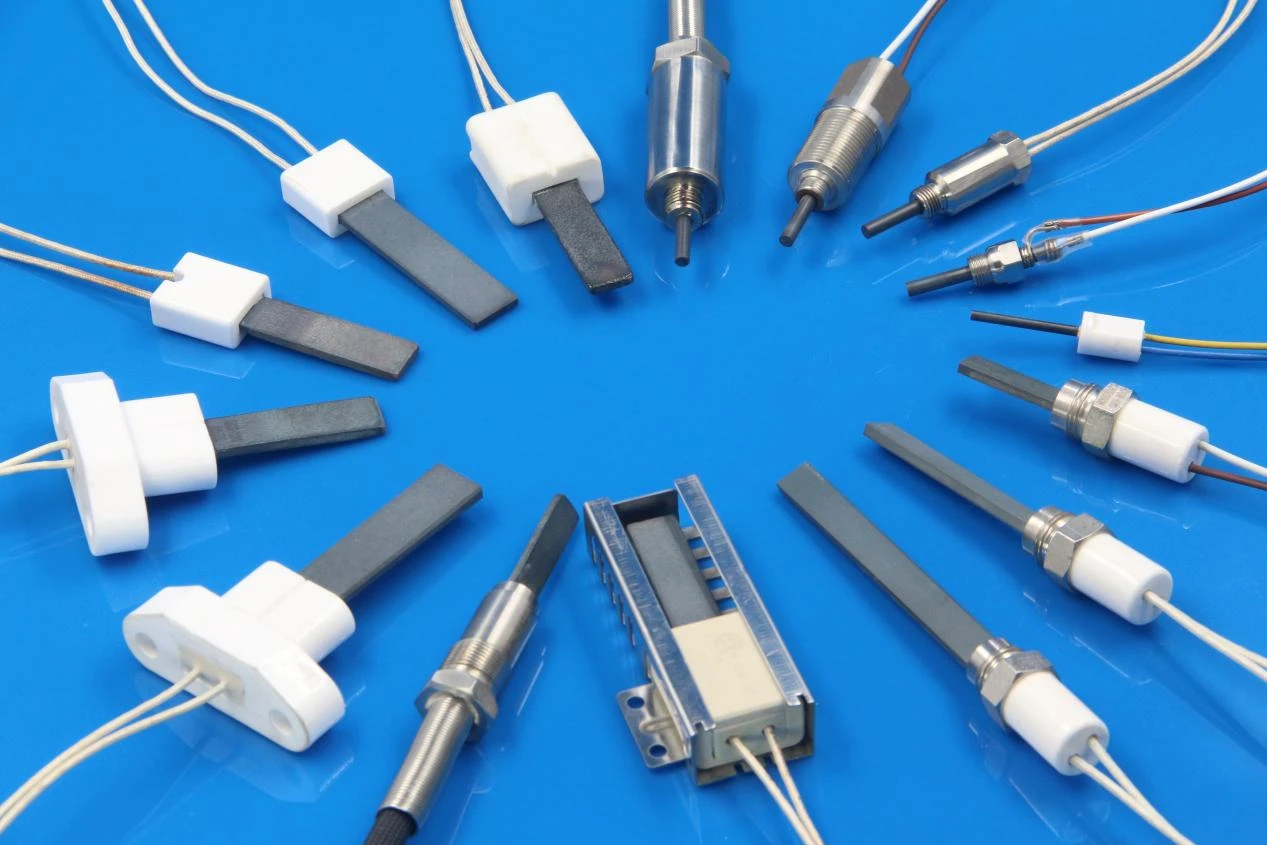
In practical applications, silicon nitride ceramic heating elements are available in various configurations. Depending on the equipment structure, installation space, and heating zone requirements, they can be designed in sheet-type, rod-type, and other configurations. Commercially available silicon nitride ceramic heating elements also vary in structure. These differences extend beyond appearance and are closely related to the equipment’s installation method, available space, and heating zone design.
Therefore, during equipment development, how should engineers choose between sheet-type and rod-type silicon nitride ceramic heating elements?
I. Why Do Silicon Nitride Heating Elements Adopt Different Structures?
Heating elements ultimately need to be integrated into specific equipment, and the available installation space, mounting method, and required heating position can vary significantly from one device to another. For example, some equipment has a relatively narrow internal space and requires the heating element to extend in a specific direction. Other equipment may have reserved mounting holes that allow the heating element to be inserted directly into the combustion area and secured using threads or other metal mounting structures.
Therefore, the structural design of silicon nitride ceramic heating elements usually needs to take into account the dimensions of the ceramic heating body, effective heating area, installation position, and its position relative to the surrounding medium or combustion area.
Sheet-type and rod-type structures are two common design options developed for different equipment requirements. They can use the same type of silicon nitride ceramic material, but their different geometries result in different installation and integration methods.
II. What Are the Differences Between Plate-Type and Rod-Type Silicon Nitride Heating Elements?
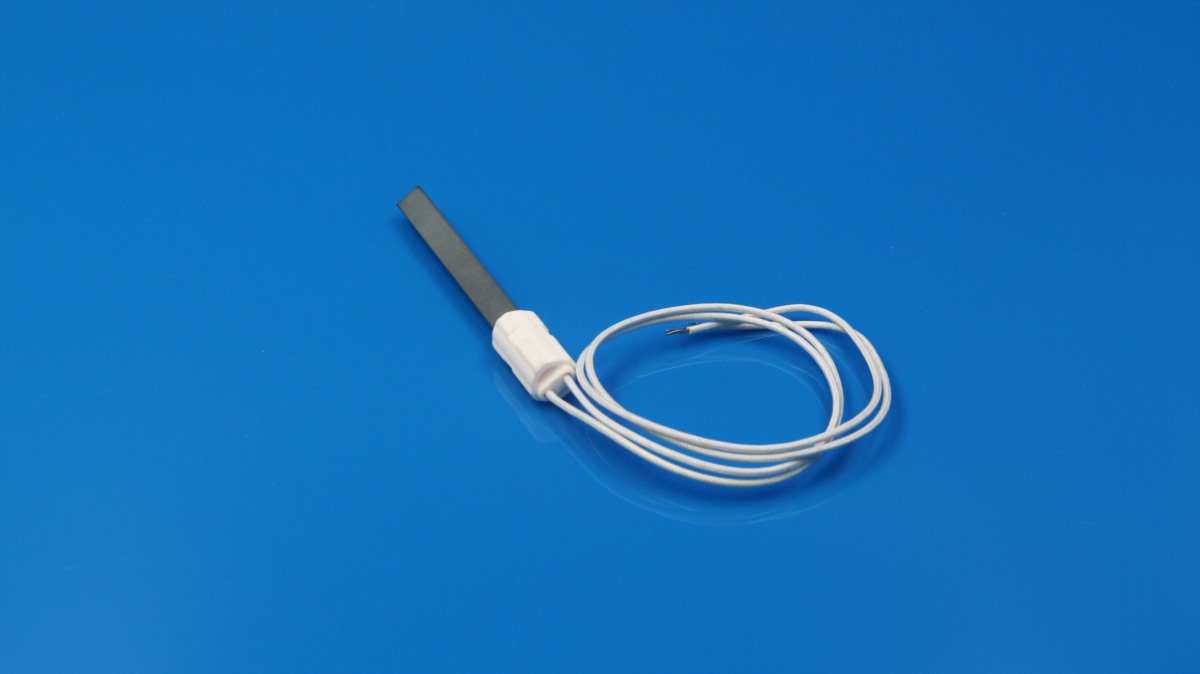
From a structural perspective, a sheet-type silicon nitride heating element is defined by its length, width, and thickness and can be designed with different heating zones according to the equipment structure. A rod-type product typically has a circular or near-circular cross-section, making it more suitable for applications involving mounting holes or axial installation spaces.
| Comparison Item | Sheet‑Type Silicon Nitride Heating Element | Rod‑Type Silicon Nitride Heating Element |
|---|---|---|
| Basic Structure | Flat or elongated structure | Circular or near‑circular cross‑section |
| Installation Space | More suitable for flat or narrow, elongated spaces | More suitable for mounting holes or axial spaces |
| Heating Zone Design | Effective heating areas can be designed according to the application | Effective heating areas can be designed according to the application |
| Mounting Method | Can be combined with ceramic holders, metal mounting structures, etc. | Can be combined with metal sleeves, threaded structures, or mounting bases |
| Main Dimensions | Length, width, and thickness | Length and diameter |
| Key Design Considerations | Heating zone position, installation direction, and available space | Insertion depth, diameter, and heating zone position |
It is important to note that the shape alone cannot determine which heating element will heat up faster, reach a higher temperature, or provide greater power. The actual performance of a heating element is also affected by factors such as resistance design, operating voltage, power, effective heating area, dimensions, and operating environment.
Therefore, the more meaningful distinction between sheet-type and rod-type structures is how well each configuration matches the available space and mounting structure of the equipment, rather than a simple comparison of which structure offers better performance.
III. What Types of Equipment Structures Are Suitable for Sheet-Type Silicon Nitride Heating Elements?
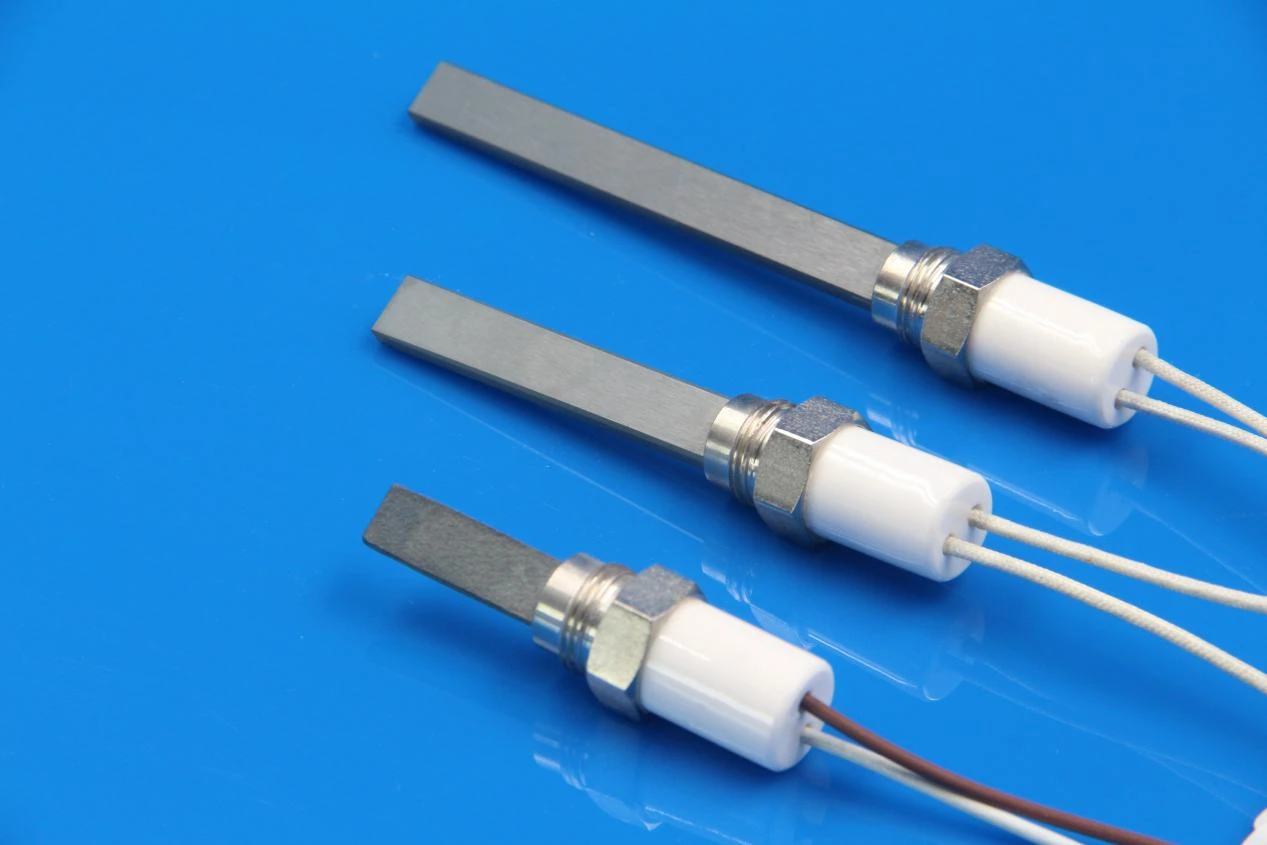
The sheet-type structure can be designed along its length and width while maintaining a relatively small thickness, making it particularly suitable for equipment with flat or narrow, elongated installation spaces.
For different applications, the overall length and effective heating area of a sheet-type heating element may vary. For example, when the heated end needs to extend further into the target heating area, the length of the ceramic body can be adjusted according to the installation position. If internal space is limited, the width and thickness of the product may need to be further controlled.
Therefore, the design of sheet-type silicon nitride heating elements typically focuses on the matching of length, width, thickness, heating area, and installation position.
The value of this configuration is not simply that it provides a “larger heating area.” Rather, the geometry and heating area of the ceramic heating element can be specifically designed according to the available internal space and target heating position of the equipment.
IV. What Types of Mounting Structures Are Suitable for Rod-Type Silicon Nitride Heating Elements?
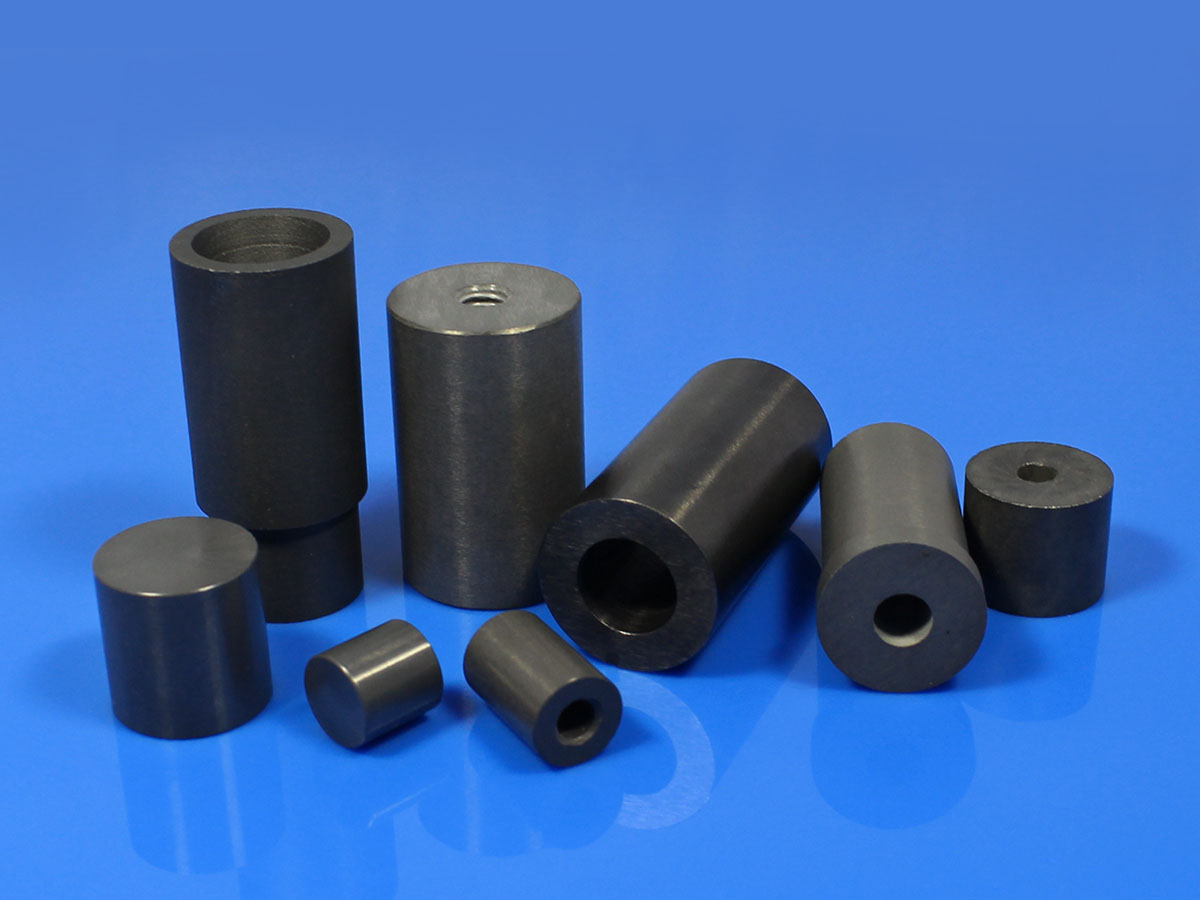
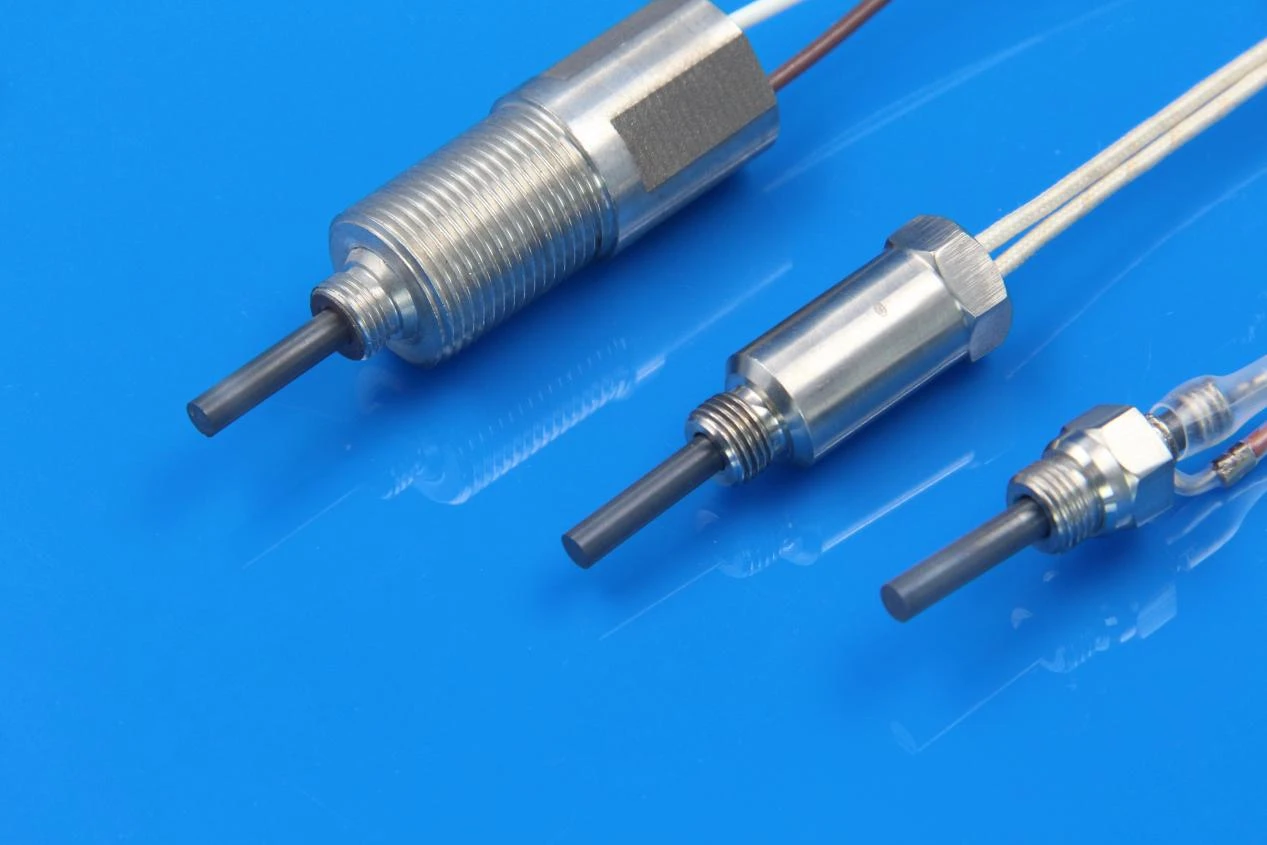
Compared with sheet-type structures, rod-type silicon nitride heating elements have a more pronounced axial geometry, allowing them to extend into the target heating area through mounting holes in the equipment.
In practical products, rod-type ceramic heating elements can also be combined with metal sleeves, threaded structures, hexagonal mounting bases, and other components, allowing the complete heating assembly to be securely mounted to the equipment. Depending on the mounting structure, the diameter, extension length, and effective heating area of the ceramic rod can be adjusted to position the heated end at the required heating or ignition location.
Therefore, for burners, boilers, and other equipment using hole-based mounting, rod-type structures can provide a relatively straightforward mechanical installation method.
In these applications, insertion depth and heating zone position are particularly important. The heated end needs to maintain an appropriate positional relationship with the actual heating or ignition area, so compatibility cannot be determined simply by the overall product length.
V. Choosing Between Sheet-Type and Rod-Type: Look Beyond the Shape
For equipment engineers, choosing between sheet-type and rod-type is only one part of selecting a silicon nitride ceramic heating element. Even when two products use the same material, differences in operating voltage, power, resistance, effective heating area, and installation position can result in different heating performance.
Therefore, when developing or replacing silicon nitride ceramic heating elements, it is necessary to consider the equipment’s operating voltage, target power, heating area, installation space, operating temperature, operating medium, and start-stop cycle requirements as a whole. For gas ignition applications, the relationship between the heated end, gas outlet, gas-air mixing area, and actual ignition position should also be considered.
In other words, a proper selection process should not simply compare sheet-type and rod-type structures. Instead, the appropriate geometry should first be determined based on the equipment structure, followed by matching the corresponding electrical parameters and heating zone design.
VI. INNOVACERA Sheet-Type and Rod-Type Silicon Nitride Ceramic Heating Elements
INNOVACERA provides sheet-type and rod-type silicon nitride ceramic heating elements and can customize them according to the mounting structure and heating requirements of different equipment. Sheet-type products can be customized in terms of length, width, thickness, and heating area according to the available space. Rod-type products can be customized in terms of diameter, length, insertion depth, and associated metal mounting structures according to the installation method.
In addition to geometric dimensions, silicon nitride ceramic heating elements need to be matched to the operating voltage, power, resistance, heating area, leads, and mounting method according to the specific application. This helps ensure that the ceramic heating element is properly integrated with the equipment structure and positioned correctly within the target heating area.
If you are developing gas burners, boilers, hot water equipment, or other equipment requiring rapid high-temperature heating and ignition, please provide INNOVACERA with product drawings, available installation space, operating voltage, target power, heating area, and actual operating conditions. Our engineering team can evaluate the application requirements and assist with selecting or customizing a suitable sheet-type or rod-type silicon nitride ceramic heating element.
For details, please contact sales@innovacera.com.