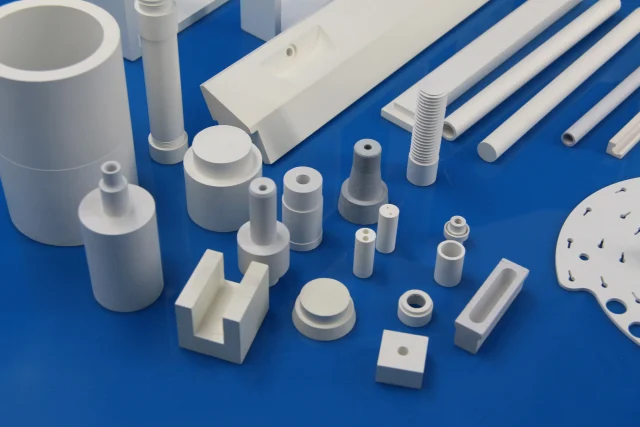
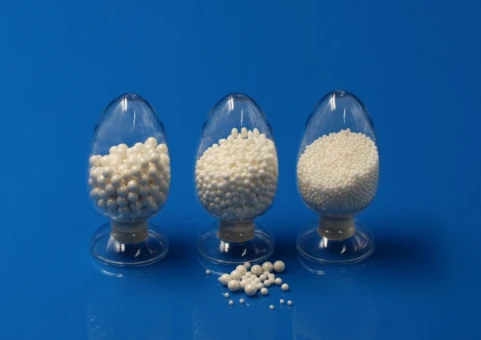
Axial flux motors are popular in EVs and industrial uses because they give high torque in a compact size. But this design creates thermal and electrical challenges that ordinary insulation materials often can’t handle. Engineers picking materials for stator insulation, winding separators, or thermal interfaces need something that moves heat away efficiently while staying electrically insulating through repeated high-temperature cycling. BN+AlN composite ceramic does this in a way that plain polymer insulators and standard alumina ceramics can’t easily match.
Why BN+AlN Suits Axial Flux Motor Environments
Axial flux motors pack the windings and magnets into a tighter space than radial designs. So heat builds up in smaller, more localized spots, and the path from winding to heat sink is short but has to work very efficiently. That’s where two properties of BN+AlN composite ceramic come in.
First, hexagonal boron nitride is a strong electrical insulator and conducts heat much better than most insulating ceramics—that’s why it’s used in demanding electrical applications. Adding aluminum nitride, which also conducts heat well, helps the composite move heat without creating electrical leakage paths. The result is a material that acts as both an electrical barrier and a thermal conductor, so you don’t need to stack separate insulating and heat-spreading layers.
Second, the operating temperature range matters. In an axial flux motor running under peak load or regenerative braking cycles, localized temperatures can rise significantly. BN+AlN ceramic, as offered by the manufacturer, is rated for continuous operation up to 900 °C in atmospheric conditions—well above the thermal ceiling of organic insulation films or standard thermoplastics used in motor construction. This margin provides a meaningful safety buffer under fault conditions or aggressive duty cycles.
Beyond temperature, the material’s low coefficient of thermal expansion relative to many metals helps reduce mechanical stress at interfaces during repeated heat cycles, which is a common failure mode in precision motor assemblies.
Material Properties:
| Property | BN+AlN |
|---|---|
| Density | 2.8 g/cm³ – 2.9 g/cm³ |
| Color | Greyish-Green |
| Bending Strength | 90 MPa |
| Compressive Strength | 220 MPa |
| Thermal Conductivity | 85 W/(m·K) |
| Thermal Expansion Coefficient (20–1000°C) | 2.8 × 10⁻⁶/K |
| Max. Working Temperature (Inactive Gas) | 1750 °C |
| Max. Working Temperature (High Vacuum) | 1750 °C |
| Max. Working Temperature (Atmosphere) | 900 °C |
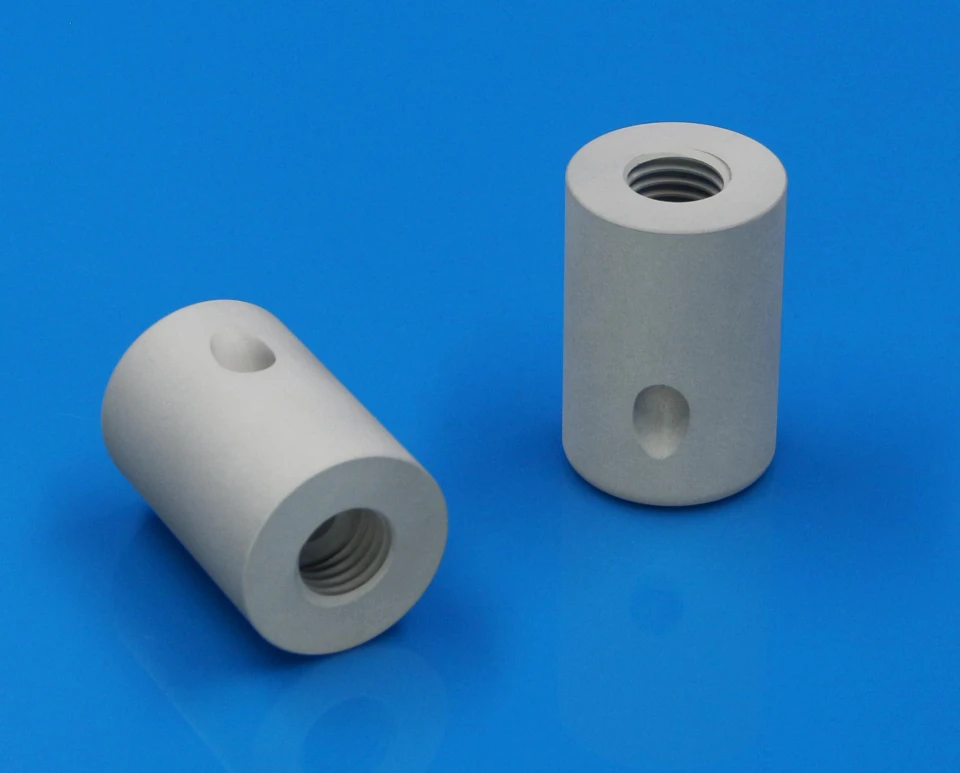
How BN+AlN Ceramic Is Applied in Axial Flux Motor Construction
In practice, BN+AlN ceramic components appear in several positions within an axial flux motor assembly:
Stator slot liners and phase separators
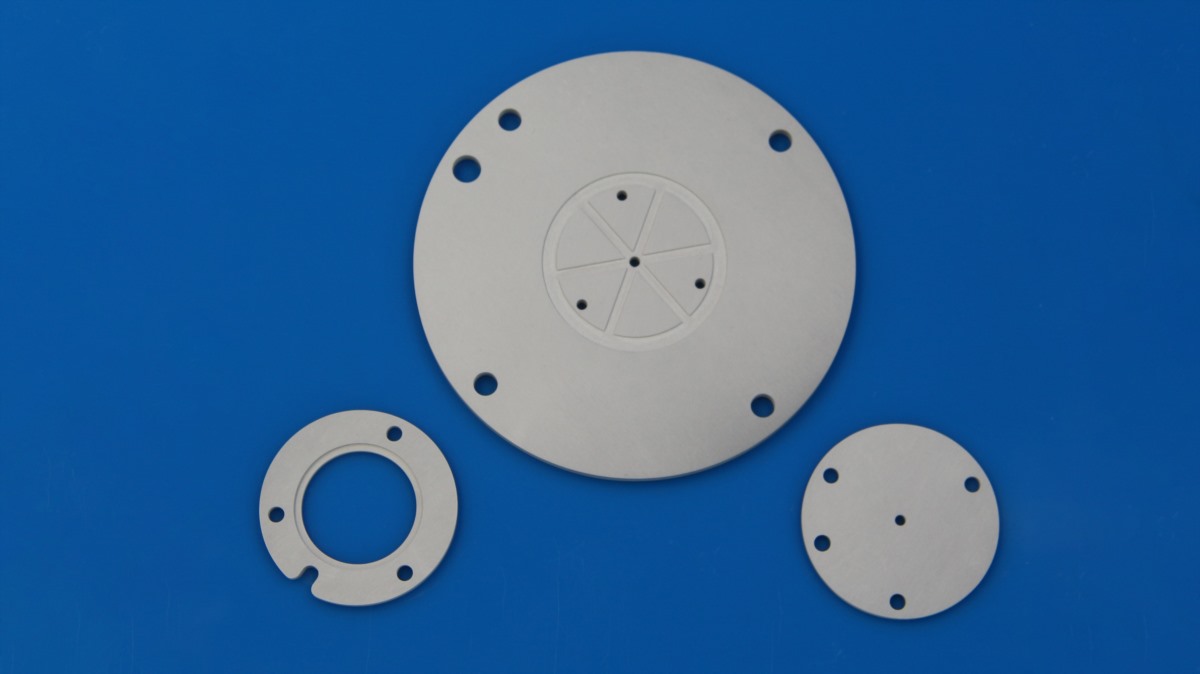
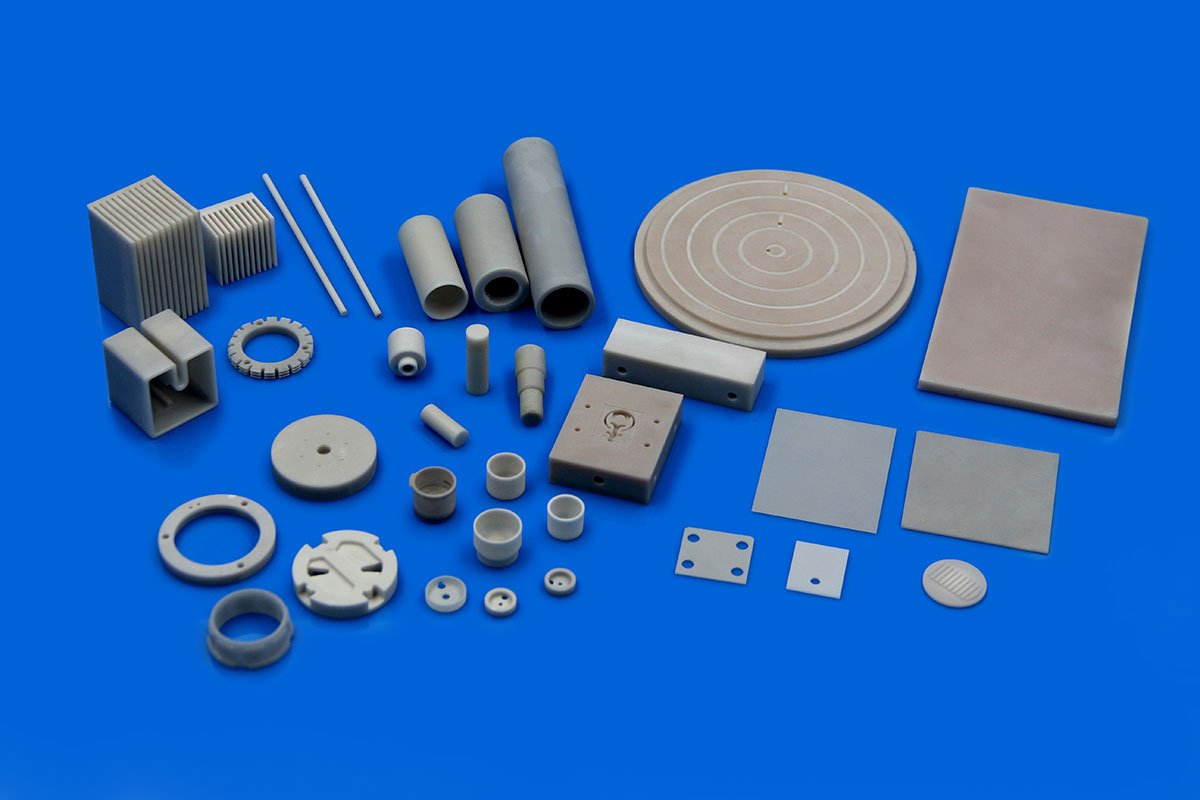
The flat, disc-like stator geometry of an axial flux motor lends itself to machined or pressed ceramic liners placed between copper windings and the stator core. These liners must be thin enough to minimize the air gap penalty but thermally conductive enough to move heat into the stator structure. BN+AlN composite can be precision-machined into thin sheets or complex profiles to fit these slots.
Thermal interface pads and backing plates
Some axial flux designs use a direct liquid-cooled backing plate behind the stator. A BN+AlN ceramic pad between the winding pack and the cooled plate provides electrical isolation while maintaining a low thermal resistance across the interface—critical for keeping winding temperatures within specification during sustained high-power output.
Bearing housings and end plates in high-temperature zones
Where bearing preload or shaft alignment components sit near high-heat zones, ceramic components machined from BN+AlN provide dimensional stability and prevent electrical current from tracking through the bearing path, a known issue in inverter-driven motors.
Insulating spacers in high-voltage designs
As axial flux motors scale toward higher voltage architectures in EV platforms, creepage and clearance distances become tighter. Machinable BN+AlN ceramic spacers allow designers to meet isolation requirements in confined geometries without enlarging the motor envelope.
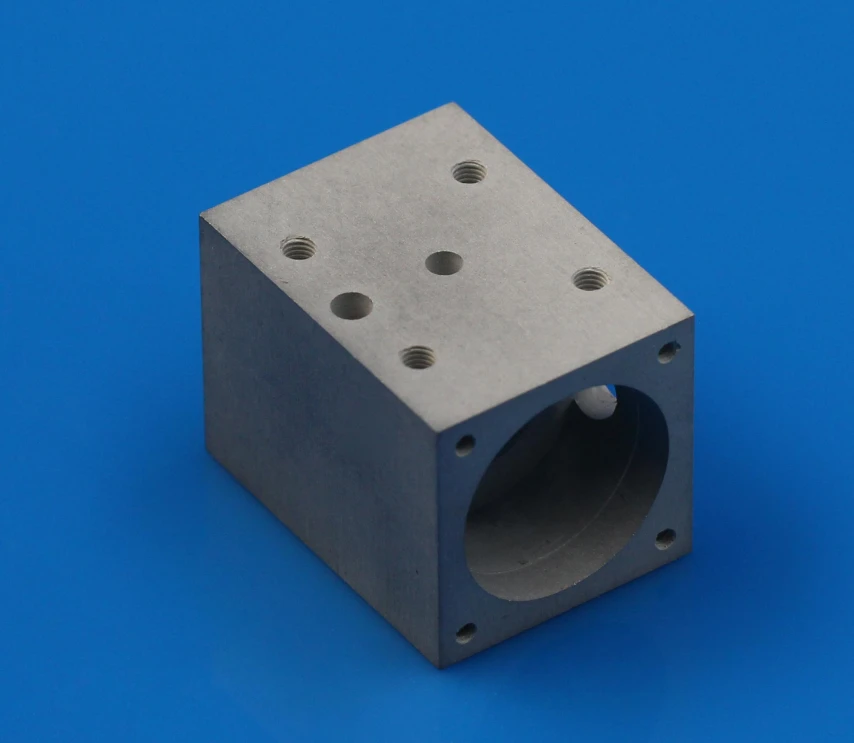
BN+AlN ceramic isn’t just another insulation option—it solves the specific heat-and-isolation problem that axial flux motors create. For engineers working on compact, high-power designs, it offers a practical way to keep windings cooler, meet isolation requirements, and avoid the extra layers and complexity of conventional solutions. As axial flux motors move into more EVs and industrial systems, materials like this will play a growing role in making those designs reliable and efficient.