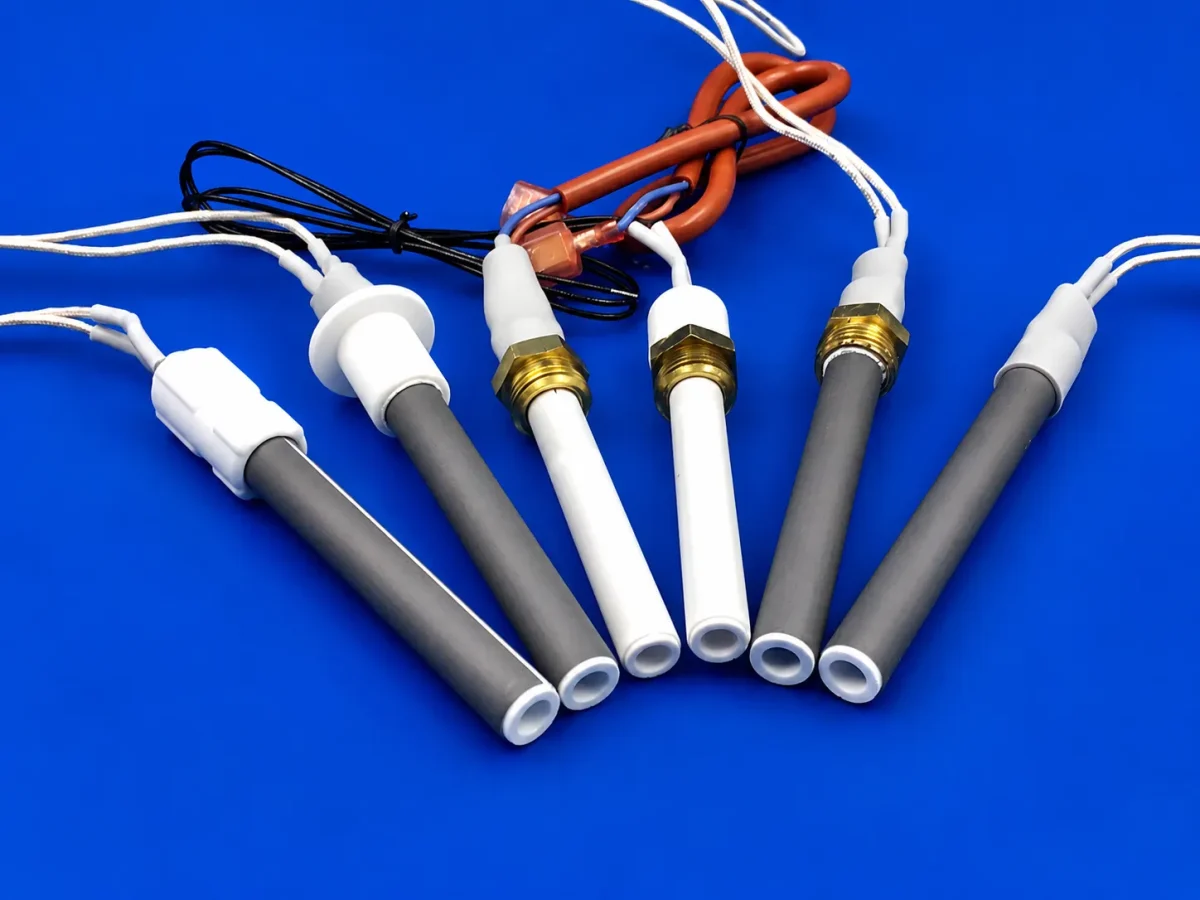
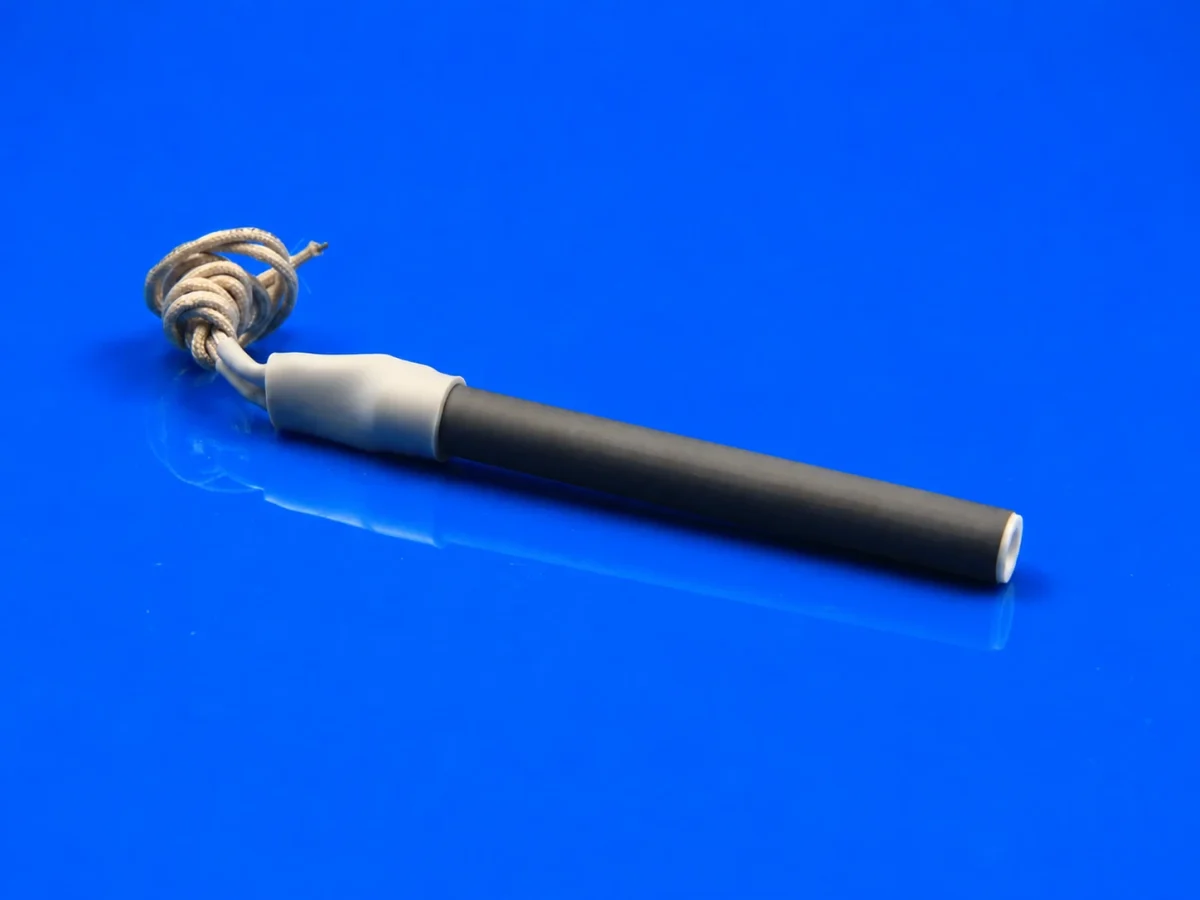
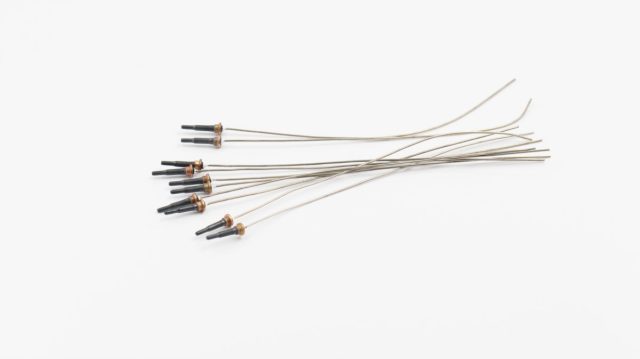
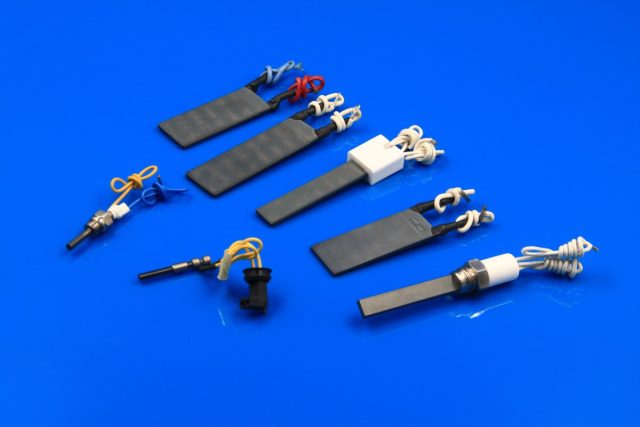
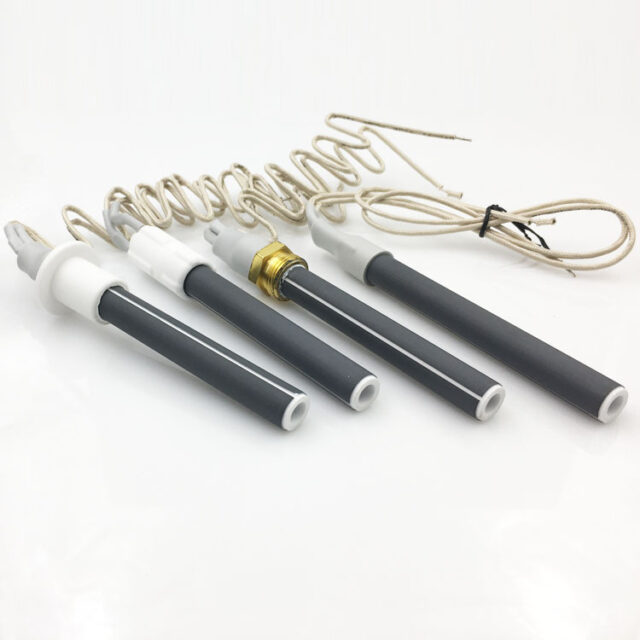
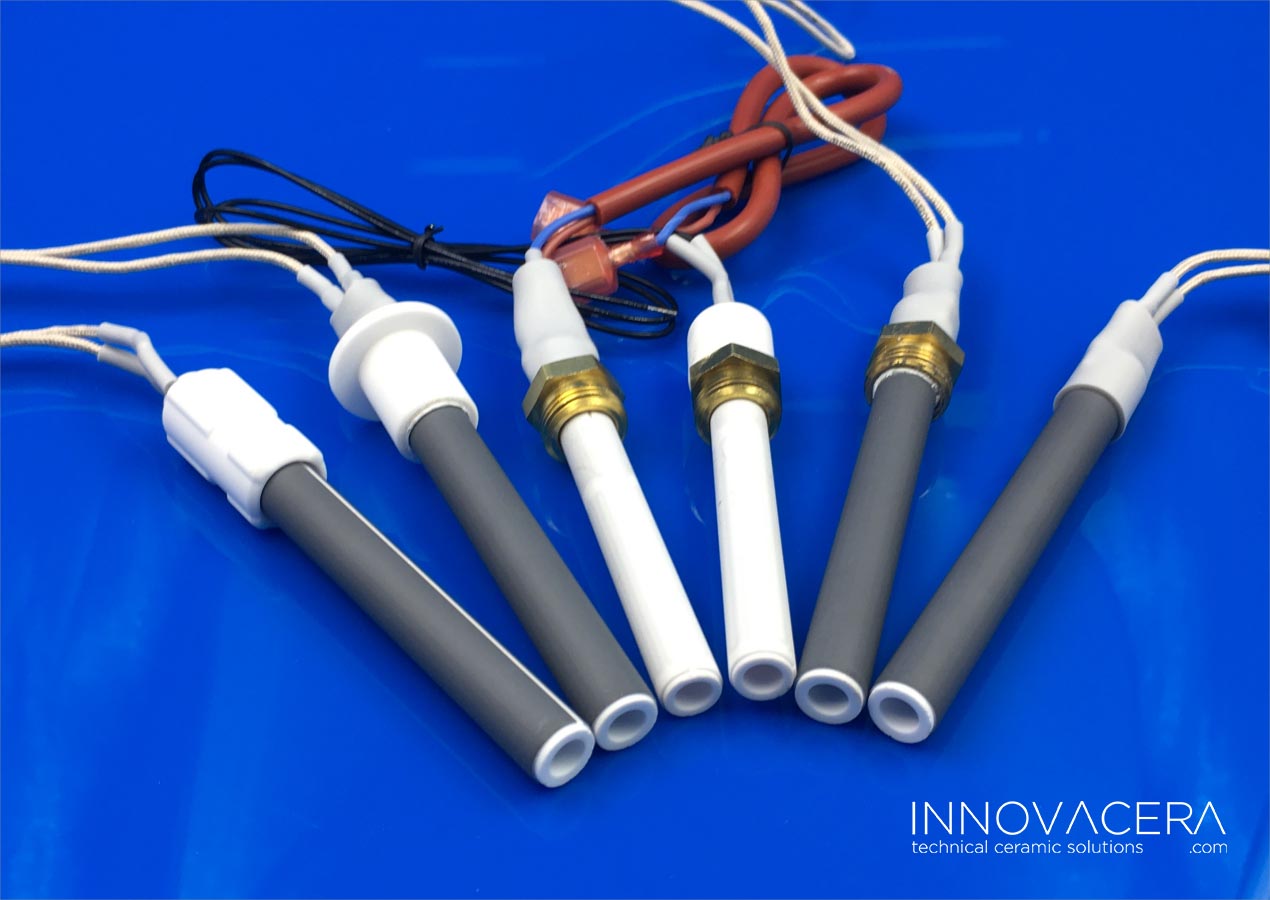
In modern solid fuel combustion equipment such as pellet stoves, stoves and boilers, the igniter is one of the core components for initiating the combustion process. With the development of ceramic hot surface igniters technology, igniters made of different ceramic materials exhibit significant performance differences. The ceramic hot surface igniter provided by our company can offer rapid and stable ignition effects for various types of fuel particles. For different application scenarios, we offer two core materials for selection: aluminium oxide (Al2O3) and silicon nitride (Si3N4). Both materials have their own characteristics and can help you match the most suitable ignition system.
1. Basic principle
The ignition device of the pellet furnace is usually a thermal surface igniter (HSI), which relies on the rapid heating of a ceramic heating element when it is energized to a high temperature (usually close to or exceeding 1000°C), thereby igniting the mixture of pellet fuel or solid fuel and air. Compared with traditional methods of using hot air or nozzles for ignition, ceramic
igniters have the following advantages:
– The ignition was instantaneous.
– Low energy consumption
– Stable and reliable
2. Alumina vs Silicon Nitride: Material Performance Comparison
| Performance Index | Alumina (Al2O3) | Silicon Nitride (Si3N4) |
| Operating Temperature | Typically up to approximately 1000℃ | Peak temperature up to 1200–1400℃ |
| Heating Speed | Heating rate meets general ignition requirements | Higher thermal conductivity & faster thermal response, quicker temperature rise |
| Mechanical Toughness | High strength but relatively low toughness | High strength and superior toughness |
| Thermal Shock Resistance | Moderate | Excellent |
| Thermal Stability | Suitable for most pellet stove applications | More stable performance under extreme high temperatures |
| Service Life | Long service life and high reliability under normal working conditions | More significant lifespan advantages under high-temperature, frequent start-stop, and high-cycle working conditions |
| Electrical Insulation | Excellent | Good, meets the insulation requirements for igniters |
| Cost | Relatively low | Relatively high, with more complex processing technology |
3. Advantages of Alumina Ceramic Igniters
Our alumina ceramic igniter is suitable for conventional pellet furnace applications:
– Stable and reliable: The high-purity alumina material offers excellent electrical insulation and oxidation resistance.
– High ignition efficiency: Quickly reaches the stable ignition temperature, reducing unburned fuel emissions
– High durability: After undergoing cyclic tests, it can operate stably for an extended period.
– High cost-effectiveness: The processing technology is mature and suitable for large-scale production.
Suitable for standard industrial and civil pellet furnaces, as well as applications where cost is a key consideration.
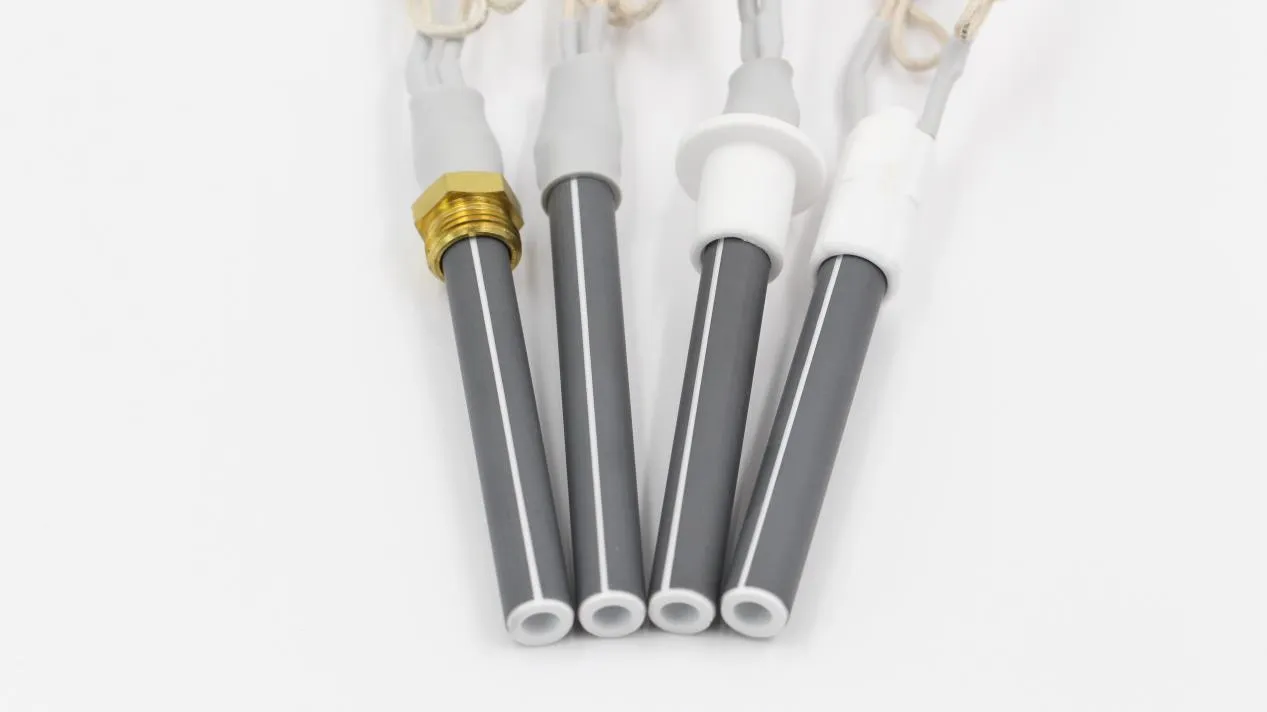
4. Advantages of Silicon Nitride Ceramic Igniters
Our silicon nitride ceramic igniters are more suitable for high-end and industrial-grade particle furnaces:
– Higher heat resistance: Can operate stably even at extremely high temperatures, and ignites more quickly.
– High thermal shock resistance: Outstanding resistance to thermal shock, suitable for high-cycle and high-dynamic environments
– Fast heat response: It can reach the ignition temperature within several seconds to about ten seconds, significantly reducing the ignition time.
– Extremely long potential lifespan: Lower wear in high-temperature cyclic environments, longer usage period
Suitable for high-speed ignition, demanding operating conditions and industrial-level combustion equipment.
5. Model Selection Suggestions
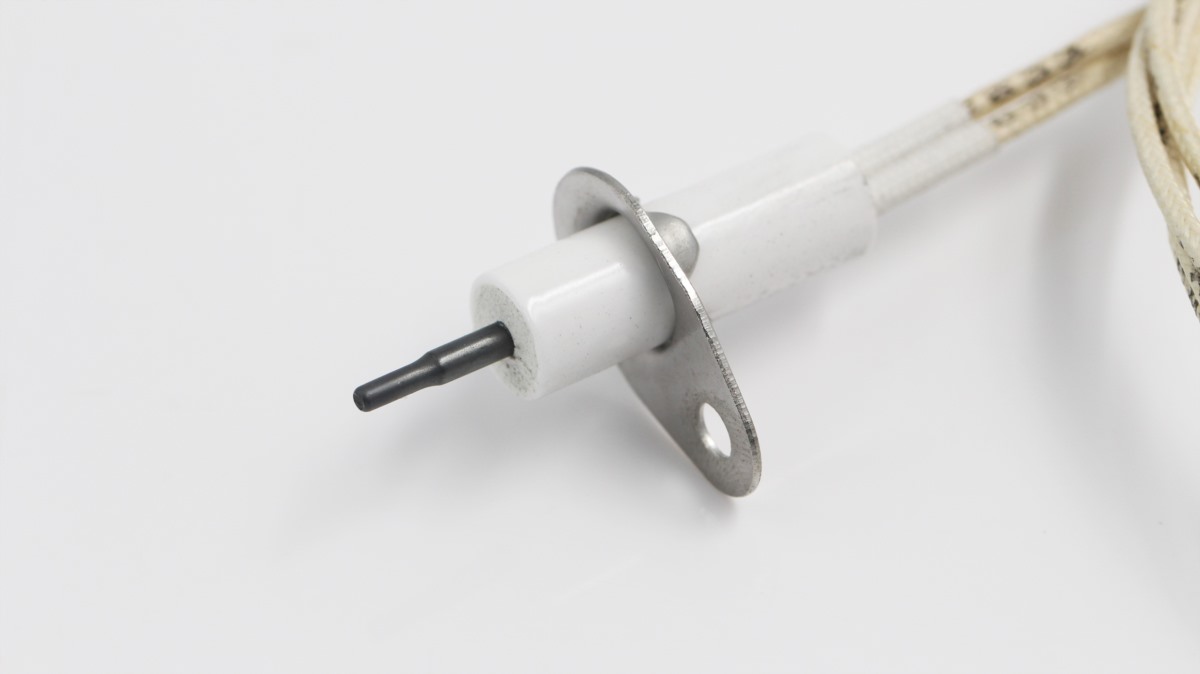
When making the actual selection, apart from the performance of the material itself, there are several other points that also need to be given careful consideration:
①Installation and Matching
The shape, size and interface design of the igniter should be compatible with the structure of the combustion chamber.
The thermal expansion coefficients of the igniter, the mounting base and the sealing structure need to be matched. The wires, seals and other accessories also need to be compatible with its working temperature characteristics.
②Electric parameter
Select the appropriate voltage/power specifications based on the power configuration of the equipment.
Different materials exhibit differences in their thermal response curves and power efficiency.
③Cost vs. Performance Balance
The alumina route is suitable for cost-sensitive products;
Silicon nitride pathways are suitable for performance-driven or high-end devices.
Summary:
| Selection Factor | Recommended Option |
| Cost priority | Alumina Igniter |
| Standard industrial & residential pellet stoves | Alumina Igniter |
| Extreme high temperature / rapid ignition | Silicon Nitride Igniter |
| High thermal shock & long service life requirements | Silicon Nitride Igniter |
Overall, these two types of ceramic hot surface igniters have quite different target markets and application scenarios. Alumina ceramics have the advantage of mature technology and controllable costs, resulting in high cost-effectiveness; silicon nitride ceramics, on the other hand, can better withstand extreme conditions and have superior overall performance and durability. Choosing the right material based on your equipment requirements and actual operating environment is essential to ensure a more stable and reliable ignition.
Obtain professional ceramic ignition system solutions
Whether you are developing new types of pellet stoves or aiming to enhance the ignition efficiency and reliability of your existing combustion systems, Innovacera can provide you with suitable ceramic ignition solutions.
We offer:
– A variety of materials including alumina and silicon nitride
– Customized size and structural design
– Matching different voltage and power requirements
– Stable capacity for batch production
Our engineering team will, based on your actual usage scenarios, including requirements such as fuel type, ignition duration, working temperature and service life, provide you with professional selection suggestions to help you find the most suitable balance point between product performance and cost. If you would like to learn more about the product information or customize the solution, please feel free to contact us at: sales@innovacera.com