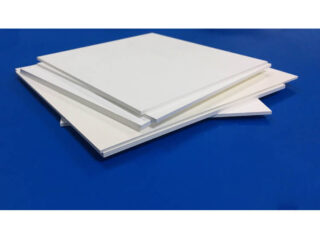
In power semiconductor, new energy vehicle, industrial control, and high-reliability electronic packaging projects, silicon nitride (Si₃N₄) ceramic substrates typically undergo multiple stages, including material selection, sample preparation, performance testing, process validation, and terminal reliability assessment. For customers developing new high-power density modules (such as IGBT or SiC modules) or integrating a second supplier, the true bottleneck affecting project timelines is often not merely product delivery, but the lengthy and repetitive sample validation process.
Particularly in the initial project phases, if a supplier cannot provide samples with clear batch information, third-party test data, and a foundation of stable performance, customers may find themselves re-validating from fundamental material tests. This not only escalates testing costs but also significantly prolongs the product finalization and supplier qualification cycles.
Why is the Validation Cycle for Silicon Nitride Substrates Extended?
Silicon nitride substrates are not directly applicable after mere dimensional processing. Their thermal properties, mechanical strength, surface quality, dimensional accuracy, and subsequent metallization compatibility all directly influence the power module’s heat dissipation capability, mechanical reliability, and long-term operational lifespan.
A comprehensive integration process typically encompasses:
- Material property confirmation;
- Dimensional and appearance inspection;
- Thermal conductivity testing;
- Flexural strength testing;
- Metallization or copper bonding process matching (e.g., AMB);
- Thermal cycling and power cycling evaluation;
- Module packaging and terminal application testing.
These diverse tests are often conducted by material suppliers, third-party laboratories, packaging plants, and end-users independently. Should preliminary sample data be incomplete, or if significant batch-to-batch variations exist, customers may be compelled to repeat tests, or even restart the entire material evaluation process.

Consequently, the core pain point for customers is usually not
“whether silicon nitride substrates are available,” but rather:Can the supplier provide pre-validated samples with clear test bases that can be immediately utilized for project evaluation?
What Issues Arise from the Absence of Pre-Validated Samples?
1. Prolonged Initial Project Testing Phase
Upon receiving standard samples, customers typically first need to confirm if the material meets basic performance requirements before proceeding with subsequent metallization, copper bonding, or module packaging tests. If the fundamental performance falls short of expectations, the initial investment in testing time and processing costs could be entirely lost.
2. Difficulty in Comparing Disparate Test Results
Without explicit information on test methods, environmental conditions, and batch specifics, even if a supplier provides performance parameters, customers struggle to ascertain the comparability of the data. For instance, flexural strength is influenced by specimen dimensions, span, loading speed, and testing standards; thermal conductivity also varies with test methods, temperatures, and sample states. Lacking data on testing conditions makes direct engineering decisions challenging.
3. Increased Uncertainty in Supplier Qualification
Material performance constitutes only a segment of supplier qualification, yet it forms the bedrock for subsequent validation. Instability in fundamental material data can lead to fluctuations in metallization layer reliability, copper bond strength, thermal cycling life, and power cycling performance, thereby extending the overall qualification period.
Third-Party Tested Silicon Nitride Substrate Samples Now Available
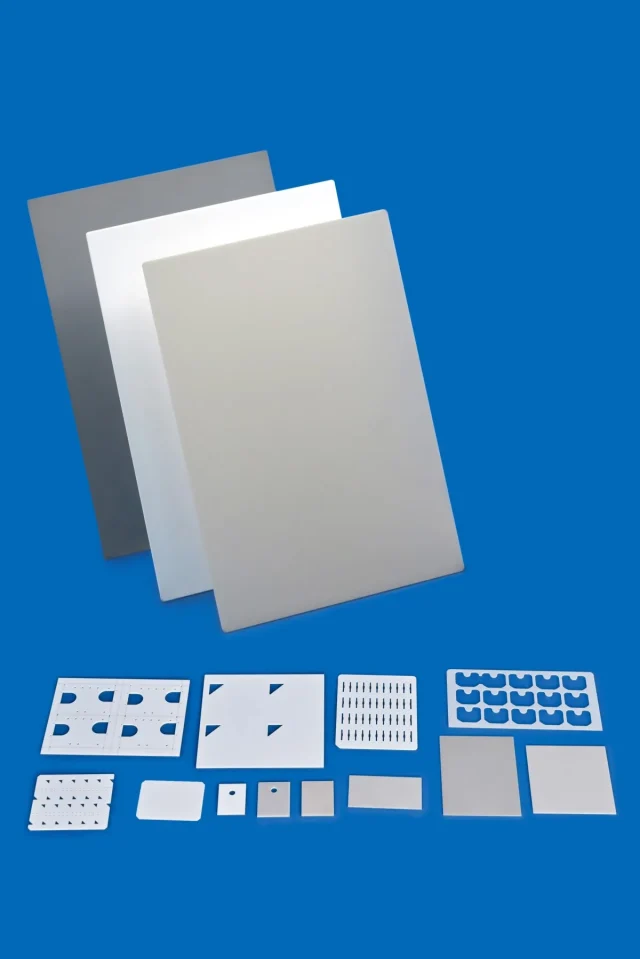
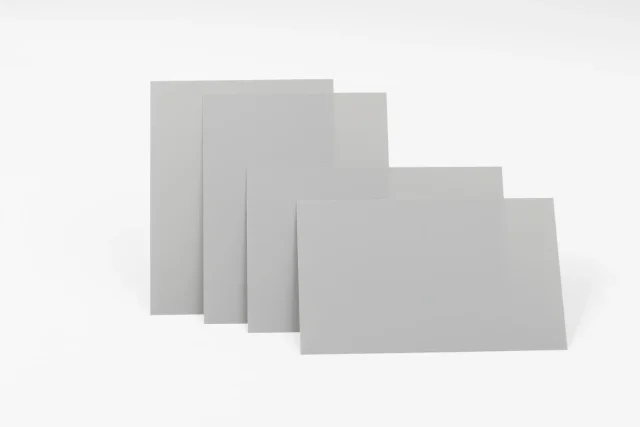
To assist customers in minimizing redundant screening efforts during early project stages, INNOVACERA has prepared silicon nitride substrate samples that have undergone comprehensive third-party performance testing. These samples are readily available for customers’ preliminary material evaluation, process matching, and application testing.
The samples were tested by the internationally recognized TÜV SÜD laboratory, with key data summarized below:
| Item | Test Information |
|---|---|
| Product | Silicon Nitride Substrate |
| Sample No. | SU0042 |
| Product Batch | 202510310201 |
| Report No. | TC.25.11.005161 |
| Report Issue Date | November 21, 2025 |
| Flexural Strength Test Method | GB/T 45763-2025 |
| Average Flexural Strength | 820 MPa |
| Thermal Conductivity | 104.3 W/m·K |
| Thermal Conductivity Test Conditions | 25°C, DISK Planar heat source method |
During flexural strength testing (test environment: 23±2°C, 50±5% RH; test speed: 3mm/min; span: 50mm), the five specimens yielded results of 813 MPa, 785 MPa, 837 MPa, 850 MPa, and 811 MPa, demonstrating exceptional consistency, with an average value reaching 820 MPa. Thermal conductivity was measured using the DISK Planar heat source method, yielding 104.3 W/m·K at 25°C.
These test results not only correspond to the specific samples and batches listed in the report but also provide customers with clear, traceable data for initial material screening.

Why are High Thermal Conductivity and High Strength Crucial Simultaneously?
For high-power density modules (e.g., SiC modules), ceramic substrates not only fulfill electrical insulation and heat transfer functions but also must withstand immense mechanical stresses arising from the copper layer, chips, solder, and coefficient of thermal expansion (CTE) mismatches between dissimilar materials.
- High Thermal Conductivity (>100 W/m·K): Facilitates rapid transfer of heat generated during chip operation to the heat dissipation structure, thereby reducing localized temperature rise and enhancing the device’s current output capability.
- High Flexural Strength (>800 MPa): Enables the substrate to endure stresses from assembly, soldering, severe thermal cycling, and mechanical loads.
If a material possesses only superior thermal performance but insufficient mechanical strength,the substrate may develop micro cracks during processing, copper bonding,or prolonged thermal cycling,leading to insulation failure.Conversely,if mechanical strength is high but thermal conductivity is limited,it could compromise the heat dissipation efficiency of power devices. Therefore, in new energy vehicle power modules, IGBTs, SiC power devices, and high-power electronic packaging, customers must concurrently evaluate both the thermal and mechanical properties of silicon nitride substrates.
Which Stages Can Pre-Validated Samples Expedite?
The utilization of samples with existing third-party test data does not imply that customers can bypass their own qualification and reliability validation, nor does it guarantee that the final module will pass all application tests. However, it can significantly reduce uncertainties in the early stages of a project.
Based on existing test data, customers can more rapidly proceed with:
- Preliminary material screening and benchmarking;
- Thermal performance comparison and thermal simulation validation;
- Evaluation of metallization and Active Metal Brazing (AMB) processes;
- Dimensional and surface processing validation;
- Power module packaging tests;
- Thermal cycling and mechanical reliability tests.
Compared to starting from scratch to identify materials and prepare test samples, using pre-validated samples with fundamental performance data helps shorten the time required for sample preparation and initial assessment, allowing engineering teams to transition more quickly into actual process validation phases.
Support Available from INNOVACERA
INNOVACERA offers comprehensive material samples, dimensional processing, and technical communication support for silicon nitride substrate projects, tailored to specific customer application conditions. This includes:
- Pre-validated silicon nitride substrate samples with third-party test reports;
- Customized processing of substrates in various dimensions and thicknesses;
- Strict control over surface flatness and roughness;
- Precision machining of holes, grooves, and irregular structures;
- Discussions on metallization and copper bonding process adaptation (e.g., AMB);
- Application support for power modules and high-reliability electronic packaging.
Customers in the material selection, supplier integration, or second-source qualification stages are encouraged to prioritize requesting samples for internal testing.
Obtain Tested Samples, Accelerate Project Validation
The ultimate selection of silicon nitride substrates still requires a comprehensive assessment considering chip power, module structure, metallization process, copper thickness, operating temperature, and reliability requirements.
If your project is encountering challenges such as lengthy sample preparation times,insufficient fundamental data,slow supplier qualification progress, or difficulty in comparing material performance, we invite you to contact INNOVACERA.Obtain pre-validated silicon nitride substrate samples and relevant test documentation.
Contact us to request samples and initiate material,metallization or module packaging tests,thereby accelerating your project timeline!