As consumers increasingly demand better user experiences from hair styling tools—such as rapid heating, precise temperature control, low-temperature hair protection, and one-pass styling—flat irons are evolving toward faster heat-up times, higher power density, uniform heating, and long-term stable operation.
As the core heating element in flat irons, heaters not only generate and transfer heat but must also endure repeated thermal cycles during prolonged use—including initial startup heating, heat loss when clamping hair, temperature recovery, and frequent on/off cycling.
Therefore, heater performance directly impacts the following aspects of a flat iron:
- Heating speed
- Temperature stability
- Heat distribution uniformity
- Temperature recovery rate
- Product size and structure
- Long-term service life
- User styling experience
Currently, PTC (Positive Temperature Coefficient) and MCH (Metal Ceramic Heater) are two common heating solutions in straightening devices and other personal care appliances.
PTC, with its mature material system, self-regulating characteristics and cost advantages, has a good application foundation in basic and cost-sensitive products; while MCH, with its rapid thermal response, high power density, compact structure and good temperature control adaptability, is more suitable for mid-to-high-end, professional-level and those requiring rapid heating and temperature recovery in straightening devices.
Then, for high-end straightening devices that pursue rapid heating, stable temperature control and more compact structure, why is MCH gaining more attention? Compared to PTC, what specific product design problems can it solve?
I. Why do straightening devices need high-performance heaters?
The heater of a straightening device is not simply a continuous heating element.
During actual use, the heating element will constantly go through:
Power-on heating → Reach the set temperature → Contact the hair to dissipate heat → Power compensation → Temperature recovery → Shutdown and cooling
This cycle.
Especially in high-temperature and high-frequency usage environments, the heating element, metal thermal conductive layer and heating plate will repeatedly undergo thermal expansion and contraction. If the material and structure cannot withstand long-term thermal cycling, it may cause:
- Reduced heating speed
- Decreased temperature stability
- Increased local temperature difference
- Changes in heating performance
- Component failure
Therefore, high-end straightening devices require not only “able to heat”, but also need to consider:
- Rapid heating capacity
- Higher power density
- Good temperature uniformity
- Rapid temperature recovery ability
- Compatibility with temperature sensors and control systems
- Long-term thermal cycling stability
- Adaptability of structural size to product design
This is also an important reason why MCH has application advantages in high-performance straightening devices.
II. What are the differences between PTC and MCH heaters?
1. PTC heater: Mature and economical self-regulating heating solution
PTC is the abbreviation of Positive Temperature Coefficient, which is a heating element that continuously heats up.
Common PTC heating elements use PTC ceramic materials based on barium titanate. One of its important features is that the material resistance changes with temperature, thereby generating a certain self-regulating heating effect.
The main advantages of the PTC solution include:
- Has certain self-regulating characteristics;
- Heating technology is mature;
- Control system is relatively simple;
- Supply chain is mature;
- Has a comprehensive cost advantage;
- Suitable for products with relatively moderate requirements for rapid heating.
For entry-level and some mid-range straightening devices, PTC can meet basic heating and styling needs.
However, when products further pursue rapid heating, high power density, rapid temperature recovery and more flexible electronic temperature control, they need to consider the structure, power output and the entire temperature control system of PTC.
It should be noted that the self-regulating characteristic of PTC does not equal precise temperature control. The actual temperature is still affected by PTC material properties, heating plate structure, environmental temperature, cooling conditions and control methods.
2. MCH heater: Rapid response solution for high-performance straightening devices
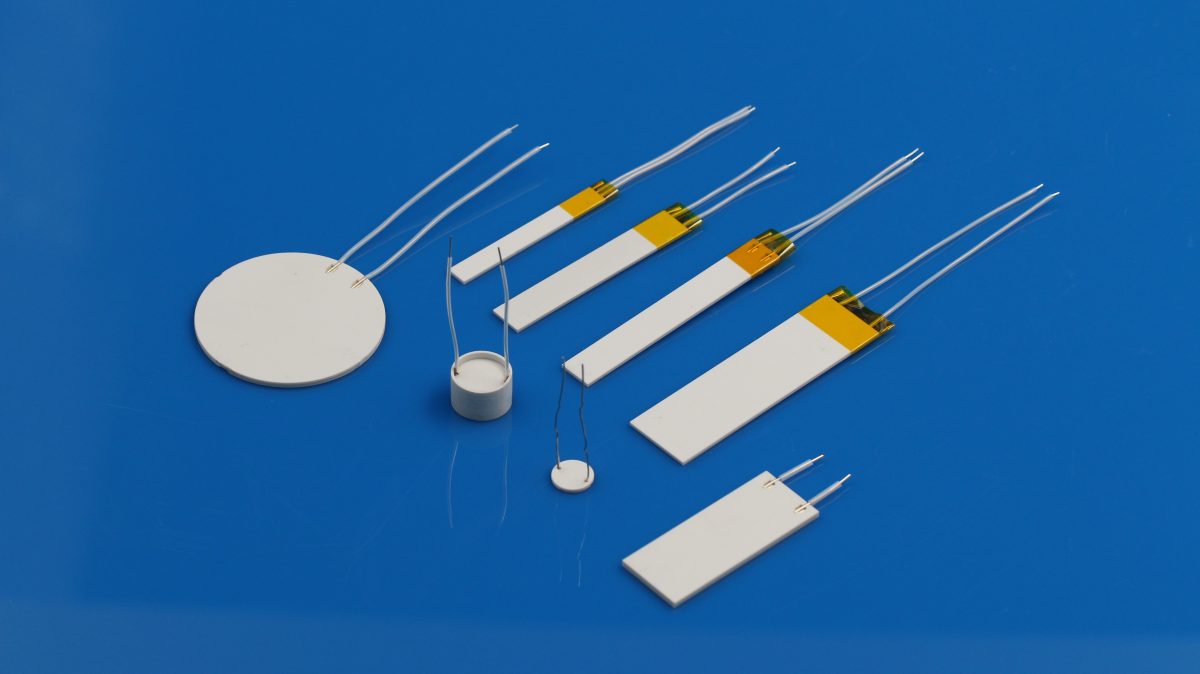
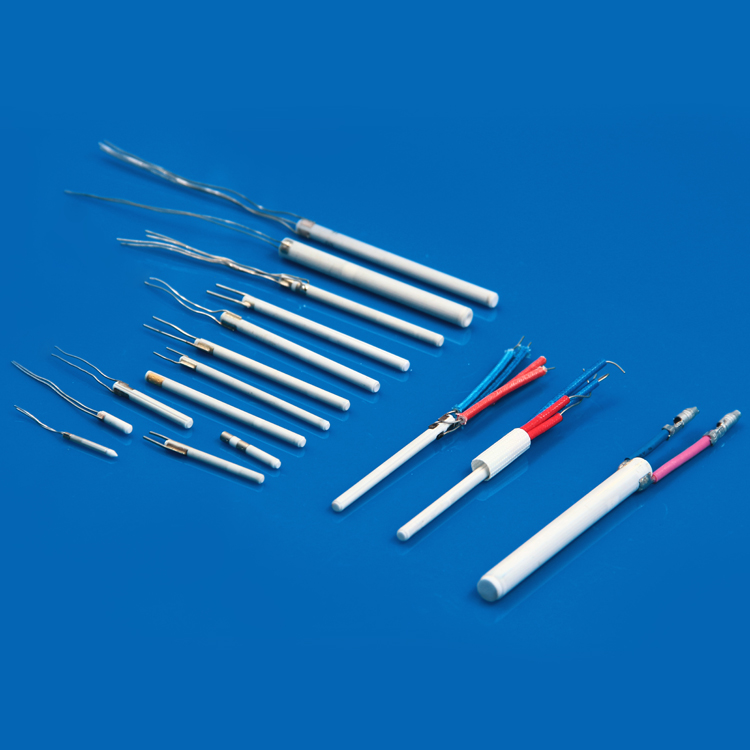
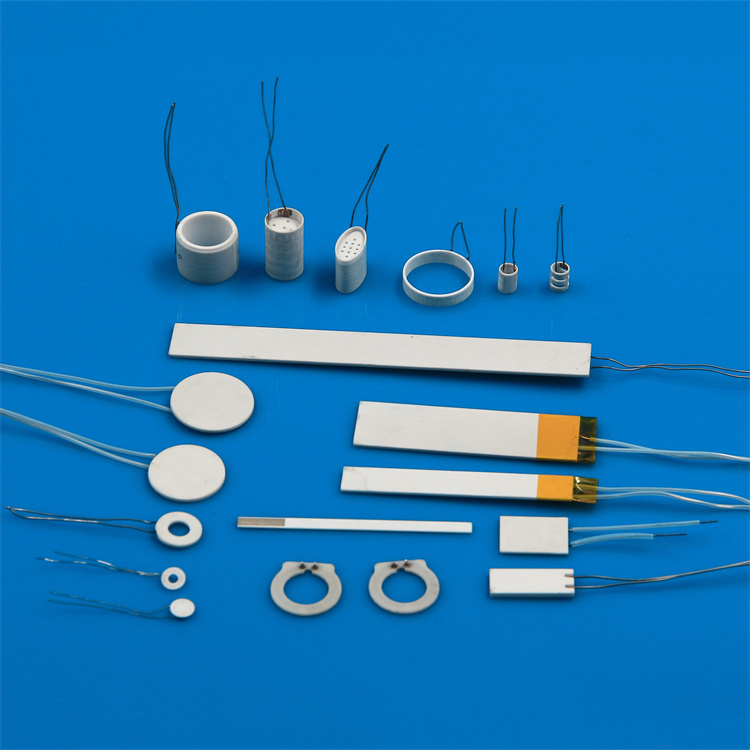
MCH, or Metal Ceramic Heater, is a heating element that integrates resistance heating materials with a ceramic substrate. MCH usually uses alumina ceramics as the base material, and forms a heating circuit by arranging high-temperature-resistant metal heating materials according to the designed resistance lines. Then, through the high-temperature sintering process, a stable integrated structure is formed.
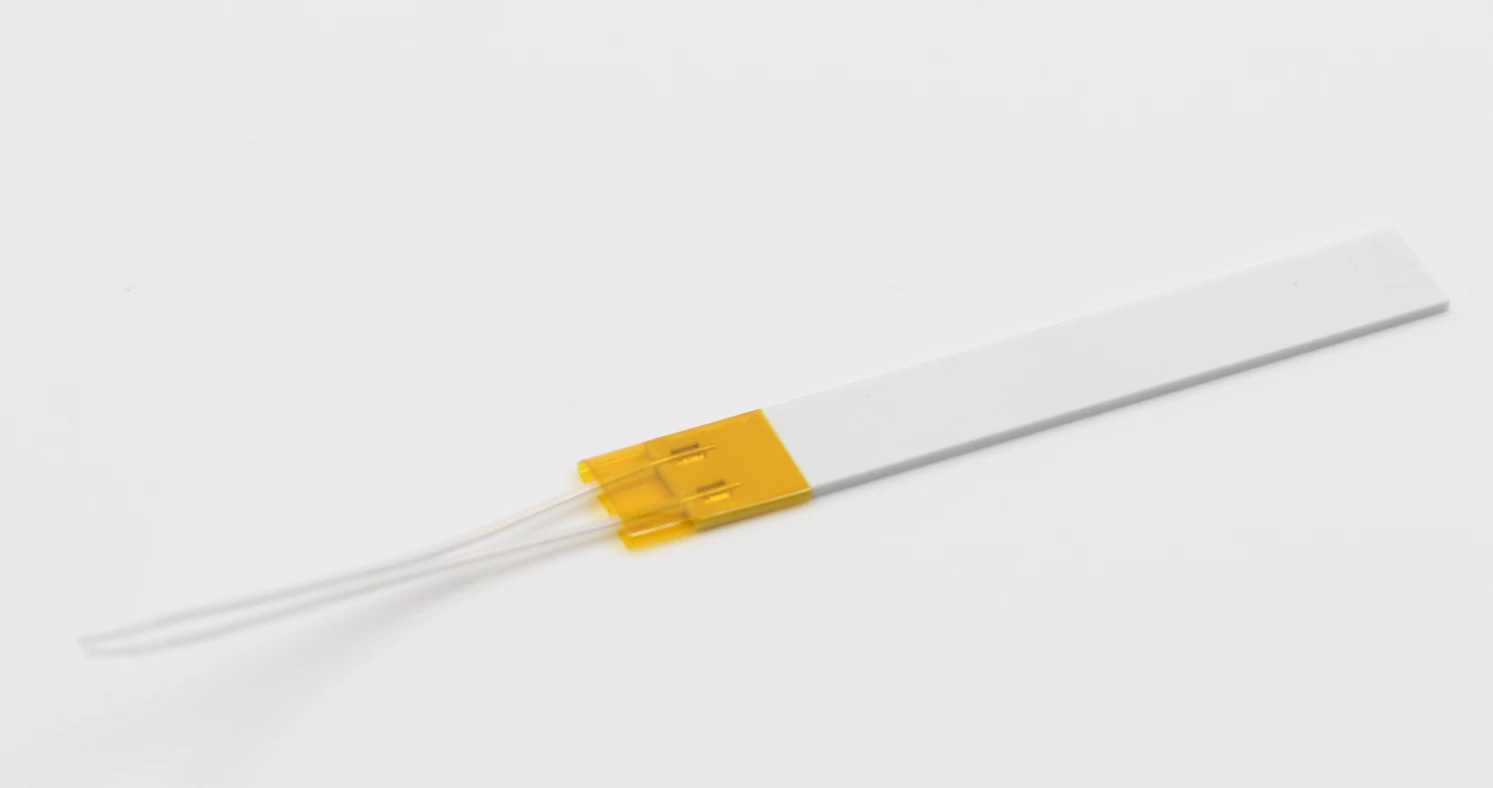
Compared with traditional block-shaped heating elements, the heating circuit of MCH has higher design flexibility. It can be optimized according to the size, power and heating area of the product.
The main features of MCH include:
- Rapid heating
- High power density
- Rapid thermal response
- Good temperature uniformity
- Compact structure
- Dimensions and resistances can be designed according to the application
- Suitable for cooperating with temperature sensors and electronic control systems
- Good long-term thermal cycling stability
These features make MCH particularly suitable for straighteners that have high requirements for heating speed, temperature recovery, consistency of shape and product miniaturization.
III. Why do high-end straighteners choose MCH?
1. Rapid heating, shortening waiting time
For straighteners, the waiting time after startup is one of the most intuitive user experiences.
MCH adopts a highly integrated ceramic heating structure. The heating circuit can be designed according to the product requirements for power and resistance, thus achieving a faster thermal response.
Under reasonable power, size and structure design conditions, MCH can reach the working temperature required by the straightener in a relatively short time.
The actual heating time depends on:
- Rated power
- Working voltage
- MCH size
- Heating area
- Target temperature
- Heating plate material
- Heating plate thickness
- Overall thermal resistance of the product
- Temperature control strategy
Therefore, when comparing different heating schemes, tests should be conducted under the same working voltage, power, heating area and target temperature.
For high-end straighteners emphasizing “rapid startup”, the rapid thermal response of MCH can effectively improve the user experience of the product.
2. High power density, improving temperature recovery speed
After the straightener clamps the hair, it continuously transfers heat to the hair, and the temperature of the heating plate also changes accordingly.
If the power output and thermal response of the heater are insufficient, it will take longer to restore to the target temperature.
MCH can achieve a higher power density through the design of the heating circuit within the limited structural space.
Its advantages can be understood as:
Faster heat compensation → Faster temperature recovery → More stable styling temperature
This is particularly important for professional straighteners that need to work continuously and wide-board straighteners.
Of course, power density is not necessarily the higher the better. The actual design needs to consider the layout of the heating circuit, heating plate material, insulation structure and heat dissipation conditions to avoid local heat concentration.
3. Heating circuit design is flexible, conducive to improving heating uniformity
For straighteners, the temperature uniformity of the heating plate directly affects the styling effect.
If the heating plate has obvious hot and cold zones, it may lead to:
Local temperature too high → Uneven heating of the hair
Local temperature insufficient → Need to re-plate
The heating circuit of MCH can be designed according to the size and shape of the heating plate.
Engineers can optimize the heat distribution by adjusting:
- Heating circuit length
- Heating circuit spacing
- Heating area
- Resistance distribution
- Heater position
4. Suitable for precise electronic temperature control
Modern high-end straighteners usually need to provide multiple temperature settings to meet different hair types and styling needs.
MCH has the characteristic of rapid thermal response and can be used with:
- NTC temperature sensors
- MCU
- PCB control system
- PID or other temperature control algorithms are coordinated.
The basic control process can be understood as:
temperature detection → the control system makes a judgment → adjust the input power → MCH responds quickly → temperature recovers and stabilizes.
This combination can help the product achieve more flexible temperature control.
It should be emphasized that: MCH itself does not equal an accurate temperature control system. The final temperature control accuracy depends on the heater, temperature sensor, control circuit, control algorithm, and the overall product structure.
5. Compact structure, more suitable for slim and portable designs
With the development of wireless hair dryers, mini hair dryers and travel hair dryers, the internal space of the products is becoming increasingly limited.
MCH can integrate the heating circuit with the ceramic substrate and design the size and electrical parameters according to the product requirements.
Based on actual projects, it can be evaluated as:
- Length
- Width
- Thickness
- Resistance value
- Rated power
- Working voltage
- Heating area
Therefore, MCH is particularly suitable for:
- Mini hair dryers
- Portable hair dryers
- Wireless hair dryers
- Professional hair styling tools and other products that are sensitive to space and weight.
6. Good long-term thermal cycling stability
Hair dryers will undergo a large number of heating and cooling cycles during long-term use.
Therefore, the heater not only needs to provide heat quickly, but also needs to maintain stable performance under repeated thermal cycles.
MCH uses a ceramic substrate and an integrated heating structure, and under reasonable working temperature, electrical parameters, and thermal cycling conditions, it has good long-term stability.
The actual service life still depends on:
- Working temperature
- Working voltage
- Power
- Thermal cycling frequency
- Heating structure
- Leads and connection structure
- Insulation design
- Manufacturing process
Therefore, when selecting MCH, the lifespan and reliability should be evaluated based on actual working conditions.
IV. Performance Comparison between MCH and PTC Heaters
| Performance indicators | PTC Heater | MCH Heater |
|---|---|---|
| Heating response speed | Relatively fast | Quick |
| Power density | Moderate | Higher |
| Temperature recovery | Relatively slow | Quick |
| Temperature control | Self-regulating characteristics | Suitable for electronic closed-loop control |
| Heating uniformity | Depends on the structure | Heating circuit can be optimized |
| Structural size | Depends on the product structure | Compact and customizable |
| Electrical insulation | Good | Excellent |
| Thermal cycling stability | Good | Good |
| Product cost | Lower | Relatively higher |
| Suitable products | Basic type, cost-sensitive type | Mid-range, professional type, high-performance type |
| Core advantages | Self-regulating, mature, economical | Quick heating, high power density, fast response, highly configurable |
Note: Specific performance depends on heater specifications, working voltage, rated power, heating area, heating plate structure and test conditions. Different products cannot be directly compared based on material type for individual parameters.
V. Which hair dryers are more suitable for choosing MCH?
MCH is not a universal replacement for all hair dryers, but it is more valuable under the requirements of rapid heating, high power density, rapid temperature recovery, uniform heating and product miniaturization.
1. Professional salon-level hair dryers
Professional hairstylists usually need to use hair dryers continuously and have higher requirements for heating speed, temperature recovery and long-term stability.
The fast heat response and good thermal cycling stability of MCH help maintain a stable working state, suitable for professional hair styling tools that require frequent use.
2. Mid-range consumer-level and wide-board hair dryers
Mid-range consumers usually pay more attention to:
- Startup waiting time
- Temperature settings
- Styling efficiency
- Temperature stability
- One-step forming experience
For wide-board hair dryers, maintaining the uniformity of the entire heating area’s temperature becomes more important after the heating area increases. MCH can perform power distribution in different areas through its heating circuit design, making it suitable for products that have high requirements for uniform heating across wide plates.
3. Wireless and Portable Straightening Devices
Wireless straightening devices are limited by battery capacity and product size, so the heating system needs to quickly reach the target temperature within the limited space and power conditions.
The rapid heat response and compact structure of MCH can provide certain advantages for wireless product design.
However, the final battery life is not only dependent on the heater but also on battery capacity, input power, control strategy, insulation structure, and usage method.
Therefore, the value of MCH in wireless products is more suitable to be evaluated from aspects such as quickly reaching the working temperature, reducing waiting time, and compact design, rather than simply being attributed to a fixed percentage of energy saving.
VI. How to Choose an MCH Heater Suitable for Straightening Devices?
For OEM/ODM projects, the MCH heater is not “the smaller the size, the higher the power is better”, but needs to be matched according to the overall machine parameters.
When selecting, it is recommended to focus on confirming:
1. Working voltage
For example, 12 V, 24 V, 110 V or 220–240 V.
Different voltage platforms require matching different resistance designs.
2. Rated power
Rated power directly affects the heating speed and temperature recovery ability, and needs to be determined in combination with the heating area and target temperature.
3. Target temperature
For example, 160°C, 180°C, 200°C or 220°C.
Different target temperatures correspond to different heater designs and temperature control strategies.
4. Heater size Including:
- Length
- Width
- Thickness
- Installation space
For mini and wireless hair dryers, size is often an important limiting factor.
5. Heating time
It should be clarified: How many seconds does it take to rise from room temperature to the target temperature?
At the same time, the testing environment, initial temperature, heating plate structure and testing method should be unified to be able to effectively compare different schemes.
6. Temperature uniformity
Temperature uniformity needs to be tested in combination with the actual heating plate, and cannot be judged solely based on the MCH itself.
7. Temperature control method
If using MCH + NTC + MCU/PCB, it is necessary to comprehensively match the resistance characteristics, power and temperature control system of the heater.
Conclusion: Why do high-end hair dryers choose MCH?
PTC and MCH are not a simple substitution relationship, but provide different technical solutions for different product positioning.
PTC, with its mature material system, self-regulating characteristics and cost advantages, is suitable for products with relatively moderate requirements for rapid heating, power density and temperature response.
For high-performance hair dryers that pursue rapid heating, high power density, rapid temperature recovery, uniform heating, compact design and long-term stable operation, MCH has greater application advantages.
Therefore, if the product positioning of the hair dryer is:
Rapid heating + Stable temperature + Efficient styling + Compact design
Then MCH is worthy of priority technical evaluation.
For OEM/ODM customers, choosing MCH is not only choosing a heating element, but also providing greater engineering optimization space for the heating speed, temperature control, heating uniformity and product design of the entire hair dryer.
When rapid response, high power density and product performance become core competitiveness, MCH is a worthy heating solution for high-performance hair dryers.
Ⅶ. Innovacera MCH Ceramic Heating Sheet Solution
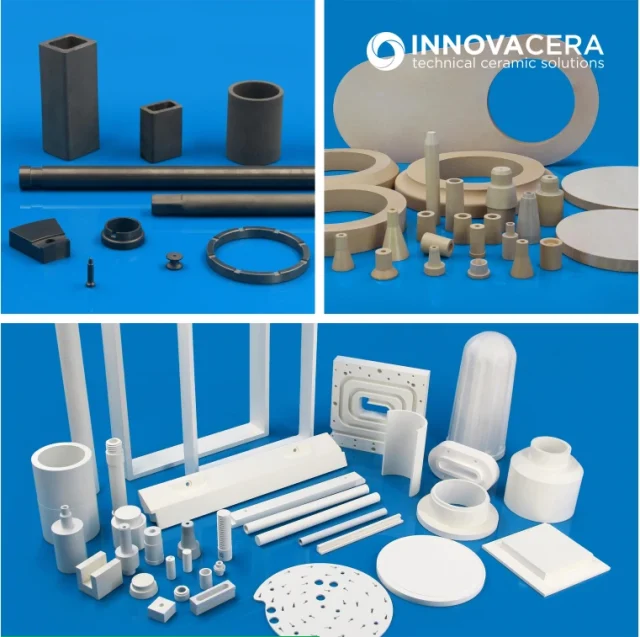
Innovacera can provide ceramic heating solutions such as MCH metal ceramic heating sheets to meet the heating application requirements of hair dryers, curling irons, personal care appliances and other small household appliances.
The MCH heating sheet adopts a structure combining ceramic substrate and metal heating circuit, and through the high-temperature sintering process forms a stable ceramic heating element, featuring rapid thermal response, high power density, good electrical insulation performance and compact structure.
For different products with working voltages, power, size and target temperatures, Innovacera can conduct MCH heater design evaluation based on specific application requirements.
For special projects, it can be evaluated based on customer drawings and product parameters:
- Heater size
- Resistance value
- Working voltage
- Rated power
- Heating area
- Installation method
- Temperature control system matching
The product can be applied to:
- Hair dryers
- Curling irons
- Hair styling tools
- Personal care appliances
- Small household appliance heating equipment
For OEM/ODM batch projects, customized production plans can be further evaluated based on the specific requirements of the customers.
If you are developing straighteners, curlers or other personal care products that require rapid heating, stable heating and precise temperature control, please feel free to contact us at sales@innovacera.com. We can assess the suitable MCH ceramic heater solution based on the specific working parameters.