In modern manufacturing and precision engineering, TIG (Tungsten Inert Gas) welding is widely used for high-quality welding due to its stable arc and excellent weld quality. This process has very high requirements for the coverage effect of the protective gas and the stability of the welding. As one of the key components of a TIG welding gun, ceramic gas nozzles play a crucial role in controlling the flow and coverage area of the shielding gas, which directly affects the stability of the arc and the quality of the weld seam. With the continuous increase in the demand for welding applications, multi-specification and high-performance ceramic nozzles are becoming an important guarantee for high-precision welding.
High-temperature material: The cornerstone of precise welding
The TIG welding process generates a large amount of heat, and common engineering materials are unable to withstand such high temperatures for a long time. Modern high-quality ceramic nozzles usually use high-quality aluminum oxide (Al3O3) as the base material. The precision ceramics formed through high-temperature sintering possess excellent thermal stability and can maintain their stable performance during the welding process.
Compared with metal nozzles, ceramic materials not only have higher heat resistance but also exhibit excellent thermal inertia. During long-term continuous welding or high-current operations, the alumina nozzle is less likely to deform or crack, ensuring the stability of the gas flow path. Meanwhile, its smooth inner surface can effectively reduce the adhesion of welding splashes. Even after multiple arc starts, it can simply be cleaned to restore its good condition, significantly extending the service life of the consumables.
Multi-specification design: Precisely matching different process requirements
1. Diameter size and gas flow rate
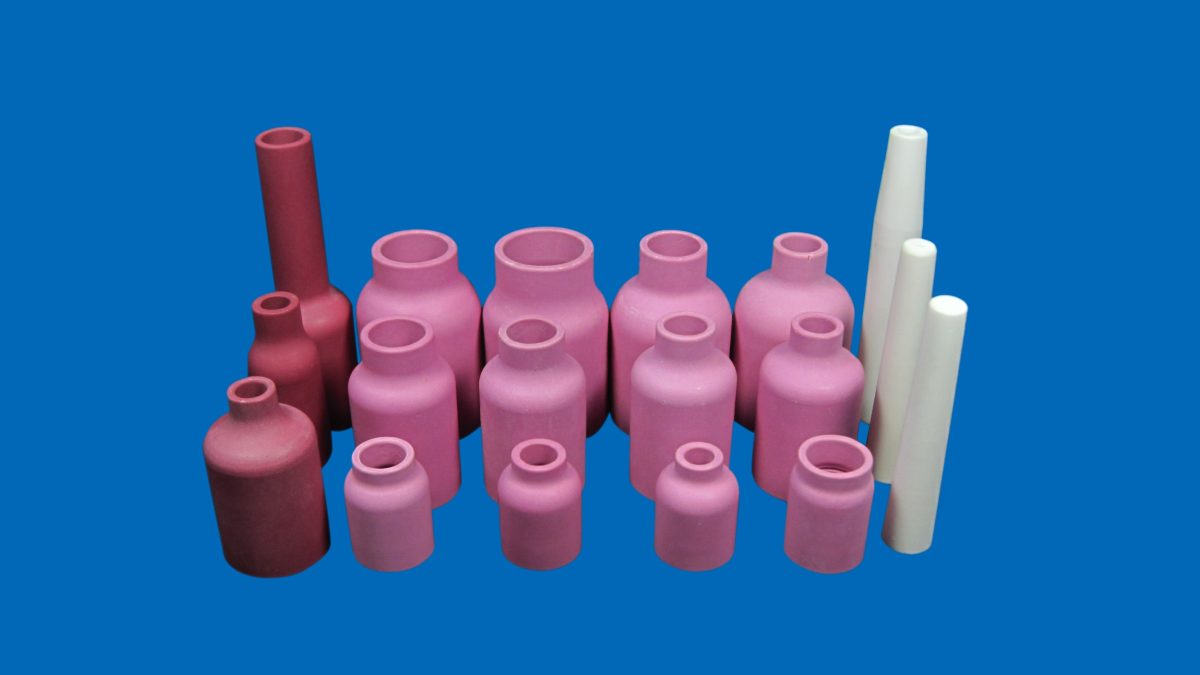
Ceramic gas nozzles are usually classified according to the inner diameter size of the nozzle. Different specifications can provide different ranges of gas protection effects.
In practical applications, nozzle specifications are typically identified by numbers (such as #4, #6, #8, #10, #12, etc.) along with the corresponding inner diameter in millimeters, for example, 5 mm, 7.5 mm, 8 mm, 10 mm, 12.5 mm, etc.
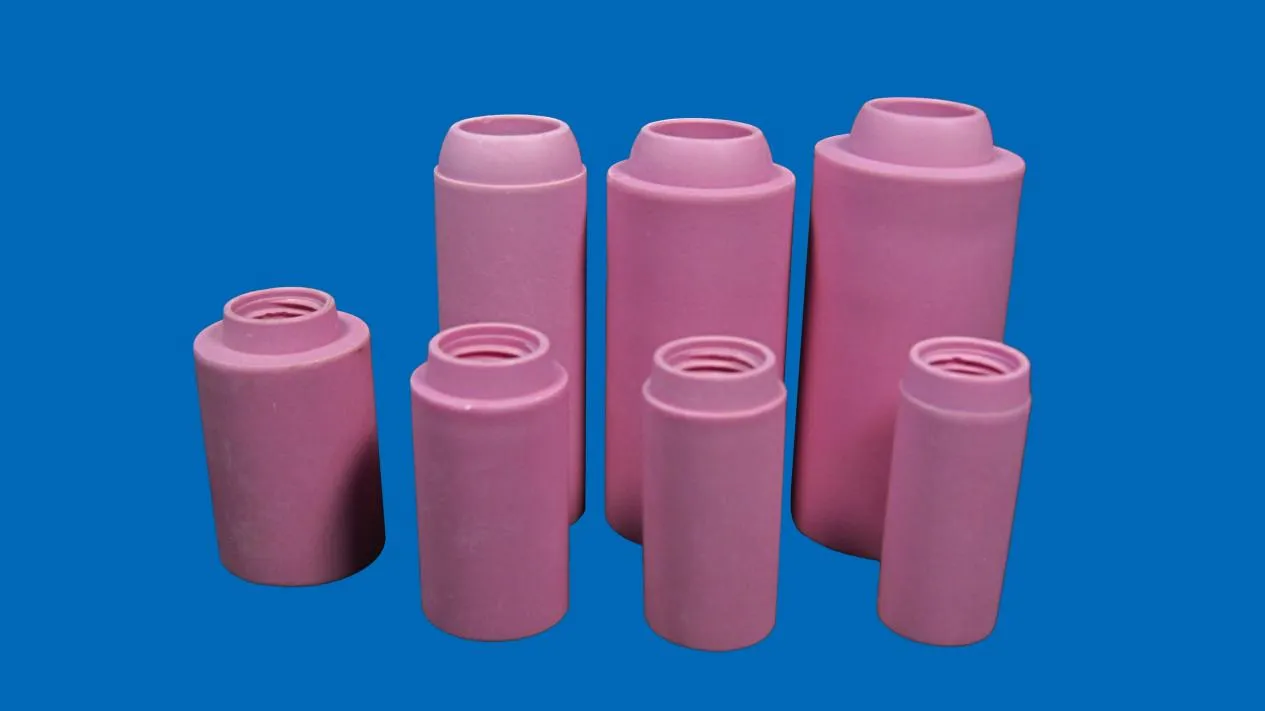
Nozzles of different inner diameters have distinct characteristics in terms of gas flow distribution and protection range:
• Small-diameter nozzles (such as #4, #5, #6)
Suitable for low-current or precision welding scenarios, such as thin plate welding or processing of small-sized parts. These nozzles can generate a more concentrated protective airflow, precisely covering a small molten pool area. They are commonly used in stainless steel pipe fittings, thin-walled structural components, and some precision welding applications.
• Large-diameter nozzles (such as #8, #10, #12 and above)
When the welding current is high or a wider gas protection range is required, the large-diameter nozzle can provide a wider gas coverage area, allowing the protective gas to form a stable gas layer, thereby effectively reducing weld oxidation. Such nozzles are commonly used in welding of materials with high requirements for gas protection, such as aluminum alloys and titanium alloys.
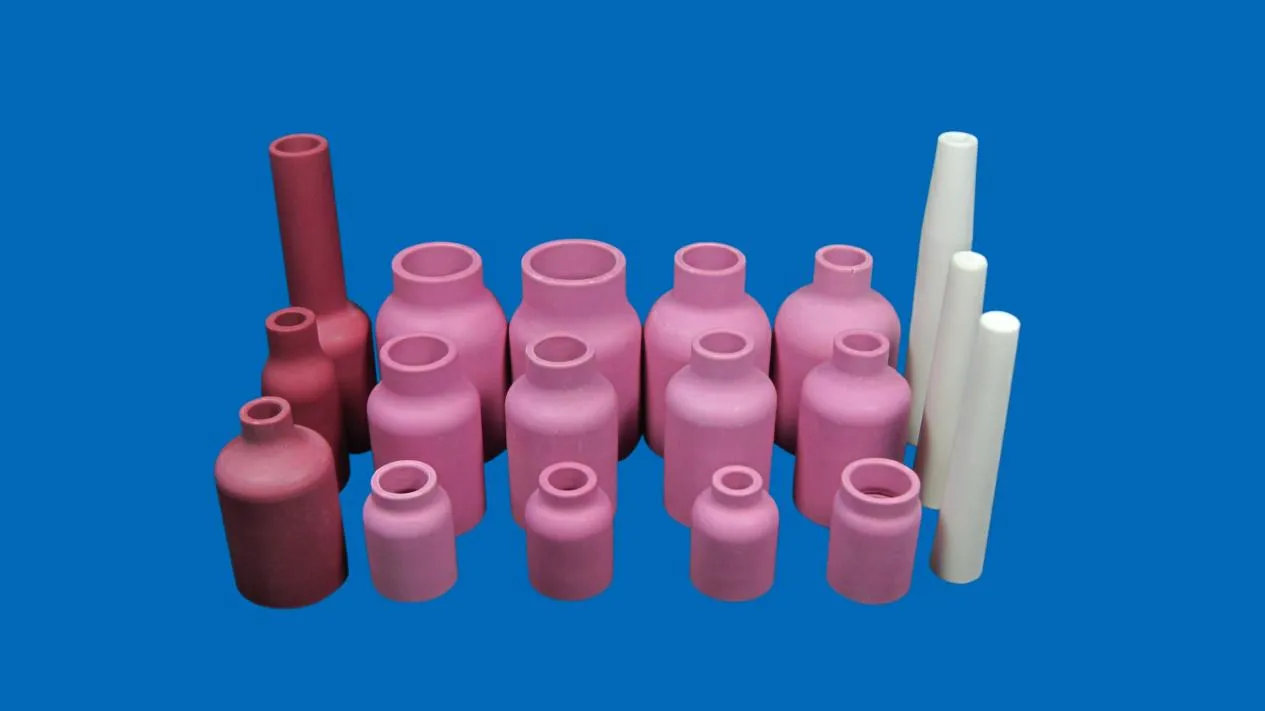
2. Geometric shapes and lengths
Apart from the inner diameter size, the geometric shape and length of the nozzle also have an impact on the gas protection effect.
• Standard type and long type nozzles
In some narrow structures or deep groove welding operations, longer-sized nozzles can extend the gas protection range to deeper positions, enabling the shielding gas to effectively cover the welding area even when the tungsten electrode extends relatively long, thus maintaining the stability of the arc.
• Optimize the structural design
Some nozzles adopt expanded or optimized cylindrical structure designs to improve the gas flow state, reduce turbulence, and make the protective gas distribution more uniform. This design helps enhance the gas protection effect in the welding area, thereby improving the quality and stability of the weld seam.
Application scenarios: From precision manufacturing to industrial welding
The multi-specification TIG ceramic nozzles can adapt to various welding conditions, and their application scope covers a wide range of scenarios from precision manufacturing to industrial equipment welding.
• Aerospace and High-End Manufacturing: During the welding process of titanium alloys, stainless steel and other high-performance alloys, strict requirements are imposed on gas protection. The appropriately sized ceramic nozzles can provide a stable protective gas flow. When used in conjunction with components such as gas lenses, they help reduce weld oxidation and improve welding quality.
• Automobile manufacturing and industrial pipe welding: In the welding of automotive exhaust systems, pressure pipelines and structural components, the selection of nozzle size will affect the gas protection range. Longer or larger-sized nozzles can provide a more stable gas coverage in some confined spaces or deep groove welding operations.
• Automated welding equipment: In automatic TIG welding systems (such as pipe plate welding or automated production lines), ceramic nozzles are widely used in welding gun components due to their excellent heat resistance, insulation properties, and high dimensional stability, thereby ensuring the stability and repeatability of the welding process.
• Precision welding and processing of small structural components: For the welding of thin plates or small-sized metal parts, the small-diameter nozzle can provide more concentrated gas protection, which helps to improve the weld formation quality and reduce welding defects.
Innovacera offers a variety of specifications of TIG ceramic nozzles to meet the application requirements of different welding currents, material types and working environments. Please feel free to contact us at sales@innovacera.com for more product information.