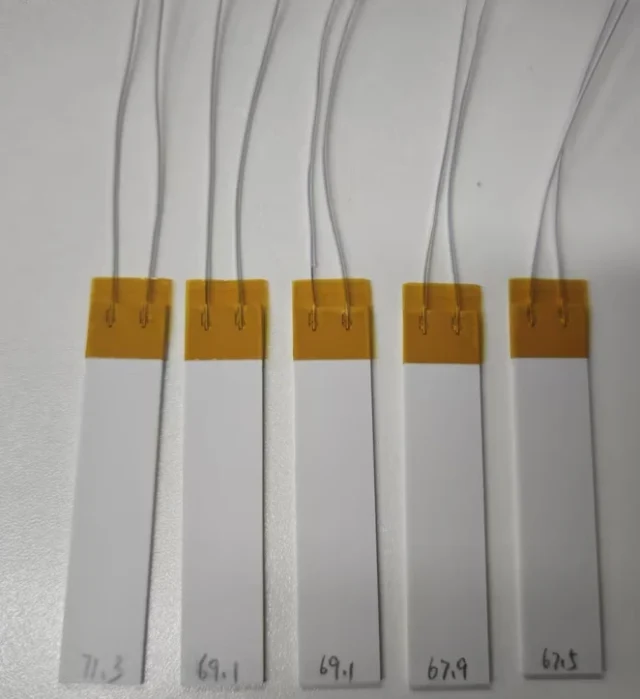
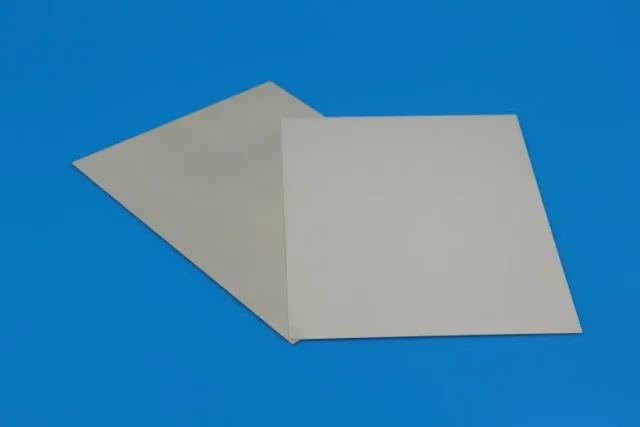
A personal note from Innovacera at PCIM 2026, Nuremberg
Every June, the global power electronics community asks the same question – or rather, travels thousands of miles to find the answer in person. PCIM stands for Power Conversion and Intelligent Motion. But for those of us who supply the enabling materials, it means something deeper: thermal management, reliability, and making the right sourcing choices.
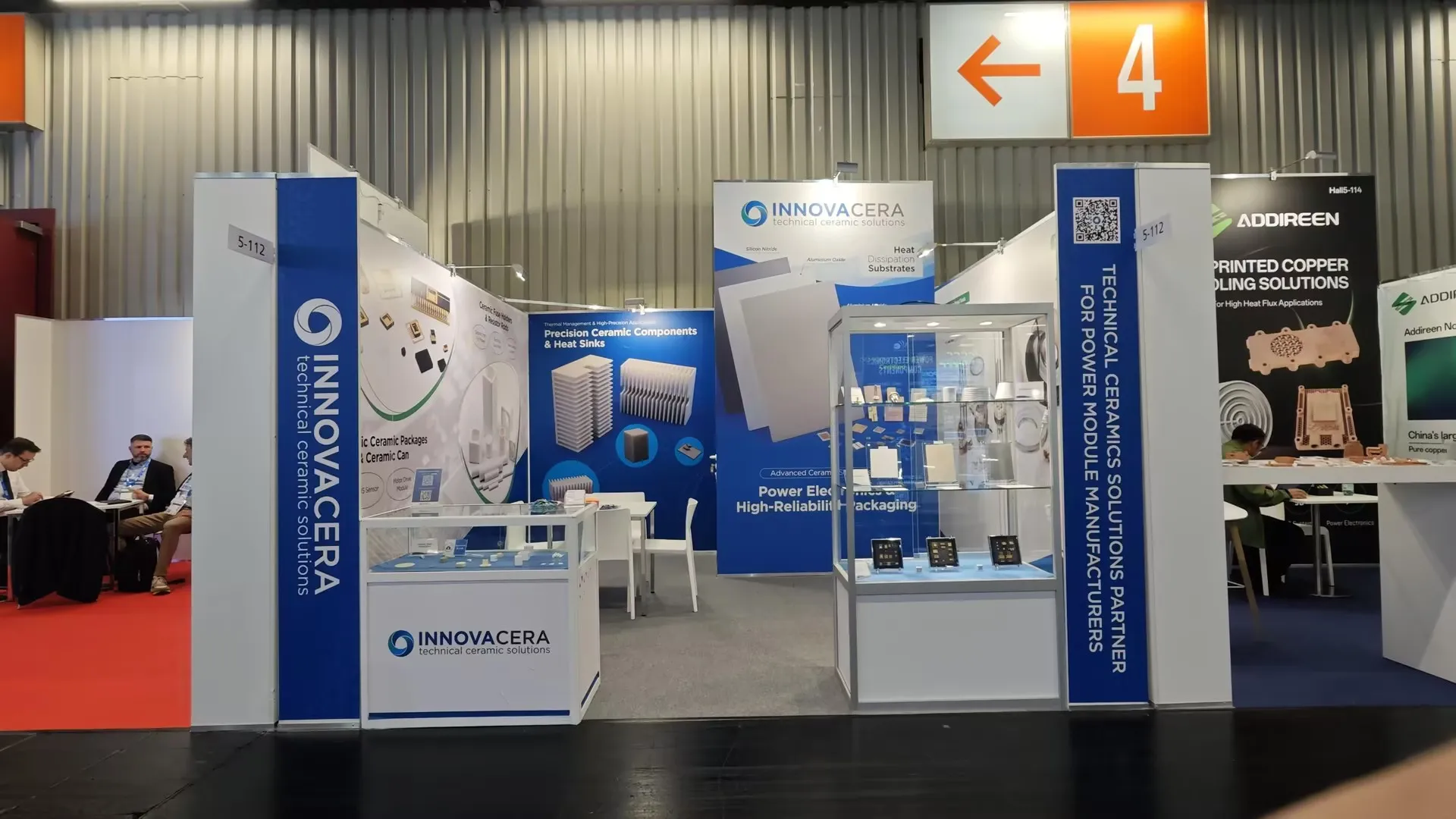
I’m writing this from our booth (Hall 5-112) to share a candid, engineer-to-engineer perspective on ceramic substrates – and to tell you exactly what’s Innovacera advantages and disvantages.
The silent crisis in power electronics (still heat)
A 10 °C rise in operating temperature roughly doubles the failure rate. SiC and GaN devices run hotter and more power-dense than ever. IGBT modules need to survive tens of thousands of power cycles. And the foundation of every power module – the ceramic substrate – is often the bottleneck.
That’s where we come in. But with a twist.
What Innovacera does best: bare ceramic substrates
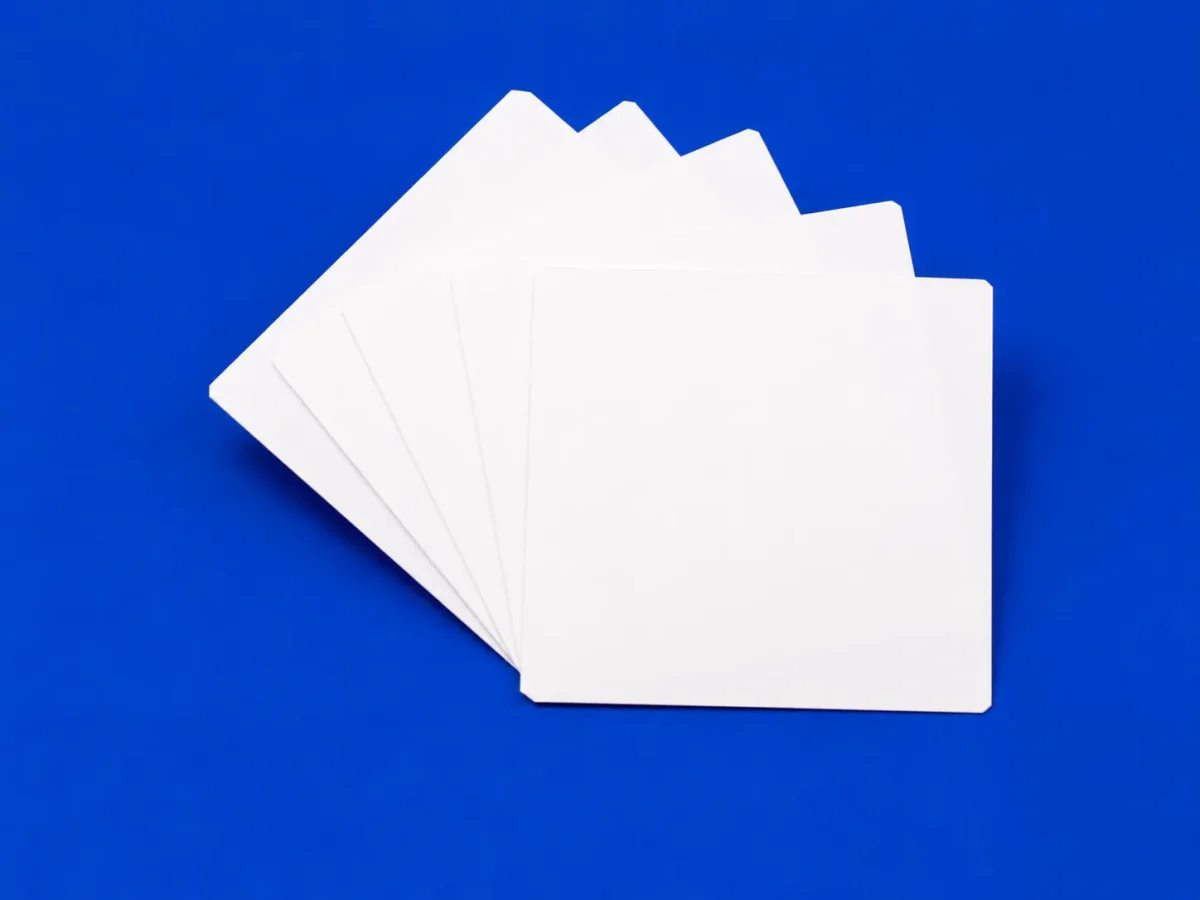
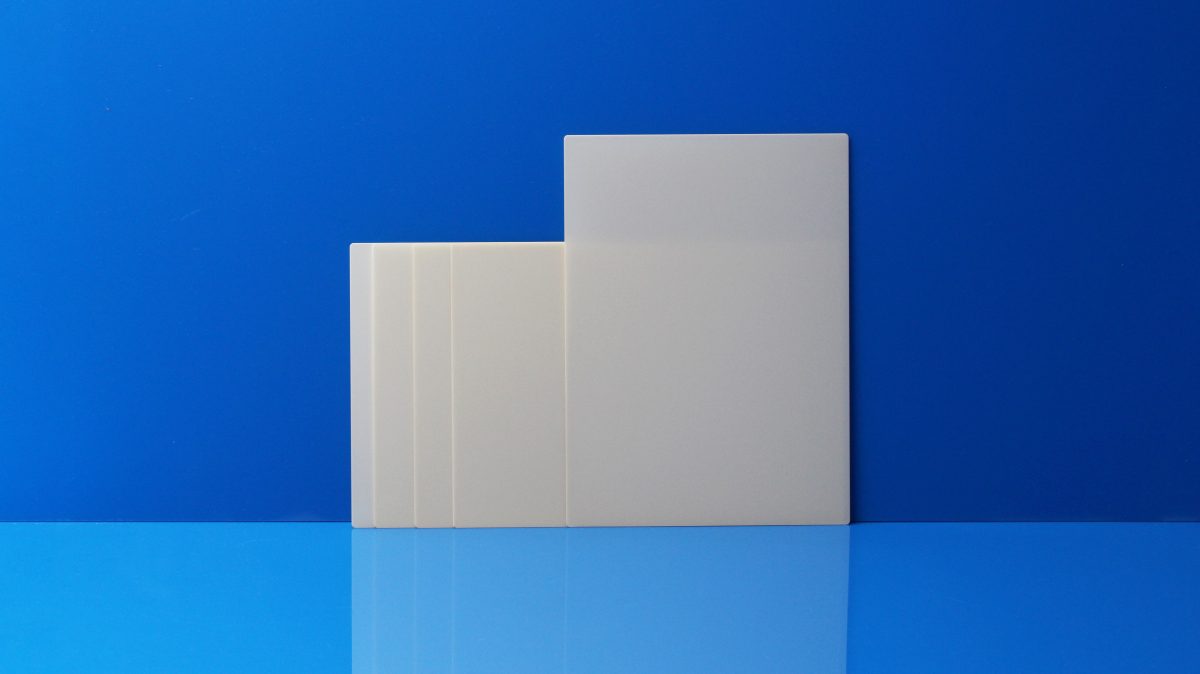
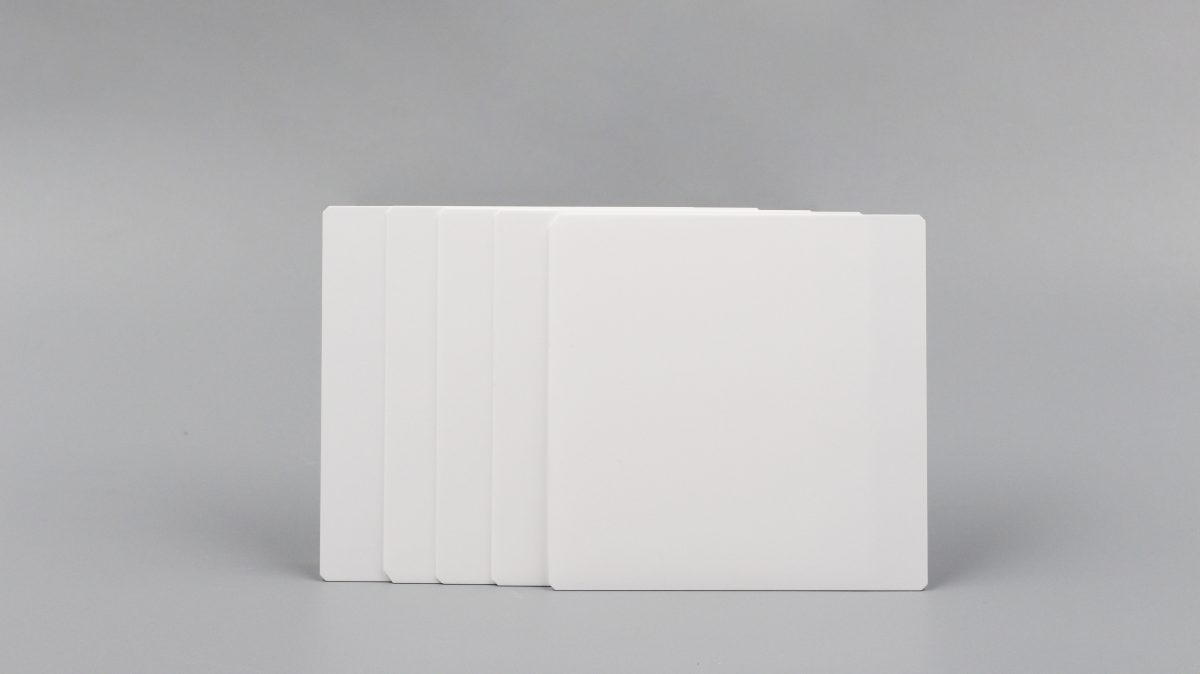
We manufacture high-quality aluminum nitride (AlN) and alumina (Al2O3) bare substrates. No metal layers. Just the pure ceramic core – precisely controlled for thermal conductivity, flatness, strength, and batch-to-batch consistency.
Why bare substrates? Because we’ve learned an honest lesson: on DPC, DBC, and AMB metalized substrates, we cannot win on price. Instead of fighting a losing battle, we focus on what we truly excel at – delivering superior bare substrates that let you choose the metallization path that fits your cost and performance targets.
| Our Strength | Our Honest Reality |
| ✅ AlN & Al2O3 bare substrates – custom sizes, tight tolerances | ❌ DPC / DBC / AMB metalized substrates – we are not price-competitive |
| ✅ High thermal conductivity (AlN 170–230 W/m·K) | ❌ We don’t push metalized products – you can do metallization in-house or with partners |
| ✅ Excellent surface finish and warpage control | |
| ✅ Strong batch stability for volume production |
The takeaway: Buy our bare substrates, then apply your own DPC, DBC, or AMB process – or source metallization from a specialist. You get the ceramic quality you need without paying a premium for our metalization.
Bare substrate performance at a glance
| Property | Innovacera AlN (Bare) | Innovacera Al2O3 (Bare) | Innovacera Si3N₄ (Bare) |
| Thermal Conductivity (W/m·K) | 170 – 230 | 24 – 30 | 80 – 90 |
| CTE (×10⁻⁶/K) | 4.0 – 4.5 (matches Si/SiC) | 7.0 – 7.5 | 3.0 – 3.5 |
| Dielectric Strength (kV/mm) | ≥15 | ≥14 | ≥18 |
| Max. operating temp. (°C) | 1100 | 1000 | 1000+ |
| Surface roughness Ra (μm) | <0.05μm (polished) | <0.3 | – |
| Typical thickness tolerance | ±0.05mm | ±0.05mm | ±0.05mm |
- Data referenced from Innovacera internal measurements and standard ceramic material datasheets
With AlN’s thermal conductivity approaching that of aluminum metal (≈237 W/m·K) , while remaining electrically insulating, it is the gold standard for IGBT, SiC, and high-power LED heat spreading . Our AlN bare substrates achieve 170–230 W/m·K, making them a drop-in upgrade from alumina. Mostly is 170 W/m·K, for 114.3114.30.33mm and 50.850.80.712mm ceramic substrates, we can make 230 W/m·K.
The metalization dilemma – and a smarter way
Many buyers assume they must buy pre-metalized substrates. Not true. Here’s a quick comparison:
| Metalization method | Typical cost level | Our position | Better strategy |
| DPC (Direct Plating Copper) | Medium | ❌ Not price-competitive | Buy our bare AlN → outsource DPC |
| TFC (Thick Film Copper) | Low | Acceptable but not focus | Bare substrate still works |
| DBC (Direct Bonded Copper) | Medium-High | ❌ Not price-competitive | Buy bare → partner for DBC |
| AMB (Active Metal Brazing) | High | ❌ Not price-competitive | Buy bare → use your own AMB line or specialist |
The smart buyer’s path: Source high-performance bare AlN or Al2O3 from Innovacera, then apply the metallization method that makes sense for your volume, reliability needs, and budget – either in-house or through a dedicated metalization service provider. You avoid the markup of “one-stop-shop” metalized substrates and keep control of your supply chain.
Where our bare substrates go to work
Because we focus on the ceramic base, our customers use Innovacera bare substrates across all the applications identified in typical buyer personas:
| Application | Recommended bare substrate | Why bare is enough |
| IGBT power modules | AlN (170–200 W/m·K) | Customer applies AMB or DBC metalization; our AlN provides the CTE match and thermal conductivity |
| SiC EV inverters | AlN (high-grade) | High thermal conductivity + CTE match; metallization added later |
| High-power LED packaging | AlN or Al2O3 (white, reflective) | DPC or TFC can be done by the LED packager; we supply the flat, reliable substrate |
| Thick / thin film resistors | Al2O3 (96% or 99.6%) | Direct screen-printing on bare alumina is standard – no need for pre-metalization |
| Charging station | Al2O3 (cost-effective) | Simple insulation and heat spreading; metallization not required |
Customer testimonial (paraphrased): “We used to buy DPC-ready AlN from a large Japanese supplier. Lead times were long, prices high. Now we take Innovacera bare AlN and do our own thin-film metallization – same performance, 25% lower total cost.” — Thermal engineer, European power module startup.
The market context: why bare substrate sourcing matters
The global AlN substrate market is projected to reach USD 277 million by 2031 (6.6% CAGR) . Japan dominates supply (~49%), but lead times and geopolitical risks are pushing OEMs to diversify.
By focusing on bare substrates, Innovacera offers:
– Shorter lead times (no complex metalization steps)
– Lower MOQ (we support prototyping and small batches)
– Custom sizes (down to 1 mm × 1mm, up to 190mm*139mm)
– Full traceability from raw powder to sintered substrate
We are not trying to be everything to everyone. We are the bare-substrate specialist – and we are proud of it.
Come see for yourself at PCIM 2026
📍 Booth Hall 5-112, NürnbergMesse, Germany
📅 June 9–11, 2026
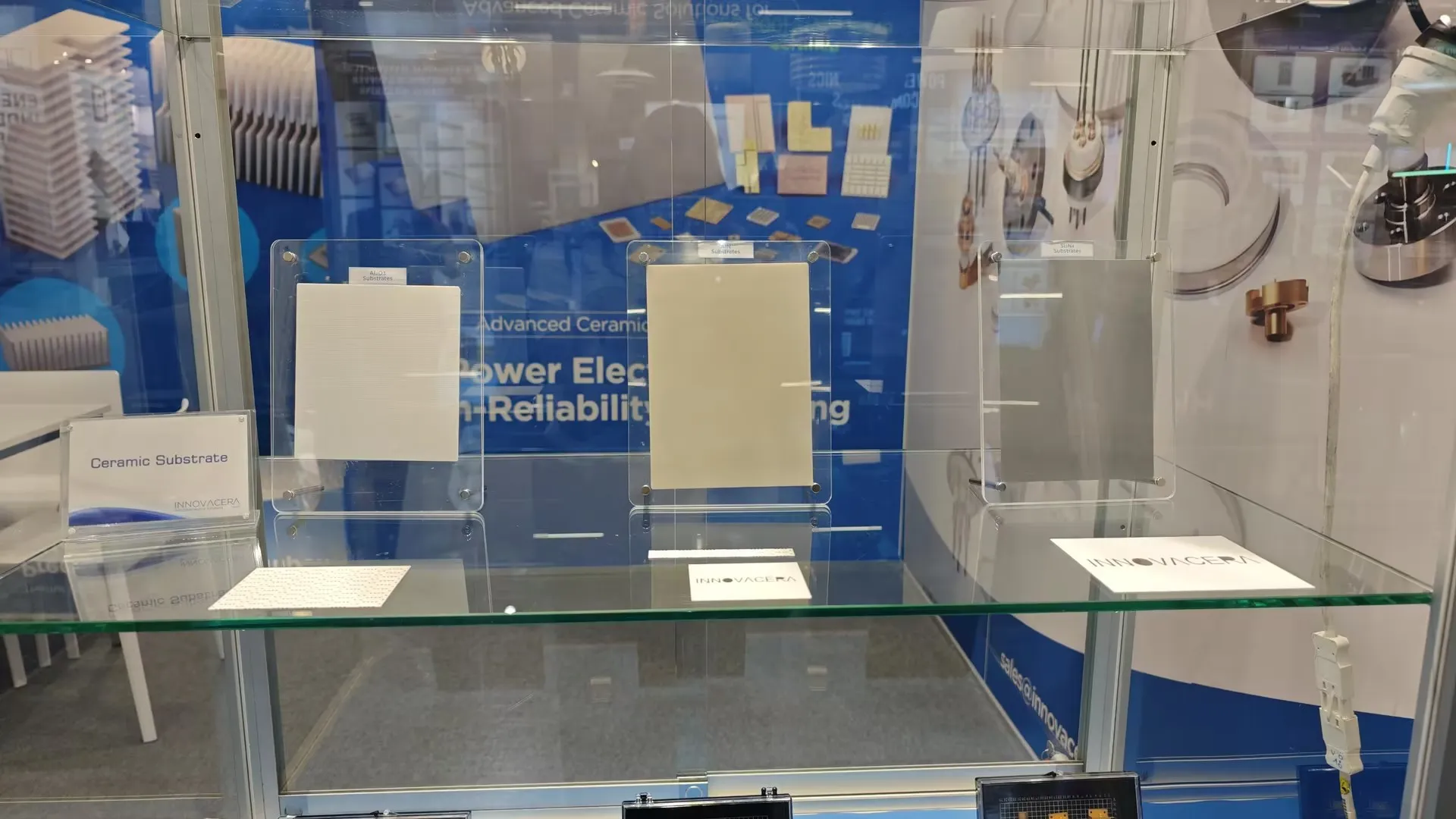
What you will see at our booth:
– Bare AlN substrates (polished and as-sintered) – feel the surface finish
– Bare alumina substrates (96%, 99.6%) – compare whiteness and flatness
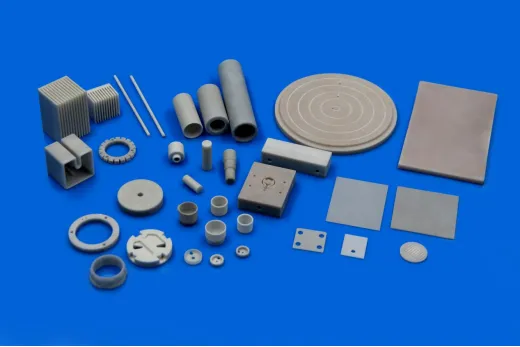
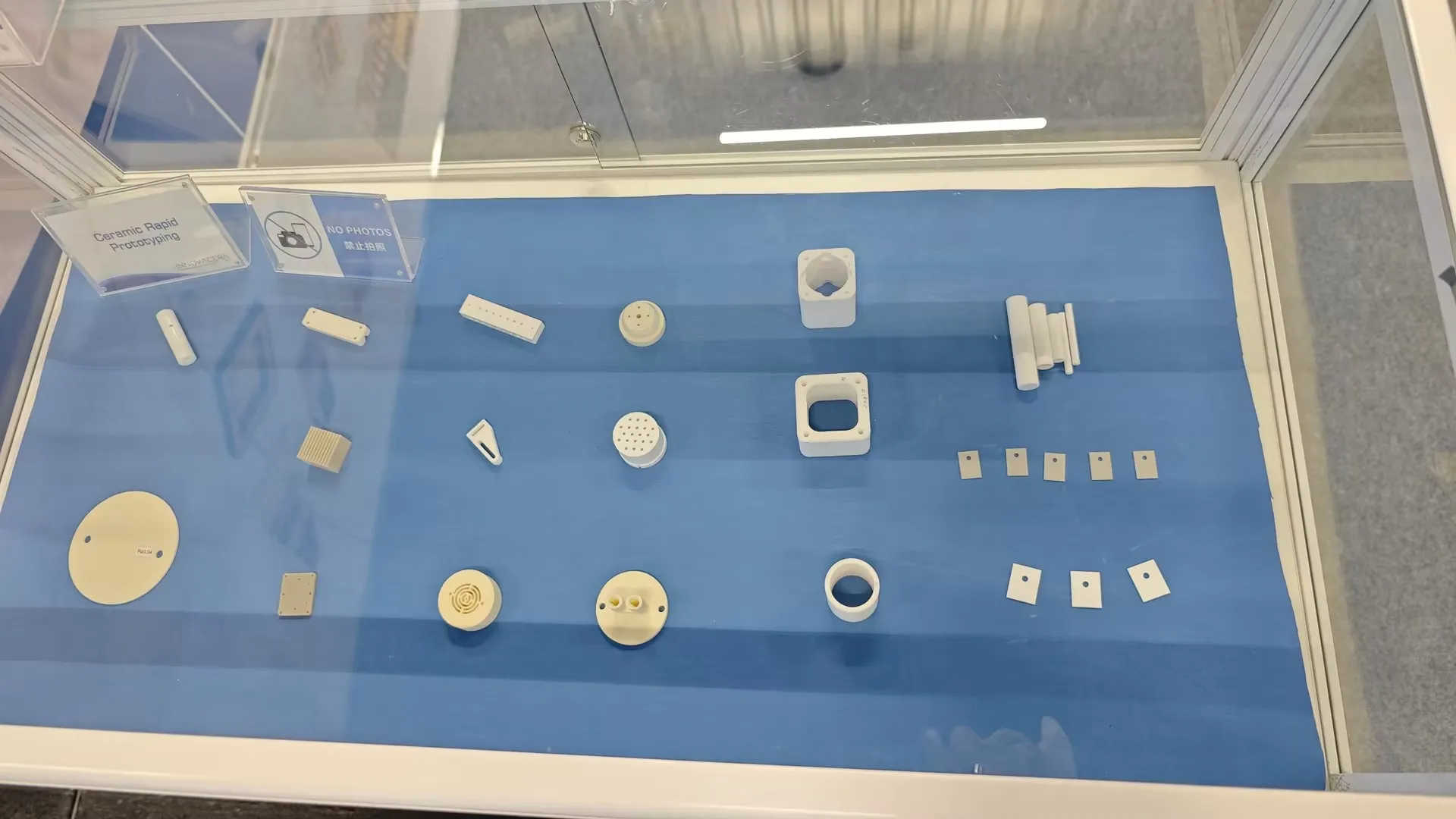
– Custom shapes: laser-cut, ultrasonic-machined, or as-fired edges
– Side-by-side comparison: our bare substrates vs. competitors’ bare substrates
– Honest discussion: when to use bare, when to add metalization, and who we recommend for DPC/DBC/AMB
📸 Booth photos 👈 Check out the images below – you’ll see our product displays and the team ready to talk ceramics.
Final thoughts: PCIM stands for Power Conversion and Intelligent Motion – and also for making smart sourcing decisions
You don’t have to buy metalized substrates from a supplier that forces you into their whole value chain. Buy the bare ceramic substrates from Innovacera – apply metalization your way.
We look forward to meeting you in Nuremberg. Come to Booth Hall 5-112, let’s talk about how high-quality bare AlN and Al2O3 substrates can improve your power module reliability without breaking your budget.
— The Innovacera Team
Can’t attend? Email us at sales@innovacera.com or visit our website. Request bare substrate samples, datasheets, or a virtual consultation.
This article reflects the personal perspective of Innovacera at PCIM 2026. For technical specifications and ordering, contact us directly.