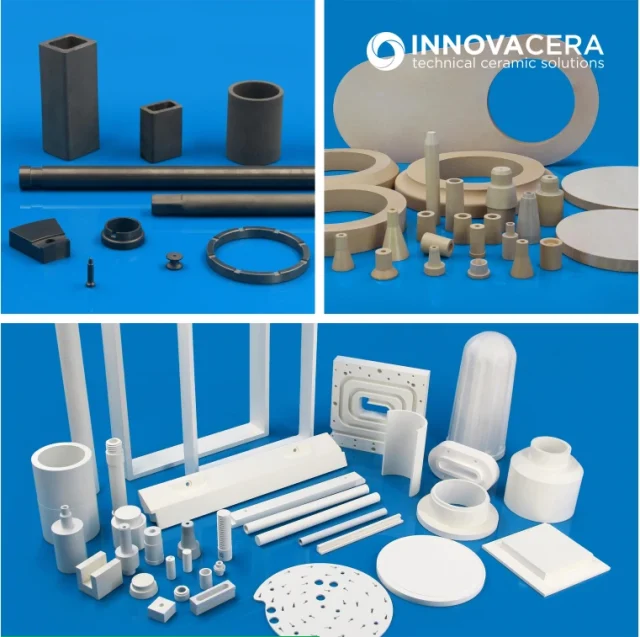
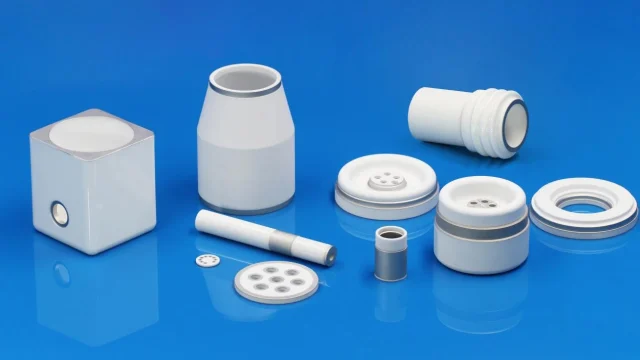
In the fields of modern chemical engineering, petrochemical industry, environmental protection and gas-liquid mass transfer, packed towers are the key equipment for enhancing gas-liquid contact and maintaining the continuous operation of production lines. Ceramic packing serves as the core internal component of the tower and is resistant to acid and alkali corrosion, high temperature, and has a sturdy structure with a long service life. It has significant advantages in high-temperature and harsh corrosive conditions and is widely used in processes such as distillation purification, gas absorption, smoke gas desulfurization, tail gas treatment, and catalyst support.
Compared with metal and plastic fillers, ceramic fillers can withstand strong corrosive conditions such as strong acids, strong alkalis, high temperatures and organic solvents. They are less prone to aging, deformation, corrosion and damage, and can effectively reduce the frequency of equipment maintenance and the cost of component replacement. This fully meets the long-term, continuous and stable industrial production requirements of various packed towers.
I. What is Ceramic Tower Packing
Ceramic tower packing is made from high-aluminum raw materials through high-temperature sintering. It is a special ceramic product installed inside the packed tower. Its physical and chemical properties are stable and its chemical inertness is excellent. After installation, it can significantly expand the gas-liquid contact area, regularize the fluid flow direction, improve the mass transfer, heat exchange and material separation efficiency, and also control the pressure drop inside the tower to achieve efficient and low-loss operation of the entire process.
The product is suitable for equipment such as distillation towers, absorption towers, smoke gas washing towers, chemical reaction towers, catalyst support beds, etc., and is an indispensable general consumable in the petrochemical, chemical and waste gas treatment industries.
II. Common Types and Characteristics of Ceramic Tower Packing Materials
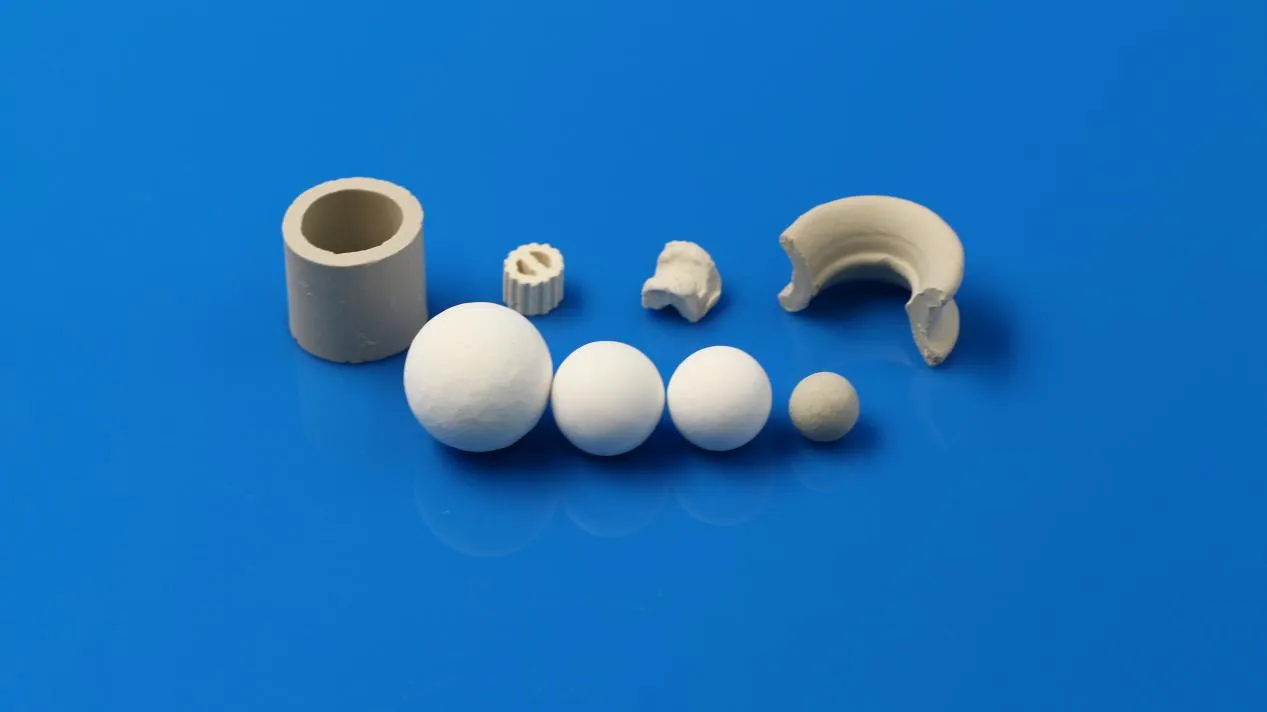
Different structural ceramic packing materials are suitable for different process conditions and can specifically address issues such as channel flow, high pressure drop, poor mass transfer, and uneven liquid distribution. Currently, the five main categories of ceramic tower packing materials used in industry are as follows:
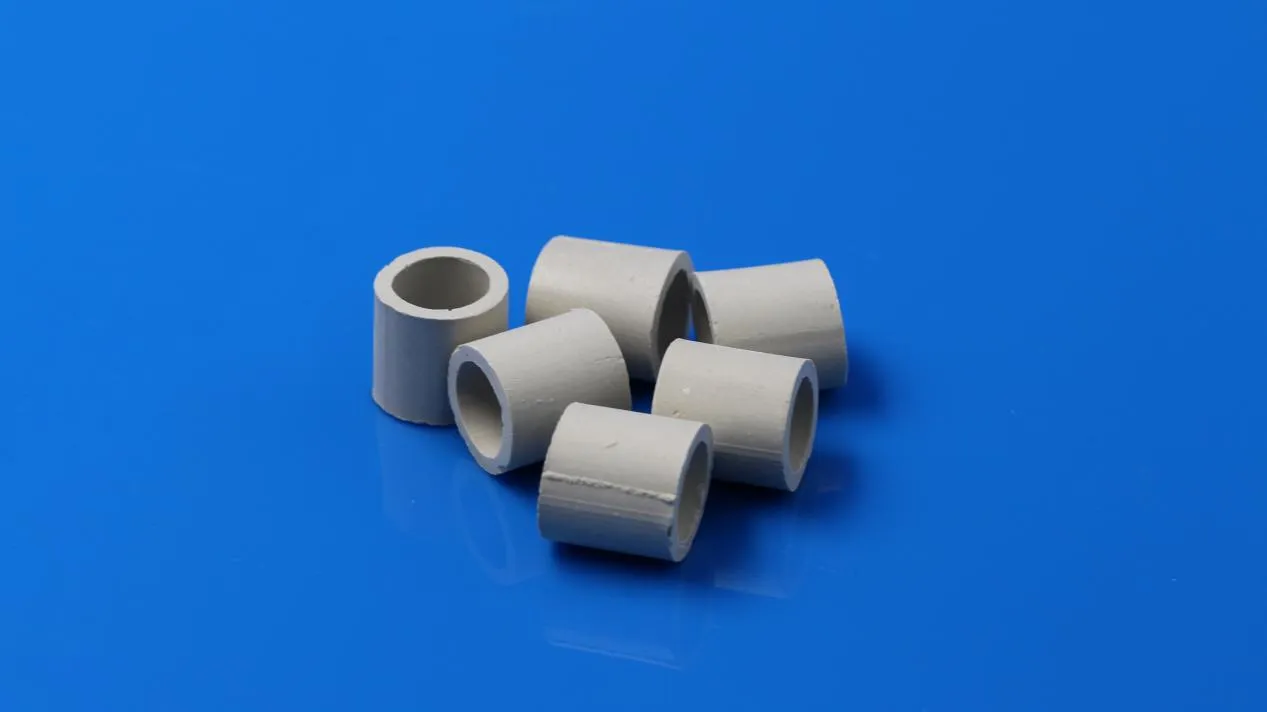
1. Ceramic Raschig Rings
This is the classic basic type of ring-shaped packing material in the industry, with a simple structure, low cost, and wide adaptability. It was the first packing material to be applied industrially. The overall structure is an equal-diameter and equal-height cylindrical shape, with extremely strong versatility, suitable for scenarios such as conventional rough washing towers, pretreatment towers, and old-fashioned chemical towers for renovation. The disadvantage is that the fluid flow is generally poor, and liquid channel flow occurs frequently, resulting in a relatively high pressure drop.
2. Ceramic Pall Ring
An upgraded and improved version of Raschig rings, with interlaced window structures on the ring walls and internal tongue leaves bending towards the center. The unique opening design allows the gas and liquid to penetrate the ring body for full circulation, breaking the circulation limitations of traditional ring-shaped packing materials, and improving the mass transfer efficiency by 30%-50% compared to Raschig rings, with lower pressure drop and greater flow capacity. It is the mainstream selection for chemical absorption and degassing processes.
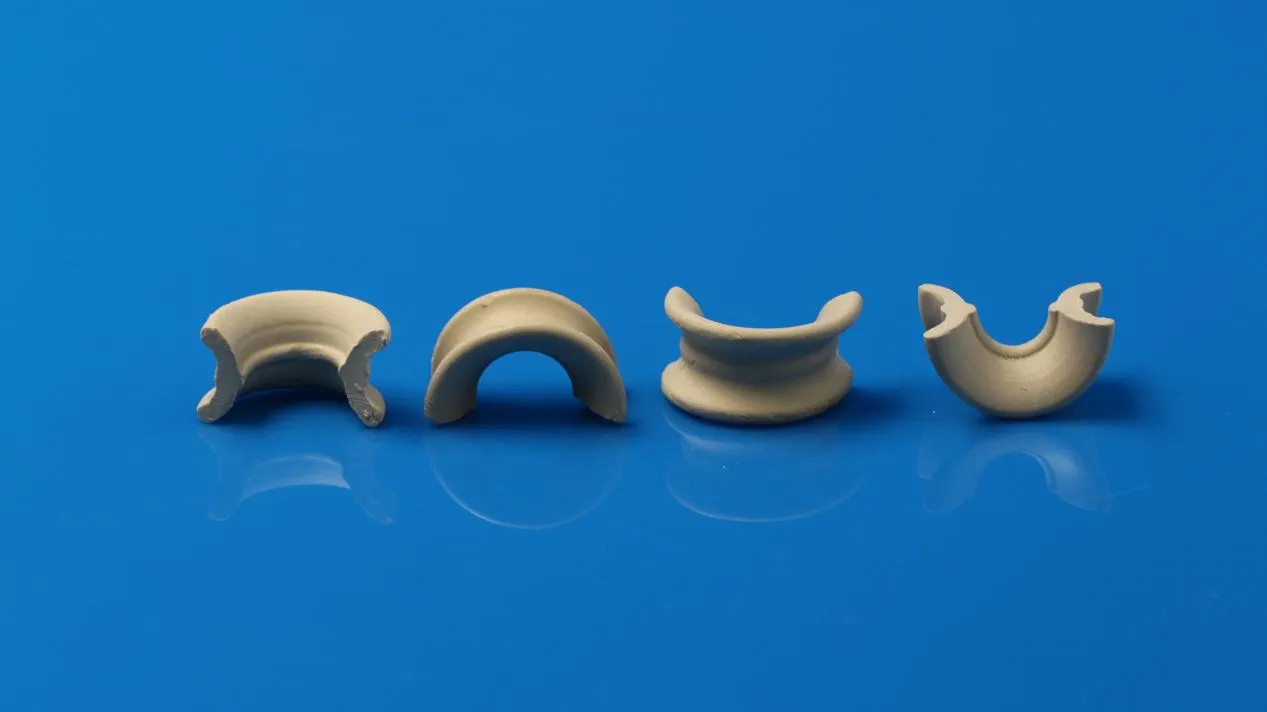
3. Ceramic Intalox Saddle Rings
Ceramic Intalox Saddles, also known as Ceramic Rectangular Saddle Rings, are widely used in absorption, scrubbing, and distillation towers. An improved type of saddle-shaped packing material with a smooth arc structure, high porosity, and uniform stacking. It can effectively improve the liquid distribution in the tower, eliminate wall flow and bias flow problems, and has a large fluid flow rate and uniform mass transfer. It has excellent corrosion and high-temperature resistance and is specifically used in sulfuric acid drying towers, flue gas desulfurization towers, and acidic gas washing towers.
4. Ceramic Cross Partition Ring
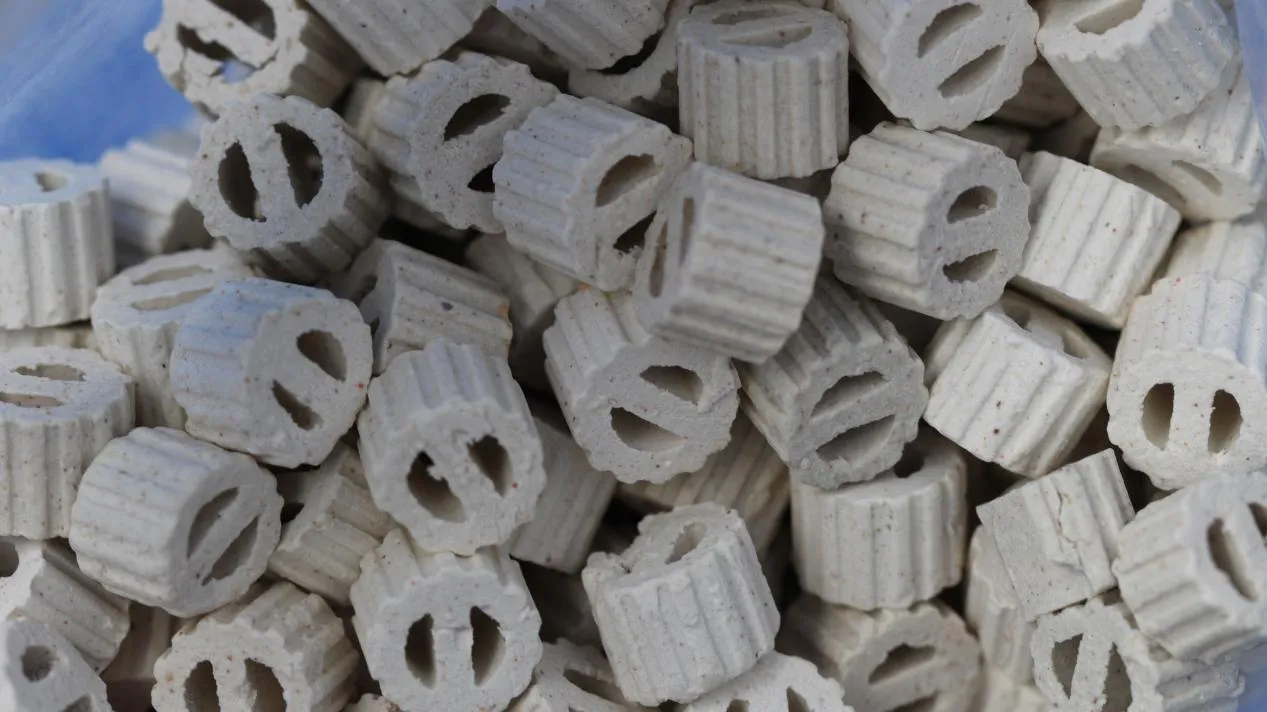
Also known as one-way rings in the industry, the ring body has additional cross partitions inside, dividing a single cavity into multiple independent flow spaces, significantly increasing the contact area between gas and liquid. The structure is regular, with high compressive strength, and is often used as bottom support packing or mass transfer packing in high tower sections, suitable for large-diameter industrial towers.
5. Ceramic Packing Balls
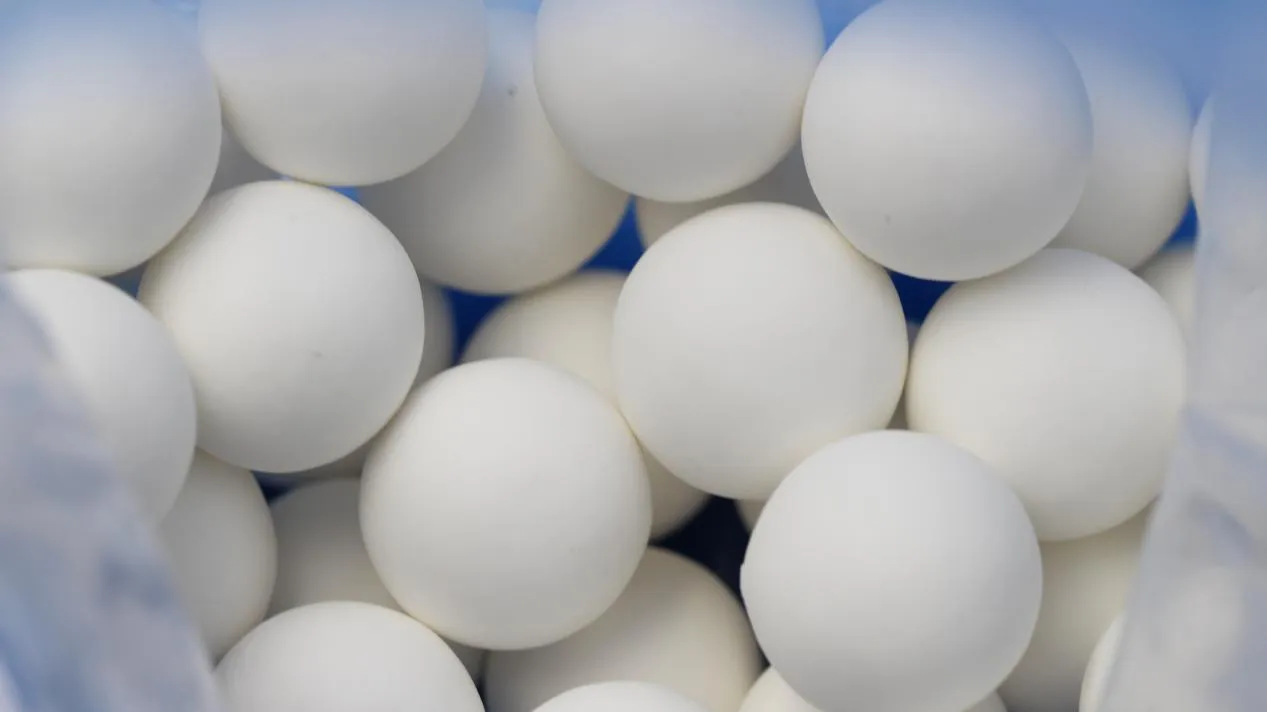
Divided into solid inert porcelain balls and perforated porcelain balls, the porcelain is dense, resistant to pressure and wear, and has extremely strong stability. They are mainly used as the upper and lower support layers for catalysts in fixed-bed reactors, evenly distributing the gas flow, buffering material impact, and filtering impurities, effectively protecting the catalyst from being washed and crushed and avoiding bed blockage. They are widely used in petrochemical, fertilizer, and fine chemical reaction equipment.
III. Comparison Table of Various Ceramic Fillers (Core Parameters)
| Packing Type | Core Advantages | Relative Pressure Drop | Mass Transfer Efficiency | Application Scenarios |
|---|---|---|---|---|
| Ceramic Raschig Ring | Low cost, stable structure, high versatility | Relatively high | Medium | Rough washing towers, pretreatment towers, old tower renovation, conventional separation processes |
| Ceramic Pall Ring | Smooth fluid circulation, low resistance, high mass transfer efficiency | Relatively low | Relatively high | Gas absorption, degassing, rectification, medium-precision separation processes |
| Ceramic Intalox Saddle | Uniform liquid distribution, large flux, anti-clogging | Low | High | Flue gas desulfurization, sulfuric acid process, waste gas washing, high-flow working conditions |
| Ceramic Cross Partition Ring | Large contact area, high compression resistance, excellent supporting performance | Medium | Relatively high | Tower bottom support, high tower section mass transfer, large-diameter industrial towers |
| Ceramic Packing Ball | Wear and compression resistant, uniform flow distribution, catalyst protection | Extremely low | Auxiliary mass transfer | Catalyst bed support, bedding protection, fluid uniform distribution |
IV. Advantages and Disadvantages of Ceramic Tower Filler Core (Compared with Metal/Plastic Filler)
| Comparison Dimension | Ceramic Tower Packing | Plastic Packing | Metal Packing |
|---|---|---|---|
| High Temperature Resistance | Excellent (800-1000℃) | Poor (Softens & deforms below 100℃) | Good |
| Corrosion Resistance | Excellent (resists most acids, alkalis and solvents, except hydrofluoric acid) | Medium, easy to aging in strong corrosive media | Poor, prone to corrosion and rust in acid-base environments |
| Service Life | 8-12 years, long service life | 3-6 years, easy aging and damage | 5-8 years, failure caused by rusting |
| Operation Stability | Physically and chemically inert, no dissolution, stable efficiency | Easy deformation at high temperature, disordered liquid distribution | Prone to blockage after rusting, affecting process operation |
| Disadvantages | Heavy weight, brittle and fragile, requiring careful installation | Poor high temperature resistance, not applicable for high-temperature working conditions | Weak corrosion resistance, not suitable for strong acid and alkali working conditions |
V. Main Application Domains of Ceramic Tower Packed Materials
Relying on the core advantages of high-temperature resistance, strong corrosion resistance, and stable performance, ceramic tower packed materials are widely applicable to various industries under harsh industrial conditions:
1. Basic chemical and fine chemical industries: various material distillation, acidic gas absorption, degassing treatment, hydrochloric acid, nitric acid, and sulfuric acid production towers, suitable for separation processes of strong corrosive media.
2. Petrochemical industry: tail gas desulfurization in refineries, oil and gas washing, hydrogenation units, fixed bed reactors for catalyst support, suitable for high-temperature acidic oil gas conditions.
3. Environmental waste treatment: power plant flue gas desulfurization towers, chemical VOC waste washing towers, acid washing waste treatment equipment, industrial acid and alkali waste purification systems.
4. Special corrosion scenarios: wet metallurgical acid washing processes, chlorine alkali industry tail gas treatment, complete sets of equipment for inorganic acid production, etc., strong corrosive environments.
5. Catalytic reaction equipment: fixed bed reactors in fertilizers, petrochemicals, and fine chemicals, used for catalyst support, uniform fluid distribution, and protection of bed layer equipment.
VI. Summary
Ceramic tower packing is a core and crucial material for industrial gas-liquid mass transfer, separation and purification, as well as catalytic support processes. With superior properties such as high temperature resistance, strong corrosion resistance, and long-term stability far exceeding those of plastic and metal packing materials, it has become the optimal choice in harsh industrial conditions for the chemical, petrochemical, and environmental protection industries.
Innovacera can provide a full range of high-quality ceramic tower packing. It supports customization of non-standard sizes and high-aluminum special materials. The products are suitable for various high-temperature and strong-corrosion industrial scenarios. We can customize exclusive packing solutions based on the customer’s on-site process, tower body parameters, and working conditions, helping enterprises achieve stable processes, cost reduction, and efficiency improvement.