In high-precision manufacturing fields such as semiconductor lithography, laser processing of display panels, and fiber Bragg grating writing, excimer lasers have become key equipment in numerous advanced manufacturing processes due to their deep ultraviolet wavelengths, high energy density, and precise processing capabilities.
Excimer laser systems typically employ sealed discharge chambers, where laser output is generated by high-voltage pulse excitation of the working gas. During this process, external power must be reliably transmitted to internal electrodes within the chamber without compromising the chamber’s original vacuum-sealed environment.
However, maintaining long-term reliable vacuum performance while achieving high-voltage electrical connections has always been a significant challenge in laser system design. High-voltage feedthroughs are critical components that address this issue, combining ceramic insulation structures with metal-to-gas-seal technology to simultaneously enable electrical power transmission and maintain vacuum isolation.
I. The Critical Role of High-Voltage Feedthrough Components in Excimer Laser Systems
During operation of excimer laser equipment, a stable working environment must be maintained inside the discharge chamber, while high-voltage power needs to be transmitted through the chamber wall to internal electrodes.
Traditional electrical connection methods may face the following challenges under prolonged operation in high-voltage and vacuum conditions:
• Poor vacuum sealing stability: Micro leaks may develop after long-term operation and undermine the stable internal environment of the cavity;
• Deteriorated insulation performance: High-voltage pulses are prone to cause arcing and partial discharge, compromising overall system reliability;
• Thermally induced structural stress: Temperature fluctuations during equipment startup and shutdown generate cyclic thermal stress, which impairs interfacial structural stability;
• Outgassing contamination: Materials not tailored for vacuum service will release gaseous contaminants, degrading cavity cleanliness and destabilizing the optical system.
Accordingly, feedthrough components for excimer laser systems are required to deliver high insulation capability, superior hermetic tightness, reliable thermal stability and ultra-low outgassing performance simultaneously.
II. Ceramic-Metal Composite Structure Satisfies High-Pressure Vacuum Application Requirements
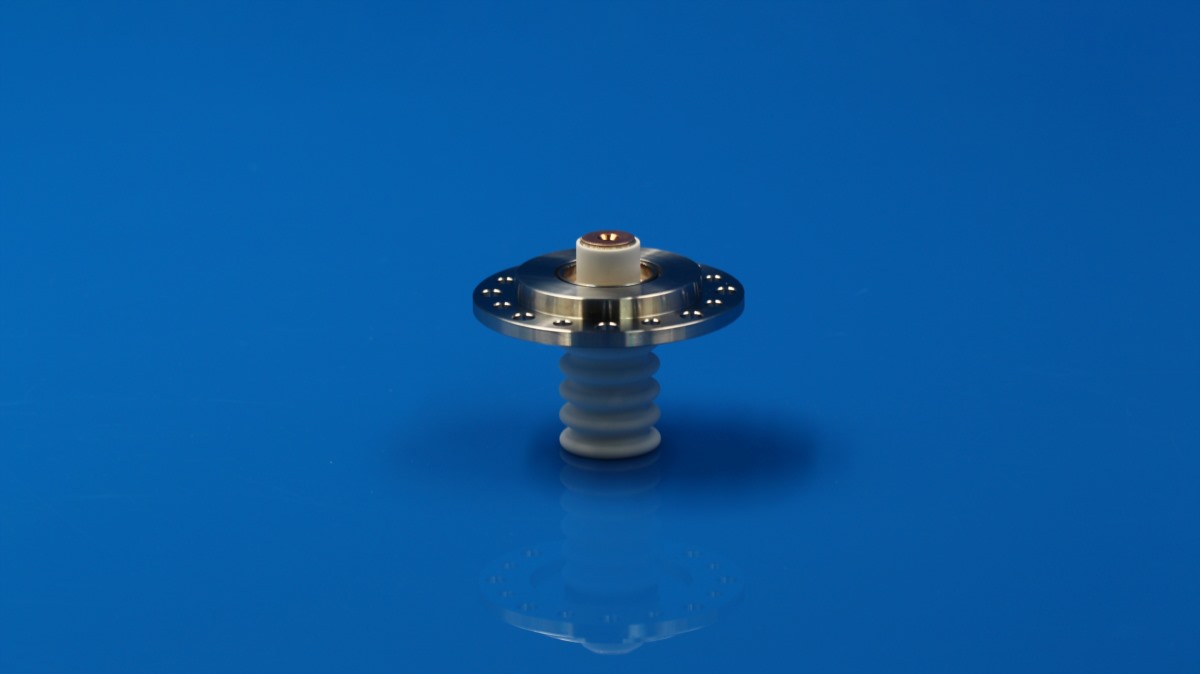
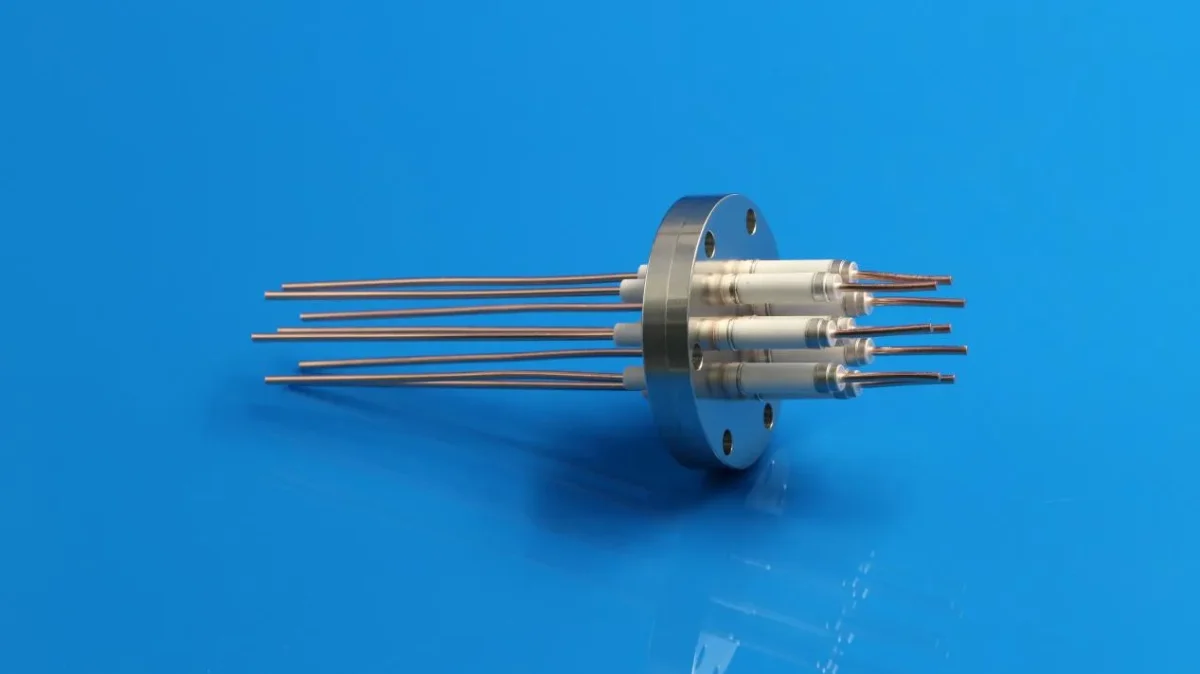
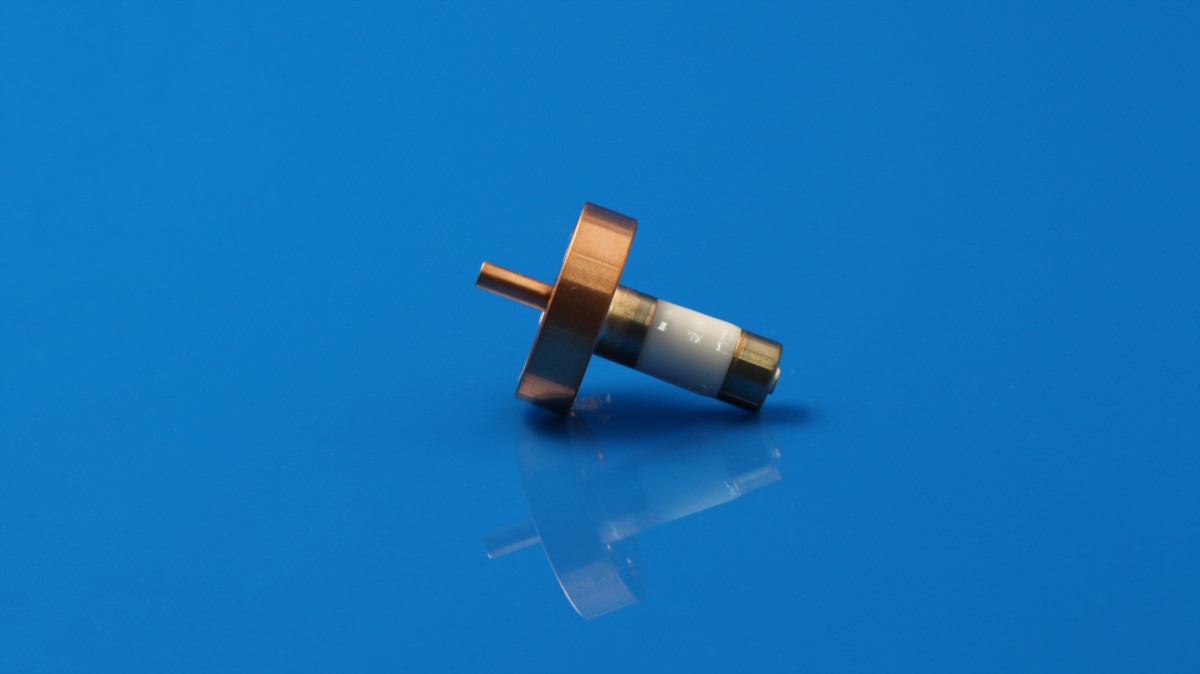
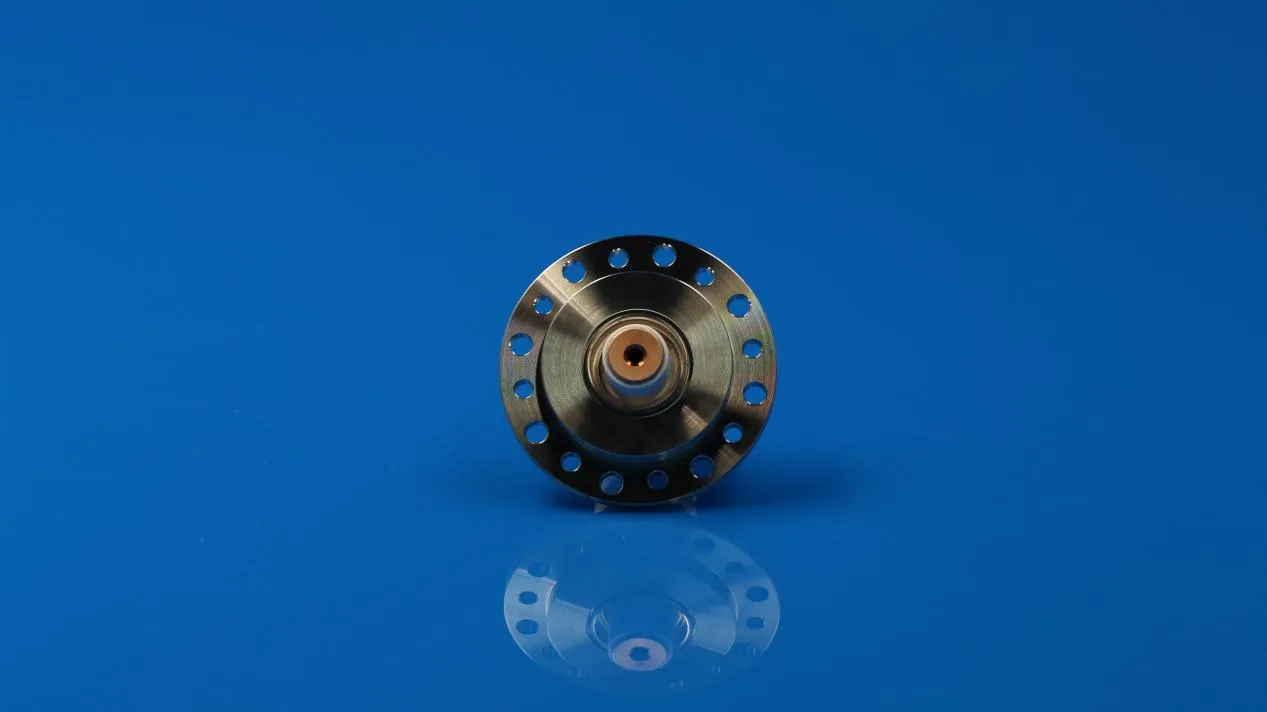
INNOVACERA Small HV Feedthrough adopts a ceramic-metal gas-sealed connection structure. Through the precise combination of 95% alumina ceramic and various metal materials, it achieves high-pressure transmission and vacuum isolation.
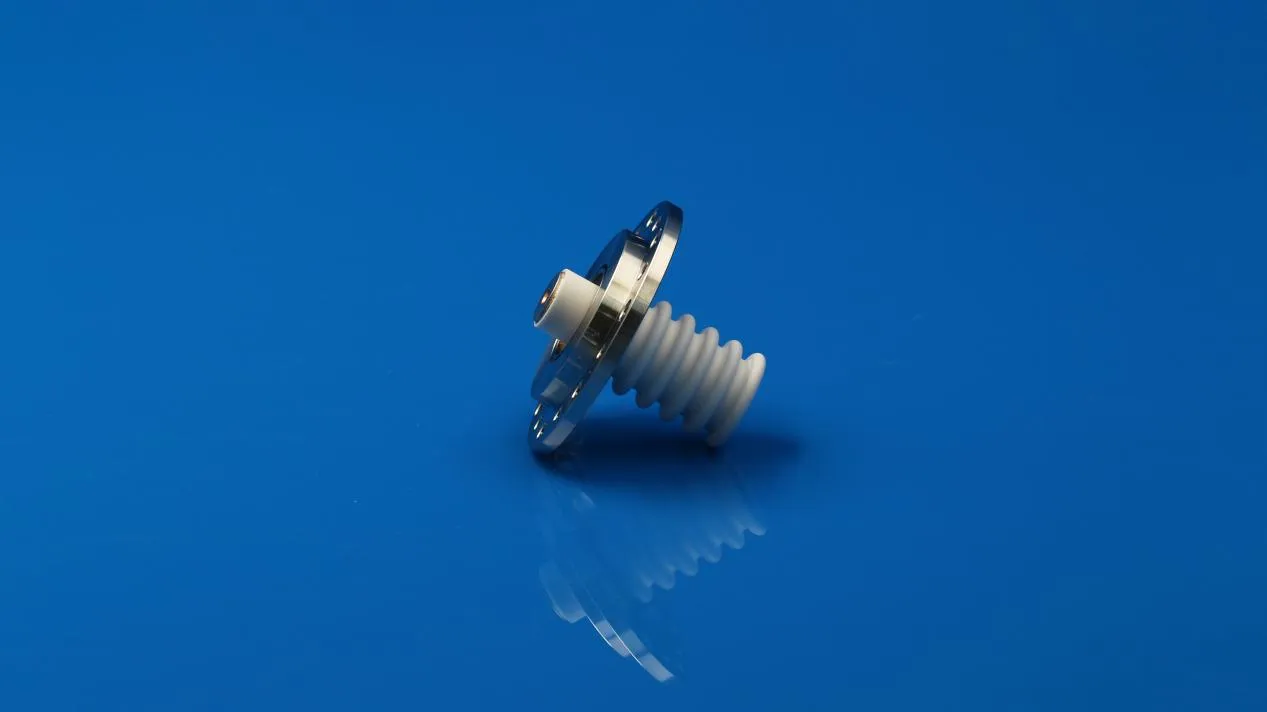
Different materials play different roles in the component:
1. 95% Al2O3 Ceramic: Provides Reliable Electrical Insulation Performance
The 95% Al2O3 ceramic exhibits excellent dielectric properties, mechanical strength, and high-temperature stability. It is an excellent core insulation material for high-voltage applications. With a reasonable structural design, it can be adapted to various voltage levels and effectively avoid the risk of breakdown during high-voltage operation. Additionally, this material has low gas release and high cleanliness, which can meet the strict usage requirements of high-end vacuum equipment.
2. Carbovan Alloy: Enhances the Reliability of Ceramic-Metal Sealing
The thermal expansion coefficient of Carbovan alloy is highly compatible with that of Al2O3 ceramic, making it a key transitional material for ceramic-metal gas sealing. Through precise brazing technology, it can significantly reduce the thermal stress caused by temperature cycling, stabilize the sealing interface structure, and significantly enhance the long-term operational reliability of the product in a vacuum environment.
3. Oxygen-free copper conductor and 304 stainless steel structure: Achieve stable connection
Oxygen-free copper has good electrical conductivity and can meet the requirements of high-pressure electrical transmission; the 304 stainless steel shell provides good mechanical strength and corrosion resistance, allowing the feedthrough to be compatible with different vacuum equipment structures.
III. Design Features Optimized for High-Pressure Vacuum Environment
Different from ordinary electrical connection components, Small HV Feedthrough has been optimized for the comprehensive requirements of high-pressure pulses and vacuum environments:
• High-reliability insulation structure: The ceramic insulation layer effectively isolates the internal conductor from the metal housing, reducing leakage, arcs, and breakdown risks during high-pressure operation, ensuring the stability of electrical connection.
• Stable ceramic-metal gas-sealed connection: The matching sealing structure between ceramic and metal materials enables the component to have good vacuum sealing performance, meeting the requirements for long-term stable operation.
• Wide temperature range working ability: Through reasonable material combination and structural design, the feedthrough can adapt to temperature changes during equipment operation, maintaining stable mechanical and electrical performance.
III. Optimized Design Characteristics for High-Voltage Vacuum Environments
Small high-voltage feedthroughs are engineered to satisfy combined demands of high-voltage pulse operation and vacuum conditions, outperforming standard electrical connectors:
Robust insulating construction: The ceramic dielectric barrier fully separates internal conductors from the metal housing, minimizing leakage current, arcing and electrical breakdown under high voltage to sustain consistent electrical performance.
Hermetically stable ceramic-metal joint: Custom-matched bonding structure between ceramic and metal delivers outstanding vacuum tightness, supporting continuous, reliable, long-duration operation.
Wide temperature range working capability: Through reasonable material combinations and structural design, the feedthrough can adapt to the temperature changes during equipment operation, maintaining stable mechanical and electrical performance.
IV. Key Technical Features of Small HV Feedthrough
| Parameter Item | Product Feature |
|---|---|
| Insulation Material | 95% Alumina Ceramic |
| Voltage Range | 1kV ~ 30kV, customizable upon request |
| Operating Temperature | -40℃ ~ +300℃ |
| Helium Leak Rate | ≤1×10⁻¹⁰ Pa·m³/s |
| Structure Type | Ceramic-metal hermetically sealed structure |
| Interface Type | Customizable with CF, KF and other vacuum flanges |
V. Widely applied in precision manufacturing and vacuum equipment fields
Thanks to its highly reliable insulation performance and gas-sealed connection capability, Small HV Feedthrough is not only suitable for excimer laser systems, but also can be applied to various high-voltage vacuum equipment, including:
• Semiconductor manufacturing and lithography-related equipment;
• Display panel laser processing equipment;
• Fiber grating and optical component processing equipment;
• Vacuum research experimental devices.
INNOVACERA: Offers highly reliable ceramic-metal sealing solutions
In high-pressure vacuum equipment, electrical connections not only need to achieve signal or energy transmission, but also require long-term maintenance of insulation reliability and cavity sealing stability. High-performance ceramic-metal bonding technology provides a reliable solution for such complex operating conditions. Based on experience in ceramic materials, precise sealing connections, and structural design, INNOVACERA can develop highly reliable feedthroughs and ceramic-metal components for laser, semiconductor, and vacuum equipment, tailored to different voltage levels, interface forms, and working environments, helping customers achieve more stable equipment operation.