When the RF power amplifier is operating, the heat generated by the chip needs to be promptly dissipated. The electrical performance and dimensional accuracy of the substrate itself also affect the subsequent assembly. Therefore, although the AlN ceramic substrate is only one component of an RF power amplifier, its selection should not be based on thermal conductivity alone. The chip’s operating conditions, the substrate’s role in the assembly, and any subsequent processing requirements must also be considered.
Aluminum nitride has both high thermal conductivity and good electrical insulation performance, and is often used in electronic devices with requirements for heat dissipation and insulation. However, the structures and working methods of different RF power amplifiers are not the same, and the suitable substrate specifications will also vary. Before purchasing, several pieces of information are worth confirming in advance.

1. First, Clarify the Device’s Operating Conditions
When selecting a substrate, the chip’s power dissipation, operating frequency, and thermal load are important considerations. For different modes such as continuous wave operation and pulse operation, the heat load that the substrate has to bear may vary; the chip size, installation method and heat dissipation structure will also affect the actual heat dissipation requirements.
This information is related to the selection of specifications such as substrate thickness and material properties. If only a thermal conductivity index is provided without specifying the operating conditions, it is difficult for the supplier to determine whether this specification is suitable for the specific application. Therefore, during the quotation stage, it is more beneficial to provide as much information as possible about the working mode of the power amplifier, the heat dissipation method and the purpose of the substrate, which will facilitate the subsequent selection.
2. High Thermal Conductivity Does Not Necessarily Mean Good Overall Heat Dissipation
Thermal conductivity is a frequently considered metric when purchasing aluminum nitride substrates. Compared to common electronic ceramics such as alumina, aluminum nitride has a higher thermal conductivity, making it suitable for applications where the heat from the chip needs to be conducted to an external heat dissipation structure.
However, the heat dissipation performance of the substrate is not solely determined by the material. The connection layer between the chip and the substrate, the thickness of the substrate, and the contact conditions between the substrate and the subsequent heat dissipation structure can all affect heat transfer. Even with the same ceramic material, different structural designs and assembly methods can result in different final heat dissipation performance.
When evaluating suppliers, look beyond thermal conductivity. Factor in substrate thickness and assembly design. Always verify thermal conductivity data against material grade, specs and test conditions. One cannot simply rely on a single number to determine if a product is suitable.
3. The Dielectric Properties Should Be Considered in Conjunction with the Design of the RF Circuit
Aluminum nitride substrates not only conduct heat but also perform the function of electrical insulation. However, whether the dielectric constant and dielectric loss and other indicators need to be prioritized for control depends on the specific application of the substrate in the device.
If the substrate is also to be used for the fabrication of RF transmission lines or other high-frequency circuit structures, the dielectric properties may directly affect the circuit design and signal transmission. At this time, relevant indicators need to be confirmed based on the operating frequency and design requirements, and data from different test frequencies cannot be directly compared.
If the bare substrate is mainly used as an insulation and heat dissipation carrier for the chip, the priority of relevant parameters may be different. When purchasing, it is best to first confirm the electrical performance requirements of the design end, and then determine which indicators need to be included in the technical specifications and acceptance conditions, rather than indiscriminately requiring all parameters.
4. Size and Surface Quality Also Affect Subsequent Processing
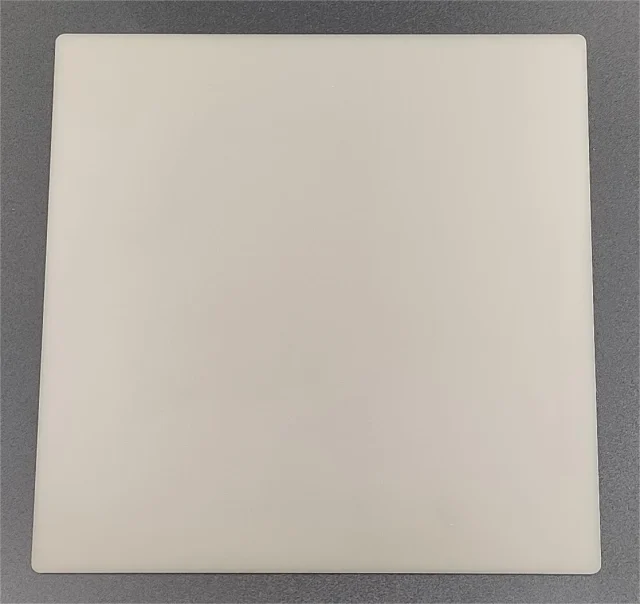
The length, width, thickness and tolerance of the substrate usually need to match the structure of the device. For products that will undergo further processes such as metallization, pattern fabrication or chip mounting, flatness, warpage and surface roughness may also become factors affecting the processing outcome.
Here are a few concepts that are easily confused. Flatness and warpage both involve the geometric shape of the substrate, but they are not the same indicator; total thickness variation (TTV) is used to describe the thickness differences at different positions of the substrate. They correspond to different size control requirements and cannot be simply replaced by one indicator.
These parameters don’t always require rigid acceptance criteria. What matters is the substrate requirements of downstream processes. For operations sensitive to flatness and thickness uniformity, define clear tolerances on drawings or technical specs. In necessary cases, measurement methods should also be agreed upon.
5. If Metallization Is Required Later, It Should Be Taken into Account During the Selection Process
A bare aluminum nitride (AlN) substrate does not necessarily mean that no further processing will be needed. Some products will be used directly as ceramic carriers, while others may require further metallization or circuit fabrication. Different processing routes may have different requirements for the surface condition, dimensional accuracy, and material compatibility of the substrate.
For example, the processing methods of direct copper plating, thick film metallization, and thin film processes are not the same, and the required substrate conditions cannot be generalized. If the metallization is carried out by another supplier, the purchaser should preferably confirm the subsequent processing requirements in advance to avoid finding that the surface condition or dimensional tolerance of the substrate does not match the processing conditions after it arrives.
6. Before Making a Selection, Clearly Define the Application Requirements and Key Specifications
When purchasing aluminum nitride ceramic substrates for RF power amplifiers, it is not the case that the more parameters the better. What is more important is to distinguish which indicators will affect the actual use, which ones depend on subsequent processing, and which ones need to be clearly defined as acceptance conditions.
INNOVACERA provides aluminum nitride ceramic substrate products. For projects with specific dimensions, tolerances or processing requirements, please send the product drawings, intended uses and purchase quantities to sales@innovacera.com for further communication on applicable specifications and processing requirements.