technical ceramic solutions

News

Category Archives: News

Metalized Ceramics for Electrical Components

Metalized Ceramic

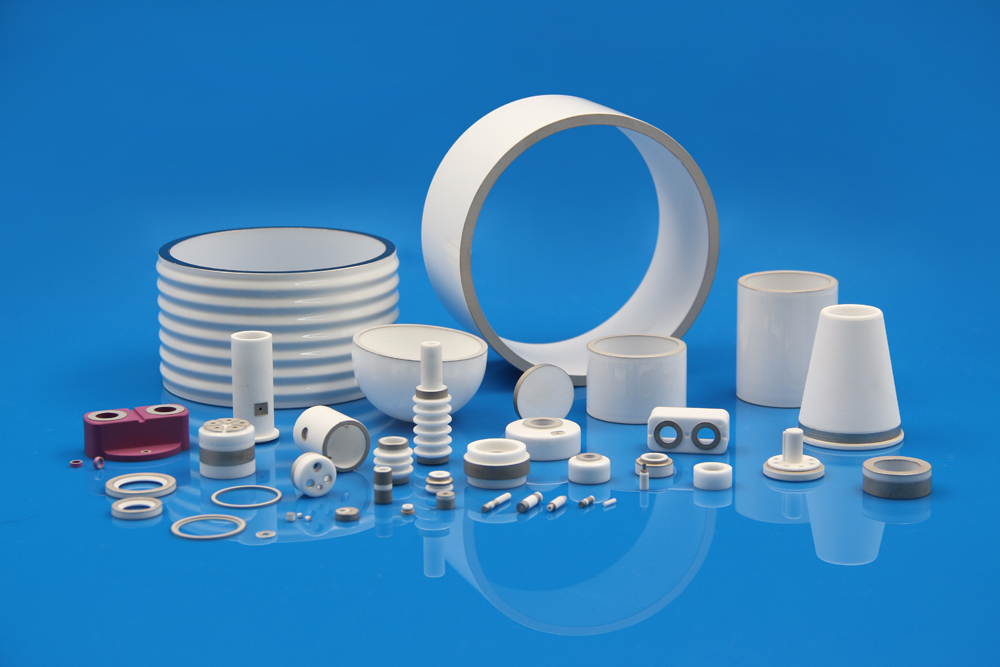
INNOVACERA supplies custom refractory metalized alumina ceramics for use in power grid tubes, x-ray tubes, vacuum interrupters, and similar applications where ceramic-to-metal seal joints of exceptional strength and hermeticity are required.

Ceramic material:

Deposition methods:

  • Screen printing
  • Pad printing
  • Brush coating

A coating of molybdenum-based paint followed by nickel plating can provide an interface where the ceramic/metal component can be formed by brazing, providing a sealed joint. After sintering, a layer of molybdenum-manganese alloy with a thickness of 10–30 μm was deposited. The metallization sintering process is carefully controlled to achieve a balanced mixture of molybdenum particles surrounded by a glass matrix to insure high bond strength between the metallization layer and the ceramic matrix.

Contact us today with your requirements and our sales engineers will work with you to provide the correct product to meet your application.


Aluminum Nitride Ceramic – An Excellent Solution For Electronic Applications

Aluminum Nitride Ceramics

Aluminum Nitride (AlN) combines high thermal conductivity with strong electrical resistance, making AlN an excellent solution for many electronic applications. Unlike most electrically insulative materials which are often also thermally insulative. AlN allows electrical systems to dissipate heat quickly in order to maintain maximum efficiency.

There are two kinds of AIN due to different production methods, one is direct sintered AlN, another is hot pressed AIN, and their color is different, traditional color is grey, and hot-pressed AIN is black.

Aluminum Nitride Advantages:

  • High heat dissipation with thermal conductivity of 170 W/mK
  • Thermal expansion coefficient similar to Si, GaN, and GaAs semiconductors
  • High dielectric strength

If you have more interest, pls contact us.


Pyrolytic Boron Nitride (PBN) Disc for Furnace, Electrical, Microwave, and Semiconductor Components

PBN Disc for Semiconductor

Pyrolytic Boron Nitride (PBN) is a kind of advanced ceramic, Pyrolytic Boron Nitride (PBN) Disc and other pyrolytic boron nitride products are synthesized on the mold by chemical vapor deposition (CVD) process, with BCl3 and NH3 at high temperature and low pressure. PBN products are extremely pure, as the purity of gas material is easier to be controlled. Typically, PBN products have a total impurity of <100 ppm, which means the purity is no less than 99.99%. With such a high purity level. It is the ideal material for furnace, electrical, microwave, and semiconductor components.


Why do alumina ceramic components have spots and how to prevent?

alumina ceramic tube

alumina ceramic tube

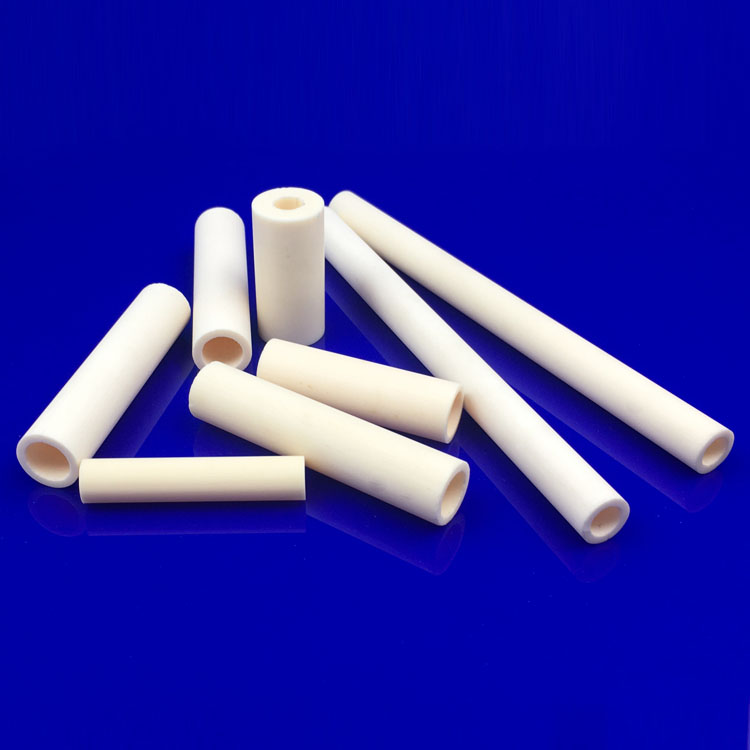
Alumina ceramic is a kind of ceramic material with a-al2o3 as the main crystal phase, because of its own high melting point, high hardness, heat resistance, corrosion resistance, and electrical insulation characteristics, it can be used in more stringent conditions. Alumina ceramics, with low price and mature production process, is one of the largest and most widely used ceramic materials, mainly used in the field of cutting tools, wear-resistant parts, and bioceramics. In addition, it is also widely used in energy, aerospace, chemical electronics, and other aspects. Especially 95% alumina and 99% aluminas, whether in structural ceramics or electronic ceramics are one of the most widely used ceramic materials.

In the production process of alumina ceramic parts, such as alumina ceramic tubes, alumina plates, and alumina rods there are often black, brown, and pink spots on the surface of the ceramic part, as well as on the inside. This spot is one of the main reasons for the unqualified alumina ceramic products.

The main impurities of black and brown spots are Fe, and the main impurities of pink spots are Fe, Cr, and Ni. By analyzing the composition of the spots and tracing the production process, it can be preliminary determined that the black and brown spots are mainly caused by mixing mechanical iron particles in advanced ceramic production. And pink spots from the composition analysis can be judged to be caused by stainless steel material fine particles.

Now we know the reason why alumina ceramic components have spots, how do we prevent and solve it?

  • Raw materials: choose raw materials with good quality and low iron content as far as possible, and remove iron by magnetic separation when necessary.
  • Grinding: pay attention to observing whether the ball mill lining brick falls off and timely repair.
  • Granulation: slurry conveying with magnetic separation to remove iron, hot blast furnace, and hot air filtration to avoid hot air system rust into the material. The granulated powder is magnetically separated to remove iron before final product packaging.
  • Piping: All piping should be lined with polyurethane whenever possible.

Signs You Need to Replace 3D Printer Nozzle

Ceramic heating element

3D printing can be enjoyable when everything is going right. However, it can rack your brains when something goes wrong. 3D printing issues can usually be fixed by adjusting the settings or the parts. But if you’ve tried everything and it’s still not working, it could be that you need to replace a part in your 3D printer, particularly the nozzle.

What could wear out your nozzle? Here are the following reasons:

Nozzle Damaging Practises
Using abrasive filaments

Some 3D printer filaments are tough on regular nozzles. These are usually “composites” or filaments that have been reinforced by fibers to improve their mechanical properties. These filaments are:

  • Carbon fiber
  • Fiberglass
  • Nylon
  • Metal-filled filaments
  • Glow-in-the-dark filaments

Use tougher nozzles made of hardened steel, ruby, tungsten, and stainless steel when using these filaments. They are much more capable of withstanding the abrasiveness of these filaments and lasting longer than the regular brass ones.

Aggressive nozzle unclogging methods

While unclogging your nozzle can be good for your nozzle and the quality of your print outcome, doing it often and aggressively can wear out your nozzle. You have to be careful of clearing it, using gentle methods and materials to clean it with. Follow our nozzle unclogging and cleaning tips that won’t harm your nozzles.

3D Printing Issues that may be caused by nozzle damage

You may encounter a reduction in print quality when your nozzle is worn out. You’ll notice some of these issues crop up:

  • Under-extrusion
  • Poor layer adhesion
  • Print blobs
  • Uneven or rough print surface

However, it can be tricky to attribute these issues to nozzle wear. These issues can also be caused by the following:

  • Clogged nozzle
  • Setting the bed too high
  • Incorrect nozzle diameter setting in the slicer

Check your 3D printer to make sure that you’re not committing any of the mistakes above. If you’re still experiencing the same print quality issues after checking your 3D printer, then it means it’s time to replace your nozzle.

Signs of Nozzle Damage

To the untrained eye, a worn-out 3D printer nozzle looks just like any. However, if you look closely, you’ll see the signs of wear and tear. Here’s what you need to look out for:

  • Marks and grooves in the inner walls near the opening
  • Bigger nozzle diameter than usual
  • Nozzle tip has become dulled down or shortened

Take care of your 3D printer nozzle before it’s too late!

It’s not the end of the world if you have to replace your 3D printer nozzle. They are usually reasonably priced and easy to replace. In fact, it could be smart to stock up on nozzles of different diameters and make since you need to change them depending on the filament you’ll be using and the model you’ll be creating.

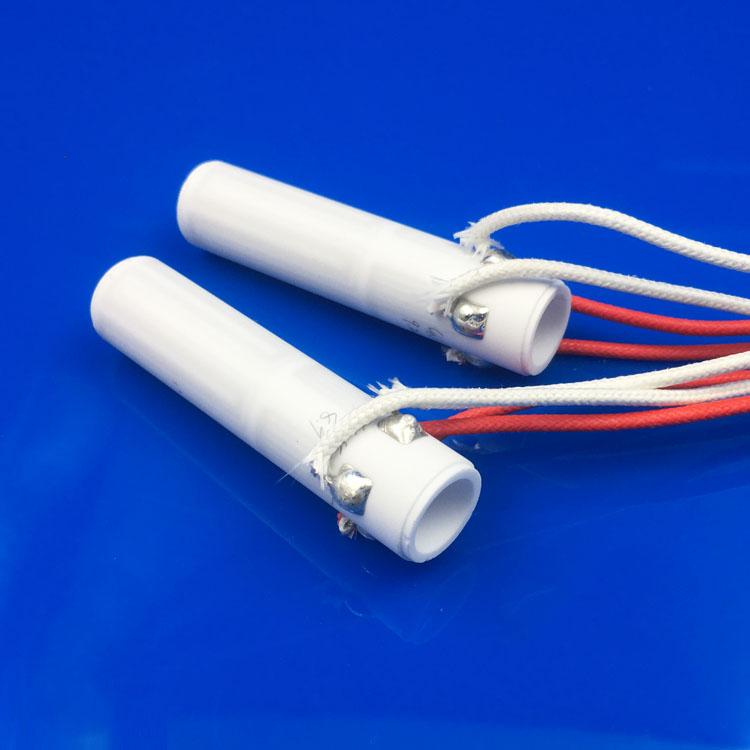
INNOVACERA supplies custom Ceramic heating elements for 3D Printer Extruder Hot Ends.

Contact us today with your requirements and our sales engineers will work with you to provide the correct product to meet your application.


Innovacera Ceramic Metallization Process

Ceramic Metallization Process

Our ceramic metallization process uses proprietary thick film manganese/molybdenum and tungsten coating as the base layer on ceramic components. This unique technology provides a wettable ceramic surface to metal bond in a brazed assembly.

To prevent oxidation and to improve wettability after the metallization layer is sintered into the ceramic at high temperature, it is plated using electrolytic plating. Metallization and nickel thickness is measured using X-Ray Fluorescence (XRF) technology to ensure desired thickness specifications are met.

With more than ten years of industry experience, the INNOVACERA team has expertise in a variety of application methods, capable of metallizing on Alumina Ceramic Components, AlN Ceramic Substrate, from prototyping to production.

The main applications of metallization:

  • Feed-through insulators
  • Headers
  • High-power receptacles
  • Insulating discs
  • Insulating rings and cylinders
  • Precipitator products
  • Power Switches
  • Vacuum Interrupters
  • SCR Housing
  • Windows
  • X-Ray tubes
  • Optical
  • Photonics
  • Energy storage/batteries

Boron Nitride Ceramics Sintered Setter Plate For Sintering AlN Si3N4 Substrates

BN Plate BN setter

The boron nitride setter plate is made of high purity 99.7% boron nitride ceramics and has a high operating temperature in an inert gas (2100°C) and vacuum (1900°C) environment. It has excellent thermal shock resistance which can be used for applications having sudden temperature changes. It will not react or wet with a wide range of molten metals and glass. It is also a good electrical insulator.

Boron nitride setter plate for high-temperature sintering furnace. The maximum size to produce is 500mm x 500mm, plain holes, thread holes, grooves or shoulders could be machined on the plate. In this field, we can offer precision machined components.


ESD (Electro-Static Discharge) safe microporous ceramic vacuum Chuck

ESD (Electro Static Discharge) safe microporous ceramic plates

INNOVACERA ESD (Electro-Static Discharge) safe microporous ceramic vacuum chuck (black and dark brown) can be customized to provide high-performance suction and clamping for automated processing of film materials or visual inspection. It can meet the requirements of semiconductor lithography technology and flat display OLED cutting.

The advantages of anti-static microporous ceramic vacuum chuck:

  • They can realize full-area precise adsorption and clamp under a high vacuum atmosphere; little pollution and no damage to wafers;
  • The adsorption force is uniform, and there will be no local force during adsorption so that the wafer will not be warped and deformed, and the adsorption force will continue to be stable, which can ensure the processing accuracy of the wafer;
  • They are widely used in semiconductor lithography and other processes;
  • They can absorb conductors, semiconductors, and insulators such as metal foils, wafers, glass, resin films, etc.

Is hexagonal boron nitride (HBN) a conductor or an insulator?

BN ceramics

Hexagonal boron nitride is a boron product with a wide range of applications. For it, the question that many people are very concerned about is whether hexagonal boron nitride is a conductor or an insulator?

In fact, hexagonal boron nitride (HBN) is a typical insulator, and the resistivity at room temperature can reach 1016-1018Ω.cm, even at 1000°C, the resistivity is still 104-106Ω.cm.

The insulating properties of hexagonal boron nitride (HBN) are very good, and the thermal conductivity is very good. Therefore, it is widely used in various electronic materials and plays the role of thermal conductivity and insulation.

The boron nitride ceramic crystal belongs to the hexagonal crystal system, its structure is similar to graphite, and its properties have many similarities, so it is also called “white graphite”.

It has good heat resistance, thermal stability, thermal conductivity, high temperature dielectric strength, and is an ideal heat dissipation material and high temperature insulating material.

Typical applications include the following:
Electrode insulation parts and protective tubes for high temperature furnaces; boron nitride insulation components for polysilicon ingot furnaces, semiconductor heat dissipation insulation parts, high temperature bearings, thermowells and glass forming molds, crucibles for melting semiconductors, high purity boron nitride for molten metals Crucibles; Nitride phosphors, silicon nitride, aluminum nitride and other ceramics and crucibles for powder sintering, setter plates, etc.


Alumina (Al2O3) Ceramic Substrates for Resistors

Alumina Substrates

Alumina is the most commonly used technical ceramic material. Thanks to its very good electrical insulation, dielectric strength, and high-temperature resistance up to 1500 °C, Alumina Ceramic is ideal for electrical applications and high-temperature applications.

Alumina ceramics feature:

  • Good mechanical strength
  • Good heat conductivity and fire resistance
  • Good corrosion and wear resistance
  • Very good electric insulation

The alumina substrates also possess several unique features:

  • Good surface with high smoothness/flatness and less porosity
  • High resistance to heat shock
  • Low warpage and camber
  • Stable in very high temperature and corrosive chemical
  • Very stable breaking strength and shape/dimension variance

Applications:
Network resistor, Chip resistor, Chip resistor array, Thick-film hybrid IC, Thin-film hybrid IC, General isolator


Enquiry