technical ceramic solutions

News

Category Archives: News

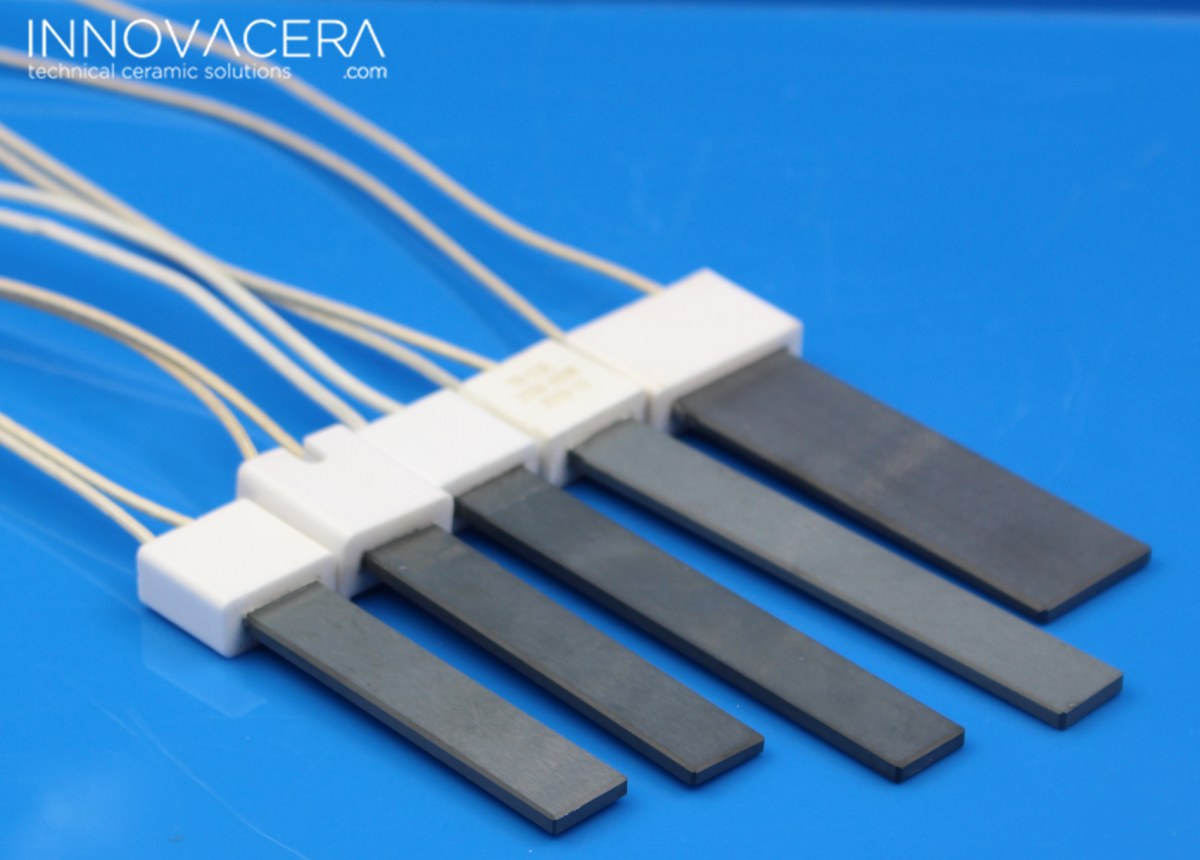
Ceramic heating element for 3D Printer Extruder Hot Ends

Ceramic heating element for 3D Printer Extruder Hot Ends

In September 2021, the 3D manufacturing accessories manufacturer E3D Online and the new phase successively released the 3D hot end in the current season, and the application of the Tusi semiconductor printing tube has been completed instead of the traditional single-head heat pipe. The hot new releases originate from the end of November 2021 and the month of December 2012.

The hot end is the first heating element of the hot end of the heating tube made of ceramic material, and the heating end is redesigned according to the unique characteristics of the ceramic heating tube. A new type of design hot end can provide 3D design convenience.

The two new hot ends are briefly described below.

E3D’s new hot end: Revo
Revo integrates a heating tube and thermistor. This design effectively solves the problem that the traditional hot end cannot accurately control the temperature.

  • Can quickly replace the nozzle, and can resume printing in the shortest time. Nozzle and throat are integrated with one unit, so there is no possibility of material leakage.
  • Weight reduction, the Revo™ Micro is half the weight of the E3D V6. Also in volume, it is smaller than the V6. Therefore, the space occupied by the print head is reduced, thereby improving the printing accuracy and speed.
  • The heating element is smaller and quicker than traditional heating blocks and has a positive temperature coefficient (PTC) that reduces power as heat increases, preventing overheating and fire problems.

Phaetus’ new hot end: Rapido

  • Larger heating area, which can meet the high temperature printing and faster printing speed.
  • Cylinder type ceramic heater for more uniform heating
  • Interchangeable design of different types of nozzles to meet the needs of high temperature and fiber silk printing.

What is the difference between ceramic heating and traditional heating?

Traditional Hot End: Includes a nozzle screwed into an aluminum heating block, which in turn is heated by an inserted cylindrical single-ended heating tube. The module also houses a removable thermistor for temperature measurement. Finally, a separate throat thermally isolates the hot end from the wire feed path, preventing it from melting on its way to the hot end. This heating method is very inefficient and has many problems:

  • The traditional hot end is bulky and heavy, which affects the printing accuracy and speed. If it is a direct extrusion system, it will also increase the frequency of motor vibration, further reducing the accuracy and speed.
  • There is an air gap between the heater block and the thermistor and the heating tube, so effective heat transfer and accurate temperature control cannot be performed. This leads to the problem of printing at different speeds and extrusion volumes without being able to quickly change the nozzle temperature to accommodate the changing filament feed speed. This is something that all consumer-grade printers have not addressed so far

Ceramic heating end: According to the current design, the inner aluminum tube is heated, thereby heating the wire passing through the aluminum tube. The hot end of this design solves several problems compared to the traditional hot end:

  • The application of ceramic heating makes the Revo hot end half lighter in weight and smaller than the V6 model. That is to say, the replacement of the traditional heating tube with ceramic heating can make the hot end design lighter and more compact than the traditional one, thereby improving the printing accuracy and speed.
  • Ceramic heating has the property of a positive temperature coefficient (PTC), specifically, reducing power as the temperature increases, thereby reducing the associated risk of temperature runaway when the maximum temperature is reached. At the same time, since ceramic heating can be integrated with the thermistor, the purpose of precise temperature control can be achieved.

Finally, the ceramic heating core has a more uniform heating performance and thermal efficiency. To achieve the same heating performance as traditional heating tubes, ceramic heating cores may only require lower power.

The iteration from single head tube to ceramic heating reflects the charm of technological innovation. Ceramic heating can indeed bring many benefits to 3D printing, at least from the research and development efforts of E3D and Phaetus. Technological innovation is generally led by the industry leader, and then the follow-up followers make the market bigger. Therefore, I personally think that after the launch of these two new hot ends, if the market responds well, there will be more and more 3D printers using ceramic heating elements in the future.

INNOVACERA supplies custom Ceramic heating elements for 3D Printer Extruder Hot Ends.

Contact us today with your requirements and our sales engineers will work with you to provide the correct product to meet your application.


Boron Nitride Ceramics for PVD equipment

Boron nitride insulator ceramic for PVD and MOCVD equipment

Hexagonal Boron Nitride has a microstructure similar to that of Graphite. In both materials, this structure, made up of layers of tiny platelets, is responsible for excellent machinability and low-friction properties. we called hexagonal boron nitride (HBN) or white graphite. Boron Nitride is very often machined to isolate components that work in PVD equipment. They are being installed as replacement parts in PVD Magnetron sputtering systems.


How to choose the ceramic ring for the fiber laser cutting machine?

Fiber Laser Cutting Head Nozzle Holder

The ceramic ring is an important part of the cutting head of the laser cutting machine. Its main function is to transmit the electrical signals collected by the laser head nozzle, which plays an important role in the normal and stable operation of the laser cutting machine.

We often encounter equipment shutdowns for no reason, laser heads hitting the working surface and other failures that are actually caused by instability because of poor laser ceramic rings. So it is very important to choose a high-quality laser ceramic ring for the laser cutting machine.

Here is how to choose a high-quality laser ceramic ring.

The laser ceramic ring composes of a ceramic body, stainless steel parts, and copper needles. The ceramic body is mainly used to maintain the insulation of the laser head body. The stainless steel part is used to ensure sufficient contact with the nozzle, so transmitting electrical signals to the copper needles. After a certain period of use, the old laser ceramic rings in the market often have poor contact between the stainless steel parts and the copper needles, and the copper needles may break in severe cases, resulting in unstable signals, or even no signals, so the laser cutting machine stops for no reason cause losses to the user. High-quality stainless steel parts, after being assembled with ceramic bodies of appropriate size, can ensure good concentricity. So the laser cutting machine can reduce the concentricity error between the two when replacing the nozzle. It can greatly reduce the loss of working hours and greatly improve the working efficiency of the laser cutting machine! If you are interested in our laser welding machine. Please free feel to contact us.


High purity PBN washer for semiconductor

PBN washer

Pyrolytic Boron Nitride is also called PBN. It also has a hexagonal crystal structure like hot-pressed boron nitride ceramic but is produced in different manufacturing processes. PBN is produced by chemical vapor deposition (CVD), no need to go through the traditional hot pressing sintering process. The purity is up to 99.99%. Benefiting from the high purity, good thermal stability, and chemical inertness, PBN ceramic is suitable for semiconductor components or vacuum systems. It is widely used to produce ceramic crucibles for single crystal growth of compound semiconductors (such as GaAs, InP, etc.), crucibles for molecular beam epitaxy, crucibles for OLED, etc.

Main properties of PBN ceramic

  • Good thermal conductivity
  • High insulation resistance
  • High dielectric strength over wide temperature ranges.
  • Extremely pure
  • Non-wetting
  • Non-toxic
  • Non-reactive to most other compounds
  • Withstands high temperatures and rapid cooling

Alumina Mo-Mn Metallization Method

Metallized Ceramics

What is Mo-Mn Metallization?

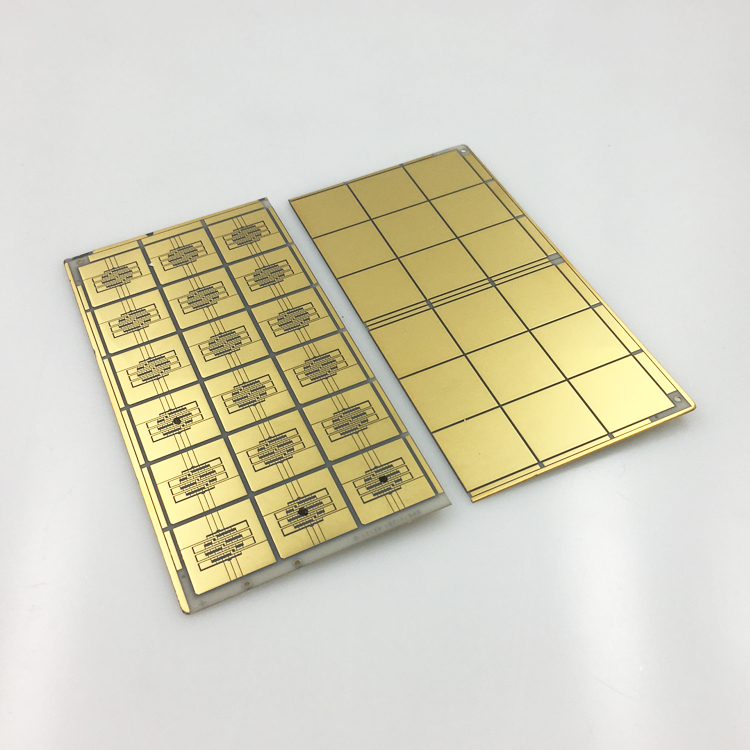
The metalized layer is obtained by adding a small amount of MoMn powder and coating it on the surface of the ceramic body with a binder and sintering at high temperatures.

Features:
1) High-intensity sealing, high air-tightness, high reliability, good heat resistance
2) Excellent insulation performance and high temperature resistance
3) Good mechanical, electrical, and thermal conductivity
4) Great bonding strength
5) Widely used for all electric products and electric heating products

These metalized ceramics are ideal for high voltage, high vacuum, and high pressure applications.

So far the most widely-used and effective method for creating a leak-tight, robust joint between ceramic and metal is by brazing. A thin layer of metal deposited on a ceramic part enables brazing between ceramic and metal part that has a different coefficient of thermal expansion.

A layer of Molybdenum-Manganese is deposited with a typical thickness of 8 to 30 µm after sintering.

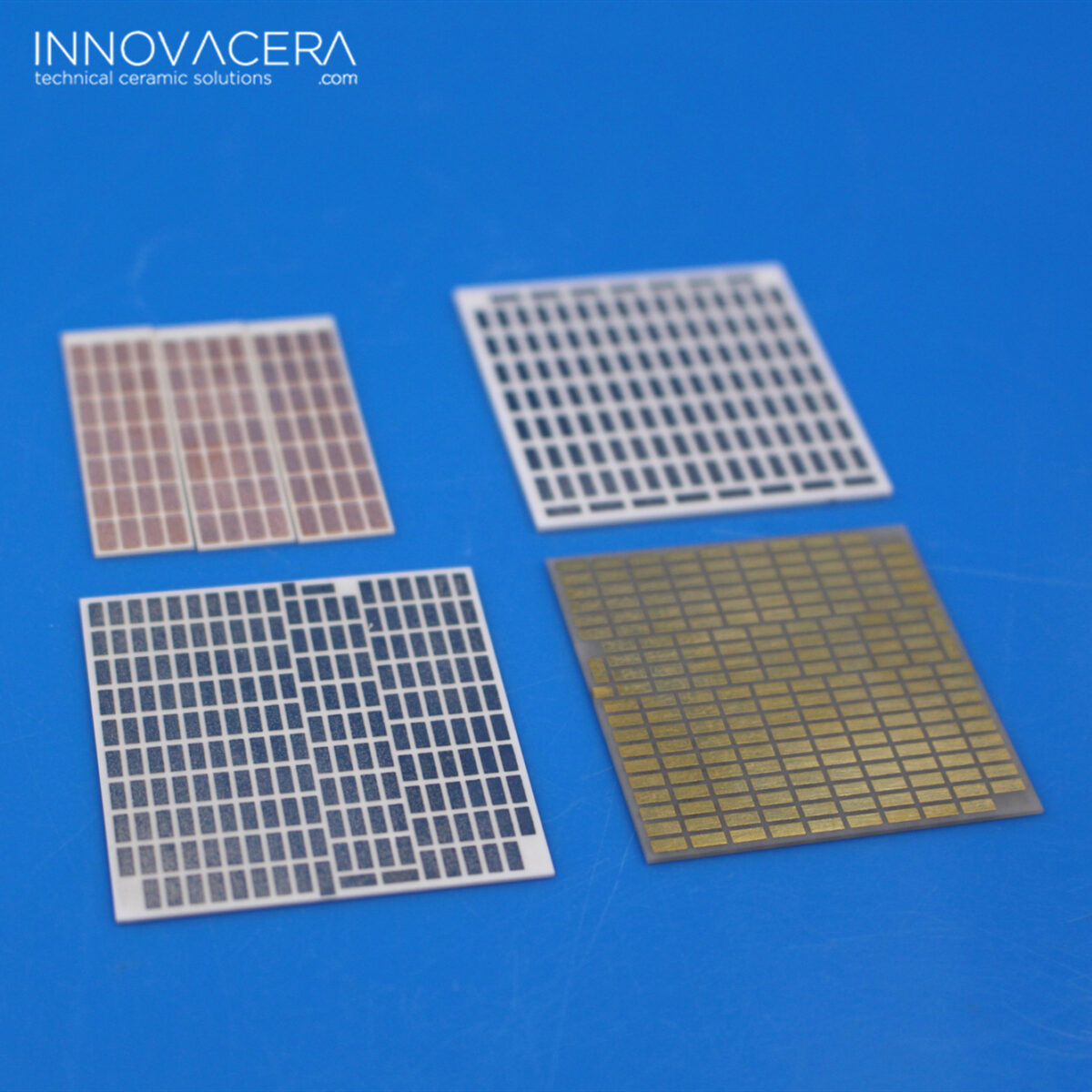
The metalized surface receives a secondary coating of nickel to seal and improve wettability for later brazing.

Applications:
Electrical transmission and distribution
Electronics industry
Textile machinery
Medical electronics
Automobile industry
Sealing
Solid Oxide Fuel Cells
High temperature application

We can supply the products according to the customer’s drawings, samples, and performance requirements.


Advanced Materials – Advanced Ceramic Lids

Metallized Ceramic Cap

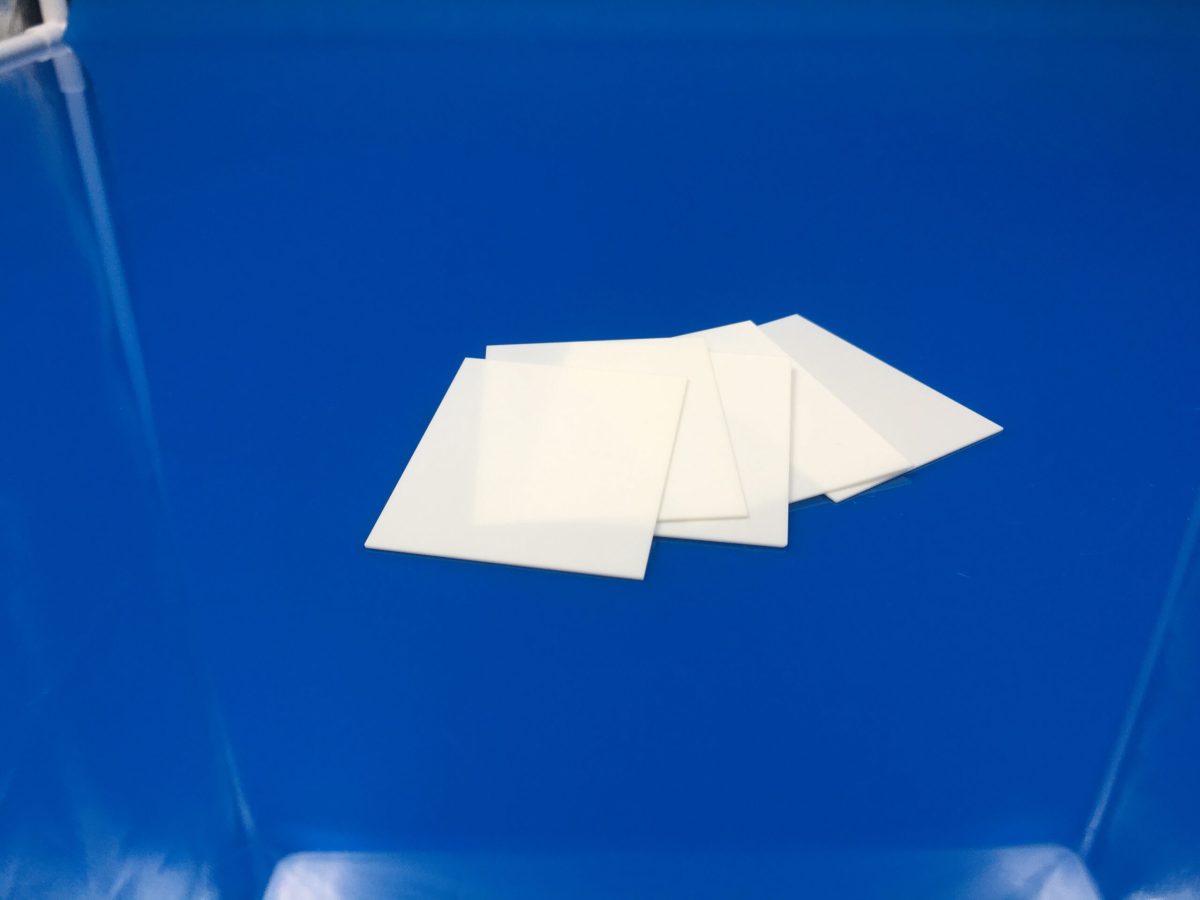
To keep pace with rapidly changing technology, customers need durable and reliable packaging materials. INNOVACER Advanced Materials produces high performance ceramic lids to meet your microelectronic packaging application whether for the semiconductor, MEMS, medical, or optical market.

A variety of elements must come together to manufacture the new Lid. Innovacera can produce edge metallization. This unique feature assures high performance and quality of the sealed packages at the customer end.

Innovacera is a professional high-tech enterprise, it has more than ten years of history of R&D, manufacturing, and sales in advanced ceramic materials, which allow us to custom-design and manufacture the ceramic Lid to meet specific customer requirements. The lids are available in a variety of shapes, sizes, materials.

Specifications

  • Lid Material – 95% Alumina, 99% Alumina, ALN Ceramic
  • Lid Color – White, Ivory, grey
  • Lid Shapes – Square, Rectangle, Flat shapes
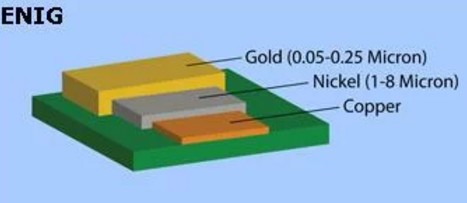
  • Lid Seal Ring Metallization – Typically nickel followed by gold.

Ceramic lids applications

  • Non-magnetic applications
  • High reliability hermetic package sealing
  • Ceramic Lid for non-hermetic packages

Growing Demand For Machinable Ceramics

Machinable Glass Ceramic

Machinable Glass Ceramic (also known as “Machinable ceramic”) is a polycrystalline composite material, white in its entire body. It is a glass ceramic material with synthetic mica crystallites as the main crystal phase. Machinable ceramic has high mechanical strength, excellent dielectric properties, thermal properties, and good chemical stability.

The most outstanding feature of machinable ceramics lies in its machinability, which can meet high-precision technical requirements, without making molds, and directly process and shape, which greatly reduces the design and processing cycle. Machinable ceramics can be flexibly applied to various structural ceramic parts that require complex shapes, high precision requirements, and difficult molding, such as various ceramic thin-walled, ceramic threads, and so on.

Machinable ceramics allow ceramic components to be made without the delay or expense of conventional ceramic manufacturing processes.

Applications of machinable ceramic include Aerospace Industry, Constant & Ultra-high Vacuum Environments, Medical Industry, Welding Nozzles, Semi-conductor Industry, and so on. Among those applications, the semi-conductor industry accounts for the largest market share, which was about 32.24% in 2016.

The machinable ceramic industry is relatively concentrated. Tokuyama is the largest producer with an output of 72389 Kg in 2016. The second producer, Corning, comes from France, with 28.08% output share.

Global production of machinable ceramic increased from 232517 Kg in 2012 to 238512 Kg in 2016. There is no doubt that Japan is the largest production base. As for consumption, the USA is the largest consumer with about 27.12% share in 2016. Europe is the follower, consuming about 53727 Kg.

Due to its own advantages, the machinable ceramic industry keeps an upward tendency in recent years, it is estimated that the global machinable ceramic industry will be worth 152.83 million USD in 2022.


Boron Nitride Ceramic For Plasma Application

Boron Nitride Ceramic For Plasma Application

Boron nitride ceramics (BN) are unique in plasma environments for their resistance to the sputtering and low propensity to generate secondary ions, even in the presence of strong electromagnetic fields. Sputter resistance helps extend component life, while low secondary ion generation helps maintain the integrity of the plasma environment.

Therefore, boron nitride ceramics (BN) are widely used to confine the plasma arc in the sputtering chamber to the target material and prevent the erosion of integral components in the process chamber.

Boron Nitride’s (BN) main products for plasma application include arc shields and guides, target frames, shields, and gaskets used in the manufacture of PVD plasma chambers.

At the same time, boron nitride ceramics (BN) are also used in Hall-effect thrusters using plasma as a propulsion method for orbiting satellites and deep space probes.

Innovacera can provide pure boron nitride and composite boron nitride including BN+Si; BN+ZrO2.


Whether the ceramic electric heating tube will leak during the heating process?

Ceramic Electric Heating Tube

In our daily life, we often encounter the application scenario of liquid heating, and there are various types of heating elements in the process of choosing, with different performance and advantages. Here focus and talk about the ceramic heating tube in the process of water heating whether the fracture will continue to lead to electricity leakage such an unsafe phenomenon.

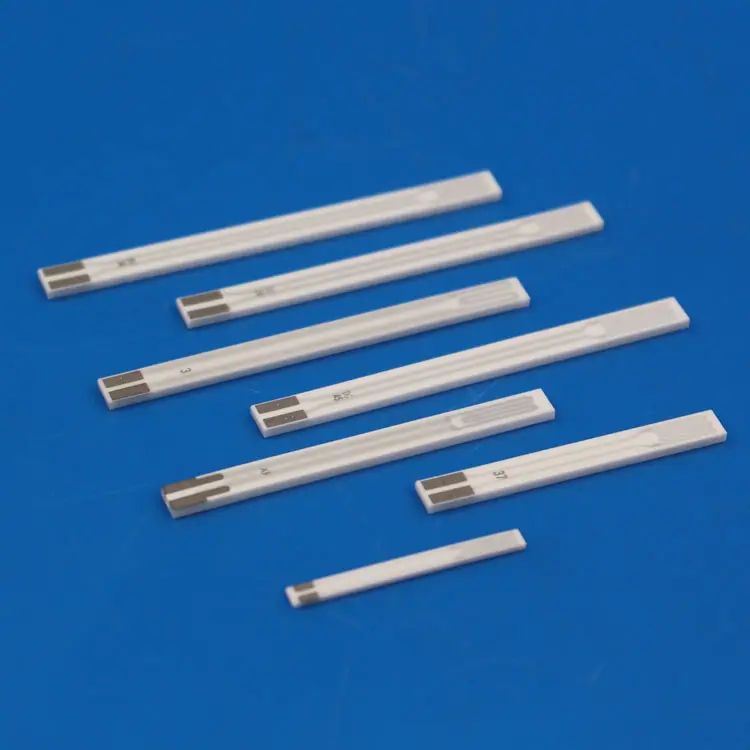
Ceramic heating tube is made of alumina flow-casting porcelain as insulation layer and substrate, and high temperature metal thick film paste is printed on the raw porcelain side, and then rolled, sintered at high temperature in hydrogen furnace to become a heating element, and finally welded leads to form MCH heating element. Accordingly, besides lead outside, the calorific area of the tube is complete insulation, this contacts to the home appliance with water, if regard water heater as, having an outstanding advantage, the safe problem is ensured.

However, the ceramic heating tube is more fragile than other materials, easy to fracture by a violent impact. Therefore, many customers are worried about whether there will be electric leakage and other unsafe phenomena after ceramic pipe fracture. Do not worry, because of the particularity of the ceramic electric heating tube heating line, after the fracture of the electric heating tube, it will immediately stop the power operation, can completely avoid leakage and other safety hazards, which is more conducive to the application of water heating.

In addition, the ceramic heating tube has another advantage compared with other heating materials, that is, it can effectively reduce the residual scale when water heating. Many water heating products, such as electric kettles and cups, are plagued by scale problems. If metal is used as the heating element, the residue of scale will directly affect the function of the metal tube, life and so on.

INNOVACERA has been in the heating pipe business for more than 10 years. We can design the heating pipe according to the customer’s drawings (voltage, power, size) or by our technical staff according to your requirements. Please feel free to contact us if you need anything


Hexagonal boron nitride electrical insulators for high temperatures and high voltages equipment

Boron Nitride Ceramic Components

Hexagonal Boron Nitride (HBN) is also known as ‘White Graphite’, has a similar (hexagonal) crystal structure as Graphite. This crystal structure provides excellent lubricating properties. It offers high thermal conductivity and good thermal shock resistance and can be easily machined to close tolerances in virtually any shape. After machining, it is ready for use without additional heat treating or firing operations.

HBN is much superior to Graphite and has the following characteristics:

  • Excellent Lubricating Properties due to low Coefficient of Friction at 0.15 to 0.70
  • Good Chemical Inertness
  • Electrical Insulator
  • Thermal Conductor (result: better heat dissipation)
  • High Temperature Stability, 1000°C in Air, 1400°C in Vacuum and 1800°C in Inert gas
  • Low Thermal Expansion
  • Low Dielectric Constant
  • High Load bearing properties

Applications:

  • BN Setter plates for high temperature furnaces
  • Crucibles for molten glass and metals
  • Electrical insulators for high temperatures and high voltages
  • Vacuum feedthroughs
  • Plasma chamber lining and fittings
  • Nozzles for non-ferrous metals and alloys
  • Thermocouple protection tubes and sheaths
  • Laser supports

Enquiry