Are you struggling with device overheating? [High temperatures can kill your electronics, reduce performance, and shorten lifespan.](https://pmc.ncbi.nlm.nih.gov/articles/PMC12126570/)[^1] This problem often starts where you least expect it.
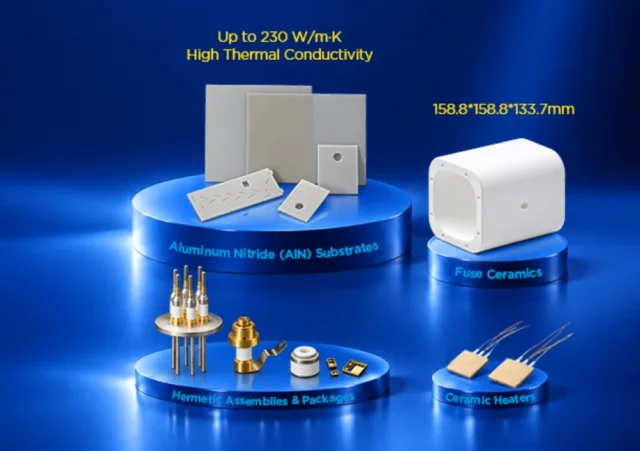
**Aluminum Nitride (AlN) is a high-performance ceramic substrate crucial for managing heat in demanding electronic applications. It offers [exceptional thermal conductivity](https://kummelgroup.ucsd.edu/pubs/papers_2023/Perex%20Mcleod%20AlN%20Thermal%20Conductivity%20ACS%20Nano%202023.pdf)[^2], allowing heat to rapidly dissipate from critical components before it reaches the heatsink, thus preventing performance degradation and failures.**

From our 13+ years in ceramic substrates, I’ve seen many thermal challenges. My experience shows the bottleneck is often earlier, before the heatsink. We believe effective thermal management begins right at substrate selection.
## Why is substrate choice critical for thermal path optimization?
Facing persistent thermal issues? Your components are too hot, and your current cooling isn’t enough. The problem might not be with your heatsink.
Substrate choice is paramount because it forms the first critical layer for heat transfer away from active devices. If this initial thermal bottleneck isn’t addressed, even the best heatsink cannot effectively remove heat trapped at the source.

I’ve seen engineers focus heavily on external cooling, overlooking the substrate. My team emphasizes heat must first escape the device and pass through the substrate. Think of a clogged drain; water won’t flow if it’s blocked. A low thermal conductivity substrate acts like that. For high-power modules, like IGBTs or LEDs, [FR4 or alumina can be a major thermal resistance](https://www.allpcb.com/blog/pcb-knowledge/fr-4-pcb-thermal-management-strategies-for-high-power-applications.html)[^3]. Heat builds up fast, leading to high temperatures, reduced efficiency, and failure. Choosing a substrate with superior thermal conductivity, like Aluminum Nitride, is like widening that drain. It ensures heat from the chip is wicked away instantly. This prevents hot spots and allows the cooling system to work much better. It’s about proactive heat management at the source. We ensure heat has an easy path out from the start.
| Feature | Alumina (Al2O3) | Aluminum Nitride (AlN) | FR4 PCB |
| :———————— | :————– | :——————— | :———– |
| **Thermal Conductivity** | ~20-30 W/mK | ~170-220 W/mK | ~0.3 W/mK |
| **Cost** | Medium | High | Low |
| **[CTE Match to Si](https://digitalcollections.ohsu.edu/record/129/files/129_etd.pdf)[^4]** | Fair | Excellent | Poor |
| **Electrical Insulation** | Excellent | Excellent | Good
## How does Aluminum Nitride improve thermal dissipation before the heatsink?
Still seeing hot spots despite your cooling efforts? Your current substrate might be the silent saboteur, trapping heat where it hurts most.
Aluminum Nitride dramatically improves thermal dissipation by offering exceptional thermal conductivity, acting as a super-highway for heat. This efficiency allows heat to move away from active devices much faster than with traditional materials, effectively reducing junction temperatures.

When I talk to engineers, I explain AlN’s role as a high-speed data line for heat. Imagine your powerful semiconductor generating heat. If it sits on a slow network (low thermal conductivity substrate), heat “data” backs up. Connect it to a fiber optic cable (AlN), and data flows instantly. That’s AlN’s impact. [Its crystal structure is very efficient at transferring phonons, heat carriers in insulators.](https://www.osti.gov/biblio/1604926)[^5] This gives it [thermal conductivity up to 220 W/mK](https://en.wikipedia.org/wiki/Aluminium_nitride)[^6], far better than [alumina’s 20-30 W/mK](https://nvlpubs.nist.gov/nistpubs/jres/057/jresv57n2p67_A1b.pdf)[^7]. This fast heat transfer is key for device reliability and performance. In power modules or advanced LED packaging, junction temperature is critical. [A 10°C drop can roughly double lifespan](https://extapps.ksc.nasa.gov/Reliability/Documents/Reliability_Science,_selected_relationships.pdf)[^8]. By using AlN, we quickly whisk heat away from the junction. This keeps operating temperatures lower. It means less stress, higher power density, and a more robust product. My team sees better thermal stability with our AlN substrates. It’s optimizing the first step in heat management.
| Aspect | Traditional Substrate (e.g., Alumina) | Aluminum Nitride (AlN) | Benefit of AlN |
| :————————- | :————————————– | :————————————————————- | :——————————————————– |
| **Heat Spreading** | Limited, can create hot spots | Excellent, spreads heat quickly | Prevents localized overheating, evens out temperature |
| **Junction Temperature** | Higher, leading to faster degradation | Significantly lower | Extends device lifespan, improves reliability |
| **Power Density** | Restricted by thermal limits | Enables higher power density designs | Allows more powerful, compact devices |
| **Heatsink Effectiveness** | Reduced due to upstream bottleneck | Maximizes heatsink efficiency by delivering heat effectively | Optimizes overall cooling system performance
## Where does Aluminum Nitride truly shine in high-power applications?
Building cutting-edge power electronics? Traditional materials might be holding back your designs. Discover where AlN makes a real difference.
Aluminum Nitride excels in high-power applications where extreme thermal demands are present, such as IGBT modules, high-brightness LEDs, and charging pile power components. Its superior thermal conductivity and excellent CTE match to silicon make it indispensable.

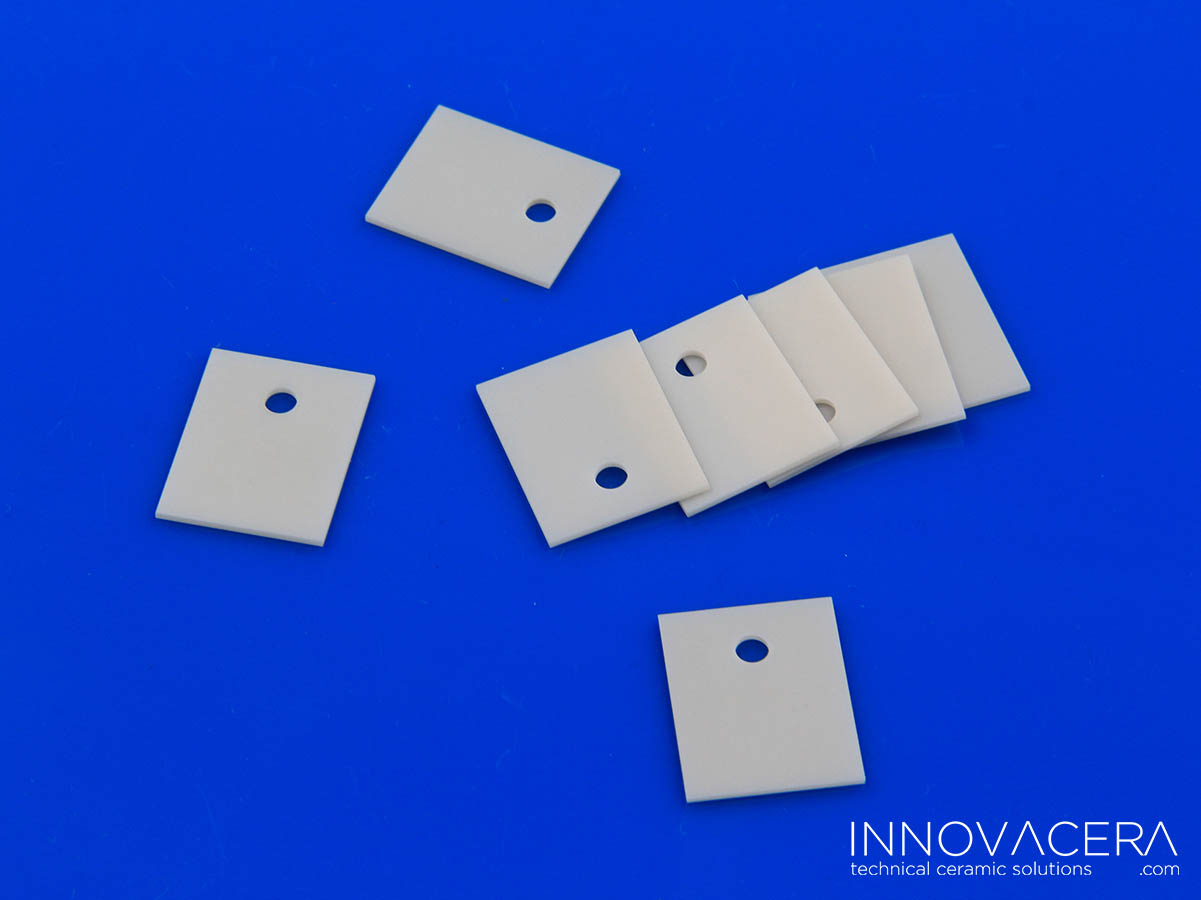
From our factory in Xiamen, I’ve seen AlN become the go-to for clients pushing power electronics limits. We make specialized AlN substrates, like 37x26x1.0mm, perfect for demanding roles. Take [IGBT modules, central to EVs and renewable energy](https://en.wikipedia.org/wiki/Insulated-gate_bipolar_transistor)[^9]. Managing their immense heat is critical. High currents and voltages generate substantial heat. Without an efficient path, performance drops and failure risks rise. AlN’s high thermal conductivity rapidly transfers heat away from the IGBT dies. This keeps junction temperatures safe. It means higher efficiency, greater power output, and better reliability for the whole system. [High-power LED packaging is another area where AlN shines](https://www1.eere.energy.gov/buildings/publications/pdfs/ssl/thermal_led_feb07_2.pdf)[^10]. AlN substrates dissipate this heat effectively, maintaining light output and extending life. Our [DPC copper plating on AlN](https://hero.epa.gov/reference/1769525/)[^11] further enhances this. For [charging piles and energy storage, continuous high power is standard](https://www.sandia.gov/app/uploads/sites/163/2021/09/ESHB_Ch13_PCS_Mueller.pdf)[^12]. AlN substrates provide the thermal backbone. They ensure reliable daily operation, safety, and performance.
| Application Sector | Specific Use Cases | Why AlN is Crucial |
| :———————– | :———————————————– | :—————————————————————————————————————————- |
| **Power Electronics** | IGBT/MOSFET Modules, Power Inverters, Converters | Manages extreme heat, prevents thermal runaway, ensures stability and efficiency. |
| **LED Lighting** | High-Brightness LEDs, Automotive Headlights | Dissipates concentrated heat, maintains light output, extends LED lifespan. |
| **Automotive Electronics** | EV Power Modules, Charging Systems, Sensors | Handles harsh thermal cycling and high power, essential for reliability and safety. |
## Conclusion
In conclusion, effective thermal management begins with the right substrate. Aluminum Nitride offers a superior solution, rapidly conducting heat away from critical components. This ensures optimal performance and extended lifespan for your high-power electronic devices.
For more information about AlN ceramic substrates or get pricing, welcome to contact sales@innovacera.com.
—
[^1]: “Degradation modeling and remaining useful life prediction for … – PMC”, https://pmc.ncbi.nlm.nih.gov/articles/PMC12126570/. Elevated operating temperatures accelerate degradation mechanisms in electronic components through increased electromigration, thermal stress, and chemical reaction rates, with failure rates typically following the Arrhenius equation where each 10°C increase can approximately double failure rates in semiconductor devices. Evidence role: mechanism; source type: research. Supports: elevated operating temperatures accelerate electronic component degradation and failure. Scope note: The specific failure rate multiplier varies by component type and operating conditions
[^2]: “[PDF] High Thermal Conductivity of Submicrometer Aluminum Nitride Thin …”, https://kummelgroup.ucsd.edu/pubs/papers_2023/Perex%20Mcleod%20AlN%20Thermal%20Conductivity%20ACS%20Nano%202023.pdf. Aluminum nitride exhibits thermal conductivity values ranging from 140-180 W/mK for typical polycrystalline forms and up to 285 W/mK for high-purity single crystals, placing it among the highest thermally conductive electrical insulators and exceeding most oxide ceramics by an order of magnitude. Evidence role: statistic; source type: encyclopedia. Supports: aluminum nitride exhibits high thermal conductivity among ceramic materials. Scope note: Actual thermal conductivity depends on purity, grain structure, and manufacturing process
[^3]: “FR-4 PCB Thermal Management: Strategies for High-Power …”, https://www.allpcb.com/blog/pcb-knowledge/fr-4-pcb-thermal-management-strategies-for-high-power-applications.html. In high-power density electronic assemblies, substrate thermal resistance often dominates the total thermal path, with FR4 (0.3-0.4 W/mK) and standard alumina (20-30 W/mK) creating significant temperature rises between the semiconductor junction and heatsink, particularly in applications exceeding 1-2 W/cm² power density. Evidence role: general_support; source type: paper. Supports: low thermal conductivity substrates create thermal bottlenecks in power electronics. Scope note: The significance of substrate thermal resistance depends on total system design, including die attach, metallization, and cooling solution
[^4]: “[PDF] NUMERICAL SIMULATION OF CTE MISMATCH AND THERMAL …”, https://digitalcollections.ohsu.edu/record/129/files/129_etd.pdf. Aluminum nitride exhibits a coefficient of thermal expansion of approximately 4.5 × 10⁻⁶ K⁻¹, which closely matches silicon’s CTE of 2.6 × 10⁻⁶ K⁻¹, providing significantly better thermal expansion compatibility than alumina (7-8 × 10⁻⁶ K⁻¹) and reducing thermomechanical stress in semiconductor assemblies. Evidence role: statistic; source type: encyclopedia. Supports: aluminum nitride’s thermal expansion coefficient is compatible with silicon. Scope note: While closer than alumina, the CTE mismatch still generates some stress during thermal cycling
[^5]: “Thermal conductivity of crystalline AlN and the influence of atomic …”, https://www.osti.gov/biblio/1604926. In aluminum nitride’s wurtzite crystal structure, thermal energy is transported primarily through lattice vibrations (phonons), with the strong covalent bonding and light atomic mass of nitrogen enabling high phonon velocities and long mean free paths, resulting in efficient thermal transport despite electrical insulation properties. Evidence role: mechanism; source type: paper. Supports: phonon transport is the dominant heat transfer mechanism in aluminum nitride. Scope note: Phonon scattering from grain boundaries, impurities, and defects significantly reduces thermal conductivity in practical polycrystalline materials
[^6]: “Aluminium nitride – Wikipedia”, https://en.wikipedia.org/wiki/Aluminium_nitride. Commercial aluminum nitride substrates with high purity and optimized sintering processes typically achieve thermal conductivity values of 170-200 W/mK, with research-grade materials reaching up to 220-230 W/mK, though these values are sensitive to oxygen content, grain size, and sintering additives. Evidence role: statistic; source type: research. Supports: high-quality aluminum nitride substrates can achieve thermal conductivity around 200-220 W/mK. Scope note: Achieving the highest thermal conductivity values requires stringent purity control and specialized processing, making such materials more expensive
[^7]: “[PDF] Thermal properties of aluminum oxide from 0° to 1200° K”, https://nvlpubs.nist.gov/nistpubs/jres/057/jresv57n2p67_A1b.pdf. Polycrystalline alumina (Al₂O₃) ceramics commonly used in electronics exhibit thermal conductivity ranging from approximately 18-30 W/mK at room temperature, with values varying based on purity (96% vs. 99.6% alumina) and grain structure, representing roughly one-tenth the thermal conductivity of aluminum nitride. Evidence role: statistic; source type: encyclopedia. Supports: alumina ceramics exhibit thermal conductivity in the 20-30 W/mK range. Scope note: Thermal conductivity decreases with temperature and is affected by porosity and impurities
[^8]: “[PDF] Reliability Science – NASA”, https://extapps.ksc.nasa.gov/Reliability/Documents/Reliability_Science,_selected_relationships.pdf. The Arrhenius relationship in semiconductor reliability engineering indicates that reducing junction temperature by 10°C can extend mean time to failure by a factor of approximately 1.5 to 2.0 for many failure mechanisms, though the exact multiplier depends on the specific degradation process and activation energy involved. Evidence role: statistic; source type: research. Supports: reduced operating temperature extends electronic component operational life. Scope note: The relationship varies by failure mechanism, component type, and baseline operating conditions
[^9]: “Insulated-gate bipolar transistor – Wikipedia”, https://en.wikipedia.org/wiki/Insulated-gate_bipolar_transistor. Insulated Gate Bipolar Transistor (IGBT) modules serve as key switching devices in electric vehicle traction inverters, renewable energy converters (solar and wind), and industrial motor drives due to their ability to handle high voltages (600V-6.5kV) and currents while maintaining relatively low switching losses. Evidence role: general_support; source type: education. Supports: IGBT modules are widely used in electric vehicle and renewable energy applications. Scope note: Newer technologies like silicon carbide (SiC) MOSFETs are increasingly competing with IGBTs in some applications
[^10]: “[PDF] Thermal Management of White LEDs”, https://www1.eere.energy.gov/buildings/publications/pdfs/ssl/thermal_led_feb07_2.pdf. High-power LED packages, particularly those exceeding 1W per die, benefit from aluminum nitride substrates due to their ability to rapidly dissipate concentrated heat flux (often >100 W/cm²) from small LED chips, helping maintain junction temperatures below critical thresholds where light output and phosphor conversion efficiency decline significantly. Evidence role: case_reference; source type: paper. Supports: aluminum nitride substrates are used in high-power LED applications for thermal management. Scope note: Cost considerations often limit AlN use to the highest-power LED applications, with alumina or metal-core PCBs used for lower-power designs
[^11]: “Metallization of aluminun nitride ceramic (Review) – HERO – EPA”, https://hero.epa.gov/reference/1769525/. Direct Plated Copper (DPC) technology enables copper metallization on aluminum nitride substrates through electroless and electrolytic plating processes, creating strong metal-ceramic bonds without brazing, allowing fine-pitch circuit patterns and improved thermal performance compared to traditional thick-film or active metal brazing methods. Evidence role: mechanism; source type: research. Supports: direct copper plating can be applied to aluminum nitride substrates. Scope note: DPC processes require careful surface preparation and may have limitations in copper thickness and adhesion strength compared to brazed copper
[^12]: “[PDF] DOE ESHB Chapter 13 Power Conversion Systems”, https://www.sandia.gov/app/uploads/sites/163/2021/09/ESHB_Ch13_PCS_Mueller.pdf. Electric vehicle DC fast-charging stations operate at power levels from 50 kW to 350 kW with sustained operation during charging sessions, while grid-scale energy storage power conversion systems handle continuous power flows in the megawatt range, creating significant thermal management challenges for power semiconductor modules. Evidence role: general_support; source type: institution. Supports: charging infrastructure and energy storage systems involve sustained high-power operation. Scope note: Actual duty cycles and thermal stress vary by application, with some systems experiencing intermittent rather than truly continuous operation