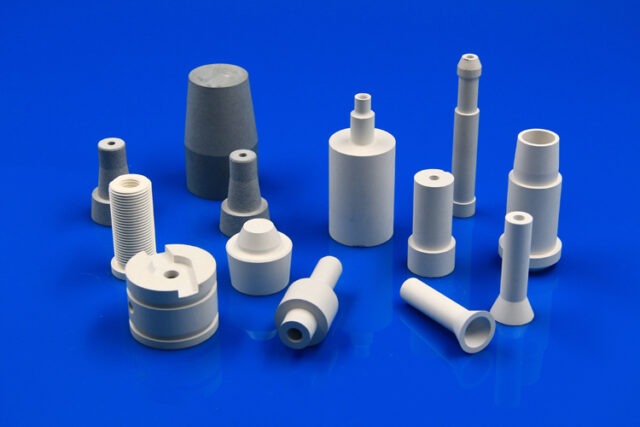
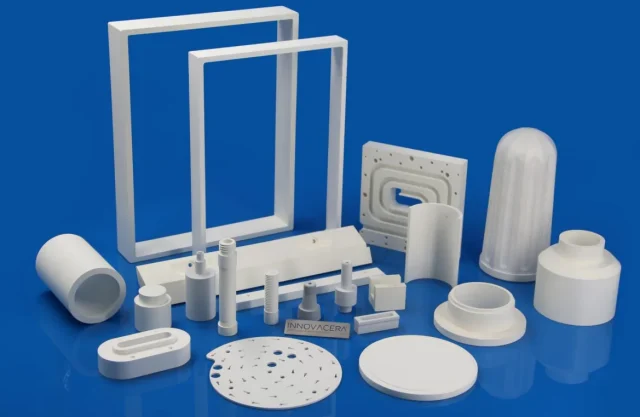
When engineers choose ceramic materials for high-temperature and thermal management applications, thermal conductivity often tops the list of concerns. Boron nitride ceramic stands out because it combines good heat transfer with electrical insulation, chemical inertness, and easy machinability. But how does its thermal conductivity really compare to alumina, aluminum nitride, silicon carbide, and other engineering ceramics? This question matters for designers working in powder metallurgy, semiconductor manufacturing, crystal growth, molten metal processing, and high-temperature furnace systems.
Boron nitride ceramic, sometimes called white graphite because of its layered crystal structure, shows thermal conductivity ranging from about 20 to 85 W/m·K depending on grade and composition. BMATS grades of solid boron nitride include UHB at 35 W/m·K, HB at 40 W/m·K, BC at 32 W/m·K, BSC at 45 W/m·K, BAN at 85 W/m·K, and BSN at 20-22 W/m·K. These numbers place boron nitride well above alumina in some grades and below aluminum nitride and silicon carbide in most cases. The wide range reflects how additives and composite fillers can tune BN properties for specific applications.
Pyrolytic boron nitride, a special form made by chemical vapor deposition, behaves differently because of its anisotropic structure. Heat travels much faster parallel to the deposition layers than perpendicular to them. At 200°C, PBN reaches about 60 W/m·K in the in-plane direction but only 2.6 W/m·K through the thickness. At 900°C, the in-plane value drops to about 43.7 W/m·K while the through-thickness value stays near 2.8 W/m·K. This directional behavior makes PBN ideal for crucibles and crystal growth fixtures where heat needs to spread across a surface rather than pass through the wall thickness.
To understand where boron nitride fits, it helps to look at the common ceramics used in engineering. Alumina ceramics, the most widely used industrial ceramic, offer thermal conductivity around 24-30 W/m·K. Standard 96% alumina sits near the low end, while high-purity alumina can reach slightly higher values. Compared to alumina, boron nitride ceramic generally transfers heat better while also offering lower density, lower thermal expansion, and much better machinability. For applications like sintering setters, furnace fixtures, and molten metal handling, this combination often makes BN more attractive despite alumina’s lower cost.
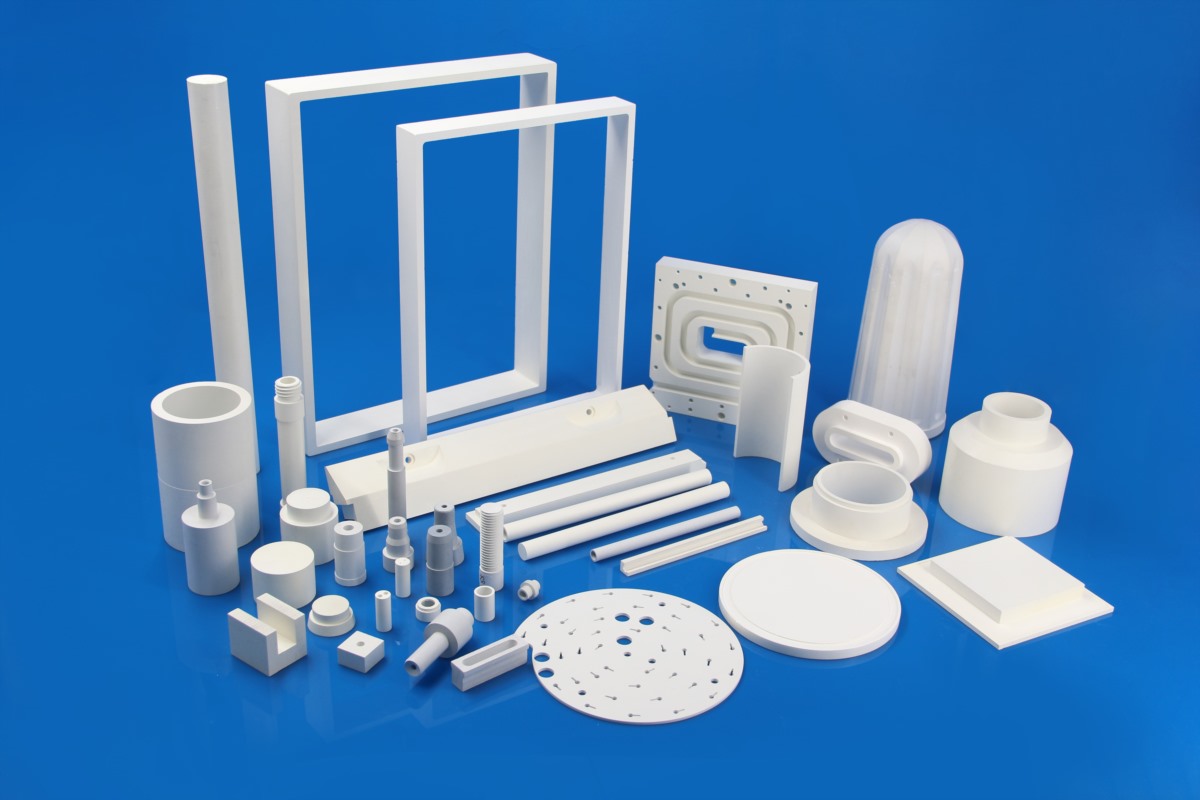
Aluminum nitride ceramic delivers much higher thermal conductivity, typically 170-230 W/m·K. It dominates power electronics substrates, LED packages, and RF applications where heat must move quickly away from semiconductor devices. AlN offers electrical isolation with outstanding thermal performance, but it costs more and requires more careful handling than boron nitride. For less demanding thermal environments or applications where machinability and chemical resistance are critical, BN provides adequate heat transfer at a lower price point.
Silicon carbide ceramic shows thermal conductivity in the range of 120-270 W/m·K depending on purity, density, and processing method. It excels in abrasive environments, high-temperature structural parts, and some power electronics applications. SiC handles mechanical stress and wear better than BN, but it is much harder to machine and generally heavier. Boron nitride remains the preferred choice when easy customization, chemical inertness, and electrical insulation matter more than maximum thermal performance.
Silicon nitride ceramic falls in the 90-120 W/m·K range. It balances thermal conductivity with high fracture toughness, making it popular for bearings, welding fixtures, engine components, and cutting tools. Boron nitride does not match silicon nitride in mechanical strength, but its non-wetting behavior against molten metals and easy machining give it advantages in crucibles, nozzles, break rings, and casting molds.
Zirconia ceramic, another common engineering ceramic, has very low thermal conductivity around 2-3 W/m·K. It acts as a thermal barrier rather than a heat conductor. Compared to zirconia, boron nitride ceramic transfers heat roughly 10 to 40 times better, making BN far more suitable for applications where heat must spread or escape rather than be contained.
The comparison table below summarizes typical thermal conductivity values and key characteristics for these ceramics.
Thermal Conductivity Comparison
| Ceramic Material | Thermal Conductivity | Key Notes |
|---|---|---|
| Boron Nitride Ceramic | 20-85 W/m·K | Easy to machine, electrically insulating, chemically inert |
| Pyrolytic Boron Nitride | 60 W/m·K (a), 2.6 W/m·K (c) | Anisotropic CVD material, 99.99% purity |
| Alumina Ceramic | 24-30 W/m·K | Low cost, widely available, good mechanical strength |
| Aluminum Nitride Ceramic | 170-230 W/m·K | Excellent thermal conductivity, used in power electronics |
| Silicon Carbide Ceramic | 120-270 W/m·K | High hardness, wear resistant, good thermal shock |
| Silicon Nitride Ceramic | 90-120 W/m·K | High strength and toughness, good thermal shock |
| Zirconia Ceramic | 2-3 W/m·K | Very low conductivity, used as thermal barrier |
Beyond thermal conductivity, boron nitride ceramic offers several properties that influence material selection. Density ranges from 1.6 to 2.9 g/cm³ depending on grade, making BN lighter than alumina and much lighter than metals. This weight advantage helps in moving parts, large furnace fixtures, and portable high-temperature equipment where every gram counts. The thermal expansion coefficient stays between 1.5 and 3.5 × 10⁻⁶/K, which is lower than most metals and helps reduce thermal stress during heating and cooling cycles.
Room-temperature electrical resistivity of boron nitride ceramic exceeds 10¹² to 10¹⁴ Ω·cm depending on composition, providing excellent electrical insulation even at elevated temperatures. This property matters in induction heating systems, high-voltage furnace components, and semiconductor processing equipment where parts must remain electrically isolated while exposed to heat.
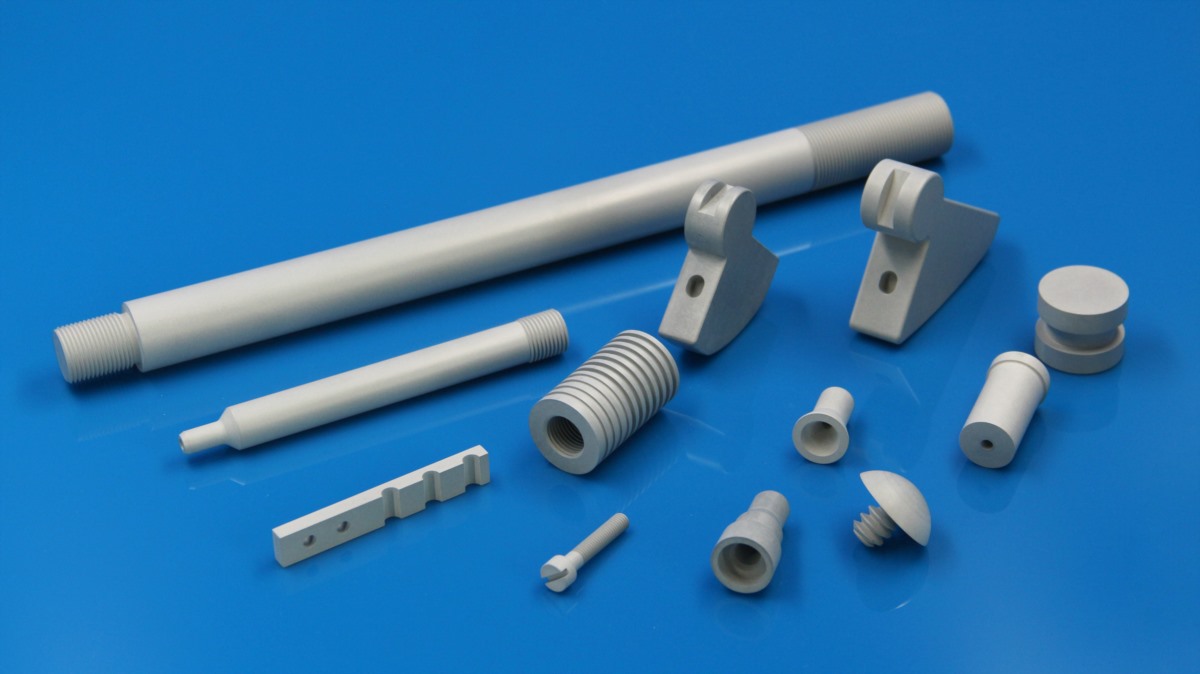
Boron nitride also resists wetting by molten metals and glass, which is why foundries use it for crucibles, break rings, nozzles, and casting molds. Molten aluminum, for example, does not stick to BN surfaces, reducing cleaning time and extending tool life. It withstands temperatures up to 900°C in air, 1750-2100°C in inert gas, and 1700-1900°C in high vacuum for long periods. These characteristics mean BN often wins even when another ceramic has slightly higher thermal conductivity.
Pyrolytic boron nitride takes these advantages further for specialized applications. With density of 2.10-2.19 g/cm³, dielectric strength of 56 kV/mm, and purity up to 99.99%, PBN serves demanding roles in molecular beam epitaxy crucibles, VGF and LEC crystal growth, OLED evaporation sources, and high-temperature vacuum equipment. Its anisotropic thermal conductivity becomes a feature rather than a limitation in these designs, allowing controlled heat spreading in directions that match the process requirements.
The manufacturing process also affects thermal conductivity. Hot-pressed boron nitride ceramics align hexagonal BN platelets to some degree, creating moderate anisotropy in thermal and mechanical properties. Pyrolytic boron nitride, grown by CVD, has highly oriented layers and shows much stronger anisotropy. Composite BN grades mix BN with silicon carbide, zirconia, aluminum nitride, or other fillers to adjust strength, thermal conductivity, and cost. For example, the BAN grade containing aluminum nitride reaches 85 W/m·K, the highest among standard BMATS grades.
So where does boron nitride ceramic fit in the overall thermal conductivity landscape? It sits in the middle-to-upper range among technical ceramics. It beats alumina in many grades and zirconia by a wide margin. It trails aluminum nitride and silicon carbide in raw thermal conductivity. But its combination of machinability, chemical stability, low thermal expansion, electrical insulation, and molten metal resistance often makes it the practical choice for complex high-temperature parts.
For example, in powder metallurgy sintering setters, BN spreads heat evenly across the furnace load while resisting sticking and reaction with metal powders. In semiconductor manufacturing, PBN crucibles provide ultra-pure containers for III-V crystal growth where contamination control matters more than maximizing heat flow. In molten aluminum handling, boron nitride nozzles and break rings survive thermal cycling and metal attack better than oxide ceramics. These are situations where a single thermal conductivity number does not tell the whole story.
Cost also plays a role in the decision. Aluminum nitride and silicon carbide substrates cost significantly more than boron nitride grades. Alumina is cheaper but lacks the thermal and chemical performance of BN for many high-temperature jobs. Boron nitride ceramic often hits the sweet spot between performance and price, especially when the design requires custom shaping or frequent thermal cycling.
When specifying a ceramic for thermal management, engineers should look beyond a single thermal conductivity number. Consider operating temperature, atmosphere, mechanical load, electrical requirements, chemical exposure, machinability, part geometry, and total cost. In that broader comparison, boron nitride ceramic earns its place as a versatile material that competes well against alumina, aluminum nitride, silicon carbide, silicon nitride, and other ceramics.
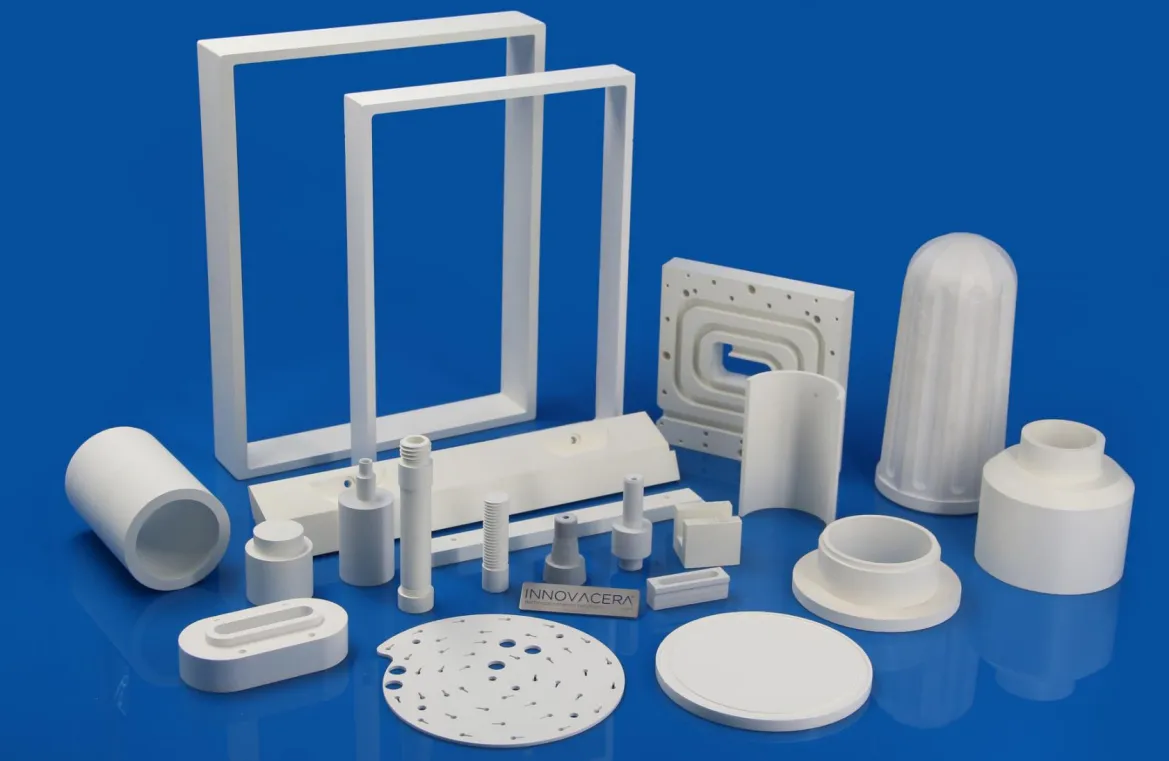
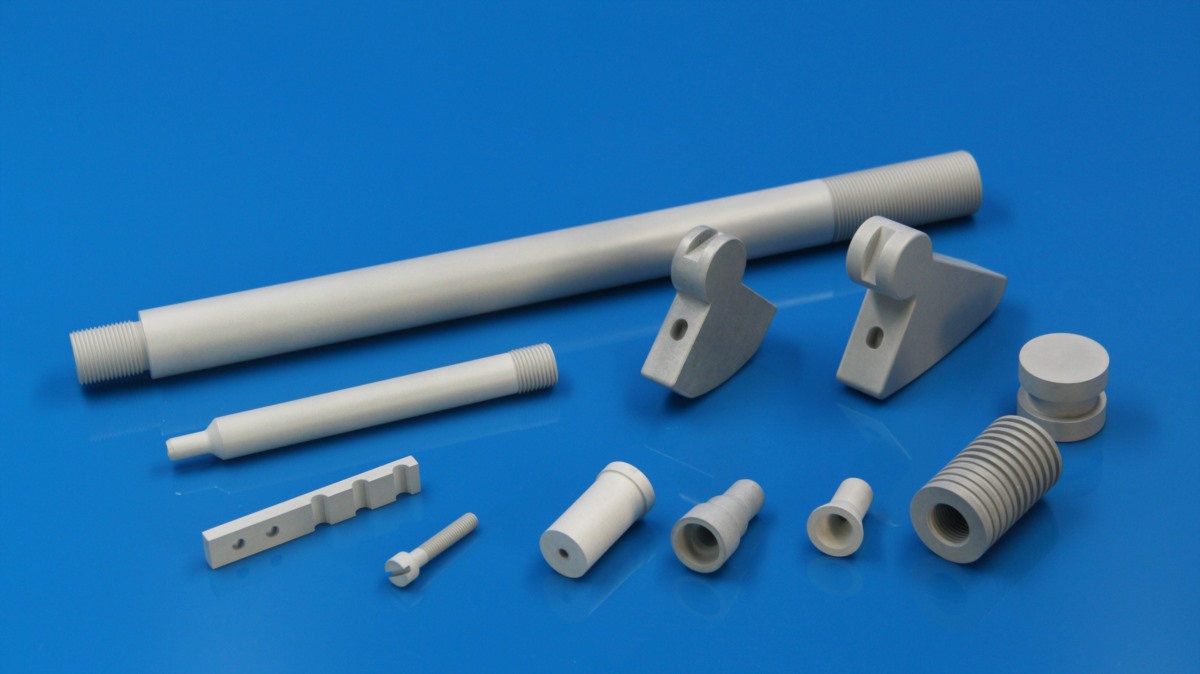
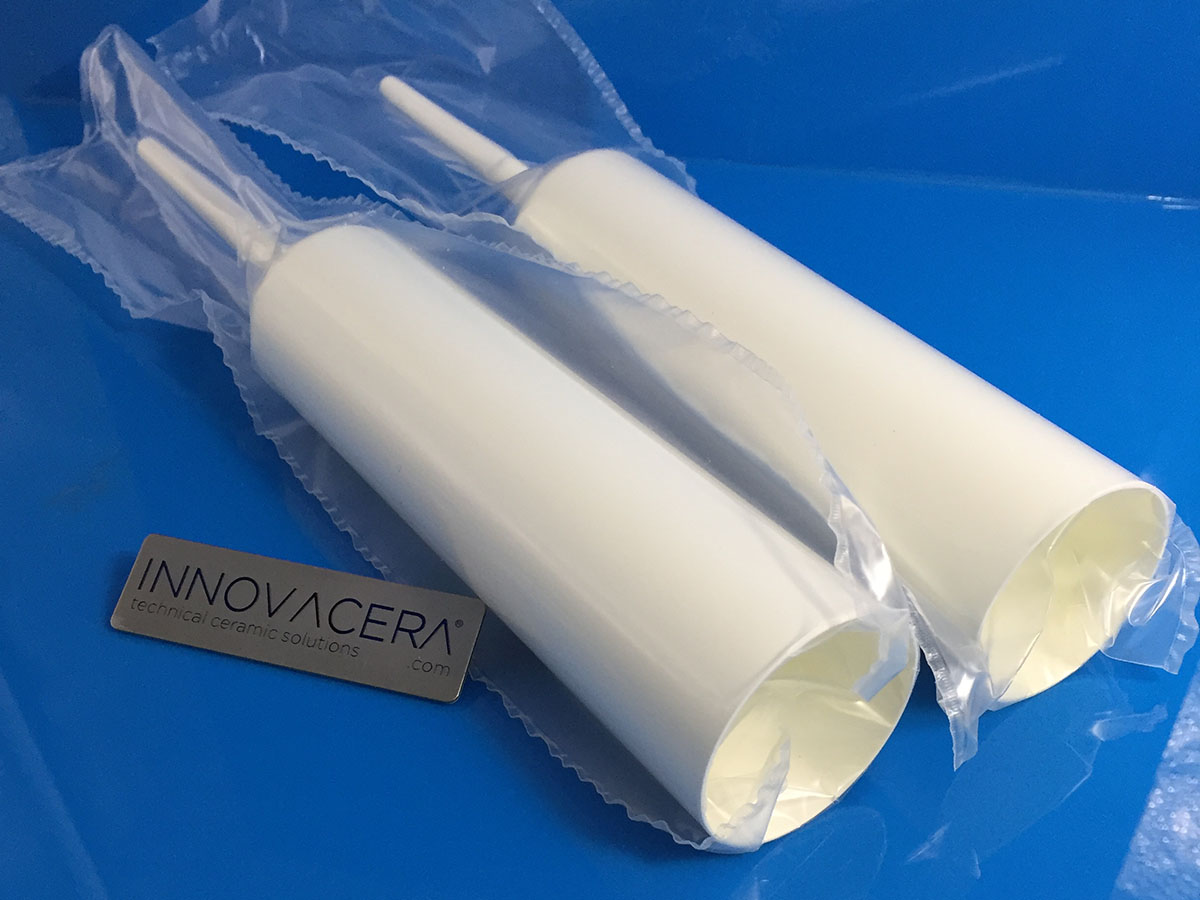
Innovacera offers a range of boron nitride ceramic grades and pyrolytic boron nitride products for high-temperature insulation, crystal growth, powder metallurgy, and semiconductor applications.