technical ceramic solutions

News

Category Archives: News

MCH Heater Rod Used For Moxibustion Bed

Moxibustion is a type of moxibustion in traditional Chinese acupuncture therapy. It mainly ignites moxa sticks and moxa sticks made from moxa leaves, and smokes and roasts acupuncture points on the human body to achieve health care and treatment. It is a natural therapy.

Metal Ceramic Heater (MCH)
Recently we make MCH (Metal Ceramic Heater) heater rod used for moxibustion bed, and the feedback is very good.

The Main Reason is As Below Advantages of Our MCH (Metal Ceramic Heater) Heater:

1. The structure is simple, and the shape, size and resistance power can be produced according to customer needs;
2. Good thermal uniformity and high power density: ≥45 W/cm2;
3. The resistance-temperature change is linear, and the temperature can be easily controlled by controlling the resistance or voltage;
4. Rapid heating and fast temperature compensation;Built-in 12 moxibustion bowls, can automatically ignite 12 moxa sticks at the same time, greatly saving waiting time
5. High thermal efficiency, uniform heating, and energy saving (unit heat consumption saves 20 to 30% compared to PTC);
6. No open flame, safe and non-charged on the surface;
Good insulation performance: the surface is safe and uncharged: it can withstand the voltage test of 3700V/1S;
7. Long life, no power attenuation after long-term use;
8. The heating piece is resistant to acids, alkalis and other corrosive substances;
9. Environmental protection: does not contain harmful substances such as lead, cadmium, mercury, hexavalent chromium, polybrominated biphenyls, polybrominated diphenyl ethers, etc.
Fully complies with EU environmental protection requirements.


Innovacera is very good at providing ceramic heating solution with different applications, if you have any project need fast heating or energy saving, pls feel free to contact with us. We are very happy to offer more solution for you.


Sealed Electrical Connectors: Why Upgrade to Ceramic Seals

When engineers design seals for electrical connectors like feedthroughs, they typically consider four common materials. At the low end, simple epoxy resins or adhesives suffice. Alternatively, mechanical seals with elastomeric O-rings provide a more robust solution. For applications demanding more, glass seals effectively prevent leaks during extreme temperature, pressure, and humidity variations.

Sealed Electrical Connectors
For top-tier performance, ceramic seals reign supreme, boasting excellent heat resistance, mechanical shock resistance, and corrosion resistance. However, the superior performance of ceramics over glass comes at a cost. Ceramic materials are typically more expensive, and ceramic-metal seals require more complex engineering and manufacturing processes.
Innovacera suggests using ceramic seals when glass seals fail to meet demanding performance requirements. For instance, aerospace applications demand high heat and mechanical shock resistance, while medical implant devices require excellent corrosion resistance and biocompatibility. Outstanding dielectric properties are crucial for high-voltage and high-current laser applications.

Advantages of Ceramic Seals

Ceramic-metal seals offer several benefits over glass-metal seals, including stronger hermetic sealing and better electrical insulation properties. Innovacera primarily utilizes 95% alumina, 99% alumina, and sapphire.
Properly designed ceramic-metal seals maintain hermeticity under various harsh conditions, such as high and low temperatures, corrosive environments, high pressure, and high vacuum. Ceramic-metal seals boast an industry-standard leak rate significantly lower than glass seals, indicating superior sealing.
Ceramic-metal seals withstand severe thermal shocks and repeated thermal cycling, remaining stable at extremely high and low temperatures. They exhibit high mechanical strength, making them less prone to breakage under high vibration and high g-load conditions compared to glass seals.

Advantages of Brazing

Ceramic-metal seals use brazing to join ceramic and metal components, producing strong bonding and excellent sealing. Brazing works well for metals and alloys that do not bond well with glass. Ceramic-metal seals exhibit good bonding with copper, copper alloys (CuNi), nickel, and nickel alloys (such as Monel, Alumel, Nial).
Compared to glass seals, the presence of brazing metal between the base metal and ceramic substrate enhances the system’s robustness. Brazing materials are more flexible than ceramics, absorbing some mechanical shocks and helping to mitigate mismatches in thermal expansion between ceramics and substrates.

Typical Applications

Ceramic-metal components play a crucial role in implantable electronic devices and aerospace applications due to their ability to withstand high temperatures, vibrations, and mechanical shocks. They are common in seals for gas turbine engine thermocouples, fuel line components, and fire detection system terminals.

Manufacturing Process:

To prepare ceramics for brazing, the surface undergoes metallization. Innovacera primarily employs thick-film and thin-film metallization technologies to ensure proper bonding and integration of ceramic-metal components. All components undergo comprehensive testing to ensure quality and consistency.


Innovacera Invite You To Visit Us At APE 2024 Exhibition On FM-30

Innovacera will attend ASIA PHOTONICS EXPO on March 6th-8th . If you happen to have attended or visit them, too, welcome to come to meet us at the exhibition. Below is more information about our APE 2024.

Exhibition Name: APE 2024
Date: March 6th-8th, 2024
Location:  Marina Bay Sands Singapore
Ceramitec 2024 Scale: -15,000 M²
Visitor:  5000+
Exhibitors: 400+

Innovacera Advance Ceramic Material will show: Alumina Ceramic, Zirconia Ceramic, Aluminum Nitride, Boron Nitride Ceramic, Porous Ceramic, Silicon Nitride Ceramics, Machinable Glass Ceramic, Silicon Carbide Ceramics.
Exhibition Web: https://www.asiaphotonicsexpo.com/
Innovacera Booth No.: FM-30

APE (Asia Photonics Expo) stands as the premier photonics exhibition for branding and business connection. This influential event focuses on the cutting-edge innovations in optical communications, optics, semiconductor, lasers, sensing, and display. It provides a brand-new trade platform to showcase state-of-the-art products, technologies, and solutions to industry professionals.

Held in Singapore, the international hub of Asian trade, APE will be your first stop to explore Asian market, also the best channel to maximize brand awareness and expand new business frontier.

Innovacera will exhibit all kinds of technical ceramic components such as Ceramic to Metal sealing part, Metallized Ceramics, Ceramic Reflector Cavities, Ceramic Substrates, AMB Substrate, DBC, DPC, and so on.
Innovacera Vission is: To be the most reliable supplier of advanced materials components and Mission is Winning with our customers and employees.
Innovacera cordially invites all old customers, industry professionals, partners, and enthusiasts to visit booth FM-30 at APE 2024.


The use of Boron Nitride (BN) Ceramics

Basic information about Boron Nitride (BN)

Boron nitride (BN) is a thermally and chemically resistant refractory material, compound of boron and nitrogen. It exists in various crystalline forms that are isoelectronic to a similarly structured carbon lattice. The hexagonal form corresponding to graphite is the most stable and soft among BN polymorphs. With excellent thermal and chemical stability, boron nitride ceramics are used in high-temperature equipment and metal casting, which  has potential use in nanotechnology.

99% Boron Nitride (BN) Ceramics
In the neutral reducing atmosphere, Boron Nitride’s heat resistance can be to 2000℃, the use temperature in nitrogen and argon can reach 2800℃, the stability is poor in the oxygen atmosphere below 1000℃. The expansion coefficient of hexagonal boron nitride is equivalent to that of quartz, but the thermal conductivity is ten times that of quartz.

Boron Nitride (BN) Material Available:

1. 99% BN
2. 99.7% BN
3. BN + AL
4. BN + Si
5. BN + SiC
6. BN + Zirconia
7. BN + ALN

The Following are the Characteristics of Different Boron Nitride (BN) Materials:

Characteristics of Different Boron Nitride (BN) Materials

The Main Use of Boron Nitride Ceramics:

1. Vacuum high temperature equipment electrode insulation (99BN, BN+AL)

Advantage: high temperature resistance 2000 degrees, good thermal shock resistance, high electrical breakdown strength (3-4 times of alumina). Carbon atmosphere corrosion resistance is much stronger than alumina

2. Semiconductor equipment insulation heat dissipation (99BN, BN+ALN)

Advantages: large resistance, high temperature resistance, high breakdown resistance, no pollution corrosion resistance and processable

3. Gas atomizing nozzle (BN 99, BN+AL,BN+SIC,BN+ALN)

Mainly used in powder metallurgy industry, gas atomization process to produce metal powder (iron powder, aluminum powder, copper powder, stainless steel, welding powder, iron silicon aluminum, iron silicon nickel, aluminum iron boron, etc.)
Advantages: Resistance to metal corrosion wear and erosion, high thermal shock resistance, non-bonding and non-reaction with metal liquid.

4. Crucible for transparent ceramic sintering or bearing plate for Aluminum nitride, silicon nitride substrate (BN 99.7)

Advantages: high temperature resistance (2000 degrees), high purity (99.7% or more), no pollution of the product, no deformation at high temperature, and the product will not bond.


The Use Of Zirconia Ceramic Blade

The Popularity of Zirconia Cearmic Blade

Zirconia Ceramic blades are becoming popular in recent years for its extremely high cutting edge strength and excellent flexural strength and hardness. The blade is made by sintering zirconia powder at high temperatures, which make it a dense homogeneous material with high hardness and sharpness. Zirconia Ceramic is known for its toughness, compressive strength and thermal shock resistance. Besides zirconia, it can also use ceramic like Alumina, Silicon Nitride and Boron Nitride. But material zirconia is more common.

Zirconia Ceramics Blade

Why It is Becoming Popular

Compared with traditional blade like steel or diamond blades, Zirconia ceramic blade has the advantages of high durability, sharpness and high level of chemical resistance. It is resistant to wear and tear, so it can be used for a long time. This makes it a cost-effective option for business.At the same time it can be sharpened to a fine edge, which makes it ideal for cutting application.

Here is the Properties of Zirconia Ceramic

Properties  Unit Value
Main Composition  % ZrO2
Density  g/cm3  ≥6.0
Vickers Hardness kg/mm2 1,200.00
Rockwell Hardness HRA 88
Modulus of Elasticity GPa 220
Bending Strength  MPa 2,500.00
Fracture Toughness  Mpa.m1/2 10
Compressive Strength MPa 2,500.00
Melting Point  ℃ 2,850.00
Thermal Conductivity (In 25℃) W/m.k 1.5~2
High Temperature Resistant  ℃ 1000

Zirconia Ceramic Blade VS Traditional Metal Cutting Blades:

Never rust like metal blades
Good electrical insulation
Good corrosion resistance to acids and alkali
High temperature resistance
Sharpness of cutting edge will remain 60 times longer than steel blades

Where We Can Use Zirconia Ceramic Blade

The range of applications for zerconia ceramic blade in industry as below:

  • Medial
  • Aerospace
  • Automotive
  • Paper
  • Semiconductor
  • Chemical Fibers
  • Firm and Foil
  • Fiberglass
  • Textile Industry
  • Food and beverage production

Here we would like to introduce its use in the industries of medical, aerospace, and automotive. In medical industry, zirconia ceramic blade is used for surgical procedures, such as cutting bone or tissue. It is also used for dental applications, such as cutting crowns or implants. In aerospace industry, zirconia ceramic blade is used for cutting composites that are difficult. They are also used for precision cutting of components for aircraft engines and other critical parts.
In the automotive industry, ceramic zirconia blade is used for cutting and shaping brake pads, clutch plates, and other components that require precision and durability.

Example of Standard Shape and Size

1. 3 hole pentagon shape with size 62.32*0.2mm

Pentagram Shape Zirconia Blade

2. 3 hole Rectangular shape with size 43*22*0.3mm

Zirconia Ceramic Blade with Three Hole
Besides above standard size and shape, we can also do the customized one to meet your specific size and shape requirements.
Innovacera has developed a high-performance zirconia ceramic for cutting yarns, textiles and other industry. It stands out from other materials with its extremely high cutting edge strength and excellent flexural strength and hardness. If you have the need, feel free to contact us.


The Advantages of MCH Ceramic Heating Element for E-cigarettes

The traditional electronic cigarette heating element is a metal heating wire. Although the heating effect can meet the needs, it has many shortcomings in other aspects. Nowadays, most electronic cigarette heating elements gradually no longer use traditional metal heating wires, but choose ceramic heating elements.
Metal Ceramics Heater (MCH) Heater for E-cig

Mainly because ceramic heating elements have the following advantages:

  • The heating speed of ceramic heating element is faster than that of traditional heating wire;
  • The heating temperature of ceramic heating element is higher than that of traditional heating wire;
  • The ceramic heating element does not leave any stains or dirt when used, which is especially beneficial to electronic cigarette products.

In the e-cigarette industry, heating elements are widely used, and ceramic heating elements are considered a breakthrough for the e-cigarette industry. Many e-cigarette customers give up using the traditional electric heating elements. Some e-cigarette heating elements could be viewed directly, so for dirty heating elements, it will affect the customer’s use. Ceramic heating elements have advantages in this regard, because the surface of the ceramic heating element is white. The key point is that it will not get dirty easily when used. From the appearance, it has a high-end and classy feeling.


About (Metal Ceramics Heater) MCH:

1. MCH is the abbreviation of Metal Ceramics Heater, which means metal ceramic heating element.

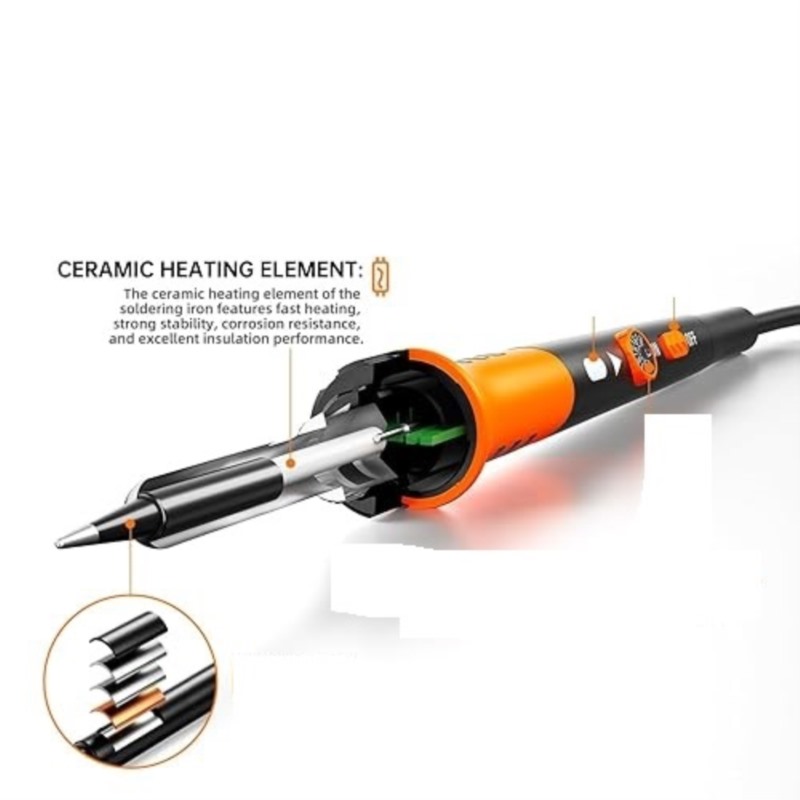
MCH refers to printing high melting point metal heating resistor paste such as metal tungsten or molybdenum manganese on a 92 to 96% alumina cast ceramic green body according to the requirements of the heating circuit design, and then laminating it by hot pressing, and then heating it at about 1650℃ The ceramic heating element, which is made by sintering ceramics and metal under the protection of a reducing atmosphere, has the advantages of corrosion resistance, high temperature resistance, long life, high efficiency and energy saving, uniform temperature, good thermal conductivity, fast thermal compensation, and does not contain lead or cadmium. , mercury, hexavalent chromium, polybrominated biphenyls, polybrominated diphenyl ethers and other harmful substances, and complies with EU RoHS and other environmental protection requirements and CE certification.


2. Main Raw Materials:

Substrate: Made of white multi-layer alumina ceramics, the Al2O3 content is not less than 95%.
Lead: Use Ф0.25mm, Ф0.3mm or Ф0.5mm nickel wire
Casing, tape: Teflon, high temperature resistant tape
Resistor: high temperature materials such as tungsten
Product thickness: 0.6~4mm can be customized
Operating voltage: 3.7V-240V can be customized
Resistance selection: between 0.3~1000 ohms, selected according to voltage, size, power and customer needs.


3. Performance and Features:

  • The structure is simple, and the shape, size and resistance power can be produced according to customer needs;
  • Good thermal uniformity and high power density: ≥45 W/cm2;
  • The resistance-temperature change is linear, and the temperature can be easily controlled by controlling the resistance or voltage;
  • Rapid heating and fast temperature compensation;
    The temperature of 500W power reaches above 600℃ for 20 seconds after startup; the rated power of its components reaches above 200℃ for 10 seconds after startup;
  • High heating temperature, up to 800℃
  • High thermal efficiency, uniform heating, and energy saving (unit heat consumption saves 20 to 30% compared to PTC);
  • Nameless fire, safe and non-charged on the surface;
    Good insulation performance: the surface is safe and uncharged: it can withstand the voltage test of 3700V/1S;
  • Long life, no power attenuation after long-term use;
  • The heating piece is resistant to acids, alkalis and other corrosive substances;
  • Environmental protection: does not contain harmful substances such as lead, cadmium, mercury, hexavalent chromium, polybrominated biphenyls, polybrominated diphenyl ethers, etc.
    Fully complies with EU environmental protection requirements.

Ceramic Target Materials for Sputtering

Innovacera adopts hot pressing sintering method to produce various ceramic targets, we supply high-quality LaB6, CeB6, Si3N4, AlN, BC, Al2O3, and other sputtering targets worldwide. Most ceramics targets have a heat strength, high melting point, corrosion, and excellent insulation. Our sputtering targets have such advantages: smooth surface, uniform color, no cracks, no chipping, no external inclusions, and contaminants. Therefore, they can be exposed to a oxidative environment and hyperthermal for a long time and have many engineering applications.
Lanthanum Hexaboride (LaB6) Ceramic Target

Ceramic sputtering targets have a wide range of applications in various industries due to their unique properties and advantages. Some common applications include:

Thin Film Deposition: Ceramic sputtering targets are used in physical vapor deposition techniques to deposit thin films of ceramic materials onto different substrates. They are widely used for applications such as semiconductor devices, solar cells, optical coatings, and magnetic recording media.
Optical Coatings: Ceramic targets are used in the production of optical coatings for lenses, mirrors, and other optical components. These coatings are used to enhance optical properties such as reflectivity, anti-reflection, hardness, and durability.


Wear and Corrosion Resistance: Ceramic sputtering targets are used to deposit wear and corrosion-resistant coatings on mechanical components to improve their surface hardness, reduce friction, and increase their lifespan. This makes them suitable for applications in the automotive, aerospace, and manufacturing industries.


Semiconductor Devices: Ceramic targets are used to deposit thin films of ceramic materials on semiconductor devices such as transistors, diodes, and integrated circuits. These films are used to improve the performance and reliability of these devices.


Magnetic Recording Media: Ceramic targets are used in the production of magnetic recording media, such as hard disk drives. They are used to deposit thin films of magnetic materials with high coercivity and remanence, enabling high-density data storage.


Decorative Coatings: Ceramic sputtering targets can also be used to deposit decorative coatings on various materials, such as glass, metal, and plastic. These coatings are used to provide a decorative finish, improve aesthetics, and provide scratch resistance.


Fuel Cells: Ceramic sputtering targets are used in the manufacture of solid oxide fuel cells (SOFCs). The targets are used to deposit the ceramic electrolyte and electrode layers required for efficient power generation in fuel cells.


Overall, ceramic sputtering targets find applications in a wide range of industries and technologies due to their versatility, excellent physical properties, and ability to deposit high-quality thin films.


What Materials are Used for High Temperature Ceramic Tubes

There are many types of high-temperature ceramics materials which is widely used for high temperature ceramic tubes. Innovacera would like to introduce some kinds of commonly used material for ultra high temperature ceramics tubes and its properties and application for you.

Ultra High Temperature Ceramics Insulator Tubes for Furnaces


Alumina ceramics: Alumina ceramic tube have excellent properties such as high hardness, wear resistance, high temperature resistance, and corrosion resistance. It plays an important role in electronics, machinery, metallurgy, chemical industry and other fields. Typically application is as ceramic insulator and protector tube for high temperature kilns.

99% Alumina Ceramic Protection Tubes for High Temperature


Silicon nitride ceramics: Silicon nitride ceramic tube has excellent high-temperature insulation properties, wear resistance and thermal shock resistance, and has been widely used in many fields, such as In the aerospace field, due to its high temperature resistance and wear resistance, it can be used to manufacture engine nozzles, gas servos and other components in high temperature environments. In the chemical industry, due to its corrosion resistance and wear resistance, it can be used to manufacture acid and alkali liquid transportation pipelines, catalyst carriers, etc. In the metallurgical field, due to its high temperature stability and excellent mechanical properties, it can be used to manufacture piping systems for high temperature furnaces. In the electric field, due to its excellent insulation properties and mechanical strength, it can be used to manufacture protective tubes for high-voltage power cables, etc.

Silicon Nitride Ceramics Pipe for High Temperature Ceramics


Silicon carbide ceramics: Silicon carbide ceramic high-temperature sleeving has good high-temperature strength, oxidation resistance and wear resistance, and can be used to manufacture high-temperature kiln tubes, thermocouple protection tubes and other equipment.

Silicon Carbide Ceramic Tubes for High Temperature


Zirconia ceramics: Zirconia ceramic tubes has high strength, corrosion resistance, high temperature resistance and other properties, and can be used to manufacture high-temperature furnace tubes, reactors, heat exchangers and other equipment.

Zirconia Ceramic High-Temperature Sleeving


When selecting high-temperature ceramics materials, comprehensive considerations need to be made based on specific usage scenarios and requirements to ensure that the performance of the material meets the requirements.


In short, choosing a suitable high-temperature ceramics material requires considering factors such as application scenarios, temperature range, physical properties, and cost. It is recommended to consult a professional ceramic material supplier sucha as Innovacera for more accurate advice before selecting high-temperature ceramic pipe materials.


Innovacera main ceramic material is Aluminum Oxide, Zirconium Oxide, Boron Nitride, Aluminum Nitride, Silicon Nitride, Machinable Glass Ceramic and other advanced materials. Through different manufacturing processes, Innovacera supply metallized ceramic components, ceramic brazing part, ceramic heater, ceramic reflector, ceramic pump components and other ceramic components.


Know More About Ceramic Metallization When Ceramic Perfectly Bond With Metal

Ceramic materials, which have excellent properties such as high hardness, high abrasion resistance and high corrosion resistance, but with poor electrical conductivity and weldability to limit their application. While metallization is a process of coating metal on the surface of ceramics, which can improve the conductivity and weldability of ceramics, thus expanding their range of applications. Ceramic after metallization has high thermal conductivity, insulation, heat resistance, strength and coefficient of thermal expansion that matched with the chip, and gradually developed into the ideal packaging substrate for new generation of integrated circuits, as well as power electronic modules.

Metallized Ceramic Components


The common ceramic substrate materials can be metallized include Al2O3, SiC, AlN and Si3N4.


1. Thick Film Metallization

Thick film metallization is a metal paste coated on the ceramic surface through the screen-printing method, and then after high temperature drying and heat treatment to form a metalized ceramic substrate technology. The advantage of this technology is that the process is simple and cost-effective cost, while the disadvantage is that the electrical performance of the conductive line is poor, can only be used for lower power and size requirements of the electronic devices.


2. Direct Bonded Copper

DBC (Direct Bonded Copper, DBC) is a copper foil (thickness greater than 0.1 mm) directly bonding to the surface of the Al2O3 ceramic substrate, in the N2 protection and temperature range of 1065 ℃ -1083 ℃. Pure copper in the molten state do not need to wet Al2O3, it needs to bring in oxygen elements in the reaction process, Cu-Cu2O eutectic liquid generated at high temperature has a good wettability on Al2O3, through the generation of CuAlO2 as a transition layer, you can be directly laying the copper foil on the Al2O3 ceramic substrate.


3. Thin Film Metallization

Thin film metallization is carried out in high vacuum conditions, with physical methods of solid material surface ionization for ions, followed by low-pressure gas in the ceramic substrate surface deposition of the required film process, that is, the physical vapor deposition technology ( PVD ), mainly including magnetron sputtering coating, deposition of a thin layer of Cu layer as a seed layer in the ceramic surface, so that the subsequent plating process to carry out. Electroplate is then performed to thicken (protect) the seed Cu. Then through the film, exposure, development and other processes to complete the transfer of graphics, and then plating so that the Cu layer grows to the required thickness, and finally through the film, etching process to complete the production of conductive lines.


Such ceramic substrate using thin-film process has shown great competitiveness in power LED packaging in recent years.


In summary, ceramic metallization can ensure the ceramic materials own the electrical and thermal conductivity of metal, thus expanding their applications including electronics, automotive sensors, optical devices, medical devices, and aerospace etc.


What Do You Know About Heating Elements Used In 3D Printing Pen

3D printing pen is a more convenient 3D printing product. You only need to write on any surface, even in the air. It can be produced directly without the support of a computer or other electronic products. The size of the 3D printing pen is the same as the ordinary pen. The material is generally made of aluminum. Generally, when the material is heated when drawing, the temperature of the pen tip will be as high as 80 degrees Celsius. When using the 3D printing pen, try to use it under the care of an adult, and do not burn your fingers.


What is a 3D Printing Pen?

A 3D printing pen is like a handheld 3D printer. It uses the same kind of heating element and extruder that you would find on a desktop 3D printer. But instead of being controlled with computer software and motors, you guide the printer head by hand.


How Does it Work?

Like all 3D printing devices, a 3D printing pen works by heating a plastic filament to its melting point and forcing it through an extruder tip. This is very similar to how a hot glue gun works; the melted plastic is very soft and can be fused onto a surface or worked into any shape that you want. Once the melted plastic leaves the tip, it cools quickly. After a few seconds, the plastic hardens and holds whatever shape you have worked it into.


What Can You Do With a 3D pen?

These pens effectively allow you to draw with plastic. You can work the plastic into just about any shape and apply it to most surfaces. You can use it to add raised decorative designs to everyday objects. With practice, you can even make 3D drawings in empty space. These pens can also be used to modify and repair other 3D printed objects.


MCH Alumina Ceramic Heaters For 3D Printing Pen

What Are The Heating Elements Used In 3D Pen?

The heating element in a 3D pen is an important component that heats up the pen’s build platform or extruder nozzle. This heat is necessary to melt and fuse the material being used for printing, such as plastic filaments or resins.
There are different types of heating elements used in 3D pen, including:Cartridge heaters,Heater blocks,Flexible heaters and ceramic heaters.
Regardless of the type of heating element used, it is important to use a high-quality component that can withstand the high temperatures required for 3D printing. It is also important to ensure that the heating element is properly installed and wired to the controller board to prevent any safety hazards.


What is the Difference Between using Traditional Heating and Ceramic Heating Cores?

First, the traditional hot end is large and heavy, which affects printing accuracy and speed. If it is a direct extrusion system, the frequency of motor vibration will also be increased, further reducing accuracy and speed.
Second, there is an air gap between the heater block and the thermistor and heating tube, so effective heat transfer and accurate temperature control are not possible. This leads to the problem of being unable to print at different speeds and extrusion volumes without being able to quickly change the nozzle temperature to accommodate changing filament feed rates. This is something that all consumer printers have not yet solved.


What is the Advantage of Using Ceramic Heater?

First, it is more lighter and smaller in size. In other words, the replacement of traditional heating tubes by ceramic heating allows the hot end to be designed to be lighter and more compact than traditional ones, thereby improving printing accuracy and speed.
Secondly, ceramic heating has a positive temperature coefficient (PTC), specifically, it can reduce power when the temperature rises, thereby reducing the risk associated with temperature runaway when reaching the maximum temperature. At the same time, because ceramic heating can be integrated with the thermistor, precise temperature control can be achieved.
Finally, the ceramic heating core has more uniform heating performance and thermal efficiency. To achieve the same heating performance as traditional heating tubes, ceramic heating cores may only require lower power.


Summary

The iteration from single-head tube to ceramic heating embodies the charm of technological innovation. Ceramic heating can indeed bring many benefits to 3D printings. Technological innovation is generally led by industry leaders, and then subsequent followers expand the market. Therefore more and more 3D printing pen using ceramic heating will be used in the future.


Enquiry