technical ceramic solutions

News

Category Archives: News

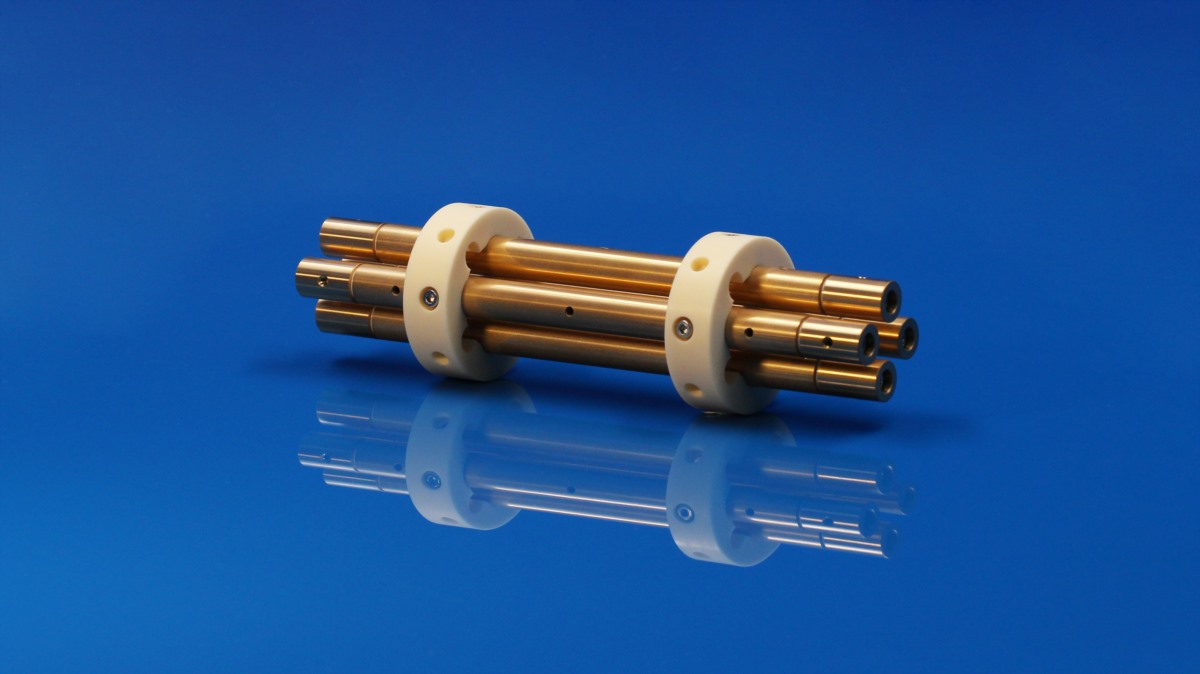
Ceramic Feedthroughs For Hermeticity and Electrical Isolation Application

In aerospace, electrical and medical equipment applications, maintaining hermeticity and electrical isolation is critical. Ensuring a reliable seal against environmental contaminants while facilitating the transmission of electrical signals requires sophisticated solutions. Ceramic feedthroughs have emerged as indispensable components, offering unparalleled performance in achieving hermeticity and electrical isolation in demanding environments.

Ceramic Feedthroughs For Hermeticity and Electrical Isolation

Ceramic feedthroughs serve as conduits for electrical signals, allowing them to pass through barriers such as vacuum chambers, pressure vessels, or hermetically sealed enclosures while maintaining a tight seal against moisture, gases, and other contaminants. This benefits makes ceramic feedthroughs essential in applications where need the reliability and durability.


Innovacera ceramic-to-metal feedthroughs insulators are made by high purity alumina ceramics and Metals are made by stainless steel, nickel, copper, nickel-iron alloys, cupro-nickel alloys, molybdenum and Kovar. The braze materials Innovacera used are silver, copper, silver-copper, or gold-copper alloys. Innovacera controls and monitors critical processes of each ceramic feedthroughs, such as helium leak testing and x-ray measurements.


The ceramic feedthroughs have material properties such as high mechanical strength, thermal stability, and chemical resistance, making them ideal candidates for withstanding extreme operating conditions. Whether subjected to high temperatures, corrosive environments, or mechanical stress, ceramic feedthroughs maintain their integrity and functionality, ensuring long-term performance and reliability.


Even the slightest ingress of moisture or contaminants will effect the functionality of sensitive electronic components, so the hermetic sealing is critical. Ceramic feedthroughs provide an effective barrier against external influences, creating a reliable seal that prevents leakage and maintains the integrity of the enclosed environment. This is particularly crucial in industries such as aerospace, electrical and medical device.


Ceramic feedthroughs are excellent in providing electrical isolation between different environments or components within a system. By virtue of their dielectric properties, ceramics prevent the transmission of electrical currents, thereby ensuring that signals remain isolated and interference-free.


The versatility of ceramic feeders extends to a wide range of applications in a variety of industries. In aerospace, ceramic feedthroughs are used in satellite communications systems, spacecraft instrumentation and propulsion systems to provide reliable electrical isolation and sealing in the vacuum of space. In medical devices such as implantable pacemakers and defibrillators, ceramic feedthroughs can transmit electrical signals while maintaining a sterile and sealed environment within the device.


Additionally, ceramic feedthroughs also used for semiconductor manufacturing , where they help transmit electrical signals in vacuum chambers and plasma processing environments. Its rugged construction and high reliability make it an indispensable part for ensuring the integrity and performance of critical manufacturing processes.


If you need any ceramic to metal ceramic components such as ceramic feedthroughs, welcome to send your inquiry to us at sales@innovacera.com.


Metallized Ceramic Cylinders for Vacuum Interrupters &Capacitors

Metallization ceramic cylinders are a crucial component of vacuum interrupters (often referred to as VI) used in the fabrication of vacuum circuit breakers (VCB). VCBs find application in medium-voltage switchgear and distribution circuits, where they play a pivotal role in regulating distribution voltage by suppressing voltage surges.

Metallization Alumina for Isolators

Innovacera is a lead supplier of high purity alumina metallized ceramic cylinders. These metalized cylinders are used in vacuum arc extinguishing chambers worldwide due to their excellent electrical insulation properties


Innovacera specializes in the metallization of molybdenum-manganese (Mo-Mn) and nickel plating, providing excellent hermetic sealing for these metallzed ceramic cylinders, essential components in vacuum interrupters.


The hermetic sealing ensures the maintenance of the required vacuum level for efficient arc extinguishing within the interrupter chamber. Moreover, the high mechanical strength of Mo-Mn metallization prolongs the service life of vacuum interrupters, contributing to their reliability and durability. By offering advanced solutions in metallization techniques, Innovacera continues to play a crucial role in enhancing the performance and longevity of critical electrical infrastructure components.


Metallized ceramic cylinders provide fabrication properties and can then be easily brazed with common brazing alloys for a variety of applications.


Characteristics Description
Shapes Cylindrical, Corrugated, Stepped, Grooved
Sizes 1.0″ to 7.0″
Material and Color Aluminum Oxide, White
Features Excellent Electrical Insulation
Excellent Hermetic Sealing
High Mechanical Strength of Metal-Clad Layers


Application Description
Vacuum interrupters in vacuum circuit breakers Used to maintain efficient operation and ensure safety in vacuum circuit breakers
Load break switches Provide reliable breaking and safety
Relays Automatic switches in electrical control systems
Automatic reclosers Used for automated reclosing operations
Isolators Provide additional safety isolation in circuits
Mining circuit breakers Suitable for circuit breakers in mining environments
Capacitors Capacitor circuit breakers in power systems
Generator circuit
breakers
Protect generators and prevent circuit overload
Vacuum tubes Used to protect circuits from overcurrents
Fuses Provide short-circuit and overload protection
Switchgear Various types of switching devices for controlling power flow


Benefit
High Purity Aluminum Oxide Capability for Internal Electrode Brazing
Efficient Arc Extinguishing in Interrupter Chambers Specialized Production Lines
Extended Lifespan Outstanding Collaborative Partner
Customized Solutions


Innovacera’s team of technical experts is here to help you meet your metalllized ceramic requirements. We offer comprehensive solutions – from prototype design and manufacturing to large-scale production.


Ceramic Components Improve Photovoltaic Efficiency

Innovacera produced precision ceramic components which have a positive effect on durability in the photovoltaic industry. Advance ceramic components play a important role in solar energy technology and improve efficiency in various areas of photovoltaic systems.

99 alumina ceramic suction plate for solar energy

Below is some typical ceramic products for Photovoltaic industry.

Ceramic insulation rings for thermal decoupling in solar systems.
Ceramic encapsulation offer superior thermal conductivity, facilitating efficient heat dissipation from the solar cells, thereby mitigating thermal stress and enhancing overall performance. Also provide a robust barrier, safeguarding the delicate solar cells throughout their operational lifespan.
Ceramic heat sinks protect from overheating in high-concentration photovoltaic systems .
Fine ceramic bearings and bushings are used in the drives of tracked photovoltaic systems.
Ceramic rollers give precise rolling of flat wires in PV systems.
High thermal ceramic substrates for solar application.


Ceramic components are widely use in the photovoltaic industry is because of their excellent properties in corrosion resistance, good electrical insulator and mechanical strength. So the alumina ceramic, zirconia ceramic, silicon nitride ceramic, aluminum nitride is ideal ceramic material for making ceramic part for photovoltaic industry.

Ceramic Components Improve Photovoltaic Efficiency

Alumina ceramic material properties is as below:

Properties Units Alumina Ceramic
Purity wt% 95% 99% 99.80%
Volume Density g/cm3 3.65 3.8 ≥3.89
Water Absorption % 0 0 0
Crystal Size(Grain Size) μm 4-5 4-5 4-5
Vickers Hardness, HV1.0 Gpa 14 1600 ≥15
Flexural Strength Mpa 300 310 ≥300
Coefficient of Linear 20-500℃ 1×10⁻⁶ 6.5-7.5 6.5-7.5 6.5~7.5
Expansion 20-800℃ mm/℃ 6.5-8.0 6.5-8.0 6.5~8.0
Thermal Conductivity W/m·K( 20℃) 20 25 ≥20.9
Specific Heat Capacity KJ/(kg·K) ≥0.8 ≥0.8 ≥0.8
Dielectric Strength KV/mm ≥12 15*106 ≥12
Volume Resistivity Ω·cm 20℃ ≥1014 ≥1014 ≥1014
Ω·cm 300℃ ≥1011 ≥1011 ≥1011
Ω·cm 500℃ ≥109 ≥109 ≥109
Dielectric Constant 1MHz 9 9-10 9-10
Tangent of Dielectric Loss 1MHz ≤4×10⁻⁴ ≤2×10⁻⁴ ≤3×10⁻⁴
Surface Roughness μm 0.4 After Machine 0.1-0.4 After Machine 0.1-0.4 After Machine
Max Working Temperature 1600 1600 1650


Photovoltaic system needs ceramic suction plate, ceramic rack, ceramic top tooth block, top comb pins, side comb plates as below are very hard to machine because it needs high quality control in the flatness, deformation and surface finish and Innovacera make it.

Zirconia Ceramic Pins For Photovoltaic Industry

As insulator materials, ceramics are key components of energy saving solutions. Within the energy sector, ceramic components are also used in machinery for energy production, including bearings, plate, rods, valves, seals, spheres, pumps, sheaths, and tubes for wind turbines, gas turbines, oil and gas extraction equipment, and other systems.


In addition to their electrical and thermal properties, ceramic parts contribute to the optical enhancement of solar panels. Ceramics play a crucial role in the manufacturing of solar commentators, which focus sunlight onto photovoltaic cells to intensify energy generation. Ceramics, with their ability to withstand high temperatures and harsh operating conditions, serve as ideal materials for the fabrication of concentrator components, ensuring long-term performance and reliability.


Application of Ceramic Heat Dissipation in Battery Cooling System

At present, the thermal management of power battery systems can be mainly divided into four categories: natural cooling, air cooling, liquid cooling, and direct cooling.


Among them, natural cooling is a passive thermal management method, while air cooling, liquid cooling, and direct cooling are active methods. The main difference between the three is the difference in heat exchange medium.


Traditional battery cooling system: To change the temperature difference between the battery core and the cooling system, liquid cooling system refrigeration is the most useful method.


How does ceramic heat dissipation apply to battery heat dissipation?

Replace insulating plastic materials with low thermal conductivity with ceramic materials with high thermal conductivity.

Aluminum Nitride Ceramic Substrate

The research shows that rapid heat dissipation and temperature equalization can be achieved by using the high thermal conductivity and high insulation of ceramics. Aluminum nitride ceramic substrates are currently used more frequently.


Advantages of aluminum nitride ceramic substrate

Aluminum nitride ceramic substrate has high thermal conductivity, low expansion coefficient, high strength, high temperature resistance, chemical corrosion resistance, high resistivity and low dielectric loss. It is an ideal large-scale integrated circuit heat dissipation substrate and packaging material.


1. High thermal conductivity

Aluminum nitride ceramics have very high thermal conductivity, with a theoretical value of up to 320W/m·K, which is much higher than traditional alumina ceramics. This makes aluminum nitride ceramics an ideal heat dissipation material, suitable for electronic devices, LED lighting, laser equipment and other fields, effectively improving the efficiency and life of the equipment.


2. Excellent electrical insulation

Aluminum nitride ceramics substrate have good electrical insulation, low dielectric constant, small dielectric loss, and remain stable at high frequencies. These characteristics make it a preferred material in high-frequency and high-power electronic equipment, such as high-frequency circuit substrates, power module packaging, etc.


3. Good thermal expansion matching

The thermal expansion coefficient of aluminum nitride ceramics substrate is about 4.5×10^-6/K, which is very close to semiconductor materials such as silicon (Si) and gallium arsenide (GaAs). This makes aluminum nitride ceramics an ideal substrate material for semiconductor devices, helping to reduce thermal stress and improve device reliability and stability.


Based on the advantages of ceramic substrates such as good thermal conductivity, heat resistance, insulation and low thermal expansion coefficient, in addition to battery systems, ceramic substrates are widely used in power electronic device packaging. At present, ceramic substrates are mainly used in IGBT, LD device packaging, LED packaging, chip packaging modules, etc.


Silicon Carbide and Silicon Nitride Ceramic Piston and Plunger For Filling Epoxy Resin

Innovacera supply ceramic piston and plungers with all kinds of materials, such as alumina ceramics, zirconia ceramics, silicon nitride and silicon carbide. Ceramic piston and plungers are main components for water jetting pumps, high pressure pumps and mud pumps. The ceramic piston and plungers are widely used for filling equipment, medical equipment, environmental engineering, petroleum and chemical a industries.

Silicon Carbide Ceramic Piston and Plunger For Filling Machine

Filling machine generally need piston and plunger for filling materials, some filling machine equipment request wear resistance, corrosion resistance and chemical inertness, then the silicon nitride and silicon carbide ceramic piston and plungers are very suitable and it is widely use for filling the epoxy resin.

Silicon Nitride Ceramic Piston and Plunger For Filling Machine

If your plant need filling the epoxy resin or you have equipment need filling epoxy resin, welcome to contact us for the silicon nitride and silicon carbide ceramic piston and plunger. Silicon nitride (Si3N4 ceramic) is black or dark grey colors, it is a non-oxide structural ceramic material and can be polished to give a smooth and strikingly reflective surface appearance. Its main properties is its high thermal shock and chemical inertness, main applications include filling machine, metal forming, industrial wear situations and molten metal handling and so on.

Below is silicon nitride and silicon carbide ceramic piston and plungers features for your reference:

  • Excellent Acid and alkali resistance
  • Good self-lubricity
  • Low coefficient of friction for movement
  • Good wear resistance
  • Excellent mechanical strength
  • High corrosion resistance
  • Reduced engine noise
  • High abrasion resistance
  • Reduced fuel consumption
  • Excellent surface finish
  • Increased service life

Below is our general sizes of silicon nitride and silicon carbide ceramic piston and plungers:

1 Piston φ90.6*φ17*149
Sleeve φ110*φ90.6*152
2 Piston φ90.6*φ17*40
Sleeve φ110*φ90.6*152
3 Piston φ70*φ17.5*148
Sleeve φ90*φ70*152
4 Piston φ60.6*φ13*148
Sleeve φ80*φ60.6*152
5 Piston φ60.6*φ13*40
Sleeve φ80*φ60.6*152

(Customized dimension is also available for us, if you have drawing, pls don’t hesitate to contact us.)


If you’re happen to looking for the new material of  plunger or piston such as silicon nitride ceramic supplier for filling the epoxy resin, INNOVACERA is your good choice. Innovacera has established a high standard of quality system and strict quality control process, each batch of products are subjected to strict quality inspection, and different packaging requirements for different products to ensure the safe transportation of products.In order to ensure quality, the company adopts advanced finished product inspection equipment and standardized Gage calibration;Including automatic inspection equipment, coordinate measuring instrument, etc.


Innovacera technical ceramic piston and plunger are widely used in many industries, such as Package, Semiconductor, Aerospace, Electronic and Electrical, Fluid Controlling, Food Processing, Automotive, adn Medical Industry.


Zirconia Ceramic V Groove Parts For Optical Fiber Fusion Splicer

The Zirconia Ceramic V-Groove is an important part of the optical fiber fusion splicer. Its function is to fix and support the left and right optical fibers in the fusion splicing process. It is used in ribbon optical fiber fusion splicer for fusing ribbon optical fiber, leather wire fusion splicer for fusing covered cables and jumpers, and polarization maintaining optical fiber fusion splicing machine for fusing polarization maintaining optical fiber, etc.
Zirconia Ceramic V Groove

Zirconia ceramic is commonly used in optical fiber fusion splicers for several reasons:

Low thermal expansion: Zirconia ceramic has a low coefficient of thermal expansion, which means it doesn’t expand significantly when exposed to high temperatures. This property ensures that the splicer maintains a stable structure during the fusion process.
Chemical resistance: Zirconia ceramic is highly resistant to chemicals, including acids and alkalis. This resistance ensures that the ceramic components remain intact and unaffected by the chemicals used in fiber splicing.
High temperature resistance: Zirconia ceramic can withstand high temperatures, making it suitable for use in the heating elements of fusion splicers.
Excellent electrical insulation: Zirconia ceramic is an electrically insulating material, preventing any unwanted electrical currents from interfering with the fusion process.
High mechanical strength: Zirconia ceramic has a high strength-to-weight ratio, making it the perfect material for components that need to withstand mechanical stress during fiber splicing.


Zirconia ceramic provides the necessary mechanical strength, thermal stability, electrical insulation, and chemical resistance required for the efficient and reliable fusion splicing of optical fibers.


What are the Key Factors To Consider in Boron Nitride Atomizer Nozzle Design

Boron nitride atomizer nozzles for powder metal atomization play a crucial role in the atomization process. These nozzles are responsible for converting molten metal into fine powder particles, which are then used in various industries such as automotive, aerospace, and electronics.

Hot Pressed Boron Nitride Ceramic Nozzle

There are different types of boron nitride atomizer nozzles used in powder metal atomization, including gas atomizers and water atomizers. Gas atomizers use high-pressure gas to disintegrate a molten metal stream into tiny droplets, which solidify into powder particles as they cool down. Water atomizers, on the other hand, use water jets to break up the molten metal stream into powder particles.


The design and construction of boron nitride atomizer nozzles are critical for ensuring efficient and effective atomization. Some key factors to consider in boron nitride atomizer nozzle design include:

Nozzle geometry: The shape and size of the nozzle play a role in determining the droplet size and spray pattern. Different geometries can be used to achieve specific particle size distributions.
Nozzle material: The material used to construct the nozzle should have high toughness and resistance to wear and corrosion. Common materials include stainless steel, tungsten carbide, and ceramic.
Nozzle cooling: Atomizer nozzles need to withstand high temperatures, and cooling mechanisms such as water jackets or internal channels can be used to prevent overheating.
Nozzle alignment: Proper alignment of atomizer nozzles is crucial for achieving consistent powder particle size and distribution. Precision alignment systems are employed to ensure accurate positioning of the nozzle during atomization.


Boron nitride atomizer nozzles are typically custom-designed to meet specific requirements, such as the desired powder particle size range and production capacity. Advanced manufacturing technologies, such as additive manufacturing, are now being used to produce atomizer nozzles with complex geometries and improved performance.


Boron nitride atomizer nozzles are key components in powder metal atomization, enabling the production of high-quality powder particles used in a wide range of applications.


Technical Ceramics Alumina

What is Alumina

Aluminium oxide is a chemical compound of aluminium and oxygen with the chemical formula Al2O3.It is one of the most popular fine ceramic material families worldwide. Encompassing a range of grades – characterized primarily by purity – coarse and dense alumina is renowned as one of the greatest materials in terms of price-to performance ratios. Aluminum Oxide ceramics can subsequently service one of the broadest industrial cross-sections of any oxide ceramic on the market.

Alumina Ceramic Rod

It is the most commonly occurring of several aluminium oxides, and specifically identified as aluminium oxide. It is commonly called alumina and may also be called aloxide, aloxite, or alundum in various forms and applications. It occurs naturally in its crystalline polymorphic phase α-Al2O3 as the mineral corundum, varieties of which form the precious gemstones ruby and sapphire.

Alumina one of the most widely used technical ceramics

Alumina is a technical ceramic widely used owing to its exceptional properties such as high hardness, strength, and excellent resistance to wear, corrosion, and high temperatures. By largely dispensing with the usual sintering aids, the corrosion resistance of the grain boundary chamfer could be developed to the best level. Material development perfected over decades enables the production of large components that are unique in these dimensions for high-performance ceramics. Due to the fine microstructure, brilliant surface qualities can be achieved by fine machining.

Alumina Ceramic Substrate

The most important material properties of alumina (Al2O3) in brief:

Good Mechanical strength
Good temperature resistance
Good thermal conductivity
Excellent electrical insulation
High hardness
High wear resistance
High corrosion resistance
Outstanding surface qualities

Alumina Ceramic Tube

Alumina ceramic composition(Al2O3 purity 95% to 99.99%):

Ordinary alumina ceramics 95% Alumina ceramic, 96% Alumina ceramic, 99%Alumina ceramic, 99.7% Alumina ceramic High purity alumina ceramics 99.9% Alumina ceramic, 99.7% Alumina ceramic.


Different alumina ceramic components have different performance and service life.

The ceramic material has established itself as extremely versatile in numerous application areas,
such as extruder screws, nozzles, and slide rings in mechanical and plant engineering, but also
in high-temperature technology.

Use of Alumina

1. Electrical Insulation

Alumina is an insulating material, making it ideal for use in high-temperature and high-voltage applications. Alumina ceramics are used in the production of heating elements, electrical insulators, and other electrical components.

2. Refractory Material

One of the most significant applications of alumina in the ceramics industry is as a refractory material. Due to its high melting point, alumina is used as a lining material in high temperature furnaces and kilns. Alumina also provides excellent thermal shock resistance, making it an ideal material for use in refractory applications.

3. Grinding Media

Alumina is also used as a grinding media in the ceramics industry. The hardness and wear resistance of alumina make it an ideal material for use in grinding applications. Alumina grinding media are used in ball mills, vibratory mills, and other types of grinding equipment.

4. Ceramic Substrates

Alumina is widely used as a substrate material in the production of electronic components, such as microchips and circuit boards. Alumina substrates are highly resistant to thermal and mechanical stresses, making them ideal for use in harsh environments. Additionally, alumina substrates provide excellent electrical insulation and high thermal conductivity.

5. Biomedical Applications

Alumina ceramics are widely used in the biomedical industry due to their excellent biocompatibility and resistance to wear and corrosion. Alumina ceramics are used to manufacture dental implants, joint replacements, and other medical devices.

Conclusion

Alumina Ceramics are the most highly regarded and widely used of the ceramic products. It can be processed as tubing, sheets, bars, rods, discs, and many other forms depending on the requirements of the project, which is widely used in automotive, petro-chemical, fluid control, material transfer, industry, electrical and electronic, semiconductor.


Boron Nitride Ceramic Amorphous Strips Nozzles For Amorphous Alloy Strip Production

A boron nitride ceramic nozzle is a specialized tool used in the production of amorphous alloy strips. Amorphous alloys are a class of materials with a disordered atomic structure that offers unique electric, magnetic and mechanical properties, and their history counts approximately 40 years.

High-performance Boron Nitride Application Nozzle for Fluid Dynamics Research

In recent years, amorphous alloy industry technology have developed rapidly, so higher requirements have been put forward on the nozzle materials used in the key of tape production. The boron nitride composite ceramic material developed for amorphous strip production has excellent high temperature resistance, corrosion resistance, thermal shock resistance, creep resistance and easy processing properties, which can meet the production of various amorphous strips, especially suitable for the needs of broadband amorphous strip production.


During amorphous alloy strips production process, a boron nitride ceramic nozzle is employed to deliver a precise and controlled flow of molten amorphous alloy onto a rotating wheel. The nozzle can withstand high temperatures, corrosive environments and boron nitride ceramic provides excellent thermal conductivity, ensuring proper heat transfer and cooling of the alloy strip. This helps to maintain consistent material properties and prevent deformation during production. The smooth surface of the nozzle also assists in the smooth and uniform deposition of the alloy onto the wheel, resulting in a high-quality final product.


Additionally, boron nitride ceramic has a low coefficient of friction, reducing frictional wear and tear on the nozzle. This results in increased nozzle lifespan and minimized maintenance requirements, contributing to overall cost-efficiency.


Amorphous metal alloy strip is produced by rapidly cooling the melt on a rapidly rotating drum. The manufacturing process is briefly described as follows: Put the “master alloy” into an induction furnace and heat it to the melt temperature of 1200-1300°C, and keep it at this temperature for a certain period of time. The melt is poured into the rotating copper drum through the nozzle, cooled and Separate the ribbon from the roller. The cooling speed reaches 106K/s, and the drum linear speed is 30m/s. Such high melt cooling rates and the presence of amorphizing agents in the melt allow “freezing” of liquid metal without producing crystals. The manufacturing scheme is shown in Figure 1.

Amorphous Metal Alloy Strip Manufacturing Solution

(Figure 1)

Performance:
1.The optimized formula and unique process make it highly resistant to thermal shock and high-temperature creep. Maximum using temperature 1700 ℃.
2.Low thermal expansion coefficient, no cracking or deformation during use.
3.Strong erosion resistance, wear resistance and metal corrosion resistance. Long service life.
4.Good raw materials, process control, product stability.

Density
(g/cm3)
Operating
temperature
Bending
strength
Leeb
hardness
Thermal
expansion
Thermal
conductivity
Compressive
strength
Compostion
2.3 1700°C 60 Mpa 450 HL 1.9*10-6/k 35 W/mk 145 Mpa BN+ZrO2+SiC


Boron nitride ceramic nozzle is a crucial component in the production of amorphous alloy strips. Its excellent thermal conductivity, corrosion resistance, and low friction characteristics improve process reliability, product quality, and overall efficiency.


What are the Applications of Ceramic Ferrules

Ceramic ferrule is a core component used in fiber optic connectors, usually made of high-purity zirconia ceramic material. Its main function is to fix the optical fiber and ensure the stability and accuracy of the optical fiber connector. The production process of ceramic ferrules includes powder preparation, molding, sintering and processing. Its manufacturing requirements are very high, and parameters such as dimensional accuracy, roundness, and surface roughness need to meet standards to ensure the performance and reliability of fiber optic connectors. Ceramic ferrules are widely used in communications, energy, transportation, aerospace and other fields.

Ceramic Ferrules for Fiber Optic Connectors

The application of ceramic ferrules:

In high-voltage switchgear, ceramic ferrules can be used to support high-voltage electrodes to protect the stability of electrical equipment. In addition, in high-temperature situations, such as electric stoves and electric heaters, ceramic ferrules can withstand high temperatures and work stably without losing their function due to temperature changes.
Ceramic ferrules also have important applications in the electronic field. For example, ceramic ferrules can be used as high-frequency circuit components such as filters, couplers, and transformers. In addition, ceramic ferrules also have good insulation properties and can be used for insulation and isolation of electronic equipment, thereby ensuring the safety of electronic equipment.
In the field of communications, ceramic ferrules also play an important role. For example, in radio frequency devices, ceramic ferrules can be used to support and secure conductors, thereby improving the operating frequency and stability of the device. In addition, in optical communication equipment, ceramic ferrules can also be used to support and fix optical fibers to ensure the stability and high-speed transmission of communication equipment.

Injection molding ferrule is a process for making ceramic ferrules. The specific steps are as follows (for example):

1. Use specially processed nano-zirconia powder raw materials for granulation.
2. Injection molding is performed in a special mold to form a blank.
3. The blank is sintered at high temperature to make a ceramic ferrule blank.
4. Precisely grind the blank to achieve sub-micron processing accuracy, thereby obtaining ceramic ferrule products with good rigidity and high precision.

Overall, the zirconia ceramic ferrule plays a critical role in maintaining the performance and reliability of fiber optic connectors, making it a vital component in telecommunications and data communication systems.


Enquiry