technical ceramic solutions

News

Category Archives: News

Porous Ceramics Applications: Atomizer Cartridges, Atomizing Core, Atomizer Core

Preface: atomization, the process of turning liquid into small droplets.
Nebulization products: humidifier, facial steamer, fog machine, medical nebulizer and so on.
With the development of science and technology, the atomization method is also diversified: high-pressure gas atomization, ultrasonic atomization, microwave heating atomization, resistance heating atomization.
As the Key of the atomization technology, the atomization core determines the atomization effect and experience.
Nowadays, ceramics in the field of fogging technology burst of vitality, become the standard of high-quality fog core.

1. Why use ceramic as material and what is the principle of atomization?

Ceramic is not the only material applied to the atomizing core in electronic atomizers.
Fiber rope, organic cotton, non-woven fabric and other materials have been applied to make atomizing core.
The ceramic applied in the atomizer core is not the same as the ceramic we commonly see on the dining table, it is a special kind of “porous ceramic“.
Porous Ceramics
This is a photo of the ceramic after magnifying it tens of thousands of times. In a ceramic core, there are about hundreds of millions of micro and nano pores like this one.
Porous Ceramics Under A Microscope
The main components of ceramic atomizer core are originated from nature, after high temperature sintering, a lot of tiny micro-pores are formed inside, and its average pore size is equivalent to one-fifth of a hair strand.
These tiny microporous holes are the key to the ceramic atomizer core’s ability to achieve stable liquid conduction and liquid locking functions. Due to surface tension and capillary effect, the liquid can penetrate into the atomizer core evenly and adsorb on the surface of the atomizer core.

2. What are the advantages of ceramic atomizer core?

Compared with the atomizing core composed of other materials, such as heating wire and fiber rope, heating wire and organic cotton, the Ceramic atomizing core is characterized by a faster rise in temperature during the heating process, better temperature uniformity and more precise control of the temperature range.
This can reduce the production of aldehydes and ketones in the process of use to a greater extent, thus ensuring the safety of the use process.


What are the applications of ceramic heat sinks for thermal management?

Highly thermally conductive ceramic heat sinks made of aluminum oxide and aluminum nitride offer many possibilities in thermal management of high-performance electronics, photovoltaics, LEDs and other applications. These products offer high electrical insulation, chemical resistance, corrosion resistance and numerous benefitsapplication.
ALN Ceramic Heat Sink

Cooling in Automotive Engineering

ALN Ceramic Heat Sinks For Thermal Management
Hybrid and electric vehicles (HEV hybrid vehicles, BEV pure electric vehicles) especially require drive motors with the highest possible power output, long service life and extremely high reliability in the smallest space.
This is where efficient liquid coolers offer decisive advantages: due to their very low thermal resistance, both thermally and electrically, since the ceramic heat sink itself is already an excellent insulator.
1. Thermal management of inverters and converters for hybrid and electric vehicles
2. Insulating ceramics for high-voltage PTC heating modules in hybrid and electric vehicles
3. Electrical insulation and cooling for lighting applications (laser lamps, LEDs)
4. Cooling of start-stop system
5. Battery Thermal Management: Uses the same ceramic components for heating during startup and cooling during operation
6. Cooling solutions for electric vehicles

Cooling of power electronic equipment

Ceramic Heat Sink
In the field of power electronics, heat sink chip technology can reduce the thermal resistance between the heat source (chip) and the heat sink by half compared to traditional cooling system structures, depending on the structure.
1. Electronic power modules with extremely high packaging density
2. Frequency converters in wind turbines

Cooling in energy production

Ceramic Heat Sinks For Thermal Management
High concentration photovoltaics (CPV/HCPV) is a futuristic technology that harvests energy from light: sunlight beams are tightly bundled together and concentrated on a small surface using high-power solar cells. If not cooled effectively, they will be destroyed in a short time.
In order to operate a CPV system at maximum efficiency, effective cooling is required, even during operation.

Cooling in LED lighting technology

Heating Sink For Cooling
LEDs have many advantages over traditional light bulbs. A key benefit is significantly longer lifespan. However, this depends heavily on the temperature the LED chip reaches during operation. A general rule of thumb is: if the operating temperature is reduced by 10°C, the life of the product will be doubled. This is why cooling LED chips is so important.
In addition, circular heat sinks with direct metallized circuits on ceramics can be used in LED technology, such as for shop and store lighting, to achieve the brightest lighting with the lowest power consumption.
1. Store and shop lighting
2. UV hardening
3. Parking and street lighting
4. Facade lighting
5. Navigation lighting
6. Stadium spotlight
7. Industrial lighting
8. High-speed camera lighting
9. Car headlights


A Brief History Of Oxygen Sensors

Function

The oxygen or lambda sensor in a properly functioning exhaust system monitors the A/F ratio, as often as one hundred times per second, and reports this information to the vehicle’s ECU or engine control unit (also referred to as the PCM or ECM). The proper adjustments are then made to ensure that this ratio is ideal or stoichiometric, helping the automobile burn fuel more efficiently. Most oxygen sensors use the core material of zirconia, which produces voltage in relation to the amount of oxygen in the exhaust.
Zirconia Sensor Heater

Evolution

Oxygen sensors were developed by the Robert Bosch Company and first used on Volvo applications in the late 1970’s. Originally, automotive oxygen sensors had only one or two wires and were made from zirconia in a thimble shape. They relied upon the heat in the exhaust system to warm them to their required operating temperature. The problem associated with this concept was that it took a very long time for the sensors to go from nonoperational (thus leaving the ECU in open loop mode) to operational (which is necessary for closed loop mode), typically over a minute. Some automobile manufacturers purposely retarded ignition timing to heat the exhaust to afford faster oxygen sensor and catalyst warm up. When located close to the engine (a requirement to warm the sensors to the adequate operating temperature) it was not possible to monitor the exhaust gases from both engine banks – another downfall of early sensor designs.
In the early 1980’s, oxygen sensor manufacturers added a small rod type heater in the center of the thimble that warmed the ceramic thimble to its operating temperature much faster. The heated sensors could be mounted downstream next to the catalytic converter – a more desirable location because the exhaust gases were in a more homogenous state and the potential for sensor overheating was reduced dramatically. The first versions were three wire sensors that employed a case ground for the sensor signal. Later applications employed four wire versions with an isolated ground.
Starting in the early 1990’s for California vehicles & 1996 for the other 49 states, OBDII controls were implemented. The requirements of the oxygen sensor increased dramatically. New technologies were developed and sensors were placed in more locations, thus increasing their feedback to the ECU. The current narrow band sensors, which only allowed for readings of “rich” or “lean,” were replaced. The new generation of four and five wire wide band sensors are now being employed on many vehicle applications. These sensors allow for exact measurements of A/F ratio, allowing for true emission control.
While the first sensor equipped vehicles had a single sensor, today’s vehicles can have up to eight. The original one wire thimble sensor has been joined by heated, planar, titania, FLO (fast light off), UFLO (ultra-fast light off), wideband and A/F ratio sensors. The modern oxygen sensor, due to its sophistication and placement, is what allows for the fuel injected and low emission engines of the modern vehicle.

Typical Sensor Components

Thimble type

Thimble Type Sensor Components
Planar type

Planar Type Sensor Components

Innovacera offer both thimble and planar type of oxygen sensor heaters, if you have more interesting, pls contact with us.


What kind of heating element can have a built-in K-type thermocouple?

INNOVACERA recently launched a small aluminum nitride ceramic heating element. Made of aluminum nitride ceramic with high thermal conductivity. Has excellent heat dissipation and electrical insulation properties.
With its properties of electrical insulation and excellent thermal conductivity, Aluminum Nitride Ceramics is ideal for applications where heat dissipation is required. In addition, since it offers a coefficient of thermal expansion (CTE) near that of silicon, and excellent plasma resistance, it is used for semiconductor processing equipment components.

Small Aluminum Nitride Ceramic Heating Element

Small Aluminum Nitride Ceramic Heating Element Characteristics

The heater can have a built-in K-type thermocouple, so it has good temperature sensing characteristics, improves its responsiveness to rapid heating and cooling, and can be used safely.
Fast heating and cooling
The aluminum nitride substrate with high thermal conductivity can be used to achieve rapid heating and cooling, and the thermal expansion rate can be used according to the material properties to design under high power density, so it can also be used for rapid heating and cooling (both 150℃/ sec) temperature cycle.
Excellent electrical performance
Excellent insulation and voltage resistance at high temperatures

Small Aluminum Nitride Ceramic Heating Element Features

Thermal properties Physical properties Electrical characteristics
Thermal conductivity 150(W/mK) Density 3.2(g/cm3) Voltage 12V~240V
Thermal expansion coefficient 4.5 (ppm/℃) Hardness 1050 (Hv@500g) Leakage <1mA
Flexure strength >250 (Mpa) Capacitivity 8.9
Insulation voltage 15KV/mm


Small Aluminum Nitride Ceramic Heating Element Application

Automotive Components
Glow Plug
Igniter for Cabin Heater
Heater for Oxygen Sensor
Kerosene and Gas Appliances
Igniter
Heater for Vaporizer
Industrial Heater Applications
Heater for Soldering Iron
Heater for Hair Iron
Bonding Heater
Seal Heater
Water-Heating Applications
Heater for Toilet Water
Bath Water Heater
Steam Boiler Heater
Liquid Heater for Small Appliances


Why Is Ceramic Metallization Layer Important In Electronic Device Packaging

In the midst of the information age, as industries such as communication and microelectronics experience rapid growth, high-frequency and high-power electronic devices have become the cornerstone of the market. Ceramic materials have emerged as a favored choice for electronic device packaging due to their exceptional thermal, electrical, and mechanical stability.

Ceramic Metallized Submount Disc Gold Plating
However, evolving market demands necessitate advancements in ceramic packaging technology. Central to this advancement is the critical aspect of connecting ceramics with metals. A solution is to deposit or sinter a thin metal layer on the surface of ceramics, a process commonly known as ceramic metallization. The performance of this ceramic metallization layer holds the key to determining the overall efficacy of the packaged electronic device.
Ceramic metallization layers play a crucial role in electronic device packaging for several reasons:

Ceramic Metallization In Electronic Device Packaging
Electrical Conductivity: Ceramic materials are typically insulators, meaning they do not conduct electricity. Metallization layers are applied to ceramics to make them electrically conductive. This conductivity is vital for creating electrical connections between different components of electronic devices.
Interconnection: Electronic devices consist of various components that need to be interconnected. Metallization layers allow for the creation of conductive paths, enabling communication between different parts of the device. These paths can be highly intricate, connecting tiny components on a microscale.
Adhesion: Metallization layers can enhance the adhesion properties of ceramic substrates. Proper adhesion is necessary to ensure that the metal layer remains firmly attached to the ceramic surface, especially during the manufacturing process and the lifetime of the electronic device.

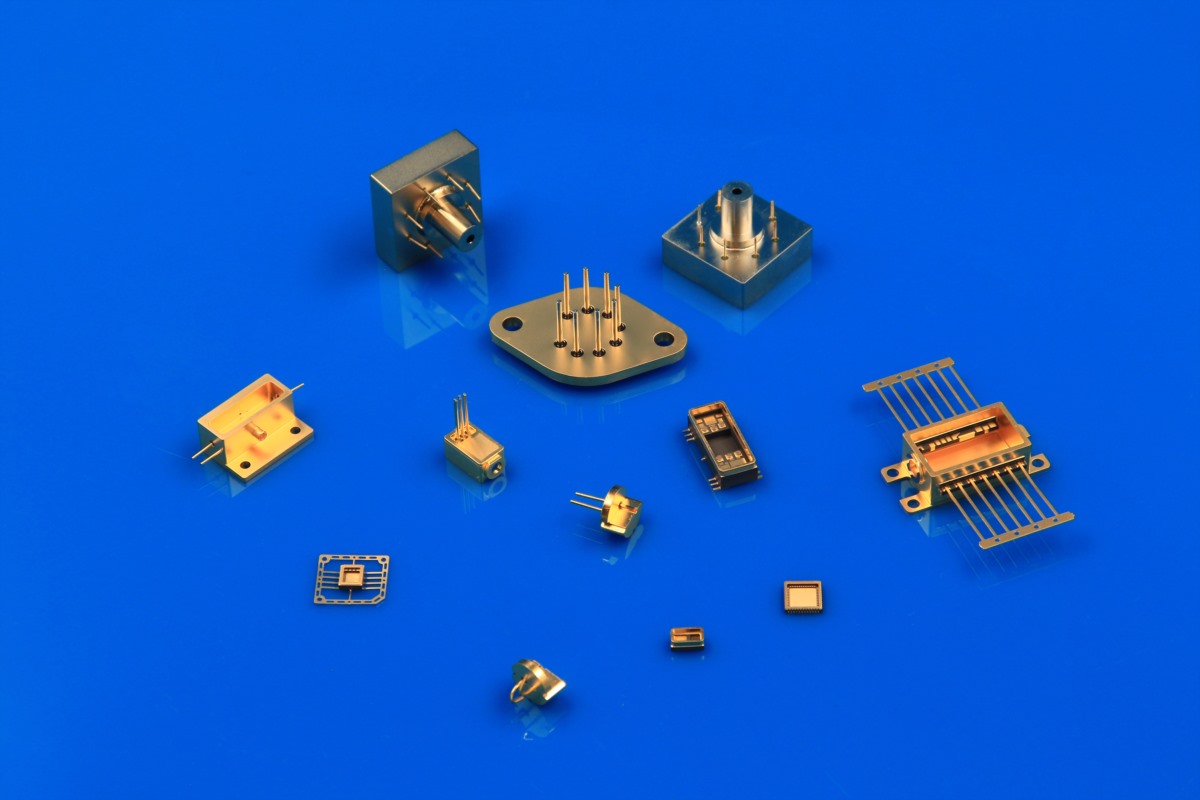
Surface Mount Ceramic Packages For Electronic Devices
In summary, ceramic metallization layers are essential in electronic device packaging because they enable electrical conductivity, interconnection, adhesion. all of which are critical for the reliable and efficient functioning of electronic devices.
Are you seeking cutting-edge solutions for your electronic device packaging needs? Look no further! At Innovacera, we specialize in state-of-the-art ceramic metallization services. With our expertise, we ensure impeccable metallization layers that meet the highest industry standards. Our commitment to excellence guarantees the optimal performance of your electronic devices. Partner with us and experience the transformative power of superior ceramic metallization. Contact us today to explore a world where innovation meets reliability!


Boron Nitride Application-Crucible

Boron nitride is an excellent self-lubricating ceramic that can withstand high temperatures and maintain its lubrication capabilities in high vacuum environments.
Usually composed of hexagonal boron nitride (P-BN), it has good heat resistance, thermal stability, thermal conductivity, high temperature dielectric strength, and is an ideal heat dissipation material and high temperature insulation material.
Due to its high thermal and chemical stability, boron nitride crucibles are used in high temperature applications.

Boron Nitride Crucible
They are also used in metal casting because it bonds well to metals, as a sandwich of metal borides or nitrides is formed.
The benefits of using a boron nitride crucible are its low wettability to molten metal, relatively high resistance to thermal shock, and conductivity with low thermal expansion. Another advantage of boron nitride crucibles is their very high operating temperatures and appropriate inert gas protection (temperatures above 3000°C have been recorded).
Boron nitride crucible is used for melting aluminum, zinc and other alloy smelting, replacing graphite crucible.
The boron nitride crucible has strong resistance to thermal shock and will not crack when quenched to 1500 degrees. It will not crack if it is kept in the furnace at 1000 degrees for 20 minutes and taken out to be blown and quenched continuously for hundreds of times.
Note: Boron nitride crucible is easy to absorb moisture and cannot be stored in humid areas. It cannot be washed with water. It can be wiped directly with sandpaper or wiped with alcohol.


Main applications of boron nitride ceramics

Basic overview of boron nitride ceramics
In its solid form, hexagonal boron nitride (HBN) is often called “white graphite” because its microstructure is similar to graphite. However, unlike graphite, boron nitride is an excellent electrical insulator with a higher oxidation temperature. It has high thermal conductivity and good thermal shock resistance and can be easily machined to almost any shape tolerance. After processing, it is ready for use without additional heat treatment or sintering operations.

Boron Nitride Ceramic
Boron nitride is a heat- and chemical-resistant refractory compound composed primarily of the elements boron and nitrogen. Its chemical formula is BN.
Other common descriptions of boron nitride include hexagonal boron nitride (H-BN) and hot-pressed boron nitride.
Boron nitride exists in various crystal forms that are isoelectronic to the similarly structured carbon lattice. The most stable form of boron nitride is the hexagonal form corresponding to graphite.
The following are the main application areas of boron nitride ceramics:
1. Insulators for high temperature furnaces;
2. Electrical insulators in vacuum systems;
3. Hexagonal boron nitride is mainly used as an alternative lubricant to graphite when the electrical conductivity or chemical reactivity of graphite is considered to be a problem.
4. They are used as semiconductor substrates, microwave transparent windows and sealing structural materials in electronic products
5. It is used as a gasket for glass melting;
6. Crystal growth crucible;
7. Broken rings for horizontal continuous casting machines;
8. Feedthrough of high-voltage equipment;
9. Boron nitride ceramics parts for ion implantation equipment;
10. Electrostatic printing process and laser printer, it is used as the charge leakage barrier layer of the photosensitive drum;
11. In the automotive industry, h-BN is often mixed with binders such as boron oxide to seal oxygen sensors.
Performance parameters of boron nitride ceramics:

Density 1.6g/cm³
Color White
Working temperature 900-1800-2100
Three point-bending strength 18mpa
Compressive strength 45Mpa
Thermal Conductivity 45W/m·k
Thermal expansion coefficient(20-1000℃) 1.5 10-6/K
Room Temperature
Electric Resistivity
>10 14Ω·cm

Boron Nitride Application-Nozzle

BN nozzle is a high-performance nozzle that is usually used for fluid dynamics research and spray experiments under special working conditions such as high temperature/high pressure. It is suitable for the following application fields:

Boron Nitride Ceramic Nozzles

1. Liquefied natural gas/LNG spray: BN nozzles can stably spray liquefied natural gas under high temperature and high pressure conditions, improving the uniformity and flow control of LNG spray.
2. Ion implantation: BN nozzles can make long-term ion implantation simpler and more reliable, and are used in manufacturing and repair in the semiconductor industry.
3. Fine chemicals manufacturing: BN nozzles can be used to manufacture high-purity and high-efficiency catalysts, high-temperature curing agents, chemicals and biological agents, etc.

Precautions:
1. Before using the BN nozzle, you first need to clean the nozzle surface and ensure that all pipes and joints are in normal condition.
2. When splashing liquid in the nozzle, the pressure and distance of the nozzle need to be appropriately adjusted according to the characteristics of the nozzle and the physical properties of the liquid.
3. During long-term use, the nozzle may be worn and clogged and needs to be cleaned and replaced in time.


Hot-Pressed Aluminum Nitride

About Hot-Pressed Aluminum Nitride (AlN)

Hot pressed aluminum nitride ceramics are sintered by vacuum hot pressing. The aluminum nitride purity is up to 99.5%(without any sintering additives), and density after hot pressing reaches 3.3g/cm3, it also has excellent thermal conductivity and high electrical insulation. The thermal conductivity can be from 90 W/(m·k) to 210 W/(m·k).

The aluminum nitride ceramic mechanical strength and hardness of the product after high temperature and high pressure are better than those of the tape casting process, dry pressing and cold isostatic press method.

Hot pressed aluminum nitride ceramics have high temperature resistance and corrosion resistance, and will not be eroded by various molten metals and molten hydrochloric acid.

Presssureless Sintering Aluminum Nitride Ceramics

Typical Application of Aluminum Nitride (AlN)

Cooling cover and magnetic resonance imaging equipment
As the substrate of high-frequency surface acoustic wave device, large-size and high-power heat dissipation insulating substrate
Electrostatic chuck and heating disk for semiconductor and integrated circuit
Infrared and microwave window materials
Crucible for compound semiconductor single crystal growth
Target of high-purity aluminum nitride film

Features

High thermal conductivity
Expansion coefficient can match with semiconductor silicon chips
High insulation resistance and voltage withstand strength
Low dielectric constant and low dielectric loss
High mechanical strength

350mm Hot Press Sintering Aluminum Nitride Ceramics

Maximum Size of Hot Press Sintering.

Length 500 x width 500 x height < 350 mm
Outer diameter 500 x height < 500 mm
We can provide Hot Pressed Aluminum Nitride (HPAN) as required.

Hot Press Sintering Aluminum Nitride Ceramics Block

Order Information

Inquiries and orders should include the following information:
1.Dimensions or drawings
2.Quantity

Packing and Storage

Standard Packing: Sealed bags in carton boxes. Special package is available on request.

Hot Press Sintering Aluminum Nitride Ceramics Plate Package

Typical Specification

Purity: >99%
Density: >3.3 g/cm3
Compress Strength: >3,350MPa
Bending Strength: 380MPa
Thermal Conductivity: >90W/(m·K)
Coefficient of Thermal Expansion: 5.0 x 10⁻⁶/K
Max. Temp: 1,800°C
Volume Resistivity: 7×10¹² Ω·cm
Dielectric Strength: 15 kV/mm

Ceramic Heat Sinks Replaced Aluminum Heat Sinks In LEDs

There are a lot of practical uses for ceramic in LEDs. First of all, they’re possibly the best material to use for heat sinks. This is because aluminum replaced copper as the cheaper alternative for heat sinks in LEDs. However, although it is relatively malleable and effective in conducting heat, it’s not that environmentally friendly to dispose of. This is where ceramic comes in! Ceramic is a very cost-productive material to use for heat sinks. This is because it is very easily available, can be printed out into heat sink shapes very easily and only needs the LED chip to be stuck directly onto it. This means using ceramic material for your LED’s heat sinks removes the need for PCB boards and thermal adhesives. Ceramic is a great alternative to previously used aluminum as they’re more environmentally friendly and contribute better to the overall heat dissipation of the light.

Ceramic Heat Sinks
There are below benefits to use ceramic heat sinks:
Longer Lifespan: Having highly effective heat dissipation will prolong an LED’s life significantly. This is because LEDs are semiconductor devices and their internal components are made from materials that do not operate well under high temperatures. So the key is to find a way of shifting the heat away from the internal components to prolong the life of the LED.
Safer: Everybody knows a light running at a very high temperature is a safety risk. Especially LED’s at high temperatures. If your home has lights running at lower temperatures, there is much less risk to in one blowing or an accident happening.
Energy Efficient: An LED light with great heat-dissipating qualities will be more energy efficient. Although LED’s do run at lower temperatures than incandescent bulbs, they still have a lot of wasted energy as heat. If the light’s heat sinks are capable of removing the heat away from the internal components the LED light will have the capability of using less wattage with the same amount of lumens.

Aluminum Nitride Ceramic Heatsinks
Below is different material thermal conductivity:

Material Thermal Conductivity(W/mK)
AlN >200
Aluminum 235
Al alloys 166 -229
Gold 316
Copper 399
Silver 429
Diamond 900-2320

Although there are many good heat dissipation materials, the ceramic heat sinks is a great alternative and a very cost-productive material.
If you have more interesting, pls consult with us for ceramic heat dissipation solution.


Enquiry