technical ceramic solutions

News

Category Archives: News

Zirconia ceramics combination stainless steel parts

Zirconia ceramics is a very strong advanced ceramic with excellent properties in fracture toughness, hardness, high wear resistance, and corrosion resistance is the best flexibility compared with other ceramic materials. The unique properties of resistance to crack propagation and high thermal expansion make it an excellent material for combination with metals like stainless steel.

Zirconia ceramics

Zirconia ceramics themselves have very excellent performance, if it is combined with high-quality stainless steel materials, the advantages of this composite are not more obvious.

The advantages of the zirconia Ceramic to metal assemblies :

1. Long service life
2. Superior Mechanical Strength
3. High Polished Surface
4. Anti-high Corrosion and Wear Resistance
5. High Temperature and Pressure Resistance
6. Good Insulation Performance
7. High hardness, long service life, not easy to break, and wear resistance
8. Non-conductive, anti-static, ceramic material itself with the insulation of electricity and magnetism properties
9. Corrosion resistance, high-temperature resistance, can be applied to a specific environment, such as acid-alkali resistance


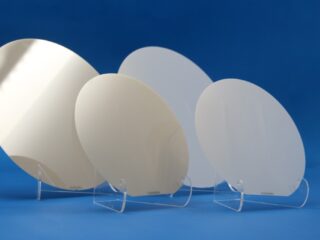
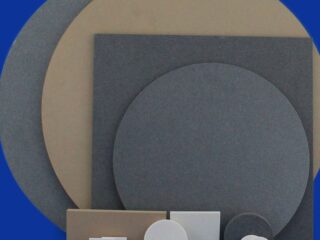
Semiconductor Wafer Carrier Alumina Disk and Ceramic Edge Ring

High precision ceramic components improve yield management for semiconductor wafer processing. Innovacera ceramic components provide precise dimensional stability, ultra-flatness and smoothness, and vacuum holding of wafers during inspection and processing. Low-surface-contact configurations minimize risk of back-side particles negatively affecting wafer geometry for precision applications.

Semiconductor Wafer Carrier Disk
The main features of high precision ceramic parts:

Alumina Wafer Carrier
1. Wear and abrasion resistance: Alumina is a tough technical ceramic with very good wear resistance.
2. High precision dimensions with tightening tolerance, it easier to get a perfect fitting relationship.
3. Chemical inertness, resistant to most of the strong acids and alkalis.
4. High-temperature ability: withstand up to 1600°C in oxidizing and reducing atmospheres.
5. Great mechanical properties, hardness, compressive, and flexural strength are much higher in stainless steel.
6. Electrical insulation: The insulation breakdown is 20KV at least.
7. Protective atmospheres or high vacuum at high temperatures to eliminate contamination or impurity.
8. Chemical corrosion resistance under high temperatures, even with strong acid or alkali.
9. Low material cost in high-level applications than other technical ceramics.


Boron Nitride Nozzles for Molten Metal Atomizing

Boron Nitride nozzles are widely used in the processing of metal powder. Molten metal atomization is a process used to fabricate metal powder from a melt. In a typical atomizer, liquid metal is poured from a nozzle into a large chamber while being sprayed with high-pressure water, oil or gas. This causes the metal droplets to separate and condense into a powder that collects at the bottom. Atomization has become one of the most popular methods of powdering metals.

Boron Nitride Nozzles
Atomization begins in a furnace where the metal is kept liquefied by electric heating elements. The metal falls into the spray chamber through a “nozzle” – this nozzle is designed to a high degree of perfection and specification. The nozzle is one of the most important parts of the atomization process – a damaged or clogged nozzle can cause the metal flow to stop or the flow to increase dramatically – both of which can disrupt the powdering process.

A molten metal atomizer chamber
To prevent this from happening, the nozzle must be mechanically robust and offer no resistance to the flow of liquid metal. At the same time, the nozzle acts as an interface between the hot furnace at the top and the much cooler spray chamber below. Therefore, it needs to be made of a strong refractory material while also being resistant to high-temperature shocks.
Boron nitride has very low thermal expansion. Together with high thermal conductivity, this ensures that the material is very shock-resistant. It can easily withstand rapid changes in the temperature inside the atomizer. It will not crack or crack under thermal stress.
Under high vacuum, boron nitride can withstand high temperatures up to 1800 °C. A gas atmosphere can push the temperature further up to 2100 °C. This means boron nitride will remain solid during the melting of most metals.
It is also easily machinable, allowing us to machine small threads, holes and other finer details with high precision and tolerances. Nozzles made of boron nitride can be easily customized, allowing both constrained and free geometries.


What are the advantages of advanced ceramics produced by cold isostatic pressing

The most commonly used forming processes in the advanced ceramics industry are cold isostatic pressing, injection molding, hot isostatic pressing and dry pressing. As an advanced ceramics manufacturer, we’d like to introduce the cold isostatic pressing process.

Alumina Parts

CIP is a method of compacting powdered materials into a solid homogeneous mass before machining or sintering. It can produce high-integrity billets or preforms that exhibit little distortion or cracking when fired. Its advantages and features include:

Improve production efficiency: CIP is easy to operate, the process is stable and can be mass-produced, so the production efficiency is high.

Optimizing material properties: CIP can make the powder material form a dense green body under high pressure, which has a high density, usually reaching more than 95% of the theoretical density. This makes the ceramic material produced by cold isostatic pressing have higher strength, hardness and wear resistance.

Fine grains: In the process of CIP, due to plastic deformation and recrystallization under high pressure, a body with fine grains can be obtained, thereby improving the strength and toughness of the material.

Manufacture of complex shaped parts: cold isostatic pressing technology has good adaptability to the manufacture of complex shaped ceramic parts. It can achieve one-time molding of complex shapes through appropriate mold design and pressure control, reducing the complexity and cost of subsequent processing.

Complex shapes: By adopting different mold structures and process parameters, cold isostatic pressing can produce blanks of various complex shapes to meet the needs of different application fields.

Strong controllability: The process parameters of CIP can be precisely controlled, such as pressure, temperature, holding time, etc., so that a green body with specific properties and microstructure can be obtained.

Low material loss: There is no melting during CIP, so there is no chemical reaction and gas phase consumption, and there is almost no material loss.

Energy saving and environmental protection: Since the cold isostatic pressing process does not require high-temperature sintering, it can reduce energy consumption and the amount of waste gas and wastewater discharged.

In summary, this makes the cold isostatic pressing technology has a broad application prospect in the field of ceramic manufacturing.


Silicon Nitride Ceramic Weld Location Pins for use in Resistance Welding

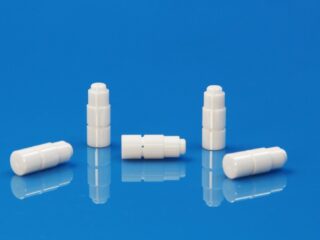
Innovacera manufactures Silicon Nitride (Si3N4) Ceramic weld location and control pins for use in resistance welding. These are used in the metal forming industry to allow precise welding of nuts to sheet metal.

Silicon Nitride (Si3N4) Ceramic Customized Parts Welding Pins
Due to ceramic’s high hardness and durability, metal can’t compete with it in insulating properties, resistance to temperature changes, and minimal wear. Another advantage of using ceramics as centering pins is their smooth polished surface, which prevents welding spatter from adhering. However, when welding pins made of commonly used zirconia ceramics, the service life does face a limit. This material also cannot withstand the currents in projection welding and the required 800°C operating temperature over time, so it wears out. And centering standard molds made of silicon nitride ceramic is a good choice.

Silicon Nitride (Si3N4) Ceramic Weld Location Pins
Silicon nitride ceramic weld location pins have the following advantages:
1.High-temperature stability: Silicon nitride ceramics can maintain stability in high-temperature environments, have excellent heat resistance, and can withstand thermal stress and thermal cycles during high-temperature soldering.
2.Corrosion resistance: Silicon nitride ceramics have excellent corrosion resistance to common corrosive media such as acid and alkali.
3.High hardness and wear resistance: Silicon nitride ceramics have high hardness and wear resistance, which can keep their shape and geometry stable for a long time during the welding process.
4.High precision: Silicon nitride ceramics have excellent dimensional and mechanical stability and are suitable for applications requiring high-precision positioning in welding processes.
Therefore, silicon nitride ceramic welding location pins are an ideal material for positioning and support needs during welding.


Congratulations for our Ceramic Igniter Got CE Certification

What is CE certification?
Conformité Européenne (CE) certification is a regulatory standard that verifies certain products are safe for sale and use in the European Economic Area (EEA). Manufacturers place a CE marking on certified products to indicate that the product complies with European safety rules and can be traded freely within the EEA.

Igniter CE certification LVD GZES2305008592HS

Igniter CE certification LVD GZES2305008592HS

Why Do Products Need CE Certification?
For manufacturers and/or importers looking to sell into the EEA market, CE certification is vital. The CE marking serves as a trade passport within the European marketplace, allowing manufacturers to freely circulate certified products within the 30 countries that comprise the EEA. The CE marking has replaced past national regulations with a single harmonized set of regulations, eliminating the need to adapt products to the specific requirements of individual EEA member states. In short, CE marking simplifies compliance requirements for manufacturers selling or importing products in the EU.

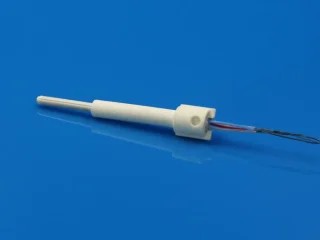
230V 250W Alumina Ceramic Wood Pellet Boiler
What type of ceramic igniter do we have?

Model Size(L×ODmm) Voltage (V) Resistance (Ω) Ref. W
INC-H1-1 90×10.5 230 78-123 210
INC-H1-2 230 74-114 225
INC-H1-3 230 70-107 240
INC-H1-4 230 65-100 255
INC-H2-1 90×10.5 230 116-182 160
INC-H2-2 230 107-165 180
INC-H4-1 90×10.5 230 107-165 160-190
INC-H8-1 90×10.5 230 70-107 235-255
INC-H6-1 90×10.5 230 70-107 225-262.5
INC-H7-1 90×10.5 230 78-123 195-225
INC-H5-1 78×10.5 230 123-195 150
INC-H5-2 230 102-176 170
INC-H5-3 230 84-133 200
INC-H5-4 230 72-116 230
INH-1-230 106*11.5 230 67.2-109 270-315
INH-2-230 106*11.5 230 67.2-109 270-315
INH-3-230 106*11.5 230 67.2-109 270-315
INH-4-230 106*11.5 230 67.2-109 270-315
INH-5-230 106*11.5 230 67.2-109 270-315
INH-6-230 106*11.5 230 67.2-109 270-315
INH-7-230 106*11.5 230 67.2-109 270-315
INH-8-230 106*11.5 230 67.2-109 270-315
INH-9-230 106*11.5 230 67.2-109 270-315

Ceramic Heater Used For Vaporizer

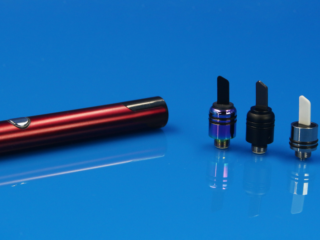
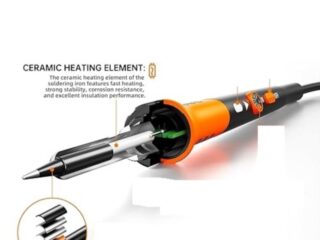
Innovacera developed ceramic heating element used for vaporizer.
The most common heating elements in a vape are made from metal, glass and ceramic. What are their differences? Which is better to be used for vaporizer?

95% Alumina Circular Ceramic Heater 12V for Evaporator
Metal heating elements conduct heat quickly, so they heat fast and adapt well to temperature changes. However, some metal heating elements can infuse vapor with metal particles. Inhaling these particles can damage the lungs and may be dangerous. So metal heating elements is not a good choice for vaporizer.
Glass is not a favored option. As glass is too delicate for an entire portable vaporizer. It’s also far more expensive than ceramic, and without any additional benefits.
Ceramic heating elements are considered the highest quality for vaporizers. First, ceramic is considered the safest heating method for vaporizers since they do not carry metal particles into the vapor. Our ceramic heater material is with Rohs and Reach certification.

INNOVACERA 95% Alumina Circular Ceramic Heater 12V for Evaporator
The Advantages of ceramic heater:
1. Small size;
2. Fast heating rate;
3. More uniform thermal performance, and thermal efficiency;
4. To integrate with thermistor, so as to achieve the purpose of accurate temperature control;
5. Safety
MCH heater technology:

Design Diameter/Length/Width Tolerance Thickness
Tube/Rod D:2.5~12 D: Above 8mm±0.3mm
Below8mm±0.2mm
LAbove80±2.0mm
Below80mm±1.0mm
Plate:Square L:10~100 Above:70±2mm 0.5~2
Below:70±1mm
Plate:Round D:10~70 Above:30±2mm 0.5~2
Below:30±1mm

Regular size and specification:

NO Model Size Resistance Voltage Shape Material
1 E0863TB OD6.3*ID5.2*8mm 0.25-0.4Ω 3.7V Tube 95%Alumina
2 E1416TA OD16*ID14.4*14mm 0.45-0.65Ω 3.7V Tube 95%Alumina
3 E13295TA D2.95*13mm 0.25-0.4Ω 5V Rod 95%Alumina
4 E13596TA OD9.6*ID8*13.5mm 0.45-0.6Ω 3.7V Tube 95%Alumina
5 E112015TA OD19.85*ID13.3*11mm 0.4-0.6Ω 3.7V Tube 95%Alumina
6 E131684FA OD16*ID7*13.8mm 0.4-0.6Ω 3.7V Tube 95%Alumina
7 E141895TA OD17.6*ID16.6*14mm 0.5Ω 3.7V Tube 95%Alumina
8 P1100TB D11*0.8mm 0.5-0.7Ω 3.7V Plate 95%Alumina

The advantages and disadvantages of Silicon Carbide

Silicon carbide products are an advanced material widely used in high temperature, high pressure and high frequency environments.

Silicon Carbide Ceramic
Its advantages and disadvantages are as follows:
Advantage:
1.Excellent high-temperature performance: The melting point of silicon carbide products is as high as 2700°C, which can maintain its structural stability and strength in high-temperature environments, so it is widely used in high-temperature molten metals, high-temperature heating furnaces, high-temperature petrochemical and other fields.
2.Strong corrosion resistance: Silicon carbide has excellent corrosion resistance and can work stably for a long time in acid, alkali and oxidative environments.
3.High hardness and high strength: Silicon carbide has higher hardness and strength than traditional ceramic materials, so it has good wear resistance and impact resistance.
4.Excellent thermal conductivity and electrical conductivity: Silicon carbide has high thermal conductivity and excellent electrical conductivity, so it is widely used in the manufacture of high-power electronic components and radiators.
Disadvantages:
1.Expensive: Silicon carbide products are expensive to manufacture because of their high manufacturing costs.
2.Difficulty in manufacturing: The manufacture of silicon carbide products is difficult and requires complex production processes such as high temperature and high pressure.
3.Fragile: Silicon carbide products are fragile and not suitable for some environments with large particles and easy wear.
4.Poor machinability: The machinability of silicon carbide products is poor, and the processing is difficult, so it is difficult to manufacture silicon carbide products with complex shapes.
Silicon Carbide Ceramic Material Properties for information.

Silicon Carbide Ceramic Material Properties


Guide to Designing with Advanced Technical Ceramics

Often an engineer unfamiliar with using ceramics will want a direct copy of a component that was originally metal, for example, made in ceramic. Very often this is not the best solution and can unnecessarily increase manufacturing costs and even result in the component not working as desired.

Advanced Technical Ceramics
By following these suggestions where possible, the advanced ceramic part will be easier and cheaper to make, saving you time and money, while still delivering a part ‘fit for purpose’.
1. Tolerance dimensions as loosely as possible. If a component can be toleranced at ± 1-3% for example, the part can usually be produced ‘as-sintered’. This then eliminates the need to diamond grind the component, which is one of the most costly stages of manufacture.
2. Avoid features that cause stress concentrations, such as sharp edges and corners, sudden changes in cross-sectional area, and small contact points. Sharp edges and corners should be relieved by chamfers, radii, or undercuts. If possible use tapers to gradually change the cross-sectional area. Provide large contact areas to spread the load.
3. Keep the component form as simple as possible. Ceramic components are fabricated by first forming a low density ‘green’ compact, which is subsequently sintered to full density. This results in shrinkages of up to 30%, which for complicated shapes makes tight dimensional control difficult. In some cases, it may be advantageous to change the form of a non-ceramic part of the design in order to simplify the ceramic component. Alternatively, consider using a modular design, that is, split the component into several smaller, simpler pieces.
4. Keep section or wall thickness as uniform as possible. Large changes in component thickness are another cause of stress concentrations. This can be the case when holes are located off-center, for example. Also, a thin section will densify quicker than a thick section and so warpage or grain growth could occur while the thicker section is still densifying. Grain growth can result in a reduction in strength and should where possible be avoided.
5. Avoid unnecessary diamond grinding. Grinding can cause very high-stress concentrations, which as mentioned above, can cause flaws. However, by optimizing the grinding parameters or by polishing or lapping, this problem can be minimized.
Hopefully, these design tips will give you some points to consider when attempting to incorporate advanced technical ceramics, such as alumian, zirconia, , in your design. Should you need more information, please contact one of our engineering staff or see our materials section for more information on the fine ceramics we manufacture.


Precautions for cleaning and sterilizing alumina ceramic filling pump

Cleaning steps: Clean with purified water, and then rinse with purified water;
Soak the ceramic pump with 1-3%NAOH for 5-15 minutes, which is equivalent to pyrogen removal, and then rinse with injected water.
Sterilization steps: Use high-pressure humid heat steam for sterilization. The sterilization temperature is 121℃, the pressure is 0.1MPA, and the time is 30 minutes (recommended time).

alumina Ceramic pump
Precautions for cleaning and sterilization:
(I)shall not use fluorine containing chemical solution and stainless steel war, to prevent corrosion of stainless steel parts; When washing, do not pull the ceramic column or plug of the ceramic metering component in the hot water higher than 40℃. The ceramic plug should be removed for washing. Ceramic rod and ceramic plug cannot be exchanged during the washing process; During sterilization, the rotary valve, ceramic plug and metering rod should be placed away in the special washing sterilization box, and the ceramic rod and ceramic plug should be vertically hung for humid heat sterilization; After sterilization, the pump body temperature should be reduced to room temperature before placement operation; Before the pump body temperature drops to room temperature, it should refrain from sudden cooling resulting in pump body cracking and deformation.
(II) If there is yellow dirt in the ceramic pump body and the liquid part, it can be soaked in 10% oxalic acid for 0.5-1 hours, and then washed with water for injection; Because the hardness of ceramic is greater than stainless steel, ceramic and stainless steel war can make the ceramic appearance adhesion to stainless steel, can not be processed clean, probably lead to the filling pump is not smooth or can not move, resulting in damage. Initiate washing and sterilization using non-metallic materials (such as tetrafluoroethylene) as storage containers; When the plunger sleeve, plunger, and slot valve are removed from the mechanical preparation, please put the plunger sleeve vertically, and the plunger slot valve is tied with a rope in the air vertically by gravity to prevent deformation.


Enquiry