In a silicone thermal pad, potting compound or injection-molded housing, boron nitride powder does not work as a standalone heat sink. It becomes part of a polymer composite, and the way the particles pack, orient and respond to mixing or molding can strongly influence how heat moves through the finished material.
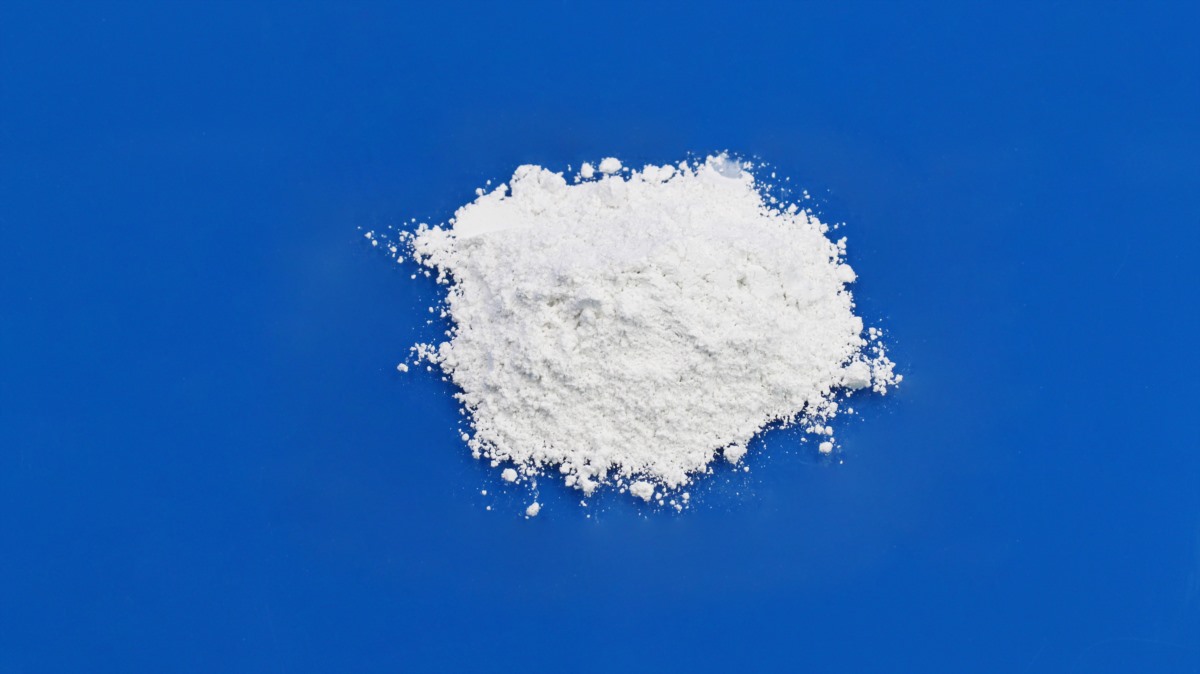
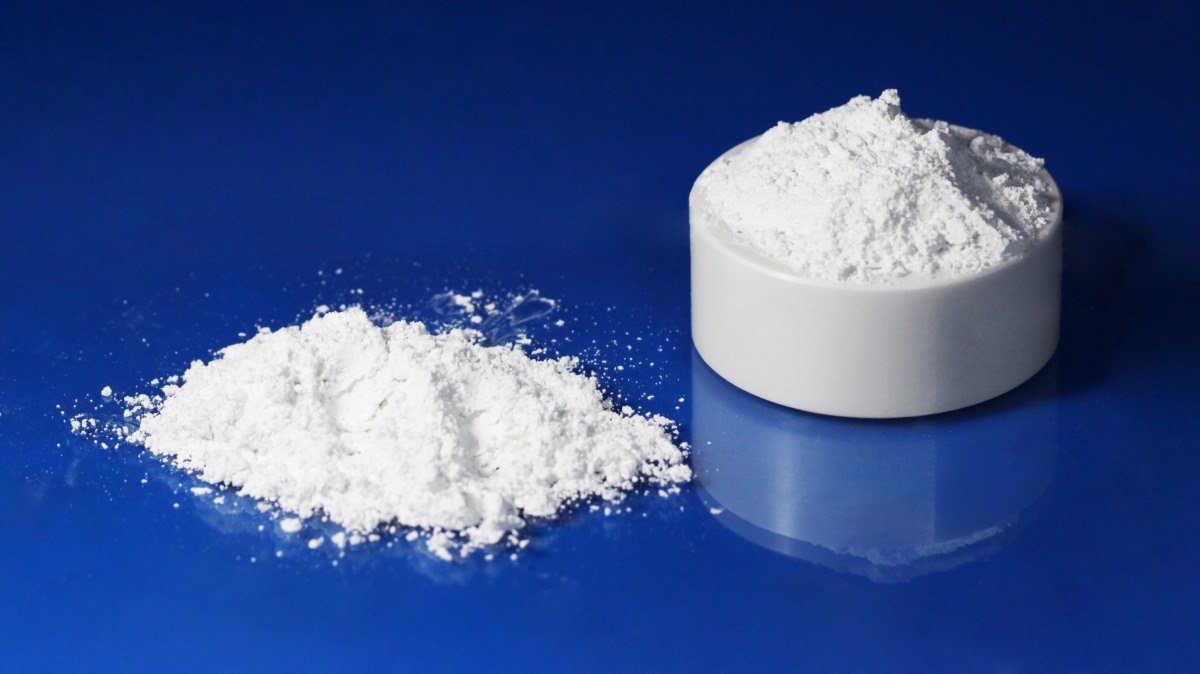
INNOVACERA supplies boron nitride powder in different particle forms, including single-crystal platelet powders covering 0.5–100 μm and nanoscale spherical agglomerates. Different grades are available for thermal-conductivity, electronic, ceramic, cosmetic and lubrication applications.
For thermal-management projects, this makes the purchasing specification more important than simply requesting “BN powder.” The resin system, required heat-flow direction, processing method and particle-size limitations should all be considered before a grade is selected.
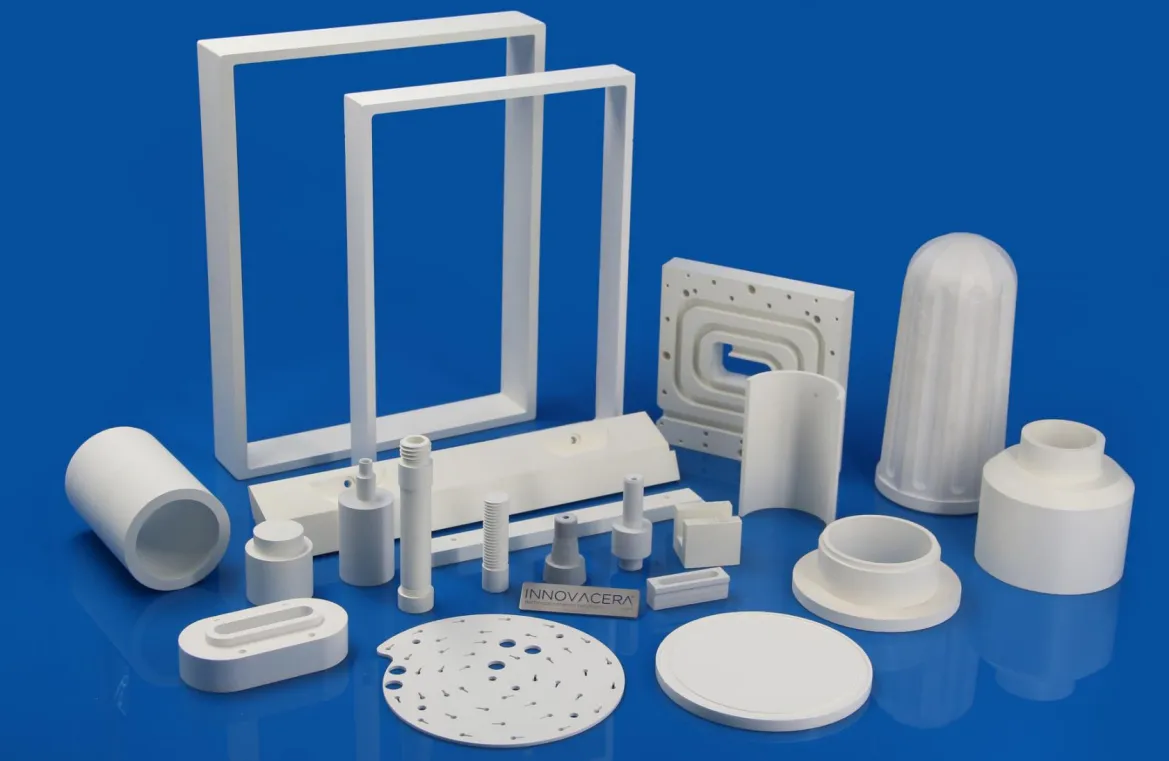
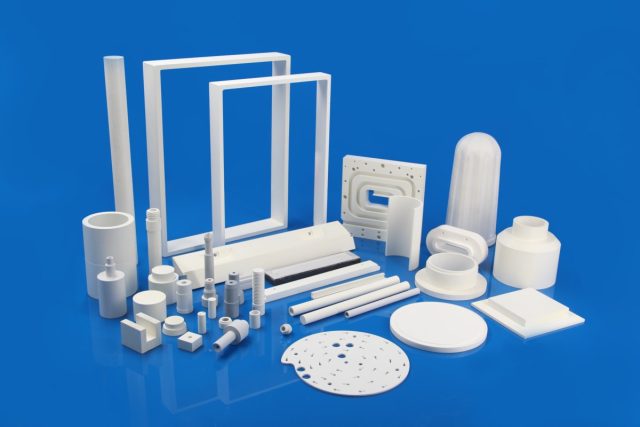
This article focuses specifically on hexagonal boron nitride powder used as a functional filler. It does not refer to machined hot-pressed BN components, pyrolytic boron nitride products or cubic boron nitride abrasives. These belong to different material forms and purchasing requirements. An overview of these distinctions is available on our Boron Nitride material page.
Where Does Boron Nitride Powder Sit in a Thermal Management Assembly?
A thermal filler is normally several steps removed from the final heat source. The BN powder is first dispersed into a polymer, and that filled polymer then becomes the functional thermal material used inside the customer’s assembly.
A typical thermal path may be: power semiconductor, PCB, motor winding or battery component → BN-filled polymer material → metal housing, heat spreader, cold plate or heat sink.
Depending on the formulation, the BN-filled material may serve different positions in this path:
- A silicone thermal pad or gap filler placed between an electronic component and a heat sink or cold plate;
- An epoxy potting compound surrounding power electronics and transferring heat toward an enclosure;
- A thermally conductive adhesive joining a heat-generating component to a structural or cooling surface;
- A thermoplastic housing, socket or molded component in which thermal conductivity must be improved without introducing an electrically conductive filler;
- An electrically insulating resin layer used where both heat transfer and dielectric behavior need to be controlled.
For a broader introduction to resin-based interfaces and common thermal filler families, see our earlier article on thermal interface materials for electric vehicles. The powder-selection problem begins one level deeper: how the BN particles actually behave inside the polymer.
Platelet Orientation Can Help One Heat-Flow Direction and Limit Another
Hexagonal boron nitride has a layered crystal structure. Individual hBN platelets therefore do not transfer heat equally in every direction.
During coating, calendaring, extrusion or injection molding, platelet particles may rotate and become preferentially aligned with the flow or with the surface of the part. This can be useful when the design needs heat to spread laterally across a sheet or molded component.
The same orientation can become less favorable when the main requirement is to move heat directly through the thickness of a thermal pad or dielectric layer. A formulation engineer therefore needs to define whether the priority is in-plane heat spreading, through-plane heat transfer or a more balanced thermal response before choosing the powder morphology.
Agglomerated BN Powder Can Produce a Different Particle Network
An agglomerated powder is built from smaller BN particles grouped into larger secondary structures. Because the platelets within an agglomerate can face several directions, this morphology can reduce the strong directional bias associated with individually aligned platelets and can be useful when heat must cross the thickness of a polymer composite.
Agglomeration, however, should not be treated as a guarantee of higher finished-part thermal conductivity. Mixing intensity, shear forces, filler loading and resin viscosity can change the agglomerate structure during processing. A powder that performs well under gentle silicone mixing may behave differently in a high-shear extrusion process.
This is one reason thermal-grade BN powder should be evaluated after compounding into the intended matrix rather than judged only from powder data.
Particle Size Has to Match the Interface Thickness and Processing Method
Particle size affects more than the appearance of the powder. It also changes packing behavior, resin demand, viscosity, dispensing performance and the number of particle-to-particle contacts that can develop inside the composite.
Fine particles can be useful where a thin section, smooth surface or restricted dispensing path limits maximum particle size. At the same time, increasing the amount of very fine powder increases the total particle surface area that the resin must wet, which may make high filler loading more difficult.
Larger particles or carefully selected particle-size combinations can help improve packing and reduce unnecessary resin-filled space between particles, but the maximum particle size still has to fit the actual bond line, film thickness, nozzle clearance or molded wall section.
For this reason, specifying only one nominal particle size is rarely sufficient for a new thermal formulation. Particle-size distribution, morphology and the dimensional limits of the finished material should be considered together.
Match BN Powder Selection to the Polymer System
The same boron nitride powder does not necessarily suit silicone, epoxy and thermoplastic processing equally well. The matrix and manufacturing route determine how the powder is dispersed and what happens to the particle network before the final part is produced.
| Polymer System | Typical Position in the Assembly | Main Powder Selection Concerns | Useful RFQ Information |
|---|---|---|---|
| Silicone thermal pad / gap filler | Between component, module, heat sink or cold plate | Through-plane heat transfer, viscosity, compressibility, maximum particle size | Target thickness, dispensing or sheet process, thermal direction, filler-loading range |
| Epoxy potting compound / thermal adhesive | Around electronics or between component and housing | Viscosity, particle packing, sedimentation, electrical insulation and cure processing | Epoxy chemistry, mixing process, maximum particle size, target thermal performance |
| Thermally conductive thermoplastic | Molded housing, socket or structural electronic part | Flowability, particle orientation, extrusion shear, injection-molding behavior | Polymer type, molding method, wall thickness, flow direction and required heat path |
| Electronic dielectric resin / laminate | Insulating resin layer between conductive structures | Electrical properties, purity, particle distribution and through-thickness heat transfer | Resin system, dielectric requirements, layer thickness and lamination process |
Why a Higher BN Loading Is Not Automatically a Better Formulation
Increasing the amount of thermally conductive filler generally creates more opportunities for particles to contact one another and form continuous heat-transfer paths. In practical production, however, filler loading cannot be increased without considering the polymer.
As the solid content rises, a formulation may become more difficult to mix, pump, coat, dispense or mold. Flexibility can change in a thermal pad, while an adhesive or potting resin may become too viscous to fill narrow gaps. In an injection-molded material, the filler can also influence melt flow and mechanical performance.
The useful formulation is therefore the one that reaches the required thermal performance while remaining compatible with the intended manufacturing process and mechanical function. This is why powder morphology, particle-size distribution and filler loading should be developed as one system rather than optimized independently.
Processing Conditions Can Change the Powder Structure You Selected
A powder specification describes the material before it enters the customer’s mixer, extruder or molding machine. The final composite has already passed through another manufacturing process.
High shear can alter agglomerates. Flow through an extrusion die or injection mold can orient platelet particles. Air trapped during mixing can interrupt contact between filler particles. Resin wetting and dispersion quality can also change how effectively neighboring BN particles exchange heat.
For development projects, it is therefore useful to compare candidate powders using the actual resin, mixing equipment and curing or molding conditions planned for production. Powder data are useful for screening, but composite testing should determine the final formulation.
When Boron Nitride Powder Is the Wrong Purchasing Category
The phrase “boron nitride” covers several very different industrial products. Before requesting a powder quotation, confirm that a functional filler is actually the item required by the BOM.
- If the requirement is a machined crucible, insulator, nozzle, plate, tube or fixture, the purchasing item is a solid hot-pressed or sintered BN ceramic component rather than BN powder;
- If the application requires a high-purity CVD-deposited crucible, plate or thin-wall component for semiconductor or vacuum processing, the appropriate category may be pyrolytic boron nitride (PBN);
- If the material is required for grinding, cutting or other superabrasive applications, cubic boron nitride (cBN) belongs to a different crystalline phase and supply chain;
- If the purchasing requirement is a ready-to-use release spray, paint or coating, BN powder is only a raw ingredient and should not be confused with a formulated coating product.
What Should Be Included in a Thermal-Grade BN Powder RFQ?
A more complete RFQ allows the powder supplier to evaluate the formulation requirement rather than recommend a grade from particle size alone.
- Polymer matrix, such as silicone, epoxy, polyurethane, PA, PC, PPS or another resin;
- Final product form, such as thermal pad, gap filler, adhesive, potting compound, film or molded component;
- Required heat-flow direction: in-plane, through-plane or multidirectional;
- Target thermal performance of the finished composite, if already defined;
- Expected filler-loading range and acceptable viscosity or flow behavior;
- Mixing, extrusion, coating, dispensing, calendaring or injection-molding process;
- Maximum particle size, bond-line thickness, film thickness or dispensing clearance;
- Electrical insulation, dielectric or purity requirements relevant to the application;
- Development sample quantity and expected production volume.
For projects that are still at an early formulation stage, the polymer system, processing method and intended heat-flow direction are usually the most useful starting information. Candidate particle morphologies and size ranges can then be screened by testing them in the actual composite.
Selecting BN Powder Starts with the Finished Component
Thermal-grade boron nitride powder should be selected from the finished component backward. A thin silicone interface, an epoxy-filled electronic enclosure and an injection-molded thermoplastic housing expose the same filler to very different geometry, shear, viscosity and heat-flow conditions.
INNOVACERA offers platelet and agglomerated boron nitride powder options for different downstream requirements. When requesting a material review, provide the resin system, thermal direction, particle-size limitations, processing conditions and target application so that an appropriate grade can be evaluated before formulation testing.
If you are developing a thermal interface material, thermally conductive polymer, potting compound or related electronic material, you can discuss your application and request a BN powder recommendation with the INNOVACERA team.