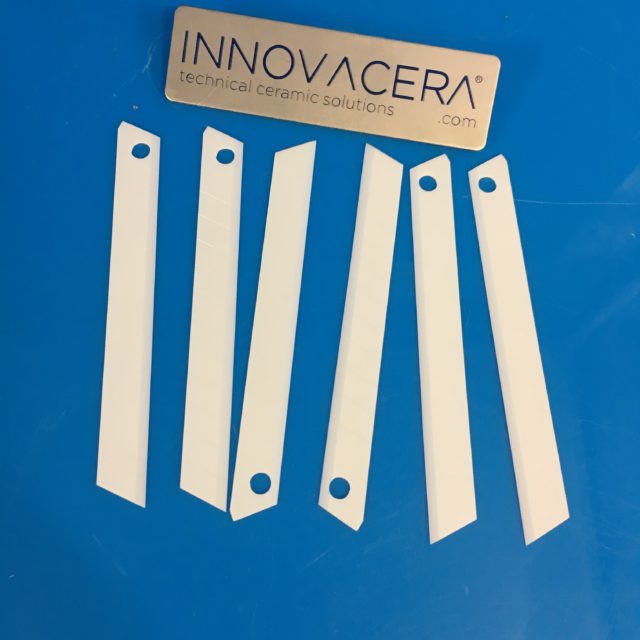
This case study carried out optimization practices on the issues of tool life and powder control during the slitting process of high-toughness polyethylene film, increasing the service life of the blade from approximately 3 days to about 7 days.
I. Project Background
In the field of film slitting processing, the performance of the cutting tools directly affects the cutting quality, production efficiency, and the operational stability of the equipment. One of our film processing customers mainly produces linear low-density polyethylene (LLDPE) films and metallocene linear low-density polyethylene (mLLDPE) films. Compared with ordinary LLDPE materials, mLLDPE has higher toughness and tensile strength, and it requires higher wear resistance and sharpness retention of the cutting tools during high-speed slicing.
The customer’s production line operates at 500 m/min, a typical high-speed cutting condition. This poses continuous challenges to the stability and lifespan of the cutting tools.
II. Core Pain Points of Customers
Previously, the customer had been using tungsten steel (metal) blades for a long time. In actual production, they mainly encountered the following problems:
- Shorter lifespan: After continuous use for approximately 3 days, obvious cutting powder will appear, and the tool wears out more rapidly. Frequent shutdowns for replacement are required.
- Friction and contamination issues: During the high-speed slicing process of LLDPE / mLLDPE films, the friction coefficient is relatively high, which can lead to the generation of powder and affect the cleanliness of the products.
- Insufficient adaptability of high-toughness materials: In the cutting process of mLLDPE films, the cutting edges are more prone to dulling and the stability decreases.
- Production efficiency is limited: Frequent tool changes result in a decline in production line continuity, increasing maintenance and downtime costs.
III. Solution: Zirconia ceramic slotting slicing blade
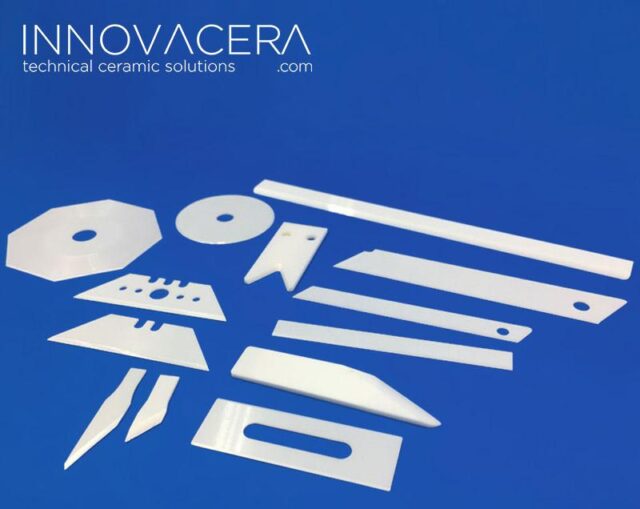
According to the customer’s working conditions, we recommend replacing it with a zirconia ceramic slot-cutting blade.
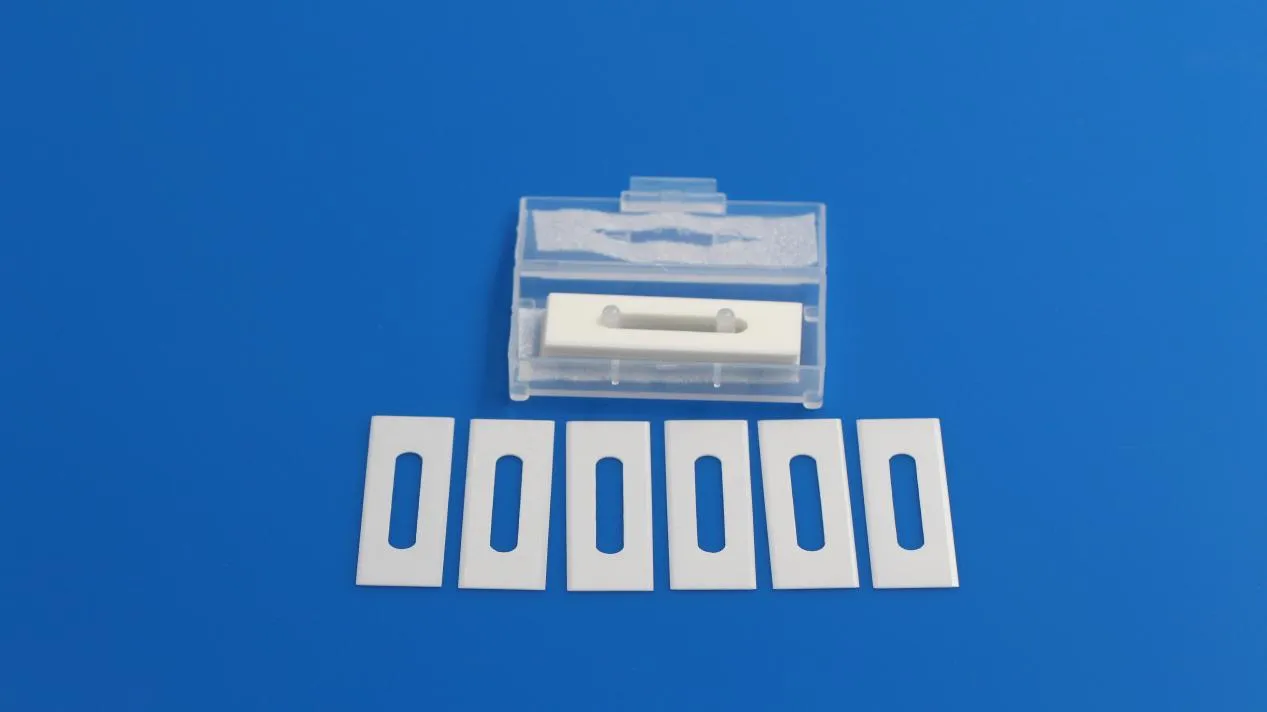
Compared with traditional tungsten steel cutting tools, ceramic blades have the following advantages:
- High hardness and excellent wear resistance: It can maintain a sharp state for a long time during high-speed cutting, effectively delaying the wear of the cutting edge.
- Low friction characteristics: The cutting process is smoother, effectively reducing heat generation due to friction and the phenomenon of material dragging.
- Excellent anti-adhesion property: Reduces the adhesion of debris from high-molecular materials such as polyethylene, thereby reducing the generation of powder at the source.
- Structural stability: Under stable installation and high-speed operation conditions, it can meet the requirements of continuous cutting operations.
The objective of this application is clear: Extend the service life of the blade, reduce cutting powder, and enhance the stability of high-speed cutting.
IV. Application Results
After continuous on-site testing by the customer and actual production verification, the ceramic blades have shown stable performance and achieved significant improvements:
– Significantly extended service life
After continuous use for approximately 7 days, slight powdering begins to occur with the ceramic blade. Compared to the original tungsten steel blade (which lasts about 3 days), the service life is approximately doubled, effectively reducing the frequency of changing blades and the downtime.
– The powder issue has been significantly improved
The powder generation cycle during the cutting process has been significantly prolonged, while the product cleanliness and production stability have been improved, resulting in reduced subsequent cleaning and maintenance costs.
– Stable operation under high-speed conditions
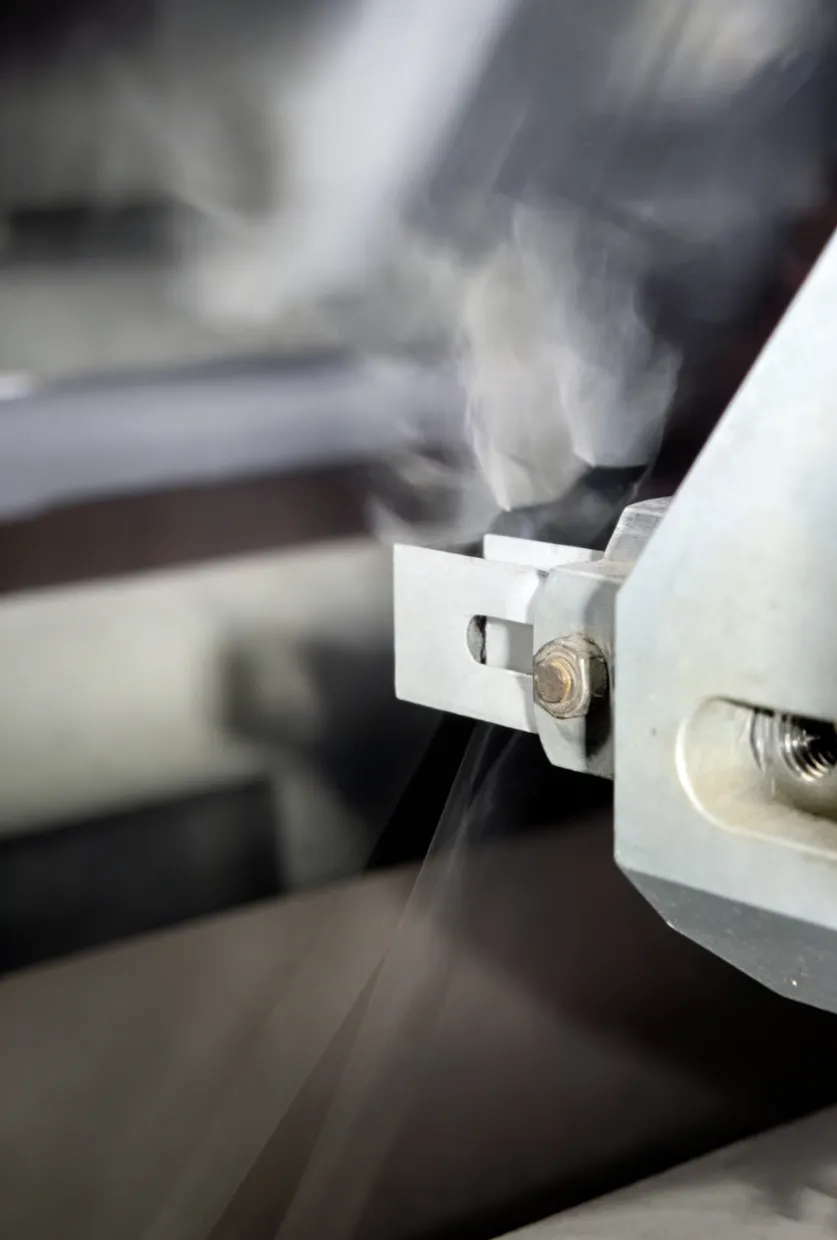
Under the high-speed cutting condition of 500 m/min, the blade operates stably as a whole and can meet the requirements of a continuous production rhythm.
V. Optimization Direction
During the actual application process, the customers reported that when cutting the slightly wrinkled film, there was some fluctuation in the uniformity of the local surface.
This phenomenon is mainly related to the following factors:
The blade remains sharp with periodic changes.
Film tension control status
Sensitivity of material flatness under high-speed conditions
Currently, the customers are adjusting the production process parameters further to optimize the blade usage cycle and operating conditions, to enhance the overall cutting consistency and stability.
VI. Summary and Application Value
This case has verified the excellent compatibility of ceramic slicing blades in the high-speed slicing of high-toughness films such as LLDPE and mLLDPE:
Through this application, the customer achieved:
The service life has been increased from approximately 3 days to approximately 7 days, representing a nearly 2-fold improvement.
The generation of fragmented powder was significantly delayed, and the cleanliness of the product was noticeably improved.
Maintain stable operation capability under a 500 m/min high-speed condition.
This solution effectively helped the customer achieve cost reduction, efficiency improvement, and enhanced production stability, providing a more reliable tool selection for the processing of high-toughness films.
Innovacera offers a variety of advanced ceramic cutting tools and customized solutions, which are widely used in film cutting, packaging processing, electronic materials, and high-end industrial manufacturing. If you are interested, please contact sales@innovacera.com.