technical ceramic solutions

News

Category Archives: News

Aluminum Nitride (AlN) Substrates

Aluminum Nitride (AlN) Substrates

The AIN crystal is a covalent bond compound with [AIN4] tetrahedron as the structural unit, and has a wurtzite structure, and belongs to the hexagonal crystal system.

ALN with outstanding insulating properties and extremely high thermal conductivity. In addition, aluminum nitride has the characteristics that it is not attacked by aluminum liquid and other molten metals and gallium arsenide, and particularly has excellent corrosion resistance to molten aluminum liquid.

Aluminum Nitride Substrate Advantages

  • Very high thermal conductivity
  • Non-toxic alternative to BeO
  • Low thermal expansion similar to Si, GaN, and GaAs semiconductors
  • High dielectric strength

Silicon Carbide Bulletproof Sheet

SiC ceramics have been widely used in petroleum, chemical, microelectronics, automotive, aerospace, aviation, papermaking, laser, mining, and atomic energy industries. Silicon carbide ceramics have been widely used in high-temperature bearings, bulletproof plates, nozzles, and high-temperature corrosion resistance. Parts and electronic equipment parts in high temperature and high-frequency range.

The advantages of silicon carbide are as follows:

  1. Good thermal conductivity;
  2. Not affected by corrosion;
  3. Will not melt at high temperature, no pollution to the liquid metal;
  4. Can be used to melt alloys rich in sodium and strontium;
  5. The appearance of the product will not stick to the slag, which is very simple to protect;
  6. The product has high hardness and is difficult to break;
  7. Cost-effective.

Alumina ceramic crucible features

Alumina Ceramic Crucibles And Insulator Tubes

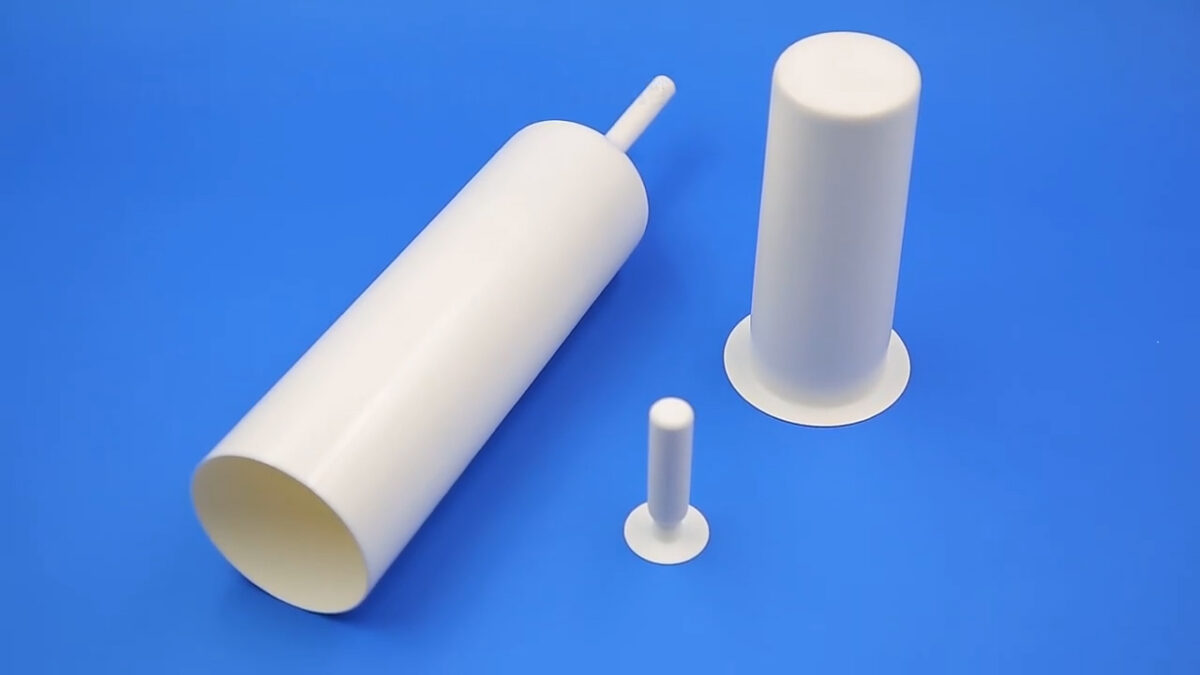
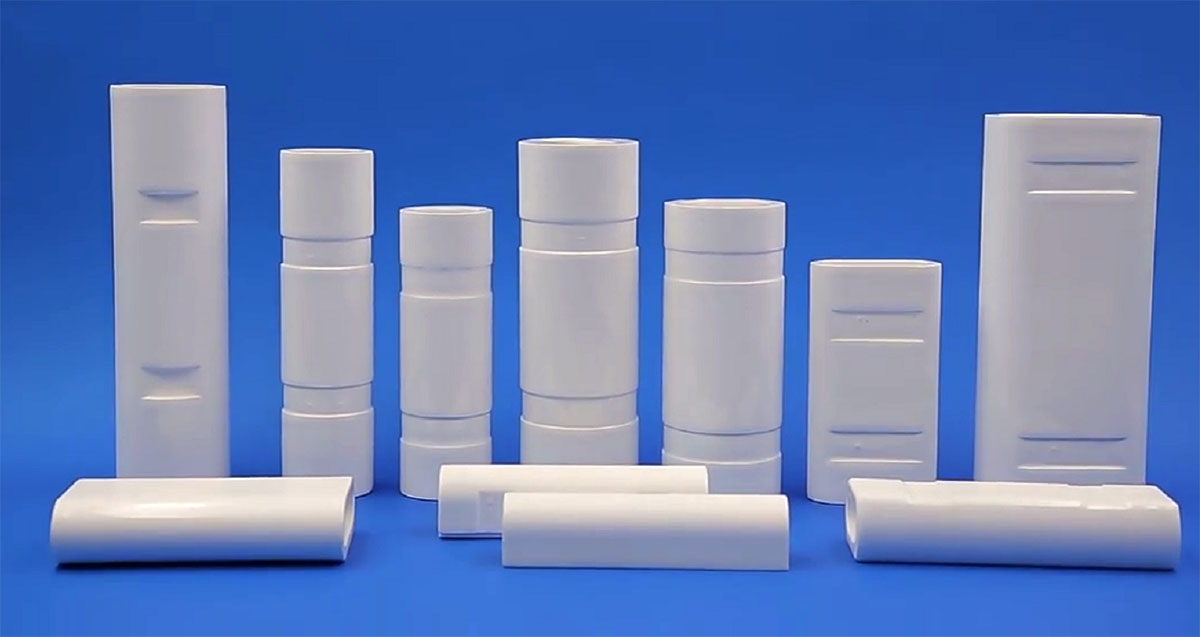
Innovacera crucible has arc alumina crucible, square alumina crucible, (tubular alumina ceramic crucible), straight (extrusion) tubular crucible, and various shaped alumina ceramic crucibles. They are suitable for various chemistry labs, metal and non-metal sample analysis and melting materials, and various industrial analyses.

Various shaped alumina corundum ceramic crucibles can be customized according to user needs.

99 porcelain uses high-quality alumina as its raw material, and its alumina content is generally above 99%. 99 alumina porcelain materials are used to make high-temperature crucibles, refractory furnace tubes, and special wear-resistant materials, such as ceramic bearings, ceramic seals, water valves, etc. Used as corrosion-resistant and wear-resistant parts.

Alumina crucible features:

  1. High-purity alumina with alumina content greater than 99%
  2. Chemical resistance
  3. High-temperature resistance, normal use at 1600°C, short-term 1800°C
  4. Resistant to sudden cold and heat, not easy to burst.

What is alumina ceramic membrane?

ceramic membrane

The ceramic membrane is an asymmetric membrane formed by inorganic ceramic materials prepared by a special process. It is divided into two types: tubular ceramic membrane and flat ceramic membrane.

The ceramic membrane has high separation efficiency, good chemical stability, acid and alkali resistance, organic solvent resistance, bacteria resistance, high-temperature resistance, pollution resistance, high mechanical strength, good regeneration performance, simple separation process, low energy consumption, and long service life.

Application fields:

  • Food industry
  • Plant (medicine) deep processing
  • Biomedicine
  • Fermentation
  • Fine chemicals

Characteristics of ceramic membrane materials:
A coating film is required on the surface of the ceramic. The coating film is to apply a filter layer. The material used depends on the pore size,100 nm is 99.995% alpha-alumina, 50-30 nm is 99.99% zirconia, and 10 nm is 99.95% Titanium oxide.

  • Support carrier: imported white corundum.
  • Microfiltration membrane: imported 99.995% purity alpha-alumina.
  • Ultrafiltration membrane: Hejal’s core invention patent, monodispersed 99.99% zirconia/titanium oxide.

How to use ceramic cavity reflectors for Nd:YAG lasers?

ceramic cavity reflectors

The ceramic reflectors used in Nd:YAG lasers are with reflection 97% at wavelength 600-1000nm and 95% reflection at wavelength 400-1200nm. Today let’s talk about the cautions when you use ceramic reflectors.

  • Do not put high pressure on it during transportation. When the size is not suitable for the pump chamber, don’t put the ceramic reflectors into the chamber by force.
  • Half glazing ceramic reflectors must be sealed with the chamber in order to avoid cooling liquid indrawing. Or the reflection may go down quickly.
  • Do not scratch the reflector during assembly and maintenance, or the reflection will go down quickly.
  • Please choose correct cooling system line & material of equipment in short-wave(eg.755nm) high-temperature system, or the metallic oxide which is dissociated from them will pollute the ceramic reflectors.

The Difference Between HTCC and LTCC

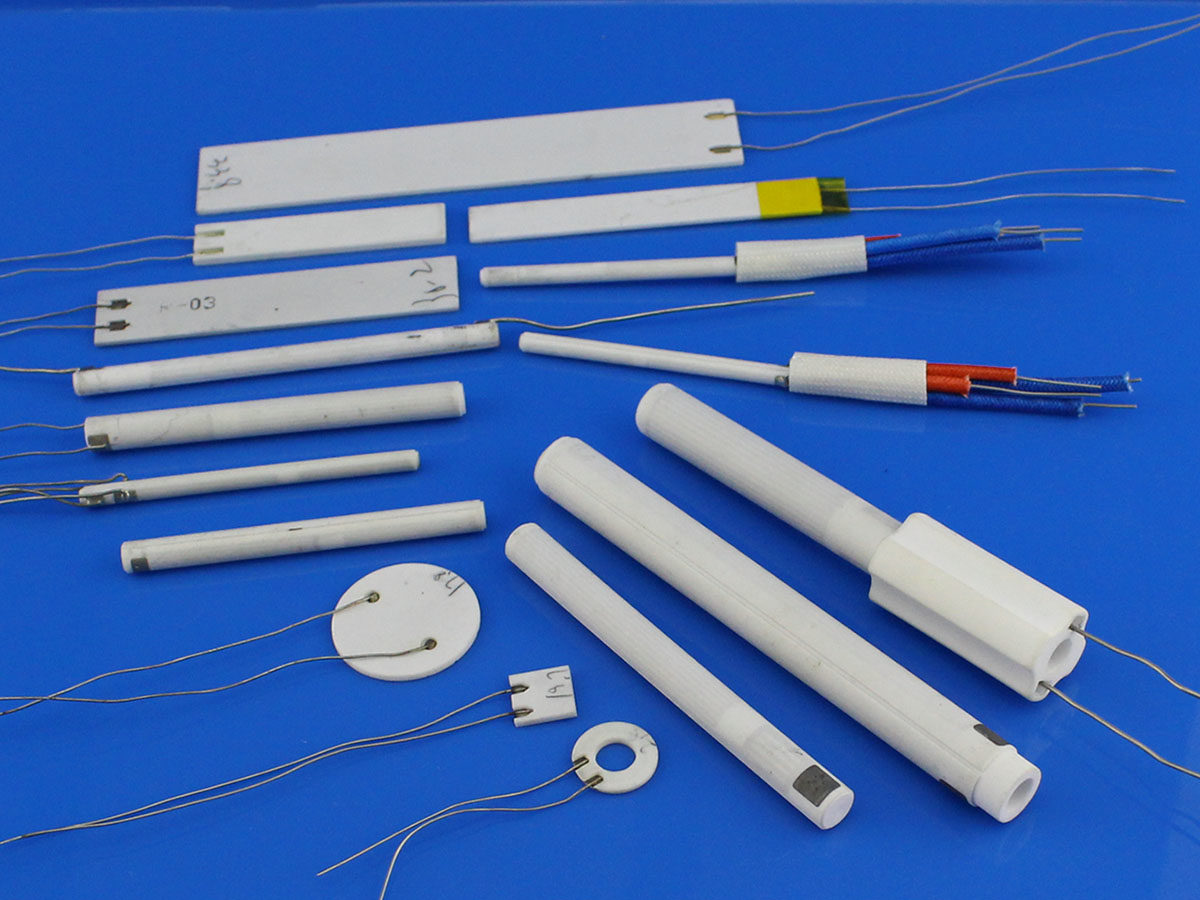
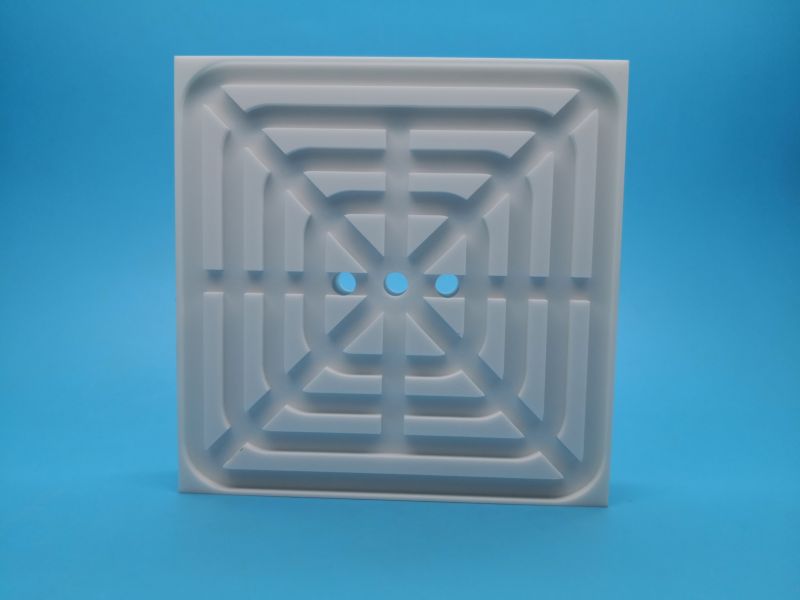
ceramic heater disc

What is HTCC? It means high-temperature co-fired ceramics which is using alumina, AlN and other ceramic material to be sintering with conductor materials (Mo, W, Mo, Mn) under high temperature of 1600°C. This is first designed by RCA company by the end of the 1950s. Due to the high temperature, it can not use low melting point metal materials like gold, silver and copper, but Mo, W, Mo, Mn.

This material is low conductivity so it will lead to signal delay. So it is not suitable to make high speed or high frequency micro-assembled electric subgrade board. But the advantages of the HTCC are High structural strength, high thermal conductivity, good chemical stability, high wiring density. It has a wide application prospect in high power micro-assembly circuit.

How about LTCC? It has a lower sintering temperature lower than 900°C, using AU, Ag, Cu high conductivity low melting point metal materials could be sintering by air. It is widely used for Rf, microwave and millimetre wave devices.

So when you choosing the ceramic material, please pay attention to what application you need so that you will know if choosing a high temperature or low-temperature ceramic. By the way, our ceramic heater belongs to HTCC.


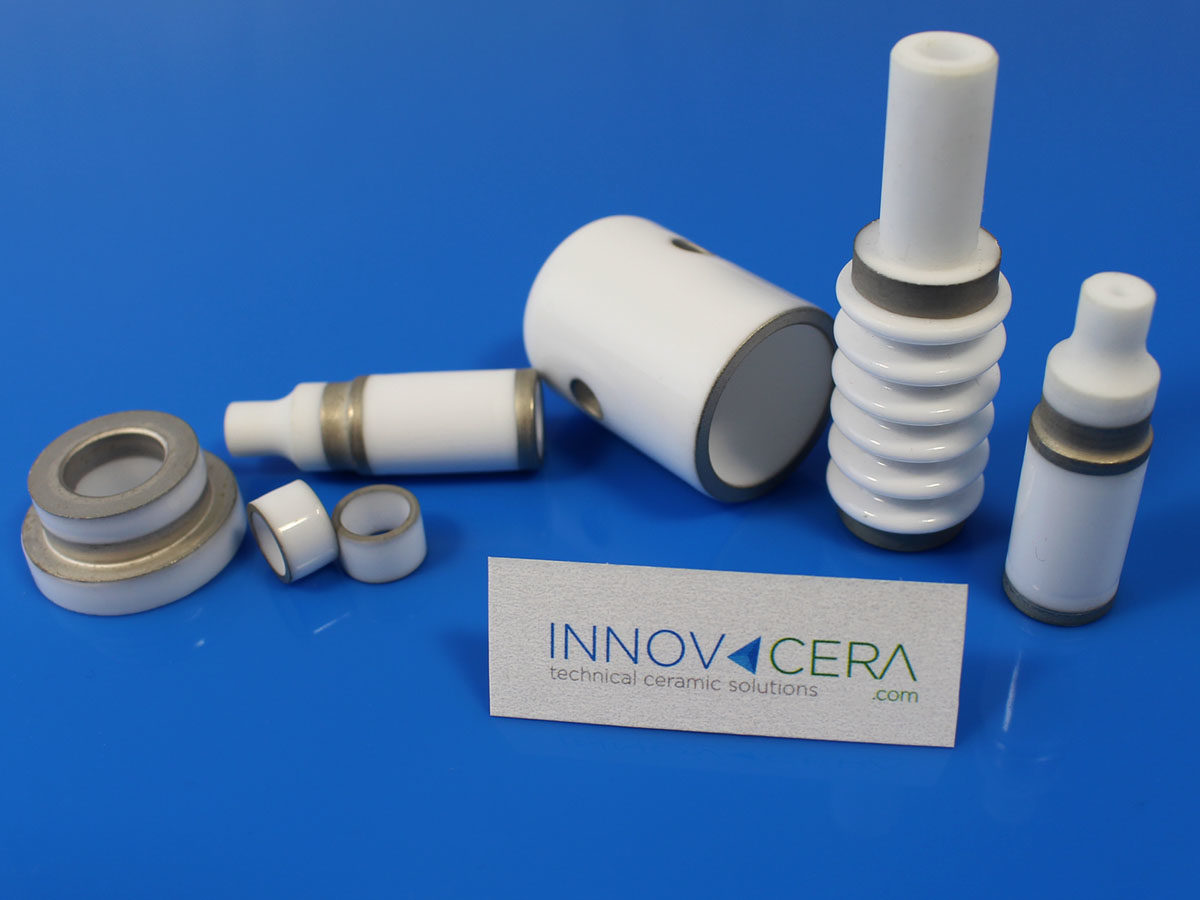
Advantages of Ceramic-to-Metal Seals

Ceramic-to-Metal

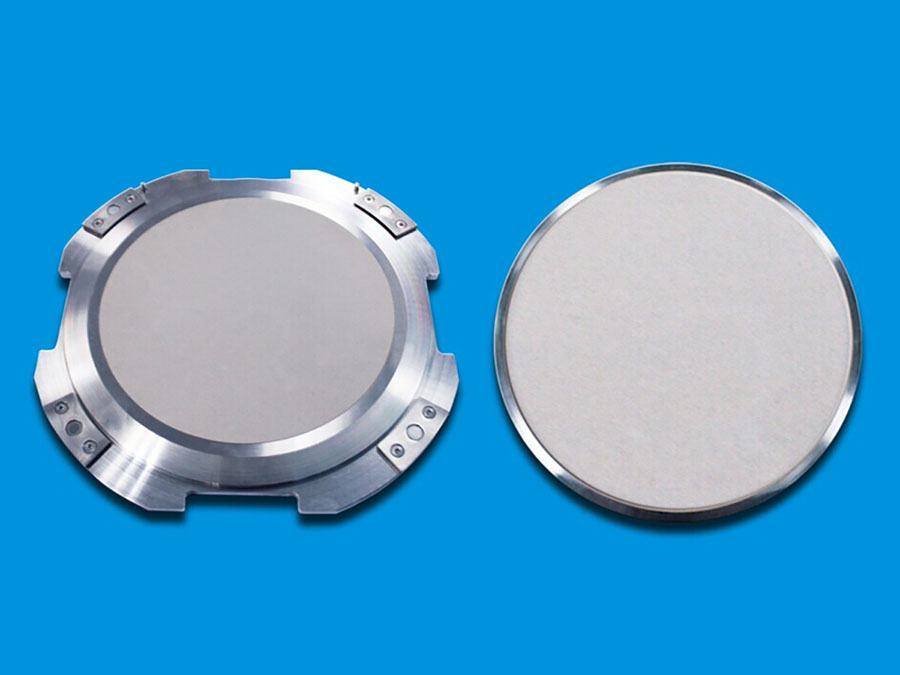
The Ceramic Surfaces for Brazing, the surface must be metallized.

Compare to Glass seal, Ceramic seal has exceptional resistance to thermal and mechanical shock as well as corrosion. While it requires more complex manufacturing processes and sophisticated engineering, the price is obviously higher.

Advantages of Ceramic-to-Metal Seals 

  • More solid, durable hermetic seal and better electrical insulation
  • Used for more harsh conditions, such as high and low (cryogenic) temperature, corrosive, high pressure, and high vacuum environments
  • High mechanical strength, less fracture when applied to high vibration and high g-load conditions
  • Shows strong bond and an excellent seal with metals and alloys, such as copper and Cu alloys (CuNi) and to nickel and Ni alloys.

Besides the above advantages, ceramic-to-metal still has more advantages to be discovered, welcome to consult with us for more details.


Why Choose Boron Nitride material as insulators in polysilicon ingot furnace?

Boron Nitride Ceramic For Vacuum Furnace

Boron Nitride is with high-temperature resistance, high thermal conductivity, and high electrical insulation. And it’s easy to machine to high precision parts with low density, non-toxic and self-lubricating properties. So it’s an ideal choice to use as a high temperature conducting material.

Boron Nitride parts in polysilicon ingot furnace can work longer than Alumina. Alumina will crack easily when the temperature goes up quickly and Boron Nitride won’t crack in the same situation.


Safety instructions of ceramic metering pump for dosing disinfectant and sanitizer in filling machine

ceramic metering pump

Safety instructions of ceramic metering pump for dosing disinfectant and sanitizer in filling machine

(1). The ceramic pump can use hot water, soapy water, alcohol, or other cleaning liquid to clean the internal remnants several times through the reciprocating work of the machine until no residue of the material comes out, then rinse with clean water. Or disassemble it for disinfection.
(2). When cleaning the internal parts, do not touch the surface of the parts with sharp tools. After cleaning, wait until the parts are dry before installing.
(3). Check if the sealing ring of each part is damaged, if any, replace the new sealing ring;
(4). Check if the screws in each part are loose, if any, re-lock.
(5). Do not flush the motor with cleaning fluid to prevent damage to the components.
(6). Try to avoid being in a state of no material for a long time when using it.
(7). It is strictly forbidden to enter hard parts or particles other than materials into the pump head assembly.
(8). For perfusion of volatile liquids, please use them in a circulating air environment.
(9). When the machine is working, it is strictly forbidden that any part of the body or other items are close to the moving parts of the machine. The factory is not responsible for the mechanical damage and personal injury caused by the machine.
(10). The equipment must be disconnected from the power supply when replacing components.
(11). It is strictly forbidden to use organic flux to clean the machine, such as gasoline, benzene, xylene, banana water, sodium hypochlorite, etc.
(12). When the machine is shut down, turn off the power switch, unplug the power cord, and clean up the miscellaneous items.


Do you know zirconia ceramic applications?

zirconia ceramic applications

Do you know zirconia ceramics?
Do you know its application?
Some brief introductions of zirconia ceramics are for your reference.
1. Zirconia ceramics have high fracture toughness, excellent wear resistance, strong bending resistance, and good thermal insulation. It has almost the same thermal expansion capacity as steel. So we can use it in structural ceramics.
2. The high-temperature performance of zirconia ceramic is excellent, so it can use to produce Heating element and refractory materials.
3. Zirconia ceramics have good electrical sensitivity so that it can be used to make oxygen sensors and solid oxides.
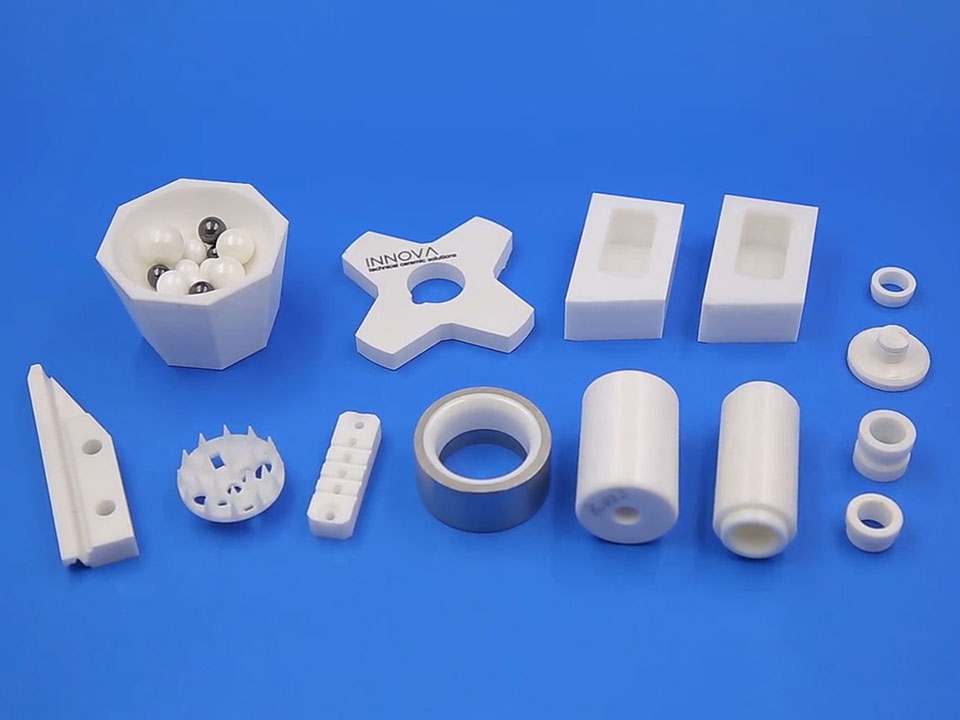
4. Besides, zirconia ceramic products include valve trim, precision balls, nozzles, tool and pump liners, plungers, blades, and so on.

Zirconia ceramics have many advantages and characteristics, and there are many applications for it. If you are interested, just contact us.


Enquiry