In today’s high-end manufacturing sector, the processing precision and stability of metal parts directly determine the quality and lifespan of the final product. With the rapid development of industrial automation and precision manufacturing technologies, the material properties of tooling fixtures, positioning components, and wear-resistant structural parts in the manufacturing process have been subject to near-stringent requirements. Therefore, high-purity alumina ceramics, as a process carrier for metal parts, are becoming the “golden key” to solving the problems of high-wear, high-corrosion, and high-cleanliness production environments.
Why Alumina Dense Ceramics?
1. Performance: Compared to traditional metals or ordinary ceramics, high-purity alumina dense ceramics, due to their unique physicochemical properties, perfectly meet the needs of high-end metal part processing scenarios.
1)Excellent Electrical Insulation and Thermal Stability:
It can operate stably for extended periods below 1600℃, and its low coefficient of thermal expansion ensures that tooling maintains extremely high dimensional stability even under conditions of drastic temperature changes.
For metal parts involving precision electronic components or requiring high-temperature molding, alumina ceramics are an ideal solution. Alumina ceramics possesses a resistivity >10¹⁴ Ω·cm at room temperature, making it an excellent insulating material that prevents electrochemical corrosion.
2)Extreme Chemical Stability and Corrosion Resistance
Alumina ceramics have extremely high chemical inertness, it can corrosion from strong acids (except hydrofluoric acid) and alkalis, and various organic solvents at room temperature, and demonstrating outstanding high-temperature oxidation resistance. So that in metal parts machining and cleaning process which need machining and acid/alkali cleaning liquid and other chemical media, alumina ceramic components can maintain long-term contact with them and will not rust or become contaminated, ensuring a high level of cleanliness on the surface of metal parts.
3)Near-Limit Hardness and Wear Resistance
Alumina ceramics have a Mohs hardness of up to 9, second only to diamond. Its dense structure (porosity <1%) allows for a bending strength of 300-600 MPa. In the manufacturing process of metal parts, whether used as a positioning guide plate for grinding media or as a wear-resistant pad for high-frequency movement, it can minimize wear rates. Data shows that its wear resistance can reach more than 170 times that of high chromium cast iron under certain working conditions, significantly extending the replacement cycle of tooling components and greatly reducing equipment downtime maintenance costs.
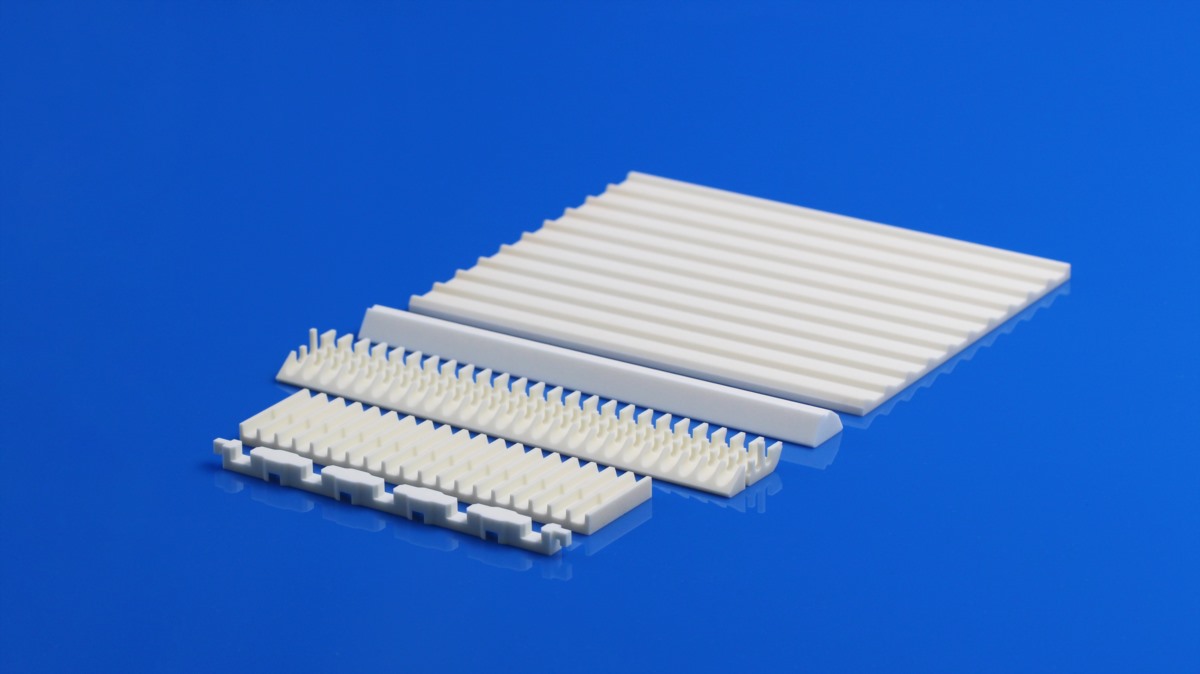
2. Cost-Effectiveness and Environmental Protection
1) Life cycle cost (LCC) optimization: The service life of high-purity alumina ceramics can be extended by 30%-60% under the same working conditions compared to other common materials. It does not need to be replaced during the metal processing, thereby reducing the downtime of manufacturing equipment, and thus significantly reducing the overall cost.
2) Improved Yield: Alumina ceramics can achieve a processing precision of 0.01mm and a surface roughness as low as Ra0.5. When used as liners or locating pins for precision stamping dies, it can effectively prevent scratches and deformation on the surface of metal parts, thereby improving product yield.
3) Green Manufacturing: The corrosion resistance of ceramic materials reduces metal debris pollution caused by equipment wear, meeting the global requirements for green and environmentally friendly production in high-end manufacturing.
Alumina Ceramic Components in Metal Parts Manufacturing Processes
1)Sizing and Guiding of Metal Precision Wires/Tubes:
Alumina ceramics has high wear resistance, so it is as dies or guide wheels can remains unchanged after long-term use. This ensures a high consistency in the metal wire diameter during the wire-drawing process, especially for high-strength metals such as stainless steel and titanium alloys.
2)Tooling and Fixtures in High-Clean Environments:
For manufacturing the metal parts used on medical or food-grade devices, it requires a very high clean environment. Alumina ceramic parts are dust-free and non-magnetic, furthermore they are extremely easy to clean and disinfect, and their surfaces do not support bacterial growth, so It ensures the high purity of the operating environment.
3)High-Temperature Resistant Support Structures:
In metal powder injection molding or brazing processes, alumina ceramic furnace lining plates or firing supports, with their excellent thermal shock resistance, ensure no deformation or adhesion to metal workpieces at high temperatures.
Need Customized Services, don’t hesitate to contact sales@innovacera.com.