technical ceramic solutions

News

Category Archives: News

Hot Glue Gun MCH Alumina Ceramic Resistor Heating Element

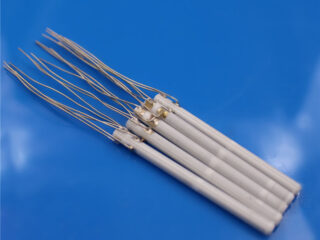
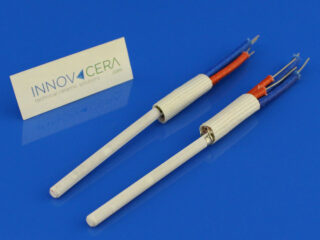
Innovacera offers MCH alumina ceramic heating element for hot glue guns. MCH heater has good characteristics such as temperature rising rapidly. safety and reliability, which is the smart and the electricity saved heater. It is mainly applied for hair curler and straightener, curling iron, face sauna, hot glue gun, soldering iron and other instruments.

Hot Glue Gun

It can be designed among 12v-220v. The design is convenient, the appearance can be designed. Temperature is rising rapidly and has the characteristic of security usage, no burning, safety and reliability.

We also produce every kind of super quality ceramic heating elements with the advantages of long service time, fast heating rate, energy-efficient and eco-friendly.

All heater should do 100% Inspections before delivery. Such as Appearance Test, Straightness Test, Dimension Test, Power-On Test, Dielectric Test and Resistance Distinguish.

If you have any new project for heating element, pls feel free to contact us.

MCH Alumina Heater Element

                                            MCH Alumina Ceramic Rod Heater


Several main applications of MCH heater

MCH HEATER

Ceramic MCH heater is widely used in various heating fields due to its advantages of lightness, safety, energy-saving, and environmental protection.

The following are the 8 main applications of ceramic heaters:
1. Toilet Bidet (water heating application)
2. Instant faucet
3. E-cigarette
4. 3D printer
5. Pellet burner
6. Automobile
7. Pellet Stove Igniter
8. Soldering iron & Station

For more information, please do not hesitate to contact us.


The main application of aluminum nitride ceramics

Aluminum Nitride Ceramics

Aluminum nitride is a new type of ceramic material with excellent comprehensive performance. It has excellent thermal conductivity and thermal shock resistance, reliable electrical insulation.

Because of the liquid phase sintering and no second phase at the grain boundary, the crystal structure is very dense and has good Resistance to plasma corrosion. A series of excellent characteristics such as low dielectric constant and dielectric loss, non-toxic and thermal expansion coefficient matching silicon, are considered to be ideal materials for a new generation of highly integrated semiconductor substrates and electronic device packaging and are widely used at home and abroad attention.

Prime Features:

  • High thermal conductivity
  • Excellent thermal shock resistance
  • Excellent insulation, >15KV / mm
  • Plasma etching resistance
  • Good shock resistance
  • Non-toxic
  • Excellent mechanical properties

Application:

  • IC packaging IC
  • Components for semiconductor equipment
  • Thermal module substrate
  • High power transistor module substrate
  • High-frequency device substrate
  • Exothermic insulation board for Thyristor Modules
  • Semiconductor laser, the fixed substrate for light-emitting diode(LED)
  • Hybrid integrated module, ignition device module

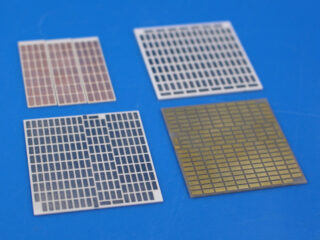
INNOVACERA has ALN substrate, ALN metalized part, ALN structural parts, dry pressed tablets, if you would like to know more, pls feel free to contact us.


Ceramic Package For Sensors

ceramic package

Ceramic is commonly used in packages due to its superior mechanical properties, suitable for small, high density, and surface mountable applications- including accelerometers and angular rate, pressure, optical and RF sensors.

Features:

  • Air-cavity type hermetic package
  • Close thermal-expansion Matching provides superior mechanical elasticity and less mechanical stress with silicon MEMS chips
  • Miniaturized, high-density surface mountable package incorporating multi-layer ceramic technology.

Ceramic Package For Sensors

Applications:

  • Accelerometers
  • Angular rate sensors (Avro sensors. vaw-rate sensors)
  • Pressure sensors
  • CMOS/ CCD Image sensors

If you have any inquiry, pls feel free to contact us.


Epoxy Resin Piston

Epoxy Resin Piston

INNOVACERA produce Silicon Carbide pistons for filling epoxy resin plant in a range of types. If you’re looking for resin plunger material, INNOVACERA is a good choice for you. The lead time is short and quality is certified.

Regular dimension for epoxy resin piston:

Item No. Material Description Size
1 Silicon Carbide Piston D60.6x148mm
Sleeve OD80x152mm
2 Silicon Carbide Piston D90.6x148mm
Sleeve ID90.6x152mm

Customized dimension is also available for us


Best comprehensive performance ceramic – Silicon Nitride Ceramic

Silicon Nitride (Si3N4) Ceramic

Silicon nitride ceramic has good properties such as high strength, high hardness, and high temperature resistance, and its hardness can reach HRA91~93; It has good thermal hardness and can withstand high temperatures of 1300~1400℃; It has a small chemical reaction with carbon and metal elements, resulting in its friction coefficient Low; It is self-lubricating which make it wear-resistant; It is strong corrosion resistance, except for hydrofluoric acid, it does not react with other inorganic acids, and has oxidation resistance at high temperatures; it also has good thermal shock resistance. It will not break even if it is rapidly cooled in the air and then heated rapidly; the high temperature creep of silicon nitride ceramics is small, and the slow plastic deformation produced under the action of high temperature and fixed load is small.

In addition, silicon nitride ceramics also have the advantages of high specific strength, high specific mode, high thermal conductivity, and excellent electrical properties. Therefore, it has special application value in extreme environments such as high temperature, high speed, and strong corrosive media. It is considered as one of the structural ceramic materials with development and application prospects. It is often the first choice in many applications that need to withstand the test. The following is an inventory of these application directions.

Regarding the application of silicon nitride, it first appeared in the 1950s, as the bonding of silicon carbide and oxide, corresponding to refractory materials, and then used to make crucibles, thermocouple tubes, rocket nozzles, etc. In the 1960s, as the demand for new materials with excellent high-temperature properties increased, the development speed of silicon nitride ceramics increased significantly. At present, the development of silicon nitride materials is focusing on the ceramics and electronics industries and continues to expand to other application areas.

1. Silicon Nitride Ceramic Bearing
Ceramic bearings have been developed rapidly since they were developed in 1972. It has been widely used in precision machine tools, automobiles, aero engines, chemical instruments, superconducting devices, and other fields. Considered as a bearing material, the most basic characteristic is rolling fatigue life. In order to evaluate the applicability of various ceramic bearings, the rolling life test was carried out with a ceramic plate. The order of rolling life is alumina < silicon carbide < zirconia < nitriding silicon. It can be seen that among the four common engineering structural ceramics mentioned above, Si3N4 is the most suitable for use as a bearing material.

2. Aerospace
In the aerospace field, the requirements for material performance are very demanding, challenging the limits of traditional materials. Si3N4 is a good choice for aerospace applications due to its high temperature strength, good fracture toughness, high hardness, high dielectric strength, excellent thermal shock resistance, and tribological properties, which can ensure excellent mechanical reliability and wear resistance. It can be used as rocket combustion chamber thrusters which are used to control satellite orbits. Because high-temperature combustion can obtain greater propulsion, so it needs the material not only light in weight but also to be able to withstand high temperatures.

3. High temperature parts of automobile engine
The Si3N4 ceramic components used in automobile engines include turbocharger turbine rotors, preheated combustion chambers, rocker arm inserts, injector connecting rods, valve guides, ceramic piston crowns, glow plugs, etc., especially the most difficult ceramic rotor products. Into certain ceramic engines, small turbine rotors have entered commercial scale production

4. Silicon nitride ceramic heat sink substrate
Although the thermal conductivity of silicon nitride ceramics is lower than that of aluminum nitride and beryllium oxide, it is significantly higher than that of general structural ceramics, and can basically meet the heat dissipation requirements of the substrate; moreover, the strength and fracture toughness of silicon nitride ceramics are much higher than others. The substrate-type ceramics, which are heat-dissipating substrate materials with excellent comprehensive performance, have been practically used in the electronic control systems of high-speed railways and electric vehicles.

In short, as a structural ceramic material with the most excellent comprehensive performance, many application directions of silicon nitride ceramic have attracted the attention of industry and laboratories. It is believed that with its unique properties, there is still broad room for silicon nitride of development in the future.


New Star In The Field Of Bulletproof Armor – Boron Carbide Ceramic

Bulletproof Armor Boron Carbide Ceramic

Boron carbide ceramic is one of the hardest ceramic materials, falling just short of diamond and cubic boron nitride. Because of its low density (∼2520 kg/m3), it has become the material of choice for body armor systems.

Below is the performance comparison of three kinds of typical bulletproof ceramics:

Ceramic Density
/(g·cm-3)
Mo Elastic modulus
/GPa
Knoop hardness Fracture toughness
/(MPa·m1/2)
Price
/(RMB·kg-1)
SIC 3.20 350-450 2500 4.0-6.4 350-400
B4C 2.50 400 2900 2.8-4.3 700-800
AL2O3 3.50 350 1800 2.8-4.5 70-80

We found that both silicon carbide and boron carbide ceramics have the characteristics of low density. The density of common alumina ceramics is about 3.5g/cm-3, while the densities of silicon carbide and boron carbide are only 3.2g/cm-3 and 2.5g/cm-3 respectively. It can be seen that under the trend of lightweight mobile armor, silicon carbide and boron carbide materials have inherent advantages.

In terms of elastic modulus, the elastic modulus of alumina ceramics is about 350GPa, while the elastic modulus of silicon carbide and boron carbide materials is about 400GPa. It can be seen that the three main armor ceramic materials all have the characteristics of high elastic modulus.

In terms of hardness, boron carbide > silicon carbide > alumina. It is worth mentioning that tungsten carbide is the key material for the production of cemented carbide. Compared with silicon carbide, the hardness of silicon carbide is twice that of tungsten carbide, the density is 1/5 of tungsten carbide, and the strength is maintained at 1400°C.

In terms of wear resistance, boron carbide > silicon carbide > alumina. Data measured by the Institute of Powder Metallurgy of Central South University show that the wear resistance of alumina ceramics is equivalent to 266 times that of manganese steel and 171.5 times that of high-chromium cast iron. It can be seen that the high hardness and high wear resistance of ceramic materials are much higher than wear-resistant steel and stainless steel.

In terms of other properties, boron carbide ceramic is unique in high-temperature thermal stability. Compared with alumina, its thermal expansion coefficient is less than 1/2. At 500°C, its thermal conductivity is one order of magnitude higher, and its thermal shock resistance is nearly 20 times higher. But their common problems are low fracture toughness and high brittleness. Therefore, the strengthening and toughening of bulletproof ceramics has always been a hot research direction. Strengthening methods mainly include multi-element ceramic system composite, functionally graded ceramics, layered structure design, etc., Its fracture toughness is poor, the tensile strength is low, and brittle fracture is prone to occur. The ceramic composite target plate must be bonded by the ceramic panel and the composite backplate to overcome the failure of the ceramic due to the tensile stress. This kind of composite target plate is usually made by bonding small pieces of ceramic panels and composite material backing plates, which can also prevent the whole ceramic panel from breaking. When the projectile invades, only a single piece of armor will be crushed.

In addition, the current prices of silicon carbide and boron carbide materials are still relatively high, and the price of boron carbide even reaches 700-800 yuan per kilogram, which is nearly 10 times that of alumina materials. However, with the development of lightweight and high-efficiency armor systems, the superiority of bulletproof ceramics has become more prominent. As the Gemini of bulletproof armor materials, silicon carbide and boron carbide materials, it is believed that there is still much room for improvement.


Why we choose SiC ceramic parts instead of metal parts in slurry pumps?

SiC Ceramic

SiC Ceramic Slurry Pump is applied for mining, metallurgy, coal power plant, chemical industry, etc. It can stand large solids, for slurry with high weight concentration- 60% for mineral slurry and 45% for ash slurry. It can work well in a position such as a ball mill pump in mining.

Advantages of SiC Ceramic Slurry Pump:
– abrasion resistance 4 times of high chrome
– corrosion resistance to PH0-12 nearly all acid and alkali
– impact resistance to large solids
– 3~8 times longer lifetime than metal pump
– energy saving and cost-reducing > 20%~40%

However, are you curious about the reason why the Ceramic Slurry Pump is more competitive than the metal pump?

The reason depends on the structure of the SiC pump, its wet parts are made with sintered SiC ceramic, which is sintered in an automatic nitriding furnace at a temperature of 1400℃.

SiC has strong corrosion resistance and good wear resistance. The slurry flows through the SiC part so that it does not corrode the pump.

INNOVACERA has 20 years of experience in this area and can provide SiC ceramics. If you have any technical questions or need sic ceramic, pls contact us at any time.


How is the ceramic tube made?

Alumina Ceramic Insulator Tubes

How is the ceramic tube made?

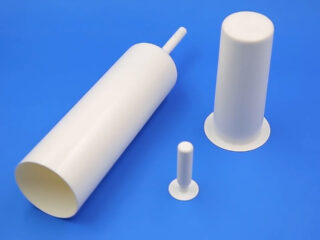
One of the methods is dry press, which is putting the power in tooling and put it into a dry press machine for a few minutes, tube is ready, this method is regularly used to make a tube.

Dry Press Manufacture:
1. Alumina power put into the tooling
2. Tooling put into the dry press machine
3. Final product ceramic tube


MCH Cereamic Heater Used For Soldering Iron

soldering iron heater MCH Cereamic Heater

A soldering iron is composed of a heated metal tip and an insulated handle. Heating is often achieved electrically, by passing an electric current (supplied through an electrical cord or battery cables) through a resistive heating element. Cordless irons can be heated by the combustion of gas stored in a small tank, often using a catalytic heater rather than a flame. Simple irons, less commonly used today than in the past, were simply a large copper bit on a handle, heated in a flame.

Solder melts at approximately 185 °C (365 °F). Soldering irons are designed to reach a temperature range of 200 to 480 °C (392 to 896 °F).

Soldering irons are most often used for installation, repairs, and limited production work in electronics assembly. High-volume production lines use other soldering methods. Large irons may be used for soldering joints in sheet metal objects. Less common uses include pyrography (burning designs into the wood) and plastic welding (as an alternative to ultrasonic welding).

The advantage of using an MCH ceramic heater in soldering iron are long service time, fast heating rate, energy-efficient and eco-friendly.

And the features are as below:
1. High resistivity
2. Moderate strength
3. Excellent electrical properties
4. Poor heat conductivity (Thermal insulator).
5. Good resistance to thermal shock.
6. Low coefficient of thermal expansion
7. Good mechanical stability.

Our quality inspections rules for the heater are below:
All heater should do 100% inspections before delivery. Such as Appearance Test, Straightness Test, Dimension Test, Power-On Test, Dielectric Test and Resistance Distinguish.

If you have more questions, pls feel free to contact us at email sales@innovacera.com


Enquiry