technical ceramic solutions

News

Category Archives: News

Why use silicon nitride in aviation and aerospace?

Silicon Nitride Ceramic Components

There are several reasons why those who work in the aviation and aerospace industry are relying on silicon nitride. First of all, while this material is relatively new to this industry, current properties that are known make it suited to this space. These ceramics are strong, durable, resistant to heat, and lightweight. They provide economic value and are versatile, having been incorporated in multiple aircraft and spacecraft parts already. As technology continues to grow and progress in this space, flight speeds and demands are only going to increase. This material is able to withstand the growth and progress in these industries over time.

Silicon nitride has many key applications throughout the aviation and aerospace industries. In the past, traditional metals were used; however, the rapid development of this field has meant that existing metals cannot stand up to the stress of supersonic and hypersonic travel. Silicon nitride is better suited to withstand the incredible temperatures that develop at high velocities.

Si3N4 is already replacing legacy materials in:

  • Ball bearings
  • Radomes
  • RF Windows
  • Engine components

The ability of silicon nitride ceramics to meet and exceed the demands and expectations of the aerospace industry only promises further growth and expansion of this material in this area.


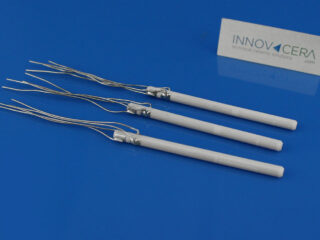
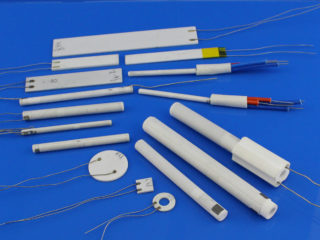
What makes the ceramic heating element the core part of a Vaporizer?

the ceramic heating element the core part of a Vaporizer the ceramic heating element the core part of a Vaporizer

Not every dry herb vaporizer is the same! Especially those using ceramic heating elements.

The ceramic heating element is a safety and healthiest option for dry herb vaporizers, so every vaper is preferred to choose those vaporizers that carry ceramic heating element.

The proponents believe that the heating element is the core of the vaporizer and primarily dictates the experience of the taste.

Let’s be more specific, when a vaper burns tobacco, marijuana, or hemp during traditional smoking to release the active component, whether it’s nicotine, CBD, or THC, they inhale the smoke. We all know that’s not good for health.

the ceramic heating element the core part of a Vaporizer

Rather than burning, Vaporizer heats the liquid, wax, or even dry herb to release a vapor, and a vaper inhales the vapor without any damage to their lungs or throat.

And why the ceramic heating element is becoming the core part of the vaporizer?

It’s mainly because:
1. Ceramic is inert, so the ceramic heating element won’t chemically interact with the herbs during the vaporization process.
2. Ceramic has melting points over 3000°F, it burns at a higher temperature than aluminum, making it the safe and cleanest option for vaporizers.
3. Good thermal conductivity, it conducts heat to maximize vapor production and flavors without reaching the point of combustion or burning the herbs.
4. Excellent corrosion resistance and wear resistance, compared to the glass heating element, it’s less fragile.


Various Purity Alumina Ceramic Materials

Alumina ceramic parts

Alumina ceramics are one of the strongest ceramics available. Alumina ceramics have excellent properties, making them one of the most widely used ceramics in structural, abrasive, and corrosive environments. In addition, high-purity alumina ceramics have excellent electrical properties and are one of the materials of choice for semiconductor chamber applications.

Widely used in chamber parts in semiconductor equipment, Wafer transfer parts, FPD manufacturing equipment parts, and Heat-resistant and electrically insulating parts


The Application of LED Ceramic Package

Ceramic Substrate

LED packaging materials are diverse, each has its own dominant field, and ceramic packaging has a dominant position in the field of the high power LED.

The application of the LED ceramic Packages are as below:
1. Headlights for automobiles
LED ceramic encapsulated light source has the advantages of shock resistance, high-temperature resistance, high reliability and so on. It is very suitable for the high-temperature harsh environment of car headlights.
2. LED Flicker
Another suitable LED ceramic encapsulated light source is the smartphone flash market, the mainstream model is an aluminium nitride ceramic encapsulated device.
3. Operating Lamp
4. Chip ceramic encapsulated base

LED Ceramic Package LED Ceramic Package

If you want to know more about our ceramic material, please feel free to contact us.


Application of Silicon Nitride Ceramic

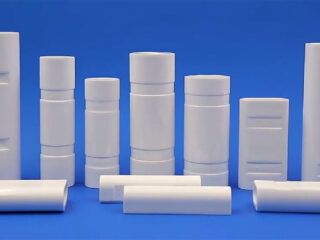
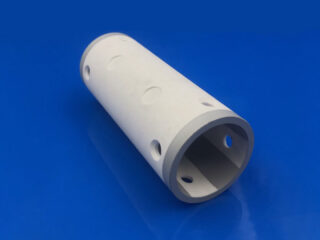
Si3N4 Ceramic Tube

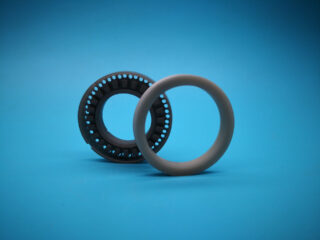
Silicon nitride is an important structural ceramic material. It is a super-hard substance that has lubricity and is resistant to wear. It has an atomic crystal structure and is resistant to oxidation at high temperatures. It is precisely because of the excellent characteristics of silicon nitride ceramics that people often use to manufacture mechanical components such as bearings, turbine blades, mechanical seal rings, and hydraulic molds.

Properties of silicon nitride:
1. Heat resistance
2. Thermal shock resistance
3. Self-lubricating
4. Corrosion resistance
5. Wear resistance


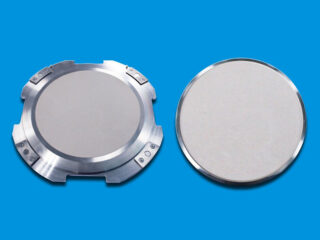
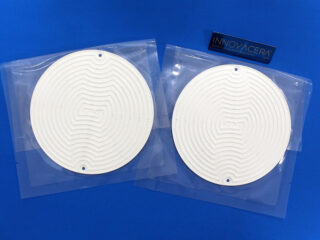
Porous Ceramic Dicing and Thinning Vacuum Chuck

Porous Ceramic Dicing and Thinning Vacuum Chuck

The dicing vacuum chuck table can be made more than 12 inches, according to customer requirements with different shape like the disc, square and irregular shape.

The size of thinning vacuum chuck can be matched with 3 inch wire, 4 inch wire, 5 inch wire, 6 inch wire, 8 inch wire and 12 inch wire. It can also be customized according to requirement.

They are widely used for Disco, ADT, K&S, Applied materials, TSK, OKAMOTO, Micro Automation as special tools for adsorption and carrying.

The main feature includes:

  • High flatness and parallelism
  • Good permeability and uniform adsorption
  • High strength
  • Long life time
  • Easy to process

Zirconia ceramic cutter blade

INNOVACERA ceramic blades are made of zirconia. Zirconia has many advantages over steel, especially for industrial applications. It has the following characteristics:
1. The blade is extremely sharp, no need to re-sharp, extremely durable.
2. Anti-corrosion, no iron smell, never rust, easy to clean. Will not bring odour to food.
3. Non-toxic, hygienic and environmentally friendly. The surface density is large, it is not easy to be contaminated with food juice, and it reduces the chance of bacteria breeding.
4. Green knives maintain the original colour and flavour of food. Material chemical properties are stable, healthy and environmentally friendly.


BN parts on vacuum high-temperature equipment

Boron nitride is used for the electrode insulation of vacuum high-temperature equipment.

Matching model: BN-99, BN-AL

Advantage:

  • Temperature resistance up to 2000 degrees;
  • Thermal shock resistance;
  • High electrical breakdown resistance (3-4 times that of alumina);
  • Corrosion resistant to carbon atmosphere (better than alumina).

Innovacera can supply large size with 500*500.
And the 10 large-scale hot press sintering furnace is the largest production of high-purity boron nitride in China.


INNOVACERA’s PBN material

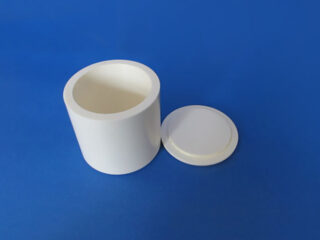
Pyrolytic Boron Nitride Crucible

PBN is with 99.99% purity and a grade of hexagonal boron nitride. It is produced by the chemical vapour deposition process to create its solid body and all the boron nitride crystals grow parallel to the surface on which the vapour is deposited. The CVD process gives this pyrolytic boron nitride an almost perfect layered structure, which leads to anisotropic thermal conductivity, making it an ideal material to make crucibles for crystal growing.

Main Features
1. The colour of PBN is between ivory and orange-brown, nontoxic, imporosity, easy processing.
2. The purity is up to 99.99%, surface densification, good gas barrier properties.
3. The strength increases as the temperature rises and peaked at 2200℃.
4. Acid, alkali, salt, and organic reagent resistance. Meanwhile, it does not react with the majority of molten-metal and semiconductor material.
5. Excellent thermal shock resistance, excellent thermal conductivity, low thermal expansion coefficient.
6. High resistance, high dielectric strength, low dielectric constant, low dissipation factor, excellent microwave and infrared ray ability
7. It’s with anisotropy in mechanics, heat, and electricity.

Properties

Property Unit Value
Lattice constant μm a: 2.504 x 10^-10   c: 6.692 x 10^-10
Density g/cm3 2.10-2.15 (PBN Crucible); 2.15-2.19 (PBN Plates)
Micro hardness (Knoop)(ab side) N/mm2 691.88
Resistivity Ω*cm 3.11 x 10^11
Tensile strength N/mm2 153.86
Bending strength ⊥C N/mm2 243.63
⊥C N/mm2 197.76
Elastic modulus N/mm2 235690
Thermal conductivity W/m*k “a” direction  “c” direction
200℃ W/m*k 60           2.60
900℃ W/m*k 43.7          2.8
Dielectric strength (at room temperature) KV/mm 56

Main Applications
* Crystal growth (VGF, LEC Crucible)
* Molecular Beam Epitaxy (MBE) Crucible
* Polycrystalline Synthesis Boat
* OLED and MBE Effusion Cell
* MOCVD Heater
* PBN Infrared Window
* Traveling Wave Tube (TWT) (PBN Support Rod)
* High temperature, vacuum equipment insulator


How to use ceramic reflectors to extend the service life?

Alumina Ceramic Reflector

Ceramic reflectors are recently used in laser pump chambers. It is made of A porous alumina ceramic of 99% Al2O3 content, used extensively for long-life laser reflectors. This material is sintered at high temperatures to achieve a controlled porosity. Its main advantages are a long lifetime.

Typical applications:
Pumping chambers for Nd: YAG lasers — low to high power, single or multiple lamp designs. Pumping chamber reflectors of this material are virtually indestructible and prove a highly cost effective alternative to metal coated types. E.g Ceramic Reflectors For Lamp-pumped Solid-state Lasers, Ceramic Reflectors For Diode-pumped Solid-state Lasers, Ceramic Reflectors For Beauty and IPL, Ceramic Reflectors for CO2 laser and so on.

However, the method of using ceramic reflectors is very important. If the method is not properly, the pump chambers and ceramic reflectors will be destroyed. The following is a key point when used in a wavelength of 755nm, the key point is to ensure that the working water temperature is 70°C, otherwise, it will contaminate the ceramic reflector (As shown below 1). If it’s a long wavelength, there is no such problem. For example, if the wavelength is 1064nm, the working temperature is about 30°.


Enquiry