technical ceramic solutions

News

Category Archives: News

Technical Ceramic For Automotive And Transportation

Technical ceramic for automotive

The automotive & transportation landscape is changing rapidly. From autonomous technologies to electric and advanced fueling systems to car sharing and connected mobility, transportation systems of the future will require new and innovative technologies, materials, and designs. 

Technical ceramics are some of the few materials available that can meet the needs of this ever changing industry.

With unsurpassed materials and manufacturing expertise, global capacity, and an unwavering commitment to quality, Innovacera is the international partner of choice for automotive & transportation suppliers requiring the unique, high performance properties of technical ceramics.

Ceramic components for automotive offer outstanding performance since they can be both electrically insulative and thermally conductive at the same time, which is not possible with metals (electrically conductive) or plastics (thermally insulative). Ceramics can also be engineered to be as strong as metals—outperforming them in many mechanically demanding transportation applications.

The ceramic application for automotive are as below, sensors, bearings, electronics, battery electrical, DC motors, head lamp, power electronics, fuel system, metal castings, water pumps

To learn more about our solutions for other transportation applications please feel free to contact us.


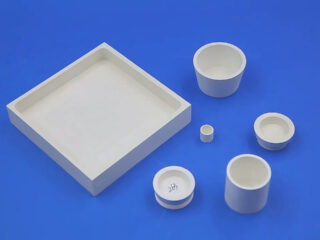
Application of Thermal Analysis Crucible

Special crucible for thermal analysis instrument

Alumina ceramic crucibles are used in scientific experiments and materials such as molten metals. Made of 95 alumina ceramics, it has high temperature and corrosion resistance and lasts longer than other materials.

Under normal circumstances, first put the object to be analyzed into the crucible or crucible, and then heat it. The heating speed and the temperature drop depend on the characteristics of the equipment and products, whether it is fast or slow, because the thermal expansion of the raw materials can cause cracks that are easy to produce, or make them grow quickly. The best way is to heat them slowly, which can extend their service life.


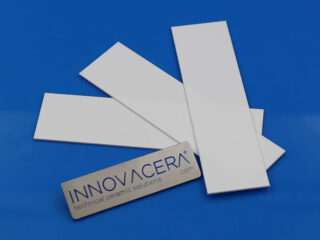
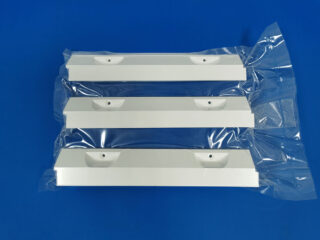
Ceramic Reflectors

Ceramic Reflector

Our ceramic reflectors work particularly well in Ruby and Nd:YAG laser pumping chambers and can be a highly cost effective alternative to metal coated reflectors. They are also extensively used as reflectors in housings for high intensity lamps.

Ceramic reflectors can be glazed both inside the cavity and the out surface using a highly reflective glaze that seals the ceramic against ingress of cooling fluids that may alter the refractive index, introduce impurities and reduce reflectance and efficiencies. Glaze can also act as filters and our yellow glazed reflectors have been used successfully in certain applications. The visible yellow colour is complementary to the spectral colours violet and indigo and effectively absorbs these wavelengths up to around 450 nm.

Reflectivity of INNOVACERA® ceramic laser reflectors

Typical applications
Ceramic Reflectors For Beauty and IPL Applications
Ceramic Reflectors For Diode-pumped Solid-state Lasers
Ceramic Reflectors For Lamp-pumped Solid-state Lasers


Ceramic Ferrule Used For Optical Fiber Communication Systems

Zirconium Oxide Ceramic Ferrule Zirconium Oxide Ceramic Ferrule

Optical fiber communication is a communication method that uses light waves as the carrier and optical fiber, ie, optical fiber, as the transmission medium. Since its appearance, it has brought about major changes in the fields of technology and society. It can be said that without it, there would be no modern communication network. Therefore, as one of the core technologies of the information age, the demand for optical fiber communication is increasing day by day. In the optical fiber communication system, a kind of precision device made of special ceramics plays a very important role, that is, the ceramic ferrule. It is the most commonly used and most precise positioning component in optical fiber communication networks and is often used in the manufacture of optical fiber connectors and optical coupling of devices.

Fiber connectors are indispensable passive components in optical fiber communication systems. They are mainly used to precisely connect the non-permanent two end faces of the equipment room, equipment and instrument room, equipment and optical fiber, and optical fiber and optical fiber in the system. The light energy output by the transmitting fiber is coupled to the receiving fiber to the maximum. Most fiber optic connectors consist of three parts: two mating plugs (ferrules) and a coupling sleeve. The two ferrules are installed into the two fiber ends; the coupling sleeve acts as an alignment, and the sleeves are mostly equipped with metal or non-metal flanges to facilitate the installation and fixation of the connector.

Therefore, the main function of the ceramic ferrule is to fix the optical fiber and realize the physical connection of the two end faces of the optical fiber, so that the optical signal can be continued to form an optical path. The materials that can be used to prepare ferrules are ceramic, metal, or plastic. Among them, ceramic ferrules are widely used. The main material is zirconium dioxide (ZrO2), which has good thermal stability, high hardness, high melting point, wear resistance, and high processing accuracy, and other features.


Industrial Application And Properties Of Aluminum Nitride Ceramics

AlN Tube

What is aluminum nitride (AlN)?

Aluminum nitride (AlN) is an interesting material. If high thermal conductivity is required, it is one of the best materials. Combined with its excellent electrical insulation, aluminum nitride is an ideal radiator material for many electrical and electronic applications.

Characteristics of aluminum nitride

Aluminum nitride is a (mainly) covalently bonded material with a hexagonal crystal structure, which is isomorphic with one of the polytype zinc sulfides called wurtzite. The space group of this structure is P63mc.

The material is stable at very high temperatures in an inert atmosphere. In the air, surface oxidation occurs above 700°C, and a surface oxide layer of 5-10nm is detected even at room temperature. This oxide layer protects the material at temperatures up to 1370°C. Above this temperature, bulk oxidation will occur. Aluminum nitride is stable in hydrogen and carbon dioxide atmospheres up to 980°C.

The material is slowly dissolved in inorganic acid by grain boundary erosion and dissolved in strong alkali by erosion of aluminum nitride grains. The material is slowly hydrolyzed in water. Aluminum nitride is resistant to most molten salts, including chloride and cryolite.

Aluminum nitride is synthesized by carbothermal reduction of alumina or direct nitridation of aluminum. Sintering aids and hot pressing are needed to produce dense industrial grade materials.

Application of aluminum nitride

The metallization method enables aluminum nitride to be used in electronic applications similar to alumina and beryllium oxide.

At present, many studies have used gallium nitride based semiconductors to develop light-emitting diodes operating under ultraviolet light, and it has been reported that alloy aluminum gallium nitride is used with a wavelength as short as 250 nm. In May 2006, an inefficient led emission of 210 nm was reported. The band gap measurement of single crystal AlN (using vacuum ultraviolet reflectivity) is 6.2 eV. In principle, this allows a wavelength of about 200 nm to be achieved. However, if such a transmitter is to become a commercial reality, there are still many difficulties to overcome.

Industrial use of aluminum nitride applications includes dielectric layers in photoelectric and optical storage media, electronic substrates and chip carriers with high thermal conductivity, and military applications.

Due to the piezoelectric properties of aluminum nitride, epitaxially grown crystalline aluminum nitride is also used in surface acoustic wave sensors (SAW) deposited on silicon wafers.


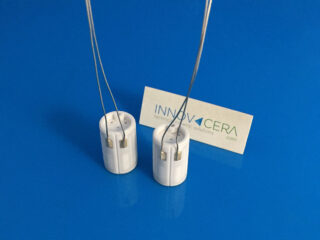
Introduction for Our New Developed AIN Heaters

New Developed AIN Heaters

The special heaters of Innovacera are flexible in design and can meet different applications requiring different construction methods. This flexibility allows the heater to be configured to a variety of shapes and sizes depending on the application.

We have developed AIN heaters which are using highly heat-conductive AIN, these heaters deliver outstanding temperature consistency through the uniform sintering of resistance-heating elements and significantly reduce metallic contamination and impurities.

The advantage of the AIN heaters:
1. Thermal conductivity equivalent to aluminium for fast and uniform thermal response
2. Watt density higher than any metal or ceramic heater technology for concentrated heat in a small area
3. Integrated RTD sensor for optimum heater temperature control
4. Dielectric strength eliminates the need for magnesium oxide insulation(MgO) layer used in metal heaters
5. Heater temperature up to 1000°C(1832°F) for high-temperature applications
6. Low porosity non-stick surface reduces the potential for process contamination
7. Chemically insert to most acid and alkaline environments
8. High mechanical strength, hardness, and wear resistance for industrial applications

Application of the AIN heaters:
1. Analytical Gas, Chromatograph Mass Spectrometer
2. Clinical Diagnostics Thermal Cyclers
3. Energy Generation Fuel Cell Reformers, Energy Conversion, and conditioning
4. Medical Incubators, Fluid Warmers, Surgical knives
5. Photonics Lasers, Biomedical Optics
6. Electronics Assembly Solder Flow
7. Semiconductor Chemical Vapor Deposition, Plasma Etch, Gas Delivery

If you want to know more about our AIN heaters, please contact us directly.


Silicon Nitride Telemetry Tooling

Silicon Nitride Telemetry Tooling is used in downhole logging operations.

Why use Silicon nitride ceramic?
1. High dielectric strength and nonmagnetic properties;
2. Light weight and high strength, fracture toughness
3. high thermal shock resistance and low coefficient of thermal expansion which helps withstand the extreme temperatures
4. Resistance to wear and corrosion chemicals

The above-mentioned special properties allow Silicon Nitride Telemetry Tooling to go deep into the ground in a complex environment containing oil and natural gas together with measuring equipment. And It is an ideal material for extending the life of components in petroleum exploration and mining operations.

Silicon Nitride Telemetry Tooling Silicon Nitride Telemetry Tooling


Which Ceramic Materials stand out in 5G smart phones?

As the 5G era is rapidly developing, the mobile phone industry will usher in a new round of reform.

Zirconia ceramic stands out as a backplane material for 5G smartphones. With the advantages of high strength, high hardness, acid and alkali resistance, corrosion resistance, wear-resistance and low thermal expansion coefficient, it is becoming an advanced material after plastic, metal and glass.

As 5G communication uses a 3 GHz or more wireless spectrum, which requires faster signal transmission, 1~100 times than 4G, makes the ceramic backplane should have no interference to signal and has incomparable superior performance.

Except for applying as a backplane for smartphones, zirconia ceramic is also been using for 5G base station filter.


BN Insulators for PVD, CVD Systems

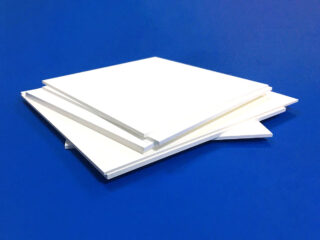
Boron Nitride Plate For PVD CVD and Plasma Systems

With properties of high dielectric strength and high chemical inertness, Boron Nitride is uniquely qualified for a variety of shielding and insulating components in a harsh and high-temperature environment, such as PVD, CVD and plasma.

Boron Nitride parts such as insulating rails, protective tubes, target frames, shields and liners ensure that the PVD arc remains constrained towards the target, preventing equipment damage. Boron Nitride is commonly used as an alternative for pyrolytic Boron Nitride in these applications.


Metal Ceramics Heater

MCH HEATER

MCH is the abbreviation of Metal Ceramics Heater. MCH refers to printing high melting point metal heating resistor paste such as metal tungsten or molybdenum manganese on a 95% alumina cast ceramic green body according to the requirements of the heating circuit design, after hot pressing together, and then reducing the atmosphere at about 1600℃ Under protection, a ceramic heating element made by sintering ceramic and metal together.

Performance and characteristics:
1. Shape, size, and resistance power can be produced according to customer requirements;
2. Good thermal uniformity and high power density;
3. Rapid heating and temperature compensation;
4. High thermal efficiency, energy-saving;
5. There is no flame, and the surface is safe and without electricity;
6. The heating sheet is resistant to acid, alkali, and other corrosive substances.

Application scope:
Widely used in daily life, industrial and agricultural technology, communications, environmental protection, industrial drying equipment, electric heating adhesives, water, oil and acid-base liquid heaters, hairdressers (hair straighteners, curlers), air heaters, cigarette lighters, Electronic cigarettes, aromatherapy stoves, heating and cooling air conditioners, instant water heaters, instant faucets and other fast heating devices, multi-function microwave ovens, ovens, ovens, clothes dryers, hand dryers, air conditioning fans, air cleaners, kettles, Coffee maker, medical treatment, infrared physiotherapy instrument, intravenous fluid heater, etc.


Enquiry