technical ceramic solutions

News

Category Archives: News

What Technology Enables Ceramics and Metals to Achieve A “Strong Combination”?

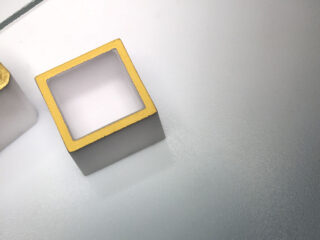
Ceramic Block DBC Substrate

Ceramics are often referred to as inorganic non-metallic materials. It can be seen that people directly position ceramics on the opposite side of metal. After all, the performance of the two is worlds apart. But the advantages of the two are too prominent, so in many cases, it is necessary to combine ceramics and metals, each showing their strengths, so the technology-ceramic metalization technology was born.

Especially with the advent of the 5G era, the power of semiconductor chips continues to increase. The development trend of lightness and high integration is becoming more and more obvious, and the importance of heat dissipation is also becoming more and more prominent. This undoubtedly puts more stringent requirements on package heat dissipation materials. In the packaging structure of power electronic components, the packaging substrate serves as a key link for connecting the upper and lower parts and keeping the internal and external circuits connected and has functions such as heat dissipation and mechanical support. As an emerging electronic heat dissipation packaging material, ceramic has many advantages high thermal conductivity, insulation, heat resistance, strength, and thermal expansion coefficient matching the chip, so it is an ideal packaging heat dissipation material for power electronic components.

Ceramics used in circuits must first be metalized. A layer of a metal film should be applied to the surface of the ceramic. And to make it conductive, then welded with metal leads or other metal conductive layers. To be connected and become one.

The most important step in the ceramic-metal sealing process is metalization, and its quality affects the final sealing effect.

Difficulties in welding ceramics and metals:
1. The linear expansion coefficient of ceramics is small, while the linear expansion coefficient of metal is relatively large, causing the joints to crack. Generally, the thermal stress of the metal intermediate layer should be handled well.
2. The ceramic itself has low thermal conductivity and weak thermal shock resistance. When welding, it is important to minimize the temperature and control the cooling rate after welding.
3. Most ceramics have poor conductivity or even non-conductivity. It is difficult to use electric welding.
4. Due to the stable electronic coordination of ceramic materials, the connection between metal and ceramic is unlikely. Need to metalize ceramics or braze with active solder.
5. Since ceramic materials are mostly covalent crystals, they are not easily deformed, and brittle fractures often occur. At present, the intermediate layer is mostly used to reduce the welding temperature, and the indirect diffusion method is used for welding.
6. The structure design of ceramic and metal welding is different from ordinary welding. It is usually divided into flat seal structure, sleeve structure, pin seal structure, and double seal structure. The sleeve structure has the best effect, and the production requirements of these joint structures are very high.

The Mechanism of the Ceramic metalization
The mechanism of ceramic metalization is relatively complex, involving several chemical and physical reactions, the plastic flow of substances, and particle rearrangement. Various substances such as oxides and non-metal oxides in the metalized layer undergo different chemical reactions and substance diffusion and migration in different sintering stages. As the temperature rises, each substance reacts to form an intermediate compound, and when it reaches a common melting point, it forms a liquid phase. The liquid glass phase has a certain viscosity and at the same time produces plastic flow. After that, the particles are rearranged under the action of the capillary. Driven by energy, atoms or molecules undergo diffusion and migration, crystal grains grow, pores gradually shrink and disappear, and the metalization layer is densified.

The Process of Ceramic Metalization
1. Substrate pretreatment. 
2. Preparation of metalization slurry. 
3. Coating and drying.
4. Heat treatment. 

The specific method of ceramic metalization
1. Mo-Mn method
2. Activation Mo-Mn method
3. Active metal brazing
4. Direct Bonded Copper (DBC)
5. Magnetron sputtering

Influencing factors of ceramic metalization
1. Metalization formula
2. Metalization temperature and holding time
3. Microstructure of metalization layer
4. Other factors


High Pressure Ceramic Piston Plunger For Waterjet pump

Ceramic Piston Plunger

Ceramic Piston Plunger Fits General Pump and Interpump. The Ceramic Plungers are mostly made of alumina (Al2O3) or zirconia (ZrO2) ceramics which have superior wear resistance, corrosion resistance, high-temperature resistance and impact resistance properties etc. When using ceramic plungers instead of tungsten carbide you get longer life on HP-seals and the plunger itself.

And a high surface finish will increase the wear life of parts, allowing for lower replacement costs and better performance. INNOVACERA decades of experience in tight tolerances and high surface finishes have helped us build relationships.


Alumina is Harder than Zirconia, So It Must be More Wear Resistant?

99 Alumina Ceramic Parts

Although it’s commonly accepted that hardness equates with wear resistance, it’s not always the case. In sliding wear environments, hard counter faces that do not interact with each other are an advantage.

The engineering grades of Alumina are typically 25-50% harder than zirconia grade so in sliding wear environments or pure abrasive wear, where third body abrasive wear particles are present, alumina often outperforms Zirconia.

However, in erosive wear environments such as those caused by an abrasive slurry impacting a wear part such as an oilfield valve, Zirconia can be the best performer. Its high toughness reduces the spread of impact cracks and the microfracture of the surface which generates erosive wear debris and surface damage.

When running an engineering ceramic against a dissimilar material it’s not always the case that the softer material performs poorly. Y-TZP running against Y-TZP has been shown to be a very poor wear surface combination, whereas, Y-TZP running against cast iron provides a better overall wear performance than the harder, alumina/cast iron combination.

Although it’s beyond this article to delve too deep into the tribology of ceramic interfaces, in Zirconia on Zirconia contact it’s the low thermal conductivity of the Zirconia that can be a negative factor, as the frictional heat generated in like on like sliding does not dissipate from the surface and the surface hardness decreases with a follow on increase in wear-related damage.


Do you know the five major applications of silicon nitride ceramics?

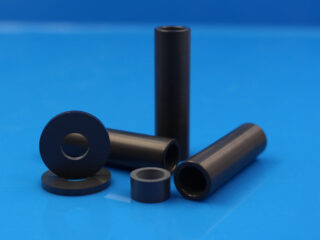
Silicon Nitride Ceramic Components

Silicon Nitride Ceramic Components

Silicon nitride ceramics have high temperature resistance, corrosion resistance, wear resistance, and unique electrical properties and are considered one of the most promising high-temperature structural ceramic materials.

Aircraft engine
The mechanical structure of the future aero engine will be simpler than the existing type, with fewer components, and operating at a higher turbine inlet temperature and component load. Its reliability and component life will also be improved. Turbine materials must meet the requirements in terms of tensile strength, creep resistance, high temperature corrosion resistance, and impact damage resistance. The use of ceramic materials with better thermal performance can reduce the amount of cooling air required and significantly increase the gas temperature.

In the past, large aircraft engines mainly used nickel-based high-temperature materials, and silicon nitride materials have higher strength, better creep strength, and oxidation resistance than nickel-based heat-resistant alloys at temperatures above 1000°C and have a small specific gravity. It is only 40% of the heat-resistant alloy, which can meet future aviation engines’ requirements to reduce weight and fuel consumption.

Mechanical industry
Silicon nitride ceramics can be used as turbine blades, mechanical seal rings, high-temperature bearings, high-speed cutting tools, permanent molds, etc. in the machinery industry. Many devices in the traditional machinery industry use metal materials. Since the metal will be corroded, the reliability and service life of these devices is greatly affected. Silicon nitride ceramic materials have excellent wear resistance, corrosion resistance, and high temperature thermal shock resistance. Can replace metal materials in the field of machinery industry.

For example, silicon nitride can be used to manufacture ball bearings with lightweight and high rigidity. It has higher precision than metal bearings, generates less heat, and can operate in higher temperatures and corrosive media. The steam nozzle made of silicon nitride ceramics has the characteristics of wear resistance and heat resistance, and no obvious damage after being used in a 650°C boiler for a few months, while other heat resistance and corrosion resistant alloy steel nozzles can only be used for 1-2 months under the same conditions.

Superfine grinding
Silicon nitride ceramics are covalent compounds whose bonding mainly relies on covalent bonds between atoms, and the prepared material itself has high hardness and wear resistance. Silicon nitride has high hardness, second only to a few super hard materials such as diamond and cubic boron nitride, and has low friction coefficient and self-lubricating properties. In the ultrafine powder and food processing industries, silicon nitride ceramic grinding balls’ performance is higher than traditional grinding balls, with higher hardness and superior wear resistance.

Ceramic substrate
With the rapid development of information technology, integrating integrated circuits is getting higher and higher, and the wiring density is getting higher and higher. If the electronic package substrate cannot dissipate heat in time, a large amount of heat will accumulate on the integrated circuit, which will eventually lead to its failure and damage. Therefore, the thermal conductivity of the substrate is extremely important. Silicon nitride ceramics are structural ceramic materials with the best comprehensive performance. The theoretical thermal conductivity of single crystal Si3N4 can reach more than 400W· M-1, which has the potential to become a high thermal conductivity substrate. Due to its excellent mechanical properties and high thermal conductivity potential, Si3N4 ceramics are expected to make up for the shortage of existing aluminum oxide, aluminum nitride, and other substrate materials have a great market prospect in the application of electronic packaging substrate.

Metallurgical field
Silicon nitride ceramic materials have excellent chemical stability and excellent mechanical properties. They can be used as components on thermal equipment such as crucibles, burners, aluminum electrolytic cell linings, etc. in the metallurgical industry. Silicon nitride ceramics have good oxidation resistance. The oxidation resistance temperature can be as high as 1400°C. It is stable in a dry oxidizing atmosphere below 1400°C, and the use temperature can reach 1300°C. And silicon nitride material can be used in the environment of rapid cold and rapid heat, so it also has a very wide range of applications in the metallurgical industry.


BN parts are used on semiconductor equipment

BN parts on semiconductor equipment

BN parts are used on semiconductor equipment for insulating, heat dissipation, or crystal epitaxial growth, such as PVD/CVD/MOCVD

Matching model: BN-99, BN-ALN

Advantages:
• High resistance
• High-temperature resistance
• High resistance to electrical breakdown
• No pollution
• Preservative
• Easy to process


Pyrolytic Boron Nitride Heater

PBN-PG Heating Element

At present, conventional insulating materials have disadvantages such as the inability to withstand high temperatures, low purity, gas release at high temperatures, poor toughness, no insulation at high temperatures, and easy corrosion. PBN insulating sheets can solve these problems.

Features:
1. It can withstand up to 2300°C in a vacuum and up to 2700°C in an ammonia atmosphere;
2. High purity, no gas impurities will be released at high temperature (>99.99%);
3. Good toughness;
4. Good high-temperature insulation (volume resistivity 3.11×10¹¹ Ω•cm);
5. Strong chemical inertness, resistance to corrosion by acids, alkalis, salts, and organic solvents;
6. The thermal conductivity in the c direction is low, which can block the heat from being conducted downwards and reduce the heat loss.

Application:
Insulation pads, gaskets, brackets, etc. used in a vacuum, high temperature, MBE equipment, and other fields.


Seven Advantages Of Boron Nitride Nozzles

hot pressing machinable boron nitride ceramics

Hexagonal Boron Nitride (HBN) is a unique material that has a wide range of industrial applications. One common uses of this material are high-temperature nozzles in molten metal applications.

The use temperature of boron nitride ceramic crucible in a vacuum is 1800 degrees, and the use temperature under atmosphere protection is 2100 degrees. Nitrogen or argon atmosphere is the best and has the longest life. The boron nitride crucible is resistant to thermal shock, and will not crack when it is rapidly cooled at 1500 degrees. It will not crack if it is taken out of the furnace at 1000 degrees for 20 minutes and blow and quenched for hundreds of times.

Here are seven advantages of boron nitride nozzles:
1, Non-Clogging – Most molten metals do not wet HBN, resulting in nozzles that don’t clog and cause costly aborted runs.
2, Ultra-High Temperature Capability – Some Boron Nitride grades are good to 1800C in a vacuum and non-O2 atmospheres, far higher than current ceramic nozzles options.
3, Precise Parts – HBN is highly machinable which means it can easily be machined into intricate forms, including threads, fine holes, and sharp radii. Pieces can efficiently be machined to very tight tolerances meaning that every nozzle is the same, allowing the critical proper start to each atomizing run. The fine grain structure helps to prevent chips or cracks of typical ceramic nozzles.
4, No Preheating – It is almost impossible to thermal shock and HBN nozzle. This is a problem for typical alumina and zirconia grades used extensively today. This also means BN does not need to be preheated, resulting in time and energy savings.
5, Wear Resistant – Composite grades have excellent wear and corrosion resistance that are unmatched in pure HBN grades.
6, Customizable Properties – The thermal conductivity of HBN can be tailored by changing the grade used. From low (5 W/mK) to high (130+ W/mK), HBN offers a diverse range of properties that can be especially useful for metal freeze-off or pre-heating.
7, Easy Prototyping – Because HBN is machinable there are no tooling charges and small prototype runs can be made efficiently. This allows for easy development of different designs for different operating conditions.

INNOVACERA supply all shapes of ceramic nozzles, welcome inquiry.


Application of aluminum nitride substrate

Aluminum nitride products are attracting more and more attention as a new generation of high thermal conductivity materials due to their superior thermal conductivity, high insulation, and thermal expansion rate close to silicon.

Aluminum Nitride Substrate

Features:

  1. High thermal conductivity: about 7 times the thermal conductivity of alumina
  2. Thermal expansion rate: thermal expansion is close to silicon, and the reliability of the mounting of large silicon wafers and heat-resistant cycles
  3. Electrical characteristics: high insulation, low dielectric coefficient
  4. Mechanical properties: superior to the mechanical properties of alumina
  5. Corrosion resistance: stronger than molten metal corrosion resistance
  6. Purity: low impurity content, non-toxic, high purity

Application:

  • High-power transistor module substrate
  • High-frequency device substrate
  • Heat-radiating insulation board for turn module
  • Fixed substrate for semiconductor laser and light-emitting diode
  • Hybrid integrated module, the ignition device module
  • IC package
  • Thermal module substrate
  • Some products for semiconductor production equipment

New Inorganic Material – Aluminum nitride (AlN) ceramics

The main crystal phase of aluminium nitride ceramics is aluminium nitride powder, which has the following characteristics:

Aluminum Nitride Ceramic Characteristics

1. What is aluminum nitride?

  • Aluminium Nitride (AIN) is one kind has the six-party wurtzite structure form of refractory compounds
  • The colour is grey
  • Aluminium nitride crystals are covalently bonded compounds with Warzite structure based on [AIN4] tetrahedral structure
  • The density of 3.26 g/cm3
  • Lattice constant a = 3.11, c = 4.980
  • The decomposition temperature is 2480℃ under normal pressure

Aluminum Nitride Ceramic

Advantages of aluminum nitride ceramic materials:

  • The strength of room temperature is high and decreases slowly with the increase of temperature
  • It has a high thermal conductivity
  • Low dielectric constant and dielectric loss
  • Low coefficient of thermal expansion
  • Good chemical stability and non-toxic

Aluminum Nitride Ceramics

2. Preparation of aluminium nitride powder

The excellent properties of Aluminum nitride ceramics are based on the high quality of their powders. There are many methods to prepare aluminium nitrite powder, such as direct nitridation, carbide reduction process, energetic ball milling, Self-propagating high-temperature synthesis, in situ autoreactive syntheses, plasma chemical synthesis, chemical vapour deposition method, solvothermal method and organic salt cracking.

3. Forming process of Aluminum nitride ceramic

Aluminium nitride ceramic formin process mainly includes: dry forming and wet forming.
1) Dry Formingis suitable for products with simple shapes and high cost, including the following two moulding methods:

  • Ordinary die forming
  • Cold isostatic forming

2) Wet Formingis suitable for products with complex shapes, low cost and simple process, mainly including the following moulding methods:

  • Tape casting
  • slip casting
  • Injection moulding
  • gel casting

Sintering method of aluminum nitride ceramics

  • Add sintering assistant
  • Spark Plasma Sintering (SPS)
  • Microwave Sintering
  • Pressureless singtering

4. Applications of aluminum nitride ceramics
1) Based on higher volume resistivity, insulation strength, thermal conductivity, lower thermal expansion coefficient and dielectric constant, it can be used for Insulation substrates for high-power semiconductor devices, heat dissipation substrates for large-scale and VLSI circuits, and packaging substrates.

Aluminum Nitride Ceramic Substrates

2) Based on high acoustic conduction velocity characteristics, can be used in Surface wave device in a high-frequency information processor.

Surface wave device

3) Based on high fire resistance and high temperature and chemical stability, can be used to make work under 1300 ~ 2000 ℃ of the crucible

crucible

The research of aluminium ammonite ceramics is still in the progress. If the synthesis cost of high-quality powders can be greatly reduced, the densification sintering at low temperature can be realized, and high-quality fluidized substrates can be obtained stably, it will be more and more widely used in the microelectronics industry and other high-tech fields.

INNOVACERA engages in R&D, manufacturing and selling the products of advanced ceramic materials, including Aluminum Nitride, Alumina, Zirconia, Boron Nitride, Silicon Nitride, Machinable Glass Ceramic, and other advanced materials. Through different manufacturing processes, we supply metallized ceramic components, alumina heater, ceramic pump components, and other ceramic components as request.

To find out more about aluminium nitride or any of our other products or services, please feel free to contact us today.
sales@innovacera.com www.innovacera.com


Q&A about aluminum nitride

1. Different applications in general
* High brightness high power LED
* Microwave wireless communication and semiconductor equipment
* Automobile
* Energy
* IGBT Module
* IPM Module
Different applications in general

2. Do you have some references for the different applications?
We don’t have detailed information.
With the development of the electric components, smaller but better performance and lower energy cost elements are pressing demand. The high dense, high power and a high-frequency component may generate as much as 100W/cm2 heat, such as high bright LED, MOSFET, IGBT and laser elements. The longer those elements work, the more heat accumulated. Due to the limited room in the package, if the heat could not have been diffused in time, it would highly affect the elements’life, performance and reliability. So, it is important to introduce good cooling package design and high thermal conductivity ceramic materials into these industries.

3.Can supply pictures of some products in the application?
* IGBT Module
IGBT Module

* High brightness high power LED
Automobile headlights; Industrial lighting; deep UV lamp; LCD background light source; Indoor agricultural lighting.

High brightness high power LED

* Components for semiconductor equipment
Components for semiconductor equipment

4. Do you have some standard dimensions or similar product descriptions?
* ALN substrate is available in regular sizes

Substrate shape Size Range Thickness
Square ≤114mm 0.17-2mm
Round ≤Dia120mm 0.25-2mm

ALN substrate are available in regular sizes

* ALN metallized HTCC products
ALN Metallized HTCC(High temperature co-fired ceramic) is a kind of high thermal conductivity and high-density ceramic substrate/package made with the designed circuit in/ on it. The circuit is tungsten metal and the insulating base is ALN ceramic. The process including via punching, via filing, circuit printing, isostatic laminating, high-temperature sintering and so on. Aluminium nitride HTCC technology is suitable for high-density packaging modules and components. It is of great significance to reduce the size and weight of modules and improve the integration of modules. It adapts to the requirements of the military, electronic, aerospace, missile and other military electronic equipment in miniaturization, high performance, multi-function, high reliability and low cost

ALN metallized HTCC products

* AlN structural parts/ Dry pressed tablets
We can provide AlN parts according to the customer’s design to meet different application demands.
AlN structural parts

5. Have you already supplied this material to Europe / Germany?
Yes. Like Britain, Germany, Italy


Enquiry