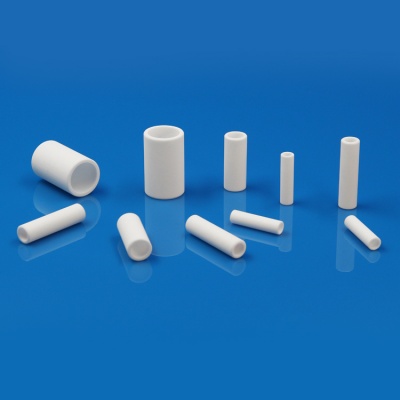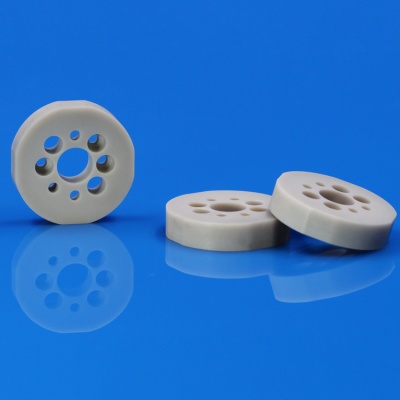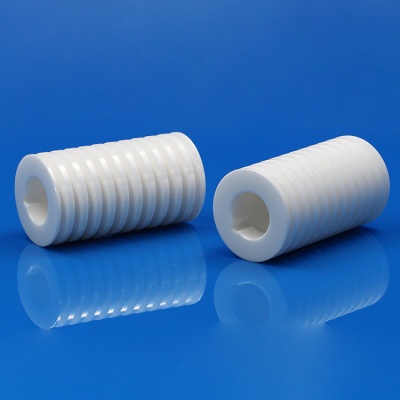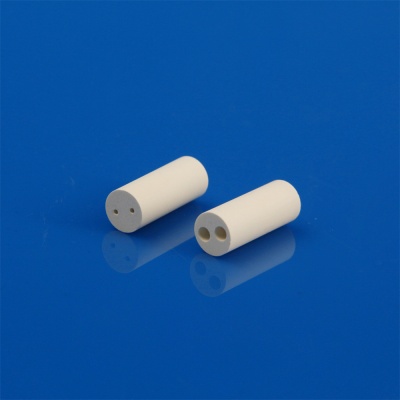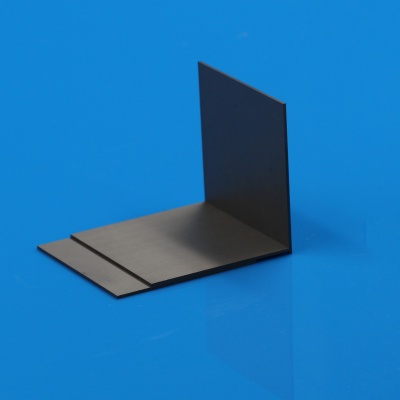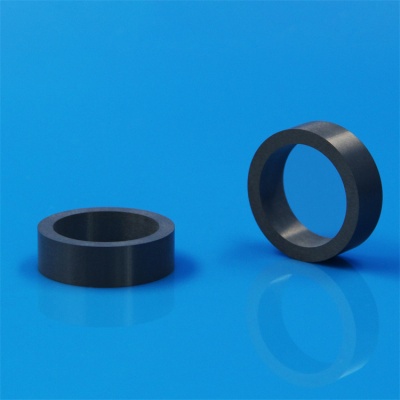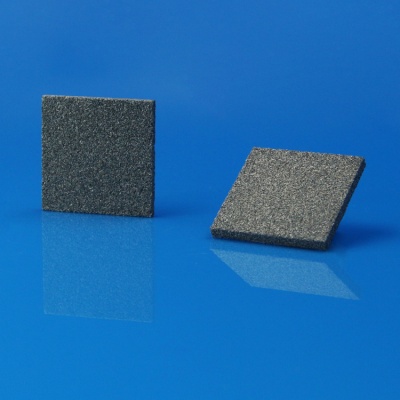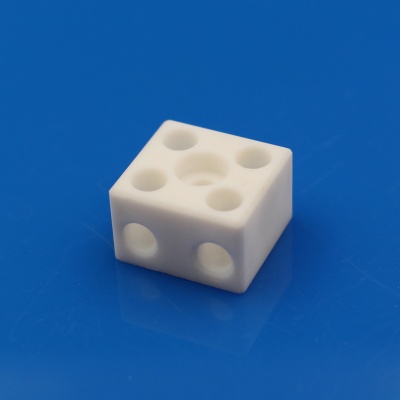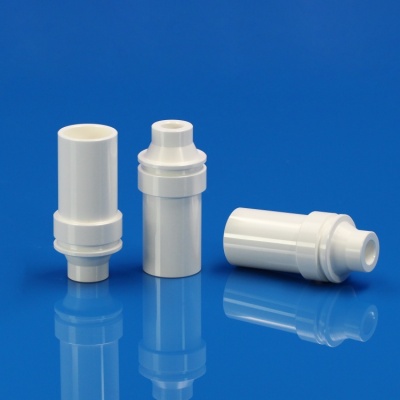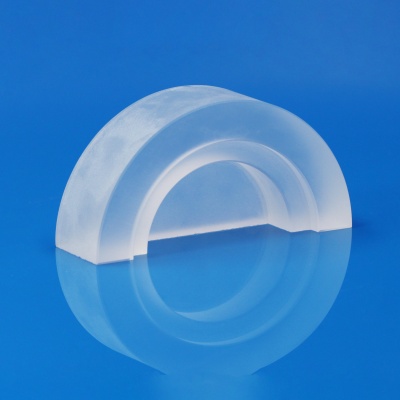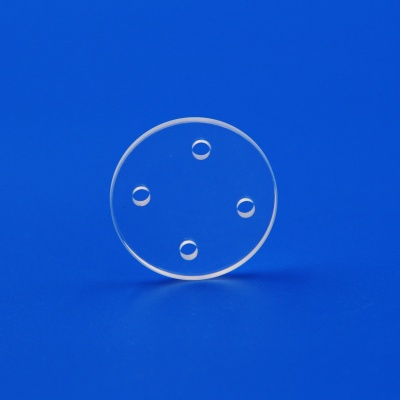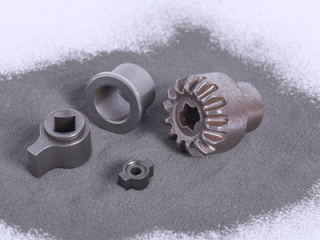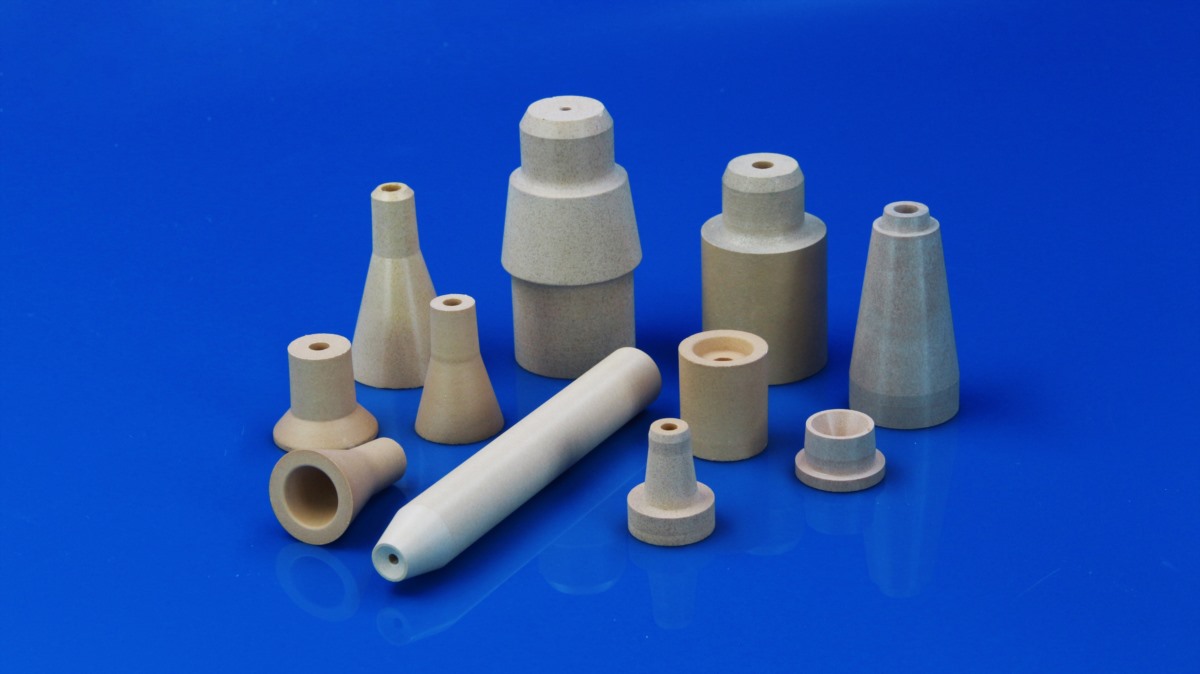
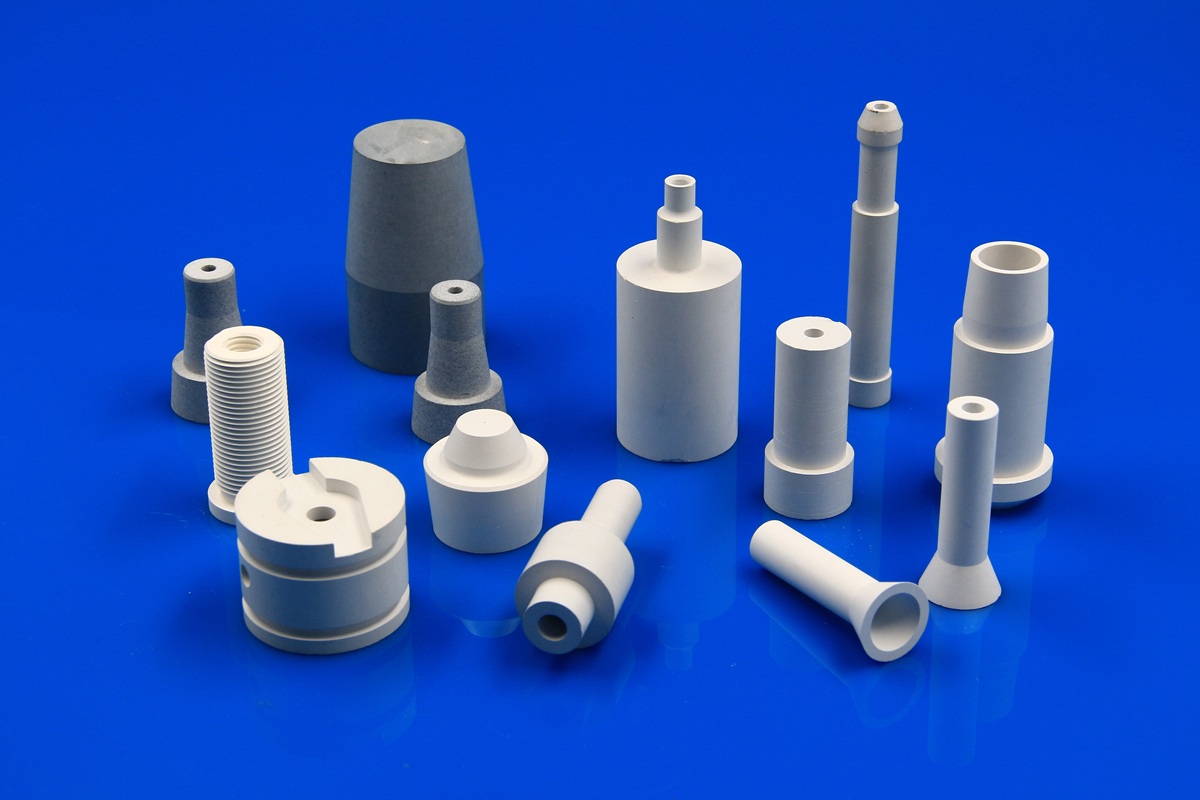


Mainly used in powder metallurgy industry or 3D printing, gas atomization process production of metal powder, such as iron powder, aluminum powder, copper powder, nickel-based alloy powders stainless steel, welding powder, Fe-Si aluminum, Fe-Si nickel, aluminum, iron, boron, etc.
Prime Features of Boron Nitride Gas Atomizing Nozzles
-Max using temperature: 1800°C
-Applicable environment: air, vacuum, or atmosphere protection environment
-Metal corrosion resistance in high temperature
-Non-bonding and non-reaction with metal liquid
-Wear-resistant and erosion-resistant to metal liquids
-High thermal shock resistance
-The formula can be designed according to customer’s using environment.
Material Properties
| Properties | Units | BMA | BSC | BMZ | BSN |
| Main Composition | - | BN+ZR+AL | BN+SIC | BN+ZRO2 | BN+SI3N4 |
| Color | - | White Graphite | Greyish-Green | White Graphite | Dark Gray |
| Density | g/cm3 | 2.25-2.35 | 2.4-2.5 | 2.8-2.9 | 2.2-2.3 |
| Three-Point Bending Strength | MPa | 65 | 80 | 90 | 150 |
| Compressive Strength | MPa | 145 | 175 | 220 | 380 |
| Thermal Conductivity | W/m·k | 35 | 45 | 30 | 40 |
| Thermal Expansion Coefficient (20-1000℃) | 10-6/K | 2 | 2.80 | 3.5 | 2.80 |
| Max Using Temperature
In Atmosphere In Inactive Gas In High Vacuum (Long Time) |
(℃) | 900
1750 1750 |
900
1800 1800 |
900
1800 1800 |
900
1800 1800 |
| Room Temperature Electric Resistivity | Ω·cm | >1013 | >1012 | >1012 | >1013 |
| Typical Application | - | Powder Metallurgy | Powder Metallurgy | Metal Casting | Powder Metallurgy |
| High Temperature Electrical Furnace Components | - | √ | √ | √ | |
| Metal Vaporize Crucible | |||||
| The Container of Metal
or Glass Melting |
- | √ | √ | √ | |
| The Casting Mould Components of The Precious Metal and Special Alloy. | - | √ | - | - | |
| High Temperature
Support Part |
- | √ | - | √ | |
| Nozzle and Transport Tube of The Melting Metal | - | √ | √ | √ | √ |
| Nitrides Sintering
(Sagger and Setter Plate) |
- | - | - | - | √ |
Prime Features of Zirconia Gas Atomizing Nozzles
-Max using temperature: 2200°C
-Applicable environment: air, vacuum, or atmosphere protection environment
-Metal corrosion resistance in high temperature
-Wear-resistant and erosion-resistant to metal liquids
-High thermal shock resistance
-The stabilizers and grains combination can be designed according to customer’s using environment.
Technical Indicators
| Indicators | Item | Units | MSZ-H | MSZ-L |
| Main Composition | ZrO2 | % | ≥95 | 95-96 |
| Al2O3 | % | ≤0.2 | ≤0.2 | |
| SiO2 | % | ≤0.4 | ≤0.4 | |
| MgO | % | ≤2.9 | ≤2.9 | |
| Fe2O3 | % | ≤0.1 | ≤0.1 | |
| TiO2 | % | ≤0.1 | ≤0.1 | |
| Physical | Color | - | Yellow | Yellow |
| Density | g/cm3 | ≤5.4 | 5.45-5.60 | |
| Porosity | % | ≤18.5 | ≤8 |
Declaration: This is an original article of INNOVACERA®. Please indicate the source link when reprinting: https://www.innovacera.com/product/boron-nitride-and-zirconia-gas-atomizing-nozzles-for-powder-metallurgy-or-3d-printing
Frequently Asked Questions
Why Choose Boron Nitride or Zirconia for Gas Atomization? How Do They Prevent Molten Metal Freezing?
In gas atomization for 3D printing and PM powders, standard nozzles suffer thermal shock fracturing and nozzle freeze-up caused by liquid metal wetting. INNOVACERA’s Boron Nitride (BN) composite nozzles (rated up to 1800°C) feature superior non-wetting properties and low thermal conductivity, eliminating metal adhesion, clogging, and skull formation. For extreme melts up to 2200°C, our Magnesia-Stabilized Zirconia (MSZ) nozzles provide exceptional erosion resistance against aggressive nickel, copper, and stainless steel alloy streams.
Need Application-Specific Nozzle Geometries for Metal Powdering? How to Order Custom Atomizing Nozzles from a Reliable Manufacturer?
INNOVACERA is an experienced engineering ceramic manufacturer supplying custom atomizing nozzles in diverse formulas—including BN+ZrO2, BN+SiC, BN+Si3N4, and high-density MSZ zirconia. Customers can customize orifice diameters, exit convergence angles, and outer mounting collars to optimize supersonic gas-metal coupling, ensuring consistent spherical powder yields with tight particle size distributions for additive manufacturing.