technical ceramic solutions

News

Category Archives: News

Have you found an igniter you like?

INNOVACERA’s advanced igniters are simply the best for lighting wood pellet and biomass burners. They use only a fraction of the energy required by hot air fans and ignition blowers and will light all fuel types. Ideal for wood pellets, wood chips, lot, corn, maize, etc.
With a considerably higher temperature, around twice that of traditional metal sheathed products, ignition times are reduced to as little as 60 seconds. This makes them significantly more economical in use.
All our range can be customized to fit perfectly in your appliance

Further product advantages
• A fraction of the energy consumption compared to conventional heater
• Long lasting (non aging) • Time to ignition 60~90 seconds
• Easy to install and retrofit
• Fits any steel tube with an inner diameter of ≥18mm
• 1000°C at steady-state temperature
• Cannot overheat even with blower failure
• Available in 100V / 120V / 220V / 240VAC
• Fully electrically insulated with no exposed electric contacts
• Impervious to oxidation and corrosion
• Ignite wood pellet, wood chips, split logs, straw and other biomass
• Comply with RoHS, REACH regulation on Hazardous Subsctances

Application
•Wood pellet stove
• Wood pellet boiler
• Wood pellet burner
• Wood chips burner
• Straw burner
• Other biomass burner

Not without reason, the high temperature heating elements pellet igniter is the reliable standard ignition system for pellet heating systems in Europe-hundreds of satisfied customers speak for themselves.

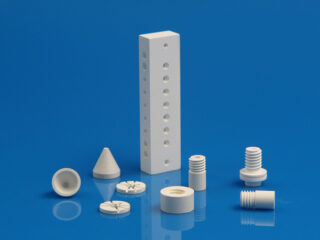
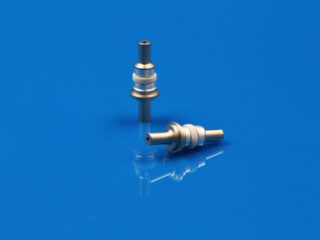
Alumina Ceramic Pellet Igniter

350W Alumina Ceramic Heater

Ceramic Pellet Igniter

Alumina Ceramic Wood Pellet Igniter


Boron Nitride for Molten Glasses Application

Boron nitride, also known as white graphite, has a structure similar to that of graphite. It has good electrical insulation, thermal conductivity, excellent thermal shock resistance and Chemical stability.

BN-sintered parts are generally produced by hot-pressing sintering. The densification mechanism can be described as vitreous sintering. Small amounts of boron oxide (B2O3) function as the liquid phase during sintering and as a binder for the BN platelets. In contrast to some other non-oxide ceramics, there is no solution and precipitation process known for the sintering of BN.

Boron Nitride for the application of glass:
1.Glass Melting – BN crucible
2.Glass Spinning – BN mould (Similar as nozzle. Glass go through it and turn to a
wire)
3.Glass Forming – BN plate

Why Boron Nitride can be used for glass melting?
Boron Nitride ceramic is with good self-lubrication. So glass won’t be stick to Boron Nitride. Also, Boron Nitride is without corrosion during workin.

Hexagonal boron nitride, either in its pure form or as a composite, is an extremely suitable material for special applications at high temperatures. Parts for high-temperature furnaces, crucibles for molten glasses and metals, side dams for thin-strip casting and evaporation boats for aluminium are the most common applications.

Boron Nitride for Molten Glasses Application

Boron Nitride for Molten Glasses Application


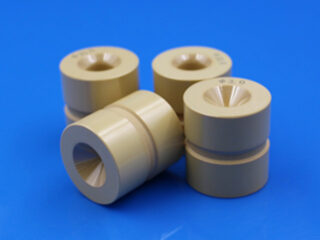
About Zirconia Partially Stabilized Zirconia Ceramics (Mg-PSZ)

Introduction:Magnesium oxide partially stabilized zirconia with magnesium oxide (MgO) as the stabilizer of zirconia, after forming the crystal structure for a cube, more stable. Magnesium zirconium has better resistance to high temperature and moisture because it is not affected by phase migration.

  1. What is magnesium oxide partially stabilized zirconia ceramics

The oxidase-partially stable zirconia ceramics (MG-PSZ), which is commonly referred to as magnesium-zirconia ceramics, are all yellow with a density of about 5.7g/cm³.

Magnesium oxide partially stabilized zirconia with magnesium oxide (MgO) as the stabilizer of zirconia, after forming the crystal structure for a cube, more stable. Magnesium zirconium has better resistance to high temperature and moisture because it is not affected by phase migration. Magnesium zirconium retains its strength even in humid, high temperature environments where the mechanical properties of yttrium partially stabilized zirconia begin to deteriorate.2. Advantages and disadvantages of magnesium stabilized zirconia ceramics

  1. Advantages and disadvantages of magnesium stabilized zirconia ceramics

Compared with yttrium oxide, magnesium oxide partially stabilized zirconia has the outstanding advantages of excellent mechanical properties and creep resistance at relatively high temperatures. However, the research and development of magnesium stabilized zirconia is restricted by two adverse factors: one is that the solution temperature of magnesium oxide in the cubic zone of zirconia is very high, resulting in magnesium stabilized zirconia is not easy to completely sintering; First, when zirconia is higher than 1000℃, magnesium oxide is easy to produce crystal phase separation and a large number of tetragonal phase instability, which makes the material properties decline and seriously restricts its application in high temperature region.

3.Application

  • Wire forming/drawing mold;
  • Precision in high-wear environments;
  • Axis;
  • furnace treatment tube;
  • Wear pad;
  • thermocouple protection tube;
  • sand blast nozzle;
  • Refractory materials;
  • Furnishing crucible;
  • Knives and blades;
  • fuel cell parts;
  • Bearings and rollers;
  • Weld nozzles and pins;
  • Gas igniter;
  • Electric insulator;
  • Ceramic guide plate;
  • Oxygen sensor;
  • Mechanical seal;
  1. Performance
Magnesium partially stabilized zirconia
Mechanical property thermal property electrical property
Color Yellow maximum service temperature(°C) 1000 dielectric constant 28
Density

(g/cm³)

6.05 thermal conductivity@25°C 2.2 dielectric strength(6.35mm) 9.4
Vickers hardness Gpa) 12.5 linear coefficient of thermal expansion
(40 - 400℃, × 10^ -6/℃)
10.2 dielectric loss 10 x 10^-4
compressive strengthc

(Mpa)

2100 Specific heat(J/(kg ・ K) 400 volume resistance
@25°C
>10^12
flexure strength
(Mpa)
850 thermal shock resistance(°C) 350 volume resistance
@500°C
>10^3
Fracture Toughness
(Mpa·m1/m2)
4~5
Young modulus
(Gpa)
200
Poisson’s ratio 200


  • Note: Performance may vary depending on the batch
Zirconia Partially Stabilized Zirconia Ceramics (Mg-PSZ)

Zirconia Partially Stabilized Zirconia Ceramics (Mg-PSZ)


Any more information about advance materail, Click website …..


LaB6 Ceramics Parts

LaB6 ceramic is an inorganic compound classified as a boride. This refractory ceramic material boasts a distinctive deep purple appearance and possesses an impressively high melting point of 2210°C. Additionally, it exhibits insolubility in both water and hydrochloric acid. Interestingly, when subjected to ion bombardment, its physical characteristics undergo a change, resulting in a green coloration instead of its typical dark purple hue.

The unique properties of LaB6 crystals make them exceptionally suited for use as stable electron-emitting media with work functions close to 2.70 eV. This low work function leads to the generation of higher electron currents at lower cathode temperatures compared to tungsten, resulting in greater brightness at the beam focus and an extended operational lifespan. In practice, LaB6 cathodes often demonstrate brightness levels ten times higher and a service life fifty times longer than tungsten cathodes. In electron microscopy applications, these advantages translate into the delivery of more precise beam currents focused on smaller sample areas, improved resolution, and reduced frequency of cathode replacement.

LaB6 ceramic finds wide-ranging applications, including:

1. Thermionic emission (cathode)
2. Applied in scanning electron microscopes
3. Utilized in surface analysis equipment
4. Serving as a plasma source for plasma-enhanced coating (PECVD)
5. Utilized in transmission electron microscopes
6. Used in radiotherapy devices
7. Utilization in vacuum electron beam welding machines
8. Implementation in devices for electron beam surface reforming
9. Employed in electron beam lithography devices

Lanthanum Hexaboride (LaB6) Ceramics Parts

LaB6 ceramic Properties:

Properties Unit LaB6
Purity % >99.5
Density g/cm3 >4.30
Structure / Monocrystalline
Vickers hardness HV 1065
Shore hardness HS HS
Thermal conductivity W/mK 15
Electrical Conductivity S/m 1.83*10^6
Flexural strength MPa 165

Aluminum Nitride – High Thermal Conductivity Material

Aluminum Nitride combines high thermal conductivity with strong electrical resistance. They are an excellent solution for many electronic applications— allowing electrical systems to dissipate heat quickly for maximum efficiency.

Thermal conductivity measures how well a material spreads heat within itself. Cooking pans have high thermal conductivity allowing evenly distributed heat to pass quickly into the food. On the other hand, insulative gloves are used to handle hot objects because their low thermal conductivity prevents heat from transmitting to sensitive hands. Technical ceramics are extraordinarily versatile, exhibiting a wide range of thermal conductivity.

Aluminum Nitride - High Thermal Conductivity Material

Aluminum Nitride – High Thermal Conductivity Material

Ceramic thermal conductivity compare

Ceramic thermal conductivity compare

Below is our Aluminum Nitride Ceramic material data sheet.

Aluminium Nitride Material Properties
Properties Value
Bulk Density(g/cm3)   >=3.3
Water Absorption   0.00
Flexural Strength(MPa)   >300
Vickers Hardness (Gpa)   11.00
Modulus Of Elasticity  (Gpa)   >200
Dielectric Constant(1MHz)   8.80
Coefficient Linear Thermal Expansion /℃,5℃/min, 20-300℃ 4.6*10-6
Thermal Conductivity 30 degree Celsius >=170
Volume Resistivity(Ω.cm) 20 degree Celsius  >1014
300 degree Celsius  109
500 degree Celsius  107
Dielectric Strength(KV/mm)   15-20
Remark: The value is just for review, different using conditions will have a little difference.


Infineon has officially launched the new EasyDUAL™ CoolSiC™ power module, which uses aluminum nitride ceramics and has a half-bridge structure. It is suitable for 1200V high-power application scenarios, including solar uninterruptible power systems, auxiliary inverters, energy storage systems, and electric vehicle chargers. The CoolSiC module technology equipped with aluminum nitride ceramics can reduce the thermal resistance of the heat sink by up to 40%, which can increase the output power or reduce the operating temperature and improve the service life of the system.

We will work with you to find the optimal material for your application.


What are the uses of Boron Nitride Ceramics?

Nitride Boron can be used in the manufacture of crucibles for smelting semiconductors and metallurgical high-temperature vessels, amorphous strip nozzles, semiconductor heat dissipation insulation parts, high-temperature bearings, thermocouple bushing, and glass forming molds.

Usually produced Boron Nitride is a graphite-type structure, commonly known as white graphite. The other is diamond type. Similar to the principle of transforming graphite into diamond, graphite-type boron nitride can be transformed into diamond-type boron nitride under high temperature (1800℃) and high pressure (800Mpa).

The B-N bond length (156pm) of this boron nitride is similar to the C-C bond length (154pm) of a diamond, and the density is similar to the diamond. The hardness of this boron nitride is similar to diamond, but the heat resistance is better than diamond. It is a new type of superhard material with high-temperature resistance, which is used to make drill bits, grinding tools, and cutting tools.

What are the uses of Boron Nitride Ceramics

What are the uses of Boron Nitride Ceramics

Boron Nitride Material Properties-SU0012

Properties Units UHB HB BC BMS BMA BSC BMZ BAN
Main Composition BN>99.7% BN>99% BN>97.5% BN+AL+SI BN+ZR+AL BN+SIC BN+ZRO2 BN+ALN
Color White White White White
Graphite
White
Graphite
Greyish
Green
White
Graphite
Greyish
Green
Density g/cm3 1.6 2 2.0-2.1 2.2-2.3 2.25-2.35 2.4-2.5 2.8-2.9 2.8-2.9
Three-Point Bending
Strength
MPA 18 35 35.00 65 65 80.00 90 90.00
Compressive Strength MPA 45 85 70.00 145 145 175.00 220 220.00
Thermal Conductivity W/m·k 35 40 32.00 35 35 45.00 30 85.00
Thermal Expansion
Coefficient (20-1000
10-6/K 1.5 1.8 1.60 2 2 2.80 3.5 2.80
Max Using TemperatureIn
Atmosphere
In Inactive Gas
In High Vacuum (Long
Time)
( 900
2100
1800
900
2100
1800
900
2100
1900
900
1750
1750
900
1750
1750
900
1800
1800
900
1800
1800
900
1750
1750
Room Temperature
Electric Resistivity
Ω·cm >1014 >1014 >1013 >1013 >1013 >1012 >1012 >1013
Typical Application: Nitrides
Sintering
High
Temperature
Furance
High
Temperature
Furance
Powder
Metallurgy
Powder
Metallurgy
Powder
Metallurgy
Metal
Casting
Powder
Metallurgy
High Temperature
Electrical Furnace
Components (High
Temperature Insulator
Sleeve Tube etc)
Metal Vaporize Crucible
The Container Of Metal
or Glass Melting
The Casting Mould
Components Of The
Precious Metal And
Special Alloy.
High -Temperature Support
Part
Nozzle And Transport
Tube Of The Melting Metal
Nitrides Sintering

Remark: The value is just for review, different using conditions will have a little difference


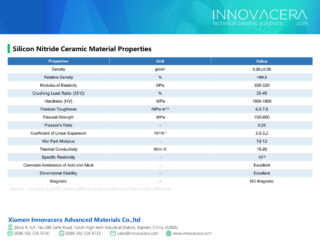
Application fields and precautions of silicon nitride ceramic igniters

Silicon nitride ceramics have the characteristics of high strength, high-temperature resistance, thermal shock resistance, oxidation resistance, wear resistance, and corrosion resistance, and are the first candidate materials for ceramics used in thermal engine parts.

Application-fields-and-precautions-of-silicon-nitride-ceramic-igniters

Application-fields-and-precautions-of-silicon-nitride-ceramic-igniters

Application-fields-and-precautions-of-silicon-nitride-ceramic-igniters

Application-fields-and-precautions-of-silicon-nitride-ceramic-igniters

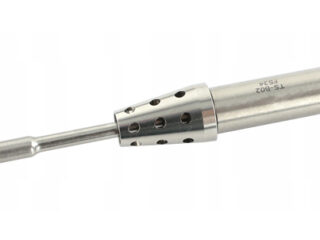
The silicon nitride ceramic igniters can heat up to 800~1000°C within ten seconds, and ignite the fuel through direct heat transfer or blast heat transfer. A temperature buffer area is set on the ignition rod to protect the terminals from damage. The wire joints are insulated and encapsulated, which can effectively prevent short circuits caused by conductive ash. With proper installation and ignition procedures, silicon nitride ceramic igniters can be used safely for years.

Application fields:

  1. Biomass boiler igniter, straw incinerator igniter
  2. Gas and oil igniters (such as natural gas)
  3. Automobile exhaust and industrial waste gas treatment
  4. Gas heating (air, working gas)
  5. Pyrotechnic generator
  6. Brazing equipment
  7. Corrosive environment heater
  8. Customization of laboratory special heating elements and heating systems

Precautions:

  1. It is necessary to use reasonable installation methods and ignition procedures to ensure the working life of the igniter.
  2. It is necessary to determine the appropriate gas flow rate according to the selected igniter model. If the flow rate is too small, the load on the igniter will be too large, and the surface temperature will exceed the rated value. When designing the airflow channel, it should be ensured that the airflow is fully in contact with the igniter and that the heat dissipation around the igniter is sufficient.
  3. Do not place any part of the igniter in the combustion chamber.
  4. A model with a larger hot zone or a combination of multiple igniters can provide a faster ignition speed.
  5. The package end of the igniter should have good heat dissipation, and the igniter should be turned off in time after the ignition is successful.

Innovacera produces silicon nitride igniters. In addition to the existing regular products of silicon nitride ceramic heaters, we can also provide customized services according to customer requirements or drawings.

If you are interested, welcome to contact us when you feel free. Any inquiries or questions will get our response quickly.


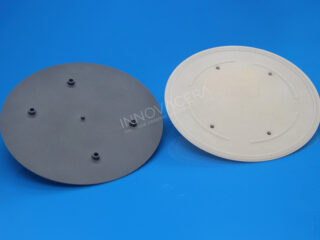
Why Polish Ceramic Substrates?

Alumina Oxide is one of the most cost-effective and widely used substrate materials in microelectronic applications. While many customers will be satisfied with an as-fired surface for their applications, there are four major benefits of ceramic substrate polishing:

  1. Finer Line Patterns

After the fine grinding and polishing process, the ceramic substrate can get finer pattern lines, which is beneficial to the denser circuit design ability and is conducive to fine-pitch, high-density interconnection circuits.

An as-fired surface finish is generally adequate for lines as thin as 1 mil in thin-film applications and 5 mils in thick-film applications. Forming finer lines than these on as-fired surfaces will exhibit poor pattern definition resulting in increased conductor resistance, which inhibits current flow and reduces circuit performance. Poor pattern definition can also contribute to performance anomalies in RF and microwave circuits, so we will polish it.

  1. Better Top and Bottom Surface Parallelism

Grinding and polishing the substrate can improves the parallelism between the top and bottom surfaces. The benefit is that the capacitance and inductance of the substrate can be more tightly controlled when the substrate is metalized and patterned. Since capacitance and inductance are the main factors determining impedance, increased parallelism can improve the predictability and performance of RF and microwave circuits.

99.6% Alumina Polishing Ceramic Substrates

99.6% Alumina Polishing Ceramic Substrates

Why Polish Ceramic Substrates

Why Polish Ceramic Substrates

  1. Thinner Metallization Layers

Polishing reduces the amplitude of peaks and valleys on the substrate surface enabling the use of significantly thinner metalization layers. Thinner resistive layers increase the sheet resistance of the material, which allows for higher resistance values when using thin-film technology—especially when using serpentine patterns.

  1. Better Optical Performance

The very nature of fabricated optical devices demands surface smoothness and flatness beyond that typically required by microelectronics. Generally, light must be precisely moved around, bent reflected, split, sent through fibers, and used in ways that were not intended by nature. All of this has to be accomplished with as little loss of light as possible. In most cases, the colors can’t be altered or shifted within the spectrum. Polishing and super polishing are the only means that can achieve highly reflective or transmissive surfaces. The surface must be polished and flattened to a small fraction of a wavelength for optimum performance.


What Are The Advantages Of Metallized Ceramic Substrates In LED Packaging?

The ceramic-based metalized substrate has good thermal and electrical properties. It is an excellent material for power LED packaging, purple light, and ultraviolet light. It is especially suitable for multi-chip packaging (MCM) and substrate direct bonding chip (COB), etc. package structures.

Classification

① HTCC and LTCC

HTCC and LTCC belong to earlier developed technologies, but due to the high sintering temperature, the selection of electrode materials is limited, and the production cost is relatively expensive. These factors promote the development of LTCC. Although LTCC reduces the co-firing temperature to about 850°C, however, it has the disadvantages of difficult control such as dimensional accuracy and product strength.

② DBC and DPC

Direct copper coating (DBC) technology is a ceramic surface metallization technology developed mainly based on Al2O3 ceramic substrates and later applied to AlN ceramics. It has been successfully applied in the fields of high-power power semiconductor modules, solar panel components, automotive electronics, aerospace and military electronic components, and intelligent power components.

Advantages:

  1. Good thermal expansion

The ceramic metalized substrate can effectively solve the problem of heat dissipation, thereby alleviating the problem of thermal expansion and contraction of different materials of the components on the ceramic substrate, and improving the durability and reliability of the whole machine and electronic equipment.

  1. Dimensional stability
  2. Good heat dissipation

The ceramic material itself has properties such as high thermal conductivity, good heat resistance, high insulation, high strength, and matching with chip materials. It is very suitable as a power device LED packaging ceramic substrate and has been widely used in semiconductor lighting, laser and optical communication, aerospace, automotive electronics, and other fields

If you have more interesting, pls consult with us.

What Are The Advantages Of Metallized Ceramic Substrates In LED Packaging

What Are The Advantages Of Metallized Ceramic Substrates In LED Packaging


Zirconia Ceramic Block for Dental

In recent years, the continuous advancement of dental technology has enabled patients to enjoy safer, more efficient, and more comfortable treatment experiences. Among them, a material called zirconia ceramic is becoming the new favorite in the field of dentistry.

Zirconia ceramic is a high-strength, wear-resistant, and highly transparent ceramic material that can be used to produce various types of dental restorations, such as all-ceramic crowns, bridges, and porcelain veneers. Compared with traditional metal-ceramic restorations, zirconia ceramics not only have better biocompatibility but also are closer to the color and transparency of natural teeth, providing patients with a more natural and aesthetically pleasing effect.

In addition, the production process of zirconia ceramics is also very advanced. Through technologies such as computer-aided design and digital processing, high-precision customization can be achieved, greatly improving the adaptability and precision of the restorations. At the same time, zirconia ceramics have high hardness and can effectively resist the impact of biting force, with a long service life.

Currently, zirconia ceramics have become one of the popular materials in the field of dentistry, receiving extensive application and promotion. With the continuous advancement and expansion of technology applications, it is believed that zirconia ceramics will play an increasingly important role in the field of dental restorations, bringing better oral health and aesthetic effects to patients.

Properties Units Value
ZrO2+HfO2+Y2O3 % ≥99
Y2O3 % 4.5-6.0
HfO2 % ≤0.5
Al2O3 % ≤0.5
Other Oxides % ≤0.5
Flexural Strength (3 point) MPa 1200±100
Translucency % 43
Vickers-hardness HV10 1300±50
Density g/cm³ 3.00
Sintered Density g/cm³ 6.02
Chemical Solubility μg/cm² 50
Radioactivity Bq·g-1 0.1
Fracture toughness Mpa.m1/2 5.5
CTE K-1 10.5±0.5*10-6
Zirconia Ceramic Block for Dental

Zirconia Ceramic Block for Dental

Zirconia Ceramic Block for Dental

Zirconia Ceramic Block for Dental


Enquiry