technical ceramic solutions

News

Category Archives: News

What is ENIG Plating

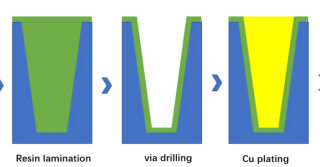
ENIG (Electroless Nickel Immersion Gold) is a surface plating that is applied over the copper pads on a Printed Circuit Board to protect them from corrosion and other abnormalities. Initially, the copper pad is covered by a Nickel (Ni) layer followed by a thin immersion Gold (Au) layer. ENIG provides good oxidation resistance, and excellent surface planarity and allows for easy soldering which results in excellent electrical performance of the PCB board.

What is ENIG Plating PCB Substrates

What is ENIG Plating PCB Substrates

ENIG is one of the most used PCB surface finishes. And it is more complex and expensive when compared to other PCB plating processes like HASL.

ENIG is a two-layer metallic coating – Nickle is the barrier to the copper pad and is also the material to which components are soldered. Gold on the other hand protects the Nickle during storage and also provides low contact resistance. Typical Nickle thickness varies from 4 – 7 µm and Gold thickness varies from 0.05 – 0 23 µm. ENIG requires a processing temperature of around 80 °C.

What is ENIG Plating PCB Substrates

What is ENIG Plating PCB Substrates

Advantages of ENIG Surface Finishes:

  • It provides impressive wettability, surface planarity, coplanarity, and long shelf life (up to 12 months) to the PCB board since immersion gold has strong chemical properties.
  • In ENIG, the nickel layer acts as a barrier and stops the interfusion between gold and copper. It also produces an intermetallic compound (IMC) Ni3Sn4 to provide good solderability after reacting with Tin.
  • It has low contact resistance, high strength, reduces oxidation, and provides anti-friction. Overall, it enhances circuit conductivity requirements.
  • It provides good plating over the copper pads and via holes.
  • Its excellent surface planarity allows the components to be soldered flat onto the pad, making it ideal for BGA pads and other fine-pitch components.

Limitations of ENIG Surface Finishes:

  • ENIG is an expensive surface finish technology
  • It has undesirable magnetic properties
  • Not good for rework and makes PCB repair very difficult

The metallized ceramic is used in critical assemblies brazed. Innovacera as a metallized ceramics supplier, provides you with custom services for metallized ceramic parts.

Welcome to contact us if you are interested.


PCB Substrate

PCB Substrate


INNOVACERA will attend The ACE 2023

In the 2023 year, Innovacera will attend 2 foreign exhibitions which are The ACE 2023 and SEMICON Europa 2023. If you happen to have attended or visit them, too, welcome to come to meet us at the exhibition.

ACE 2023     (13th International Advanced Ceramics Exhibition)
Date:  7/5/2023 – 7/7/2023
Address: Goyang-si KINTEX Exhibition Hall 1
Scale: – 350 companies, 600 booths (total)- Audience: 10,000 people from 40 countries
Organizer: Nano Technology Research Association
Products: Metallized Ceramics, Ceramic Heater, Ceramic Substrate, Ceramic Base, Ceramic Shell,  Ceramic Reflector Cavity, Laser Ceramic Head, Reflector Mirrors.           Material: Alumina Ceramic, Zirconia Ceramic, Aluminum Nitride, Boron Nitride Ceramic, Porous Ceramic, Silicon Nitride Ceramics, Beryllia Ceramics, Machinable Glass Ceramic, Silicon Carbide Ceramics.
Exhibition Web:  http://aceramic.or.kr/                                                      Innovacera Booth No.:  Will come soon.

INNOVACERA will attend The ACE 2023

INNOVACERA will attend The ACE 2023

Korea’s only high-tech ceramic exhibition

ACE 2023 is Korea’s only high-tech ceramic exhibition where you can trade, exchange, and cooperate with advanced ceramic technology, materials/parts, and the latest equipment.

ACE 2023, which celebrates its 13th anniversary this year, is continuously growing as a specialized exhibition representing the Korean advanced ceramic industry by concentrating on the core capabilities of the advanced ceramic industry, academia, research institute, and government.

The International Advanced Ceramic Exhibition is an exhibition with strong synergistic effects due to technological convergence. In addition to cutting-edge ceramics, 5 exhibitions are being held at the same time, covering cutting-edge fields such as nanotechnology, laser technology, smart sensors, and adhesive coating films. Please meet buyers from various industries through the Advanced Ceramics Exhibition and experience the synergy effect of technological convergence.

The main visitors of the Advanced Ceramics Exhibition are final and intermediate decision-makers who wish to introduce new businesses and product innovations, plan and implement national R&D projects, and discover new partners through the introduction of the latest technologies and solutions. 85% of the total visitors are composed of buyers, and more than 50% of them are more than final and intermediate decision-makers, which corresponds to the nature of professional business.


INNOVACERA Will Attend The SEMICON Europa 2023

Mostly Every year Innovacera attends an international trade show for technical ceramic solutions and electronics, optical, and semiconductor manufacturing industry. Due to the COVID-19 pandemic, Innovacera long time didn’t take a part in the international trade show, so this 2023 year, we are delighted to announce our participation as an exhibitor in Semicon Europa 2023 and ACE 2023. Welcome to join us at booth #B2-664 in Semicon Europa 2023.

Visit our booth B2-664 and learn more about the innovative technical ceramic components and technical ceramic solutions from Innovacera for semiconductor Industry applications.

From the product of Metallized Ceramics, Ceramic Carrier Plates, Ceramic Separation Ring, Ceramic Robotic Arm End Effectors, Ceramic Heaters, Ceramic Substrates, Ceramic Bases, Ceramic Shells, Ceramic Reflector Cavities, AMB Silicon Nitride Substrate, DBC, DPC, ceramic welding parts and material of Boron Nitride Ceramic, Pyrolytic boron nitride, Aluminum Nitride, Alumina Ceramic, Zirconia Ceramic, Porous Ceramic, Silicon Nitride Ceramics, Beryllia Ceramics, Machinable Glass Ceramic, Silicon Carbide Ceramics. We offer you a wide range of advanced ceramic components for semiconductor manufacturing.

SEMICON Europa 2023

Innovacera SEMICON Europa 2023

SEMICON Europa 2023  co-located with productronica 2023

Date: Nov 14–17, 2023

Innovacera Booth No.:  B2664

Address: Neue Messe München, Munich, Germany

Scale:  more than 130 exhibitors and attracted over 3,500 attendees from 54 countries.

Organizer: SEMICON Europa, Semi

Exhibition Web:  https://www.semiconeuropa.org/

About the SEMICON tradeshows:      

SEMICON Europa is an international trade fair for the semiconductor industry that is scheduled to take place in November 2023 in Munich, Germany. The event provides an opportunity for companies in the semiconductor industry to showcase their products and services, as well as network with other industry professionals and attend informative seminars and workshops.

SEMICON Europa 2023 is the strongest single event for electronics manufacturing in Europe and is constantly broadening the range of attendees across the electronics chain.

The convention attracts a highly influential audience from every segment and sector of the European microelectronics industries including semiconductors, LEDs, MEMS, printed/ organic/ flexible, and other adjacent markets. Exhibitors and attendees meet to enact change and address industry-shaping trends.

SEMICON Europa 2023

SEMICON Europa 2023


How To Detect The Abnormal Operation Of Zirconium Dioxide Oxygen Sensor?

The detection method of zirconium dioxide oxygen sensor is as follows:

01 Decoder detection

The abnormal operation of the oxygen sensor will store the fault code in the ECU. Therefore, through a dedicated decoder or a general decoder, the fault code 00525 of the oxygen sensor can be found-there is no signal from the oxygen sensor G39, G130, or the oxygen sensor G39, G130 is short-circuited to the positive electrode, and the oxygen can also be judged by reading the data stream. If the oxygen sensor reading stays at a constant value or changes slowly for a long time, it means that the oxygen sensor is faulty.

02 Detect the resistance of the heating element

At room temperature, it can be tested with a multimeter. When testing, unplug the oxygen sensor harness plug and test the resistance between terminals T4C/1 and T4C/2 on the plug. The resistance should be 1~5Ω at room temperature. If the resistance value is ∞ at normal temperature, it means that the heating element is open and the oxygen sensor should be replaced.

03 Detect the power supply voltage of the heating element of the oxygen sensor.

The voltage of the heating element of the oxygen sensor is the battery voltage. When the ignition switch is turned on and the contact of the fuel pump relay is turned on, the power of the heating element is turned on. When detecting the voltage of the heating element, unplug the oxygen sensor, start the engine, and detect the voltage between the terminals T4C/1 and T4C/2 on the connector socket. The voltage value should not be lower than 11V. If the voltage value is zero, it means that the fuse S5 (10A) is open or the contact of the fuel pump relay is not in good contact, and it can be repaired separately.

04 Detect the signal voltage of the sensor

When the operating temperature of the oxygen sensor is lower than 300°C, the oxygen sensor does not reach the normal operating temperature and there is no signal output. Therefore, the output voltage of the zirconium dioxide oxygen sensor should be measured when it is in the working state of 300°C or higher. The specific method to check the zirconium dioxide oxygen sensor with the auto multimeter pressure measurement method: run the engine speed at 2500r/min for about the 90s, connect the plug to the socket, and connect the digital multimeter to the oxygen sensor terminals T4C/3 and T4C/4 The signal voltage should be 0.7~1.0V when the engine is supplied with rich air (accelerator pedal is suddenly stepped on); when the engine is supplied with lean air (unplug the vacuum tube between the airflow sensor and the engine), the signal The voltage should be 0.1~0.3V; otherwise, the oxygen sensor is damaged and should be replaced.

How To Detect The Abnormal Operation Of Zirconium Dioxide Oxygen Sensor-thimble oxygen sensor

How To Detect The Abnormal Operation Of Zirconium Dioxide Oxygen Sensor-thimble oxygen sensor

How To Detect The Abnormal Operation Of Zirconium Dioxide Oxygen Sensor-thimble oxygen sensor

How To Detect The Abnormal Operation Of Zirconium Dioxide Oxygen Sensor-thimble oxygen sensor

05 Detect the signal change frequency of the oxygen sensor

A light-emitting diode and a 300Ω resistor can be connected in series between the wires connected to the T4C/3 and T4C/4 terminals of the sensor for detection. The anode of the diode is connected to the 3# terminal, and the cathode of the diode is connected to the 4# terminal of the connector via a 300Ω resistor. When the engine is idling or running at part load, the LED should flash. The flashing frequency should not be less than 10 times per minute. If the diode does not flash or the flashing frequency is too low, it means that the oxygen sensor is damaged and the sensor should be replaced.

06 Oscilloscope detection

Using an oscilloscope to detect the signal waveform output by the oxygen sensor can intuitively determine whether the oxygen sensor is good. Test method: start the engine and warm up the sensor to over 300℃. When the engine is in closed-loop operation, connect the probe to the signal terminals T4C/2 and T4C/3 of the sensor connector, and the engine will increase its speed from idling. Observe the output signal waveform of the oxygen sensor and compare it with the standard waveform to judge the quality of the sensor.


Do you know the difference between HTCC and LTCC?

In the early 1980s, the multilayer substrate of the circuit board of the commercialized main computer was co-fired at a high temperature of 1600°C with alumina insulating materials and conductor materials (Mo, W, Mo-Mn), that is, high-temperature co-fired. Fired ceramic (HTCC). With the development of high-frequency and high-speed communication, in order to achieve low loss, high speed, and high-density packaging, low-temperature co-fired ceramics (LTCC) came into being.

The process flow of low-temperature co-fired ceramics (LTCC) and high-temperature co-fired ceramics (HTCC) is similar, including tape casting, drilling, filling, lamination, slicing, co-firing, inspection, and other steps. But do you know the difference between them?

The following table is a simple introduction to the difference between LTCC and HTCC, let us see it.

The main difference between HTCC and LTCC
Name Ceramic Material Metallic Material Co-firing Temperature Advantage Weakness Product/

Application

HTCC

(High Temperature co-fired Ceramic)

(1)Alumina

(2)Alumina Nitride

(3)Mullite and etc.

Tungsten, Molybdenum, Manganese, Molybdenum-Manganese, etc. 1650°C- 1850°C (1)Higher mechanical strength

(2)High heat dissipation coefficient

(3)Lower material cost

(4)Stable chemical properties

(1)Low conductivity

(2)High production cost

Product:

(1)heating body

(2)Multilayer Ceramic Substrate

(3)Ceramic shell, etc.


LTCC

(Low-Temperature Co-fired Ceramic)

(1)Glass-ceramic materials

(2)Glass + Ceramic Composite Materials

(3)Amorphous glass-based materials

Silver, Gold, Copper, Palladium Silver, etc. Below 95°C (1) High conductivity

(2) Low production cost

(3) It has a small thermal expansion coefficient and dielectric constant, and the dielectric constant is easy to adjust

(4) Excellent high-frequency performance

(5) Due to the low sintering temperature, some components can be sealed inside

(1) Low mechanical strength

(2) Low heat dissipation coefficient

(3) High material cost

Application:

Manufacturing of integrated circuit packaging, multi-chip mold (MCM), micro-electro-mechanical systems (MEMS), inductors, capacitors, transformers, and antennas.


Hope the above information is helpful for you. And the important note: INNOVACERA’s ceramic heater is belonging HTCC.

Ceramic heater-Do you know the difference between HTCC and LTCC

Do you know the difference between HTCC and LTCC


Why VCSEL Laser Diodes Should Use DPC Ceramic Substrates

VCSEL (Vertical Cavity Surface Emitting Laser) laser diodes have become increasingly popular in the telecommunications, sensing, LIDAR, and optical interconnect industries due to their high efficiency, low power consumption, and high-speed modulation capabilities. One key factor in the performance and reliability of VCSEL laser diodes is the substrate material on which they are grown.


Traditionally, VCSEL laser diodes have been grown on gallium arsenide (GaAs) substrates. However, GaAs have some limitations such as a high thermal expansion coefficient and relatively low thermal conductivity, which can lead to thermal management issues and reliability problems. This is where DPC (Direct Bonded Copper) come into play.

DPC-Why VCSEL Laser Diodes Should Use DPC Ceramic Substrates

DPC-Why VCSEL Laser Diodes Should Use DPC Ceramic Substrates


DPC ceramic substrates are an ideal material for growing VCSEL laser diodes due to their high thermal conductivity, low thermal expansion coefficient, and excellent mechanical properties. The direct bonding process used to create DPC substrates ensures that the copper layer is tightly bonded to the ceramic layer, providing excellent thermal management properties.

In addition, DPC ceramic substrates have a coefficient of thermal expansion (CTE) that is well-matched to the epitaxial layers of the VCSEL laser diodes. This ensures that the diodes remain stable and reliable over a wide range of temperatures, making them suitable for use in a variety of applications.

Using DPC ceramic substrates can also improve the performance of VCSEL laser diodes by reducing the threshold current and increasing the output power. This is due to the excellent thermal management properties of the DPC substrate, which can dissipate heat more efficiently and prevent thermal runaway.

In summary, the use of DPC ceramic substrates in VCSEL laser diodes offers many advantages over traditional GaAs substrates, including improved thermal management, reliability, and performance. As the demand for high-speed, low-power laser diodes continues to grow, DPC ceramic substrates will become an increasingly important component in the production of VCSEL devices.

If you’re looking for a reliable DPC for VCSEL laser diodes. Contact us today to learn more about our full range of products and how we can help you


Active Metal Brazed (AMB) Ceramic Substrate

AMB (Active Metal Brazing) is for joining ceramics that are not wetted by ‘conventional’ brazes.

Applying active metal like titanium is added to the braze alloy, to achieve a chemically reacts with the surface of the parent ceramic.

Due to the coefficient of thermal expansion of Al2O3 (7.1 ppm/K), Si3N4 (2.6 ppm/K), and AlN (4.7 ppm/K) is close to that of silicon (4 ppm/K), Direct Bond Copper (DBC) and AMB are suitable substrates for robust packaging of bare dice since such assemblies.

AMB is a promising thick film technology that can be applied to Power Electronics, Automotive Electronics, Home Appliances, Aerospace, and Others.

INNOVACERA provides DBC, DPC, and AMB technology for customized ceramic substrates, welcome to consult more.

 Active Metal Brazed (AMB) Ceramic Substrate

Active Metal Brazed (AMB) Ceramic Substra


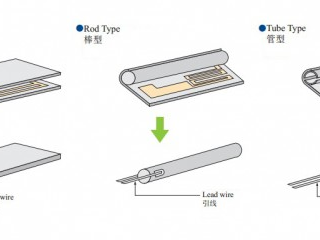
What Is A Lambda Sensor

Very Quick Guide to Lambda Sensors

A lambda sensor is an electronic device that fits into a car exhaust system. It is sometimes called an Oxygen sensor, O2 sensor, or AFR. Its purpose is to send a signal to the ECU (engine control unit) to indicate how much oxygen is in the exhaust gases. This indicates how efficiently the engine is running. The ECU uses this information to adjust the engine’s fuelling as you drive.

Lambda sensors can also be used for industrial applications, such as electricity generating stations and biomass boilers, and for general O2 measurement for industrial processes, eg. welding, steel rolling mills, drying ovens, and furnace.

What Is A Lambda Sensor-Planar-Oxygen-Sensor-Element

What Is A Lambda Sensor-Planar-Oxygen-Sensor-Element


What happens if it fails?

MOT emissions failure, excessive fuel consumption, catalyst failure, poor performance, engine check warning light, and fault codes are all symptoms that can be associated with Lambda sensor failure. The Lambda sensor’s efficiency deteriorates over a period of time.

Maintenance

No maintenance of the Lambda sensor is required and there are no serviceable parts. Similar to a spark plug, when it’s worn out it should be replaced.

Where is it?

Mounted on the engine exhaust manifold or exhaust pipe, or under the vehicle for the rear sensor. Modern engines with a close-coupled catalyst have the sensor inside the engine compartment. A close coupled catalyst places the catalyzer very close to the engine to shorten the warm-up time.

Cars made after the year 2000 have at least two sensors, front and rear, and are termed OBDII compliant. Multiple sensors enable the ECU to better judge the efficiency of individual cylinders.

How can I replace it?

Firstly consult our fitting guide – it’s roughly the same as fitting spark plugs. Or get your garage to do it. Some garages will not fit ‘universal’ type sensors, please check with them first before buying one. Direct-fit sensors are more expensive but are preferable to the universal types.

Lambda Sensor Planar Oxygen Sensor Element

Lambda Sensor Planar Oxygen Sensor Element


Ceramic Valve Core For Coca-Cola Machine

A ceramic valve core for a Coca-Cola machine refers to a component used in the dispensing system of the machine that controls the flow of the beverage. The valve core is a small, cylindrical piece made of ceramic material that is inserted into the machine’s dispensing mechanism.

The use of ceramic valve cores in Coca-Cola machines is preferred over other materials such as plastic or metal due to their durability and resistance to corrosion. Ceramics is also an excellent material for maintaining the flavor of the beverage as it is non-reactive, meaning it does not absorb any flavors or odors from the beverage.

The valve core is responsible for regulating the flow of the beverage through the machine’s dispensing system, controlling the amount of liquid dispensed per use. It is an essential component of the machine and should be regularly maintained to ensure optimal performance.

If you are in need of a replacement ceramic valve core for your Coca-Cola machine, you can contact the ceramic components manufacturers such as Xiamen Innovacera Advanced Materials Co., Ltd or a certified repair technician to obtain one. It is important to ensure that the replacement part is compatible with your specific model of machine to ensure proper installation and operation.

Ceramic Valve Core For Coca-Cola Machine

Ceramic Valve Core For Coca-Cola Machine

Ceramic Valve Core For Coca-Cola Machine

Ceramic Valve Core For Coca-Cola Machine

spensing valve for coke machineSoda dispensing head valve high quality

dispending valve for coke machineSoda dispensing head valve high quality

Dispensing Valve For Coke Machine

Dispensing Valve For Coke Machine

The ceramic valve core ( ceramic spool ) used in the Coke machine usually needs to have high sealing and corrosion resistance, as the valve core needs to be constantly switched on and off and in contact with the beverage.

The valve core made of ceramic material has the following advantages:

  • Strong corrosion resistance: ceramic material is not easy to acid, alkali, salt, and other substances erosion, so the valve core can be used for a long time without easy corrosion damage.
  • High hardness: ceramic material has a high hardness so that the surface of the valve core can resist wear and scratches, improving the service life of the valve part.
  • Good sealing: The smooth surface of the ceramic material allows a tighter seal between the valve core and the seat to prevent beverage leakage.
  • Cleanliness: Ceramic materials do not release harmful substances, and are more hygienic to use and easier to clean.

Therefore, ceramic valve core is widely used in the manufacture of Coca-Cola machines, which provides an important guarantee for the performance and reliability of Coca-Cola machines.


Aluminum Nitrides (AlN) nozzles for Plasma Etch Equipment

High-Resistance Process-Grade Aluminum Nitride (AlN) is an ideal material for many semiconductor equipment and applications.

Innovacera designs Aluminum Nitrides (AlN) nozzles for precise gas flow rate and uniform control to evenly disperse gases into the etch process chamber. These components require high plasma resistance, dielectric strength, and strong corrosion resistance to the process gases and byproducts.

Aluminum Nitride Material Properties
Properties INC-AN180 INC-AN200 INC-AN220
Color Gray Gray Beige
Main Content 96%ALN 96%ALN 97%ALN
Main Characteristics High Thermal Conductivity, Excellent Plasma Resistance
Main Applications Heat Dissipating Parts, Plasma Resistance Parts
Bulk Density 3.30 3.30 3.28
Water Absorption 0.00 0.00 0.00
Vickers Hardness(Load 500g) 10.00 9.50 9.00
Flexural Strength >=350 >=325 >=280
Compressive Strength 2,500.00 2,500.00
Young’s Modulus of Elasticity 320.00 320.00 320.00
Poisson’s Ratio 0.24 0.24 0.24
Fracture Toughness
Coefficient Linear Thermal Expansion 40-400 degree Celsius 4.80 4.60 4.50
Thermal Conductivity 20 degree Celsius 180.00 200.00 220.00
Specific Heat 0.74 0.74 0.76
Thermal Shocking Resistance
Volume Resistivity 20 degree Celsius >=10-14 >=10-14 >=10-13
Dielectric Strength >=15 >=15 >=15
Dielectric Constant 1MHz 9.00 8.80 8.60
Loss Tangent *10-4 5.00 5.00 6.00
Remark: The value is just for review, different using conditions will have a little difference.

Kindly contact us for more details if you are working in this field

We’d love to discuss how our materials can offer you a solution.

Aluminum Nitrides (AlN) nozzles for Plasma Etch Equipment

Aluminum Nitrides (AlN) nozzles for Plasma Etch Equipment


Enquiry