technical ceramic solutions

News

Category Archives: News

A brief introduction to HTCC

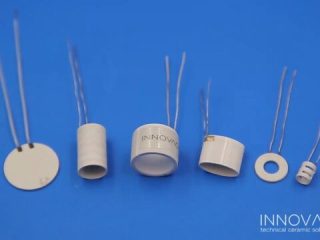
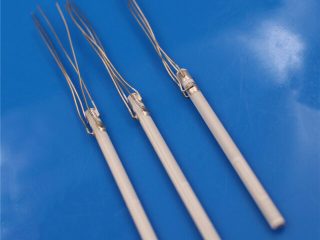
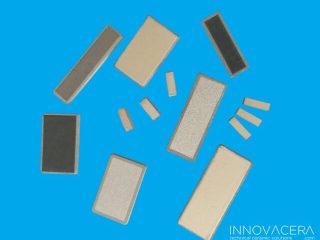
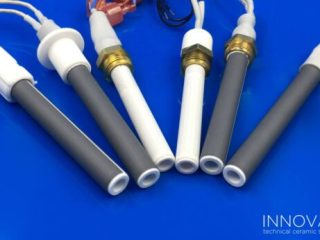
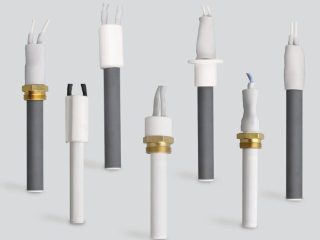
alumina ceramic heater

What is HTCC
HTCC (High Temperature co-fired Ceramic) adopts tungsten, molybdenum, molybdenum, manganese, and other High melting point metal heat resistance paste printed on 92 ~ 96% alumina flow Ceramic green billet according to the design requirements of heat circuit, 4 ~ 8% sintering agent and then laminated multilayer. In 1500 ~ 1600°C under high temperature burning into a whole.

Therefore, it has the advantages of corrosion resistance, high temperature resistance, long life, high efficiency and energy saving, uniform temperature, good thermal conductivity, fast thermal compensation, and does not contain lead, cadmium, mercury, hexavalent chromium, polybrominated biphenyl, polybrominated diphenyl ethers, and other harmful substances, in line with the European Union RoHS environmental protection requirements.

Due to the high firing temperature, HTCC cannot use gold, silver, copper and other low melting point metal materials, must use tungsten, molybdenum, manganese, and other refractory metal materials, these materials have low conductivity and will cause signal delay and other defects, so it is not suitable for high-speed or high-frequency microassembly circuit substrate. However, HTCC substrate has the advantages of high structural strength, high thermal conductivity, good chemical stability, and high wiring density, so it has a wide application prospect in high-power microasse.

The classification of HTCC
In the high-temperature co-firing ceramics, alumina, mullite, and aluminum nitride are the most important components of ceramics.

1. Alumina
Alumina ceramic technology is a relatively mature microelectronics packaging technology, it is made of 92 ~ 96% aluminum oxide, adding 4 ~ 8% sintering additives at 1500-1700°C, its wire materials are tungsten, molybdenum, molybdenum – manganese and other refractory metals.

The substrate technology is mature, medium material cost is low, and thermal conductivity and bending strength are high. However, alumina multilayer ceramic substrate has the following disadvantages:

  • High dielectric constant affects the improvement of signal transmission speed;
  • High conductor resistivity and large signal transmission loss;
  • The coefficient of thermal expansion is quite different from that of silicon, which limits its application in supercomputers.

2. Mullite
Mullite has a dielectric constant of 7.3-7.5, while alumina (96%) has a dielectric constant of 9.4, which is higher than mullite, so the signal transmission delay time of mullite is about 17% smaller than alumina. Moreover, the thermal expansion coefficient of mullite is very close to silicon, so this substrate material has been developed rapidly.

Mullite multilayer ceramic substrates have been developed by many companies and their products have good performance indicators. However, the substrate wiring conductor can only use tungsten, nickel, molybdenum, etc., and high resistivity and thermal conductivity are lower than alumina substrate.

3. Aluminum nitride
For aluminum nitride substrate, due to its high thermal conductivity, thermal expansion coefficient, and Si, SiC, and GaAs semiconductor materials match, its dielectric constant and dielectric loss are better than alumina, and AlN is a hard ceramic, can still work well under harsh environmental conditions.

For example, AlN ceramics still have excellent stability at high temperatures. Therefore, aluminum nitride as a multilayer substrate material has been widely studied at home and abroad and has made remarkable progress.

The disadvantages of aluminum nitride substrate are:

  • Wiring conductor resistivity is high, signal transmission loss is large;
  • High sintering temperature and large energy consumption;
  • The dielectric constant is higher than that of low temperature co-fired ceramic dielectric materials;
  • The thermal conductivity of aluminum nitride substrate decreases after co-firing with tungsten and molybdenum conductors;
  • Screen printed resistors and other passive components can not be incorporated into the high temperature co-firing process because the metal oxides in the slurry of these passive components will react in the reducing atmosphere of the process and deteriorate the performance;
  • The outer conductor must be nickel-plated and gold-plated to protect it from oxidation, increase the conductivity of the surface and provide a metalized layer that can be used for wire welding and tin welding component mounting.

In spite of these shortcomings, alN substrate has more advantages than other high temperature co-fired ceramic substrates in general, and has a good development prospect in the field of high temperature co-fired ceramics.

The application of HTCC
HTCC ceramic heating piece is a new type of efficient environmental protection and energy-saving ceramic heating element, compared with PTC ceramic heating element, with the same heating effect under the condition of saving 20 ~ 30% energy, so, the product is widely used in daily life, industrial and agricultural technology, military, science, communications, medical, environmental protection, aerospace, and many other fields.

Such as a small air heater, hair dryer, dryer, clothes dryer, heating machine, dehumidifier, hand warmer, dryer, electric splint, electric iron, electric iron, curling hair perm, electronic thermos flask, heat preservation box, heat preservation cabinet, kerosene carburetor, electric cooker, toilet ceramic heater, water heater, Infrared therapy instrument, intravenous injection heater, small special crystal device constant temperature tank, industrial drying equipment, electric adhesive, water, oil and acid, and alkali liquid heating elements.

INNOVACERA can customize ceramic heating elements according to demand, welcome to call or email for a consultation.


Boron Nitride Nozzles for Atomizers

Boron Nitride nozzle for gas atomization

INNOVACERA has seven grades of Boron Nitride. BN99, BN+ZrO2, and BN+Zr+AL are often used for processing steels and nickel alloys. Usually, the material is machined as a nozzle used for powder metallurgy.

Grade BN997 BN99 BN-SI BN-AL BN-SIC BN-ZR BN-ALN
Main Composition BN>99.7% BN>99% BN+AL+SI BN+ZR+AL BN+SIC BN+ZRO2 BN+ALN
Bonding Composition B2O3 B2O3 Boron oxide silicon Boron oxide aluminum Boron oxide aluminum B2O3 Boron oxide aluminum
Density (g/cm3) 1.6 2 2.2-2.3 2.25-2.35 2.4-2.5 2.8-2.9 2.8-2.9
Room Temperature Electric Resistivity (Ω·cm) >1014 >1014 >1013 >1013 >1012 >1012 >1013
Max Using Temperature (°C)
In Atmosphere
In Inactive Gas
In High Vacuum (Long Time)
900
2100
1800
900
2100
1800
900
1750
1750
900
1750
1750
900
1800
1800
900
1800
1800
900
1750
1750
Remark: The value is just for review, different using conditions will have a little difference.

BN+ZrO2, one of the composite boron nitrides, has come to be recognized as an exceptional nozzle material as it satisfies all these conditions.

It is an advanced ceramic material with a high melting point, is tough enough to prevent cracks, has high thermal shock resistance, and is easy to machine. In addition, molten metals won’t wet the surface of boron nitride, which means that it is not easily clogged during the atomization process.

Under a high vacuum, boron nitride can resist up to 1,750 °C. A gas atmosphere can push this even further to 1,900 °C. This means that boron nitride will remain solid through the melting of most metals. Boron nitride has a very low thermal expansion. Together with the high heat conductivity, this ensures that the material has very high shock resistance. It can easily withstand the rapid gradations in temperature inside the atomizer. It does not break or crack under thermal stresses.


2022 China Laser Market Forecast Analysis

Innovacera ceramic reflector is widely used for Lamp-pumped Solid-state Lasers. Solid state lasers in military, processing, medical, and scientific research fields have important functions. It is commonly used for ranging, tracking, guidance, drilling, cutting and welding, annealing of semiconductor materials, micro-machining of electronic devices, atmospheric detection, spectral research, surgery, ophthalmic surgery, plasma diagnosis, pulsed holography, and laser nuclear fusion.

The ceramic reflector is used for Lamp-pumped Solid-state Lasers

The ceramic reflector is used for Lamp-pumped Solid-state Lasers

The Laser is a device that can emit a laser. According to the working medium, the laser can be divided into the gas laser, solid state laser, semiconductor laser, and dye laser. Recently, free electron lasers have been developed. High power lasers are usually pulsed output.

1. Market scale
China’s laser industry develops rapidly and has obvious competitive advantages. The proportion of the global laser market has also continued to improve, with the scale of the Chinese laser market in 2020 reaching 10.91 billion USD market size, accounting for 66.12% of the global laser market. It is expected to reach a market size of $14.74 billion in 2022.

The chart of forecast trend of Chinese laser market

The chart of the forecast trend of the Chinese laser market scale
Data source: Laser Focus World, China Business Industry Research Institute

2. Market share
Due to the excellent performance and strong applicability of fiber lasers, the market share has rapidly increased in the past decade. The fiber laser is more than half of the market, compared with solid laser, gas laser, semiconductor laser, etc., with an obvious leading position.

The percentage of all kinds of Lasers in China

The percentage of all kinds of Lasers in China

With the growth and accumulation of solid laser technology for many years, now the type of solid-state laser is more diverse, but the high frequency use is ruby, neodymium-doped yttrium aluminum garnet(Nd3+:YAG), diode pumped solid laser, and tunable solid laser and so on.


Why Aluminum Nitride (AlN) ceramic is a preferred choice for substrate and thermal management applications?

ALN substrate

Aluminum Nitride Ceramic (AlN) is a special ceramic material that combines high thermal conductivity with high electrical resistivity. Only a few ceramics possess high thermal conductivity: Such as Beryllium Oxide (BeO) and cubic Boron Nitride (c-BN) are virtually the only other examples. However, the use of BeO is restricted due to its powder toxicity, and c-BN is very difficult to produce.

Also, the material is suitable for further processing with thick and thin-film technology aluminum nitride is an ideal material for applications in telecommunications technology.

Aluminum nitride ceramic is therefore used as a substrate for semiconductors, as well as for high-power electronic parts, housings, and heat sinks.


The Application of Zirconia Ceramic Materials in Automobiles

Zirconia ceramic

Compared with alumina ceramics, zirconia ceramics have more than three times the strength and can withstand high temperatures above 1000 degrees Celsius. The new materials promote the development of new applications in automobiles.

1. Application of Ceramics in Automobile Engines
To reduce the fuel consumption of diesel engines by more than 30%, it can be said that new ceramics are indispensable materials. The thermal efficiency of the diesel engine is 33%, which is very superior compared to the gasoline engine, but still, more than 60% of the thermal energy is lost. Therefore, in order to reduce this part of the loss, the combustion chamber is surrounded by ceramic materials with good thermal insulation performance for thermal insulation, and then the exhaust gas turbocharger and power turbine are used to recover the exhaust energy. Tests have proved that this can increase the thermal efficiency to 48%.

2. Application of Special Sensitive Ceramics in Automotive Sensors
The requirements for automotive sensors are that they can be used for a long time in the harsh environment unique to automobiles (high temperature, low temperature, vibration, acceleration, humidity, noise, exhaust gas), and should have the characteristics of small size and lightweight, good reusability, and wide output range. Ceramic heat resistance, corrosion resistance, wear resistance, and its potential excellent electromagnetic and optical properties have been fully utilized with the advancement of manufacturing technology in recent years, and sensors made of sensitive ceramic materials can fully meet the above requirements.

3. The application of ceramics in automotive brakes
Ceramic brakes are built on the basis of carbon fiber brakes. A carbon fiber brake disc is initially composed of carbon fiber and resin. It is pressed into shape by a machine, and then heated, carbonized, heated, and cooled to make a ceramic brake. The hardness of the carbon-silicon compound surface of the ceramic brake is close to that of a diamond. The inner carbon-fiber structure makes it strong and resistant to impact and corrosion, making the disc extremely wear-resistant. At present, this kind of technology is not only used in F1 racing cars but also involved in super civilian sports cars, such as Mercedes-Benz’s CL55 AMG.

4. The application of ceramics in automotive shock absorbers
The shock absorber of the car is an intelligent shock absorber successfully developed by comprehensively utilizing the sensitive ceramic positive piezoelectric effect, inverse piezoelectric effect, and electrostrictive effect. Due to the use of high-sensitivity ceramic components, the shock absorber has the function of identifying the road surface and self-adjusting, which can minimize the vibration of the car caused by the rough road surface.

5. Application of ceramic materials in automobile spraying technology
In recent years, ceramic thin film spraying technology, which is widely used in aerospace technology, has begun to be applied to automobiles. The advantages of this technology are good thermal insulation effect, high temperature and high-pressure resistance, mature technology, and stable quality. In order to achieve the goal of low heat dissipation, ceramic spraying can be applied to the engine combustion chamber components, such as zirconia sprayed on the top of the piston and zirconia sprayed on the cylinder liner. The engine after this treatment can reduce heat dissipation loss, reduce the weight of the engine itself, reduce the size of the engine, and reduce the fuel consumption.

If you have more interests, pls feel free to contact us.


Application case of Ceramic Micropore Chuck in semiconductor display panel photovoltaic medical industry

Ceramic Micropore Chuck

Ceramic Micropore Chuck adopts microporous ceramic material by special technology, which has uniform pore size distribution, and internal interconnection. After grinding, the surface is smooth and delicate and has good flatness.

It is widely used in semiconductors, electronic devices, film products, and other industries that require vacuum chuck equipment.

The following are detailed application cases

1. Semiconductor and Microelectronics

  • Wafer cut.
  • Wafer grinding.
  • Wafer cleaning.
  • Wafer AOI detection.

2. Display panel and mobile electronics

  • LCD release film, AOI detection.
  • OLED laser cutting, AOI detection.
  • Touch Panel OCA fit.

3. Photovoltaic and new energy

  • Photovoltaic film transfer and lamination.
  • Fixed by laser welding.
  • Single/polysilicon handling.

4. Flexible circuit

  • PI film transfer and lamination.
  • PI film AOI detection.

5. Precision Manufacturing

  • Visual detection fixed.
  • Laser processing fixed.
  • Metal foil handling and fixing.
  • Transport and fix in the vacuum chamber.
  • Handling and fixing of fragile materials.
  • Porous and breathable material handling and fixing.

China’s industrial ceramics industry market analysis

Innovacera Factory

The Chinese government has included industrial ceramics in these new materials industry in the 13th Five-Year National strategic development plan. The new materials industry is one of the seven strategic emerging industries in China and one of the ten key development areas of Made in China 2025. The Chinese government has established an insurance compensation mechanism for the first time, and pilot work has been carried out on a number of new materials. Enterprises using the first batch of new materials are the beneficiaries of insurance. It aims to make institutional arrangements for the risk control and sharing of the application of new materials by means of insurance, break through the market bottleneck of the initial application of new materials, and activate the effective demand of the downstream industry for new materials products. In addition, local governments at all levels have also issued policies to support the development of the industrial ceramics industry, increase support for the construction of an advanced ceramic industry chain, and open public service platforms to support industrial ceramics material cooperation projects and achievement of transformation projects, which will promote the rapid development of industrial ceramics industry. It is expected that by 2025, the market value of Chinese industrial ceramics will reach 2541.11 million USD.

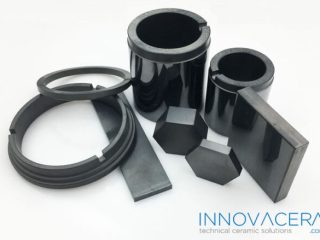
Industrial ceramic components include oxide ceramic components, such as alumina ballistic plates, zirconia y2o3 stabilized rods, and non-oxide ceramic parts, such as silicon nitride bar, Aluminum nitride substrates, boron nitride nozzles, and so on. Industrial ceramics have high wear resistance, high insulation and corrosion resistance, as well as extremely high durability and hardness. They can be used for a variety of applications in electronics, machinery, automotive, and industrial processing industries.

Electronics industry ceramics are used in components of active and passive devices, enabling high-performance electronics to be used in a variety of environments and applications, such as aerospace, automotive, communications, computers, medical, and a variety of electronic instruments, and industrial equipment, and consumer appliances.

Many industrial ceramics can withstand high temperatures while still maintaining their mechanical and electrical properties. This property makes ceramics suitable for high-temperature applications such as furnaces, jet engines, braking systems, and cutting tools.


An advanced ceramic crucible for smelting precious metals

Zirconia Crucible
What is the best container for smelting precious metals?

Zirconia ceramic has very excellent physical and chemical properties. They’re thermally stable at high temperatures, and super thermal insulation performance among various metal and oxide ceramic materials makes them a perfect material for high-temperature refractory products. The thermal conductivity is the lowest among the common ceramic material, while the thermal expansion coefficient is close to that of metal materials, making it an important structural ceramic material.

Zirconia crucibles as an important container for smelting precious metals are produced by the advanced isostatic pressing process and preciously machining.

Commonly, there are three types:
1. Calcium-stabilized
2. yttrium-stabilized
3. magnesium-stabilized

Among them, yttrium-stabilized zirconia crucibles are mostly used, but calcium-stabilized zirconia crucibles have higher thermal shock resistance and temperature resistance.

The yttrium stabilized zirconia crucible uses yttrium oxide as the stabilizer, withstanding a high temperature of 2000 degrees.

There are two series of products:
1. Refractory grade zirconia crucible with a density of 4.5g/cm3, micropores. It’s an indispensable high-temperature container for smelting rare and precious metals such as platinum.

2. Ceramics grade with a density of 6.0g/cm3 Grade zirconia crucible, fully densified, no pores. It’s stable in an oxidizing or reducing atmosphere, has good chemical inertness, and has strong corrosion resistance to much-molten metal and slag. At the same time, it inherits the thermal shock resistance of refractory materials and greatly improves the change of temperature gradient in use. It is widely used in the smelting of rare and precious metals such as platinum.


What are the different types of soldering irons?

Ceramic heating element for soldering iron

Soldering is the process of melting an alloy (solder) into a joint and joining two or more metal objects together using a tool called a soldering iron. A soldering iron is shaped like a stick or pen and has a metal tip that can be heated to melt the solder. The tool can be used for plumbing, electronics, circuit boards, and even to make jewelry. In this article, we’ll look at gas welding and soldering irons, welding guns, and the different tips and types of solder you can use with.

Different types of soldering iron tips
Depending on the type of project you are working on, you may need different types of soldering tips.  Tips come in a variety of sizes and shapes, from small tips to large wedges.  Here, we take a look at six common styles you might want, as well as the types of work these techniques can be used for. Please note that these tips are used with gas soldering irons and electric models will have a similar, but possibly smaller style.

1. Small hole tip for concentrated area
Small hole tip for concentrated area

2. Larger tips for pipe work
Larger tips for pipe work

3. Fan tips for larger sections of pipe
Fan tips for larger sections of pipe

4. Pointed tips for connecting joints, used for tin-smithing
Pointed tips for connecting joints, used for tin-smithing

5. Wedge tip for larger surface areas
Wedge tip for larger surface areas

6. Sharp tip for delicate work
Sharp tip for delicate work

7. Electric Soldering Kits
An electric soldering iron kit is a great all-around standard choice for your project. It’s affordable and versatile, as the kit comes with several different tips to use. Rod irons are usually lighter and easier to use than soldering guns or air guns, but they may not be as hot. The soldering iron will have a dial that allows you to control the temperature, depending on the project you’re working on and the material you need to melt. This type of soldering iron also requires an outlet to use, unlike a gas version, which is cordless and more portable. In general, an electric welding kit is a good choice for starting smaller home projects that you may be working on.
Electric Soldering Kits

8. Types of Solder
Solder is a molten material that is then joined together by two different metals. It is an alloy whose melting point varies according to the mixing of the materials. Lead and tin are common metals, but alloys can also be made of zinc, brass, copper, or silver. The one you choose for your project must have a lower melting point than the object you want to add, and your soldering iron must be able to reach a high enough temperature to actually melt the solder.
You’ll find that the three main types of solder are lead-based, lead-free, and flux cores. The most common ratio for lead-based solders is 60/40, where 60% tin and 40% lead form the mixture. The higher ratio makes it easier to melt and produces harder joints, making it one of the strongest materials you can weld with. Lead-free soldiers are more commonly used in consumer electronics. Lead-free solder has a higher melting point than lead alloy solder. Then there is the solder wire with flux core. The product has resin built-in adhesion because flux eliminates oxidation from the metal leading to a better working surface.
Types of Solder

INNOVACERA can customize the Ceramic Heater used in soldering iron as required.
Fast heating, environmental protection, and long service life.
Please feel free to contact us if you need more information.


Metalized Ceramics for Electrical Components

Metalized Ceramic

INNOVACERA supplies custom refractory metalized alumina ceramics for use in power grid tubes, x-ray tubes, vacuum interrupters, and similar applications where ceramic-to-metal seal joints of exceptional strength and hermeticity are required.

Ceramic material:

Deposition methods:

  • Screen printing
  • Pad printing
  • Brush coating

A coating of molybdenum-based paint followed by nickel plating can provide an interface where the ceramic/metal component can be formed by brazing, providing a sealed joint. After sintering, a layer of molybdenum-manganese alloy with a thickness of 10–30 μm was deposited. The metallization sintering process is carefully controlled to achieve a balanced mixture of molybdenum particles surrounded by a glass matrix to insure high bond strength between the metallization layer and the ceramic matrix.

Contact us today with your requirements and our sales engineers will work with you to provide the correct product to meet your application.


Enquiry