technical ceramic solutions

News

Category Archives: News

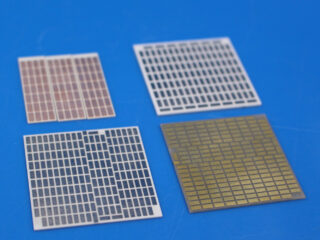
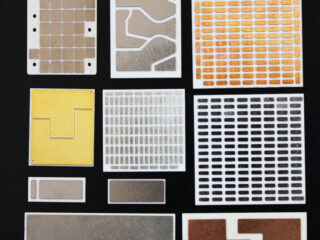
Alumina ceramic substrates for the automotive industry

Alumina ceramic substrates for automautive industry

Alumina ceramics is a ceramic material with a-Al2O3 as the main crystalline phase. Because of its high melting point, high hardness, heat resistance, corrosion resistance, and electrical insulation characteristics, it can be used under harsher conditions. Alumina ceramics have competitive prices and mature production technology. It is currently one of the ceramic materials with the largest output and the widest application range. It is mainly used in the fields of cutting tools, wear-resistant parts, and bio-ceramics. In addition, it is also widely used in energy, aerospace, chemical, chemical, and electronic fields. In particular, 95% and 99% alumina ceramic components, whether in structural ceramics or electronic ceramics, are some of the most widely used and most used ceramic materials.

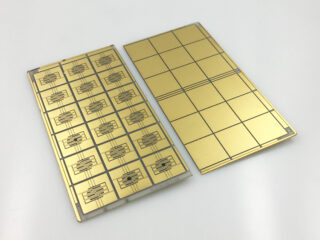
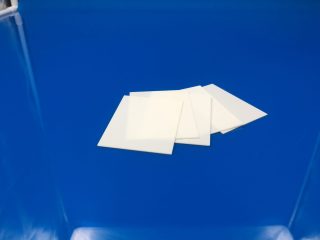
Such Alumina ceramic substrates now are widely used in the automotive industry, especially the large ceramic substrate. Innovacera are specializing in alumina ceramic substrates, the max size of AL2O3 ceramic substrates Innovacera made is 380*200*1 mm (0.8 mm and 0.635 mm thickness are also available). The substrates are part of a specific brazing process, used as spacers during thermal treatment.


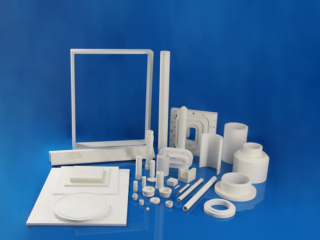
Ceramic Solutions for Electrical Insulation

Ceramic Solutions for Electrical Insulation

Insulating ceramics, also known as device ceramics, are ceramic materials used in electronic equipment to install, fix, support, protect, insulate, isolate and connect various radio components and devices.

In electronic technology, the insulating material is required to be non-conductive, that is, the resistivity is required to be as high as possible, and the dielectric strength is also required to be as high as possible. Alumina, on the other hand, is an electrically insulating material with high resistivity, which increases with purity.

The good chemical stability of alumina results in high corrosion resistance. Insoluble in water, only slightly soluble in strong acid and strong alkali solutions. Tests have shown that the low chemical solubility of the alumina ceramic component makes it highly resistant to chemical corrosion.

High voltage devices not only need insulators to accommodate the current but also insulators to not interfere with the current.

Innovacera manufactures metalized ceramics and ceramic insulators for high voltage applications. The feedstocks are 95% alumina, 96% alumina, and 99% alumina. Can be customized according to customer requirements.


2022 Spring Festival Holiday Notice

Dear Customers and Partners,

Thank you all for giving our company full support in 2021. The Spring Festival of 2022 is approaching, all the staff of Innovacera company wish you a happy Spring Festival and good luck in the year of the Tiger!

Please be informed that our office will be closed from Friday, 28th January 2022 to Monday, 7th February 2022 for Lunar Chinese New Year.

Our office will resume operation on Tuesday, 8th February 2022.

We’re sorry for any inconvenience that occurred, please do drop us an email at sales@innovacera.com or call us at +0086 592 558 9730 if you have urgent matters.

Our Management & Staff would like to take this opportunity to thank all our customers and business partners for your continuous support over the past years and also wish everyone:

A Very Happy & Prosperous Tiger Year Ahead!

The INNOVACERA Team
12th Jan, 2022

INNOVACERA 2022 Spring Festival Holiday Notice


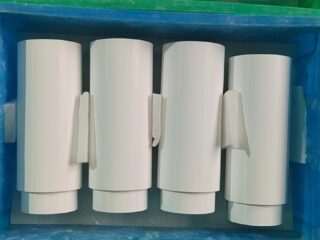
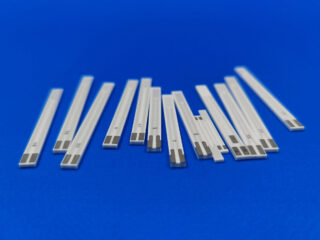
Helix Pyrolytic Boron Nitride APBN Support Rods for TWT

Helix Pyrolytic Boron Nitride APBN Support Rods for TWT

Innovacera are specializing in customized Pyrolytic Boron Nitride components such as plate, disc, helix rod, and so on.

The Helix Pyrolytic Boron Nitride APBN Support Rods is widely used for Traveling Wave Tube (TWT) because of its directional thermal conductivity and ability to provide optimal “heat spreading”, pyrolytic boron nitride demonstrates improved temperature uniformity. Resistant to thermal shock, pyrolytic boron nitride is good as a sealant and protects graphite from corrosive atmospheres including most molten metals, acids, and hot ammonia environments. Pyrolytic boron nitride provides extremely effective as an electrical insulator.

Innovacera Pyrolytic boron nitride parts application is as below:

  • Compound semiconductor crystal growth(VGF, LEC Crucible)
  • Molecular Beam Epitaxy(MBE) Crucible
  • MOCVD Heater
  • PBN Infrared Window
  • Wafer processing
  • Electronic assembly
  • Traveling Wave Tube (TWT) (PBN Support Rod)
  • Metallurgical applications
  • Thin film manufacturing
  • PBN Coating Graphite
  • High temperature, vacuum equipment insulator

What’s Alumina production in 2021?

Alumina Ceramic Plate Alumina ceramic parts

High Hardness Insulation 95% Alumina Ceramic Screw And Nut 99 Alumina Ceramic High Speed Shaft Rotor

In recent years, global alumina production has grown rapidly. In 2020, global alumina production reached 134,432 kilotons, an increase of 2,522 kilotons from 2019, a year-on-year increase of 1.9%.

The monthly global alumina production in the first half of 2021 was significantly higher than that in the same period in 2020. The global alumina market has fully recovered. In June 2021, the global alumina production was 11,695 kilotons, an increase of 705 kilotons over the same period in 2020.

Below is the statistics chart of global alumina production from 2014 to the first half of 2021:
the statistics chart of global alumina production in 2014 to the first half of 2021

With the continuous improvement of alumina production technologies in various countries, the global average daily output of alumina has increased significantly. In 2020, the global average daily output of alumina reached 367 kilotons/day, an increase of 5.9 kilotons/day from 2019, an increase of 1.6% year-on-year In the first half of 2021, the global daily average output of alumina was 386.2 kilotons per day.

In the first half of 2021, China’s alumina production accounted for 53.73% of the global total alumina production, a very large proportion; Oceania’s alumina production accounted for 15.07% of the global alumina production; Africa and Asia (excluding China) accounted for the global alumina production 9.23% of the total alumina production; South America’s alumina production accounted for 9.08% of the global alumina production; Western Europe’s alumina production accounted for 3.99% of the global alumina production; Eastern and Central Europe’s alumina production accounted for the world’s total alumina production 3.38%; North American alumina production accounts for 1.84% of global alumina production.
Regional share of global alumina production in the first half of 2021

The data learned from the National Bureau of Statistics of China show that from January to October 2021, the cumulative data of national alumina production reached 65.153 million tons. The output in a single month in November was 5.921 million tons. Below picture is the output of alumina from January to October 2021.
the output of alumina from January to October 2021.

2020-2021 alumina production comparison chart

China’s alumina imports are mainly distributed in Fujian, Shanghai, Beijing, Inner Mongolia, Liaoning, Shandong, Henan, Jiangsu, Xinjiang, Zhejiang, Chongqing, and other places. Among them, Fujian, Shanghai, and Beijing continue to rank among the top three import provinces in alumina imports, and Fujian’s alumina imports accounted for 23.56%.
Alumina domestic import data From January to October 2021

(Data From: National Bureau of Statistics of China, Customs Net, etc.)


PBN-PG Composite Heating Elements

PBN-PG-Heater-Element PBN-PG-Heater-Element

High purity and high-performance pyrolytic boron nitride are used as the substrate for the PBN heating element. Pyrolytic graphite (PG) is placed on the surface of PBN plates by the CVD method as a conductor and heater.

As both PG and PBN are extremely pure and very stable in a vacuum or inert atmosphere, the PBN-PG heating element could be very durable and keep the chamber clean. It could be heated to 1600°C in a very short time without the emission of any gas component. These heating elements are ideal products for the semiconductor industry and applications that require high temperature, high vacuum, and high purity.

PBN/PG Composite Heating Elements Specifications

Size 1″-4″
Bulk Density 2.15-2.19 g/cm3
Max. Working Temperature 2400°C
Volume Resistivity (Ω·cm) 3.11*1011
Flexural Strength (Mpa) 243.63
Thermal Conductivity (W/M·k) 43.7-60
Dielectric Strength (at room temperature) KV/mm 56

High thermal conductivity interface materials on electric vehicles

Hexagonal boron nitride sheets

The momentum of the development of electric vehicles is very strong. In 2021, the annual penetration rate of electric vehicles has exceeded 12%, which is directly nearly doubled from last year.

Therefore, in order to ensure the safety performance and service life of the core components of electric vehicles, the “three powers” and the charging piles, we need to release the heat in a timely and effective manner. This is the thermal management material, and the thermal interface material (Thermal Interface Materials, TIM) Plays a very critical role in thermal management.

Commonly thermal interface materials are mostly based on resin and thermally conductive fillers are added as needed. The thermal conductivity of the resin matrix is ​​ poor, and it needs to be filled with thermally conductive fillers to effectively adjust its thermal conductivity to meet the requirements of use.

Hexagonal boron nitride sheets that conduct heat but not electricity

The types of fillers can be divided into three categories: metallic thermally conductive fillers, carbon-based thermally conductive fillers, and inorganic thermally conductive fillers. Common metal thermal conductive fillers mainly include Al, Cu, Ag, and so on. Carbon-based thermal conductive fillers mainly include graphite, graphene, carbon nanotubes and carbon fibers. Inorganic thermal conductive fillers mainly include boron nitride (BN), silicon carbide (SiC), aluminum nitride (AlN), and so on.


Merry Christmas and Happy New Year 2021

Merry Christmas

Dear Partners,

Merry Christmas and Happy New Year ❤️ 🎄❤️
Best Wishes to you and your family. 💏👭💕

The INNOVACERA team


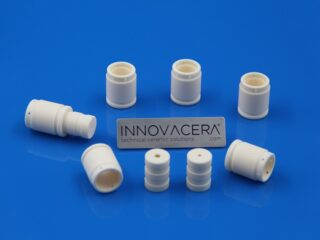
Alumina Ceramic Insulator Rings

Alumina Ceramic Insulator Rings

Alumina ceramic (Aluminum Oxide or Al2O3) is an excellent electrical insulator and one of the most widely used advanced ceramic materials. In addition, it is extremely resistant to wear and corrosion and is an industrial ceramic that can only be formed by diamond grinding. The melting point is very high at 2,072°C, and it is very hard. Alumina components can be widely used in many fields. Eg. electronics, pump components, and automotive sensors, industrial engineering, etc.

INNOVACERA Alumina includes many grades: 95% Alumina, 99% Alumina, 99.5% Alumina and 99.9% Alumina. They can fulfill customers’ different demands. The dimension ranges from 1mm to 500mm.

If you’re interested in the Alumina, please don’t hesitate to contact us for the material report.


PBN Crucible for Molecular Beam Epitaxy

PBN Crucible

Our Pyrolytic Boron Nitride (PBN) is processed by Chemical Vapor Deposition (CVD). Performance PBN is the ideal choice for furnace, electrical, microwave, and semiconductor components.
Molecular beam epitaxy (MBE) is one of the most important epitaxial growth processes for group III-V and group II-VI semiconductor crystals in the world today.

The beam source crucible used in MBE needs to have the characteristics of high-temperature resistance, high purity, and long service life. The PBN Crucible can fully meet the above requirements. It is used as an ideal container for evaporating elements and compounds in the MBE process.

For more information on our Pyrolytic Boron Nitride material, contact us today.


Enquiry