technical ceramic solutions

News

Category Archives: News

Thermally Conductive Materials

Aluminum Nitride Ceramics

Thermal conductivity is a measure of a material’s ability to pass heat through it. Materials with high thermal conductivity can effectively transfer heat and readily take up heat from their environment. Poor thermal conductors resist heat flow and obtain heat slowly from their surroundings.

The most important measured thermally conductive materials and their values are outlined below. These conductivity values are averages due to the variance in thermal conductivity depending on the equipment used and the environment where the measurements were obtained.

Thermally Conductive Materials:
1. DIAMOND – 2000 – 2200 W/m•K
2. SILVER – 429 W/m•K
3. COPPER – 398 W/m•K
4. GOLD – 315 W/m•K
5. SILICON CARBIDE – 270 W/m•K
6. BERYLLIUM OXIDE– 255 W/M•K
7. ALUMINUM – 247 W/m•K
8. ALN-170W/m•K

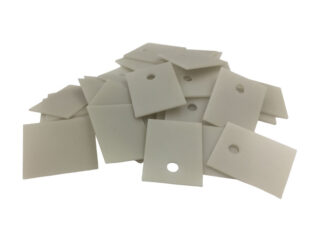
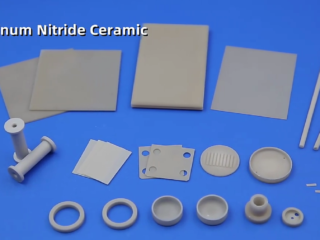
Aluminum nitride is a new type of ceramic material with excellent comprehensive performance. It has excellent thermal conductivity and thermal shock resistance, reliable electrical insulation.

ALN material is widely used in transportation such as high-speed trains, new energy automobiles, airplanes, LED lighting, electric power, high voltage transmission, smart power grids, photovoltaic, national defense: weapon, aerospace, industry, smartphone, computer, communication, and so on.

If you have more interests, pls contact us directly.


Zirconia Ceramics- An Excellent Material Choice For Smart Wear

Smart Bracelet

According to IDC’s latest data, although affected by the epidemic, suppliers have reduced their production scale, the demand for wearable devices remains stable. In the second half of 2020, with the launch of new products by many suppliers, including smart watches, smart bracelets, the global shipment of wearable devices is expected to reach 396 million units in 2020. This is 14.5% higher than 345.9 million units in 2019. IDC forecasts a compound annual growth rate (CAGR) of 12.4% over the next five years, reaching 637.1 million units by 2024.

At present, intelligent wearable devices are mainly used in the field of sports and health, such as recording exercise volume and heart rate detection. With the development of artificial intelligence technology, intelligent wearable devices are becoming more and more intelligent and will become essential supplies in our life.

The shell of the existing intelligent wearable device is mostly made of metal or plastic. Although the heat dissipation effect of the metal is better, it is also a double-edged sword, because the thermal conductivity of metal may make the equipment hot and affect the hand feel. Moreover, it is very easy to drop paint and oxidize which reduces gloss and affects beauty.

As an intelligent wearable material, ceramics have the following advantages:

  • High hardness and wear resistance
  • Skin friendly, non – allergic
  • Good heat dissipation and soaking property
  • Jade texture, lukewarm color
  • Unshielded signal
  • Suitable for mass production, low cost

Application of Zirconia ceramics in intelligent wear
1. Smartwatch

  • Watchcase
  • watch bezel
  • Backplate
  • Watchband
  • Decorative Coating

2. Smart Bracelet
3. TWS headset
And so on.

Backplate Watchcase
Watchband watch bezel

Article source: Aibang Ceramic Exhibition.


What is Dielectric Ceramic?

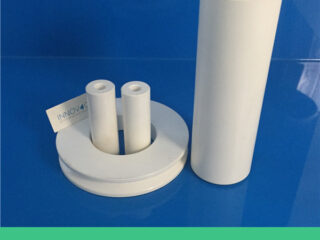
Insulating ceramic tube

Dielectric ceramic is a kind of ceramic material which resistivity is greater than 108Ω∙m, and can withstand the strong electric field without breakdown. The dielectric material is an insulator, putting more emphasis on its polarization characteristics. According to the characters of its dielectric properties can be divided into electrical insulating ceramics, ceramic capacitor, piezoelectric and ferroelectric ceramics. They are usually expressed by volume resistivity, dielectric constant, and dielectric loss.

What is volume resistivity?
The resistance of material per cubic volume, the higher the volume resistivity, materials for electrical insulation components of the higher efficiency.

What is a dielectric constant?
It is used to measure an insulator to store electrical energy performance, it is two pieces of the metal plate with insulation materials as the medium compared with air as medium or vacuum, the ratio of the capacitance.

What is dielectric loss?
Dielectric loss refers to the dielectric under the effect of the alternating electric field, the consumption of electricity per unit time.

Taking the insulating ceramic as an example, we will introduce its properties, classification, and application to better understand it.

Insulation material is not conductive, requiring high resistivity as far as possible. To become an excellent insulating ceramics, must have the following properties:

  • Volume resistivity: ≥1012 Ω∙cm
  • Relative dielectric constant ≤ 30
  • Good thermal conductivity, close to conductor material thermal expansion coefficient, heat resistance, high strength, and chemical stability

Classification of insulating ceramic:

  • The oxide, such as Si02, A120, etc
  • The non-oxide, such as Si3N4, BN, AIN, etc
  • Single crystal insulating ceramics, such as silicon, synthetic mica (the floorboard of the layered structure of aluminum silicate), spinel, synthetic sapphire, etc.

The application of the insulating ceramic:

  • High-performance ceramic insulator which can withstand the pressure of more than 500 keV used in extra-high-voltage power transmission.
  • Ceramic spark plugs used for automobiles, ceramic ignition needles used for gas stoves
  • The substrate used for integrated circuits and packaging materials
  • Ceramic insulating tubes are used for electrical and electronic.

Should you have more interests, pls contact us at any time.


PBN-PG Heaters

PBN-PG-Heater-Element

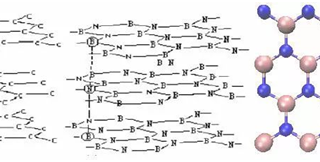
Pyrolytic graphite (PG) is placed on the surface of PBN plates by the CVD method as a conductor and heater. And the PG heating element could be covered by PBN again. As both PG and PBN are extremely pure (99.99% or even higher) and very stable in a vacuum or inert atmosphere, the PBN-PG heating element could be very durable and keep the chamber clean. It could be heated to ultra-high 1600°C for a very short time without emission of any gas component. These heating elements are ideal products for the semiconductor industry and applications that require high temperature, high vacuum, and high purity.

PBN/PG Heater Advantages:
1. PBN composite heating element has an operating temperature of up to 1600°C.
2. High mechanical durability and dimensional stability.
3. High thermal shock resistance.
4. PBN layer provides electrical insulation.
5. Eliminate outgassing and contaminations.
6. Thermal gradients can be tailored.
7. Chemically inert to almost all metals, liquids, and gas.
8. Large variety of PG heater and PGN heater shapes is available.


What Do You Know About MCH Heater?

MCH heater is the abbreviation of metal ceramic heaters.

Definition:
It refers to a ceramic heating element in which a meta tungsten or molybdenum manganese paste is printed on a ceramic casting body and laminated by hot pressing and then co-fired at 1600°C, in a hydrogen atmosphere to co-sinter ceramic and metal.

MCH ceramic heating element is high-efficiency, environmentally friendly, and energy-saving. ceramic heating element, which is mainly used to replace the most widely used alloy wire heating elements and PTC heating elements and components.

Technical characteristics:
1. Energy-saving, high thermal efficiency, unit heat power consumption is 20-30% less than PTC;
2. The surface is safe and non-harged, with good insulation performance, can withstand the withstand voltage test of 4500V/1S, no breakdown, and leakage current <0.5mA;
3. No impulse peak current; no power attenuation; rapid heating; safe, no open flame;
4. Good thermal uniformity, high power density, and long service life.

Applications:
Electric heaters, heating, and cooling air conditioners, clothes dryers, hand dryers, instant water heaters, multi-nction microwave ovens, ovens, and other household appliances and industrial appliances.

If you want to know more information, please feel free to contact us.

MCH heater element


Ceramic Nozzle Holder For Fiber Laser Cutting Head

Laser Ceramic Nozzle Holder

INNOVACERA not only produce ceramic reflector but also make ceramic ring holder for leaser cutting head now. There’re some regular types of ceramic holders. Customized design is also available for us.

Regular types are as below.
Type A
Outside Diameter: 28/24.5mm, Thickness: 12mm
( For Precitec WSX HSG… )

Type B
Outside Diameter: 32/28.5mm, Thickness: 12mm
( For Raytools Bodor )

Specifications:
Material: Alumina ceramic
The installation type: Internal thread connection
Application: Fiber laser cutting machine

Laser head assembly drawing

Features:

  • Excellent conductivity
  • High sensitivity
  • Applicable to the major brands of laser cutting head
  • Ceramic + high-quality alloy Ensure the consistency of thermal expansion of each material of ceramic ring To prevent the blowout
  • Ceramic and alloy close bonding, heating without deformation, high surface finish, airflow is more smooth

What is metalized ceramic?

metalized ceramic

Metallized Ceramics

As a typical inorganic non-metallic material, ceramics seem to stand in a completely opposite position to metal.

As its advantages are too prominent, people began to think of combining ceramics and metals, to joint their strengths. This is how the Metallized Ceramics technology generation.

Advantages of ceramics

  • Low dielectric loss-the dielectric constant.
  • High thermal conductivity
  • Thermal expansion coefficient-the thermal expansion coefficients of ceramics and metals are close
  • High bonding strength-high bonding strength between metal layer and ceramic
  • High operating temperature-ceramics can withstand high and low-temperature cycles with large fluctuations, and can even operate normally at high temperatures of 500-600 degrees.
  • High electrical insulation-the ceramic material itself is an insulating material and can withstand a high breakdown voltage.

When ceramics are used in circuits, they must be metalized first, that is, a layer of metal film that is firmly bonded to the ceramics but not easy to be melted is applied to the ceramic surface to make it conductive, and then welded with metal leads or other metal conductive layers Connected to become one.

It can be said that the pros and cons of the ceramic metallization effect will directly affect the final packaging effect.

The commonly used preparation methods for ceramic metallization mainly include the Mo-Mn method, activated Mo-Mn method, active metal brazing method, direct copper-clad method (DBC), and magnetron sputtering method.

1. Mo-Mn method
The Mo-Mn method is based on refractory metal powder Mo, then a small amount of low melting point Mn is added to the metallization formula, the binder is added to coat the Al2O3 ceramic surface, and then sintered to form a metalized layer. The disadvantages of the traditional Mo-Mn method are that the sintering temperature is high, the energy consumption is large, and the lack of activator in the formula leads to low sealing strength.

2. Activation Mo-Mn method
The activated Mo-Mn method is an improvement on the basis of the traditional Mo-Mn method. The main directions for improvement are: adding activators and replacing the metal powder with oxides or salts of molybdenum and manganese. Both types of improvement methods are aimed at lowering the metallization temperature. The disadvantages of the activated Mo-Mn method are that the process is complex and the cost is high, but its combination is firm and can greatly improve the wettability, so it is still the earliest invented process in the ceramic-metal sealing process with a relatively wide range of applications.

3. Active metal brazing method
The active metal brazing method is also a widely used ceramic-metal sealing process. It is developed 10 years later than the Mo-Mn method. It is characterized by fewer processes. The ceramic-metal sealing can be completed by only one heating process. . The brazing alloy contains active elements such as Ti, Zr, Hf and Ta. The added active elements react with Al2O3 to form a reaction layer with metallic characteristics at the interface. This method can be easily adapted to mass production. Compared with the manganese process, this method is relatively simple and economical.

The disadvantage of the active metal brazing method is that the active brazing filler metal is single, which limits its application and is not suitable for continuous production. It is only suitable for large, single-piece or small batch production.

4. Direct Copper Cladding (DBC)
DBC is a metallization method for bonding copper foil on ceramic surfaces (mainly Al2O3 and AlN). It is a new type of process developed with the rise of chip-on-board (COB) packaging technology. The basic principle is to introduce oxygen between Cu and ceramics, and then form a Cu/O eutectic liquid phase at 1065~1083℃, and then react with the ceramic matrix and copper foil to produce CuAlO2 or Cu(AlO2)2, and then Under the action of the intermediate phase, the bond between the copper foil and the substrate is realized.

5. Magnetron sputtering method
Magnetron sputtering method is a kind of physical vapor deposition. It deposits multilayer films on the substrate through magnetron technology. It has advantages over other deposition techniques, such as better adhesion and less Contamination, and improves the crystallinity of the deposited samples to obtain high-quality films. The metallization layer obtained by this method is very thin, which can ensure the accuracy of the part size. The DPC process supports PTH (Plated Through Hole) / Vias (Through Hole). High-density assembly is possible-the line/spacing (L/S) resolution can reach 20μm, so as to realize the lightweight, miniaturization, and integration of the equipment.

As a new type of material, ceramic metallization has many unique advantages. In the near future, ceramic metallization materials are bound to shine.


Zirconium products price continues to rise

Zirconium Products

Recently Zirconium products price continues to rise, below will explain why it continues to rise and what’s next year’s trend?

From the industrial chain of zirconium, the upstream raw materials are mainly zircon sand, zirconium silicate in China accounts for about 38% of the amount of zircon sand, zirconium oxychloride 16%, zirconium fused 14%. In terms of end consumption, the ceramics industry accounts for 45%, making it the largest consumer of the zirconium industry, followed by chemical zirconium and refractories.

In 2019, the total import volume of zircon sand in China reached 1.182,000 tons, which was converted into about 704,000 tons of concentrate, accounting for 98.6% of imports. In terms of import countries, the top three major importers were Australia (309,000 tons, 43.79%), South Africa (185,000 tons, 26.20%), and Indonesia (43,000 tons, 6.17%).

Zircon sand supply continues to be tight due to the suspension of RBM, the world’s top three zircon sand. In addition, the development of 5G and dentistry continues to increase the demand for zirconium products, so the price of zirconium sand has skyrocketed. Data show that since 2021, the price of Zirconium sand in Hainan has risen to 16650 yuan/ton from 8700 yuan/ton at the beginning of the year, up more than 90%.

In addition, the price of zirconium products continues to rise. Yesterday evening, media reported that Tronox, the world’s third-largest producer of zirconium sand, will increase the price of zirconium sand by $175 / ton in the next quarter. At that time, the price of South Africa and will increase to $1770-1790 / ton, and the price of Australian sand will increase to $1785-1815 / ton.

At the same time, the supply of different varieties of zircon sand of Tronox will be reduced to varying degrees in the next quarter, mainly due to the epidemic. The operation of the mine and the transportation of ore will be affected to varying degrees. At the same time, the person in charge said that the situation of supply shortage will not be alleviated in the fourth quarter and will continue to next year.

Zirconium raw material still is increasing


INNOVACERA’S National Day Holidays

Happy Chinese National Day!

Chinese National Day is celebrated on October 1st every year to commemorate the founding of the People’s Republic of China.

October 1st, 1949 was the memorial day for the founding of the People’s Republic of China. One thing that should be noted is that the PRC was not founded on that day. Actually, the Chinese independence day was September 21st, 1949. The grand ceremony held at Tiananmen Square on October 1st, 1949 was to celebrate the forming of the Central People’s Government of the brand new country. Later on October 2nd, 1949, the new government passed the ‘Resolution on the National Day of the People’s Republic of China’ and declared October 1 to be the Chinese National Day. Ever since 1950, every October 1st has been grandly celebrated by Chinese people.

The 7-day holiday from Oct. 1st to 7th is called ‘Golden Week’, our office will be closed from Oct. 1st to 7th.

During the holidays, please feel free to send your e-mail inquiries to sales@innovacera.com, we will get back to you once coming back to work. We wish you a peaceful and happy holiday!

The INNOVACERA Team


Main Applications of the Wear-Resistant Ceramics

Alumina Ceramic Plate

Alumina ceramics have good wear resistance, corrosion resistance and mechanical properties, and excellent production capacity. The most important thing is that alumina ceramics have a relatively low price and higher cost performance, which makes them more effective in practical use. So it has become the most widely used wear-resistant ceramic material.

We will introduce some applications of wear-resistant ceramic.

1. Application in conveying and coal conveying system
The equipment of the coal conveying and material conveying system are easy to wear and even wear through. The use of alumina wear-resistant ceramics will greatly increase the service life and bring significant improvements in safety production and economic benefits.

2. Application in pulverizing system
Most of the abrasion of the pulverizing system of coal-fired power plants is mainly caused by the collision and impact of pulverized coal. The high-speed pulverized coal airflow particularly severely wears the outlet of the coal mill, the inlet and outlet of the coarse and fine powder separator, and the elbow of the primary air duct of the pulverizing equipment. The same phenomenon occurs in the air pipe elbow of the powder selection system of the cement plant. By using wear-resistant alumina ceramics, it will have a positive impact on actual production.

3. Application in ash system
In power plants that use hydraulic ash removal and slag discharge systems, the ash pump, ash ditch, nozzle, and other inlet and outlet pipe sections are severely worn. After using wear-resistant alumina ceramics, they can be used for a long time and have good wear resistance, which solves the task of mechanical repair. Problems such as the heavy and poor environment.

4. As a grinding medium
Due to the characteristics of high hardness, moderate density, wear resistance, corrosion resistance, and low price, alumina grinding balls are widely used in the raw materials of cement, minerals, ceramics, electronic materials, magnetic materials, and coatings, paints, and other industries. Grinding and processing is a high-quality grinding medium. In the building ceramic industry, the wear efficiency of alumina grinding balls is 20%-40% higher than that of natural flint and pebbles. With the reduction of high-quality natural ball resources and the high wear rate of ordinary ceramic balls, alumina grinding balls will be used by more and more manufacturers.

5. Oil and gas extraction
Alumina wear-resistant ceramics can be adapted to work in harsh environments, especially those ceramics with an alumina content of 97% (mass) or more, which can be used in oil and natural gas drilling equipment. Typical applications are nozzles, valve seats, adjusting devices, pump accessories, and even drill bit accessories that can vibrate in high-pressure environments, in oil and mud and mortar, and sometimes work in the presence of acids and salts. It is resistant to wear and the requirements for corrosion resistance are more stringent.

If you have more interests, pls feel free to contact us.


Enquiry