technical ceramic solutions

News

Category Archives: News

Innovacera Always Has Different Silicon Nitride Ceramic Balls Sizes In Stock

Excellent Stock Silicon Nitride Ceramic SI3N4 Bearing Balls INNOVACERA

Innovacera develops all kinds of ceramic balls including the zirconia ceramic, silicon nitride ceramics and alumina ceramics. Many silicon nitride balls have stock.

Silicon nitride ceramic balls are precision ceramic balls which are forming in the non-oxidizing atmosphere with high-temperature sintered. At 800°C, the strength, hardness are almost unchanged, the density is 3.20g/cm3, only 1/3 weight of the steel bearing when rotating, the centrifugal force is small, can achieve high-speed operation. It can be used as a non-lubricating medium with a high pollution environment. It is ceramic bearings, hybrid ceramic ball bearings preferred balls. So it is widely used in the Bearing, Chemical, Oil industries.

Advantages:

  • High strength
  • High wear resistance
  • Excellent self-lubricating
  • High electrical insulation
  • Resistance to high temperature
  • Good magnetic insulation performance
  • Corrosion resistance, resisting acid and alkali, it can be long-term used in seawater.

Silicon Nitride Ceramic Ball Grades:

G3, G5, G10, G16, G20, G50, G100

General sizes:

from diameter 0.794 mm to 101.600 mm.

Based on the stock feature, Innovacera has a short lead time and competitive price advantages for our silicon nitride ceramic balls. Click to buy now


What is the oxygen sensor made of?

Planar Oxygen Sensor Element

The oxygen sensor consists of an internal ceramic material called zirconia, with a porous platinum coating, and is protected by a metal casing. Its performance is based on changing the properties of ceramics at high temperatures, allowing oxygen to diffuse from the air.

It operates according to the difference in oxygen concentration between exhaust gas and outside air and generates a voltage of 50 mV to 900 mV.

The probe has a limitation: to start operation, it must be heated to approximately 300°C. In older probes, it is the exhaust gas itself that heats them, so you must wait a few minutes before putting the sensor into operation. Currently, there is a heating resistor next to the ceramic, even if the exhaust gas is in a low-temperature state, it can be heated for up to 10 seconds.

We have to make a thimble type and planar type of ceramic heater for the oxygen sensor.

Blow is the thimble type oxygen sensor structure drawing.
Thimble Type Oxygen Sensor Structure Drawing

This is the structure drawing for the planar type
Cutaway view of a planar wideband sensor

If you want to know more about oxygen sensor heaters, pls contact us at any time.


Why the oxygen sensor is air leakage?

Planar Sensor Element

The oxygen sensor is a very important sensor. The function of the oxygen sensor is to sense the oxygen content of the exhaust gas discharged from the engine and give a signal to the engine computer in the form of voltage. The engine computer uses the signal of the oxygen sensor to control the fuel injection volume. If the oxygen sensor is damaged, it will have a problem of increased fuel consumption. If the oxygen sensor is loose, it is not acceptable, because it will leak. After the leak, the signal from the oxygen sensor to the computer may be inaccurate, affecting the engine’s power and fuel consumption, so if it is loose, it should be repaired as soon as possible.

But do you know why the oxygen sensor will leak when assembling the ceramic heater chip?

There are two of the reasons:

One is the chip sealing is not doing well. Around the oxygen sensor piece, the power ring needs to be crushed to fill the gap. If there is no powder ring compaction, there will be a gap leakage problem.

The other is due to the high pressure of the pressing powdering ring, about 10 tons, and the oxygen sensor plate is not straight, which may break the oxygen sensor plate.

How to prevent the leak?

Our products will be 100% tested before leaving the factory, such as withstand voltage test, so there is no possibility of air leakage before leaving the factory.

Should you have more questions, please contact us at any time.


Pyrolytic Boron Nitride (PBN) MBE Crucible for epitaxial growth of Ⅲ-V and Ⅱ-VI semiconductor crystals

PBN MBE Crucible

The purity of the Pyrolytic Boron Nitride (PBN) product is extremely high, and the purity of the gaseous feedstock is easier to control. Generally, the total impurities of PBN products are <100 ppm, which means that the purity is not less than 99.99%. This high-purity PBN product is ideal for the semiconductor industry and vacuum systems.

Molecular beam epitaxy (MBE) is one of the most important epitaxial growth processes of group III-V and group II-VI semiconductor crystals in the world. It is a method of growing thin films layer by layer along the crystal axis of the substrate material under appropriate substrates and conditions.

PBN crucible is the best container for evaporating elements and compounds in the MBE process.

The following is the schematic diagram of MBE technology.
Schematic Diagram of MBE

Note:
Molecular Beam Epitaxy (MBE) is a technology that sprays a certain proportion of the various components and doping atoms (molecules) that make up the crystal onto the surface of the hot substrate at a certain thermal motion speed under ultra-high vacuum conditions to grow the crystal.

We provide custom PBN crucibles and VGF / LEC / Conical / MBE / OLED crucibles.


Announcement of Infringement

A statement about our website being maliciously plagiarized

Recently, our marketing department has discovered that our website has been illegally plagiarized, misappropriated, counterfeited by many same technical ceramics industry. This is very bad behavior, it has seriously violated our website copyright and has infringed upon our company’s reputation and our customers benefit.

The infringing company completely imitated and maliciously copied our official website, except for the company name and contact information. Their layout, color, pictures, and content, etc. are exactly the same as our company’s official website. What’s even more exaggerated is copying without making any changes.

Innovacera official website is an important external publicity platform for our company. Although in the Internet era, information is open and shared, and our company also supports communication and learning, plagiarism without a bottom line has constituted a serious infringement and has seriously damaged our legitimate rights and benefits. Innovacera believes that companies that use opportunistic means to plagiarize the results of other people’s websites cannot last for a long time, and at the same time cannot provide their customers with credible and good settlement services.

Our company hereby solemnly declares: We strongly despise and condemn this kind of opportunistic and unearned practice. Please immediately delete all infringing source codes and revoke all infringements of companies, platforms, and individuals who are suspected of plagiarizing, embezzling, counterfeiting, or plagiarizing our website, products, and Content, and stop all related infringements at the same time.

For the above plagiarism behavior, we hope that the plagiarism company will abide by the industry ethics and take the relevant pages offline as soon as possible. In order to protect the legitimate rights of our company, our company has collected fixed relevant evidence and reserves the right to pursue related economic losses. Our company will maintain zero tolerance for infringements in the same industry, and will continue to carry out rights protection activities in the future, and will pay attention to infringements on a regular basis. Here we also call on the majority of users and clients to believe firmly Innovacera’s official website at www.innovacera.com.

Other websites with similar layouts and similar content are not relevant to our company. Please do not be deceived. At the same time, we also welcome our clients to supervise and report the infringing company for us and jointly resist this bad behavior. How can a company that has copied its official website win the trust of its customers? The following is an example of some plagiarized page content for reference:

Plagiarism News


What’s new about the laminated planar oxygen sensor?

The advocated global environmental preservation has brought the increasing stringent on emission regulations. How to reduce hydrocarbon (HC) emission at engine cold start is essential for an automotive, therefore, it’s necessary to control engine exhaust air to fuel (A/F) ratio and warm up the catalyst as quickly as possible. Oxygen sensors are widely used to control the A/F ratio at around the stoichiometric point, where three-way catalysts are most effective.

The traditional oxygen sensor is made of alumina and inserts into a zirconia ceramic tube and commonly takes some 20 seconds to activate.
Tube oxygen sensor

New laminated planar oxygen sensor combined alumina and zirconia together, heater element was embedded in the zirconia substrate of the sensor element adopting alumina for the heater substrate material, solve the problem of low thermal conductivity of zirconia while guarantee the good heating:

– High thermal conductivity and superior dielectric characteristic, by the direct joining of the alumina ceramic heater substrate and the sensor element zirconia electrolyte.
– Low heat stress at temperature rise, due to optimized heater design.
– Superior sensor protection from water droplets, and improved sensor response, due to optimized arrangement of intake holes in the sensor cover.

With these characteristics, the oxygen sensor can be activated in 10 seconds after a cold start.

planar cutaway

Planar Sensor Element


Porous Ceramics Cleaning and Machining Guidance and Precautions

1. Machining guidance and precautions:

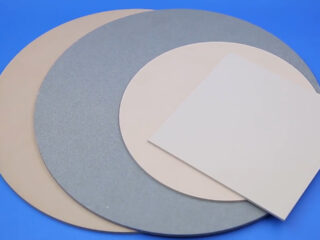
  • The porous ceramic plate is soaked in clean tap water for 5 minutes, and then processed.
  • So as to prevent the oil from penetrating into the dry ceramic plate and not being washed away.
  • The porous ceramic is cut by a diamond blade and uses a grinding wheel or grinding head to grind.
  • After processing, use neutral detergent and ultrasonic cleaning. Pls avoid processing with oily coolant, otherwise, it will be difficult to clean.
  • Last step: drying natural or drying water with an electric fan.

2. To clean the porous ceramic plate:

  • Using ultrasonic cleaning with neutral detergent to clean. The neutral detergent is not strong acid or alkaline, that is fine. Like washing powder, dishwashing liquid.
  • After cleaning, drying natural, or drying water with an electric fan. Please don’t use oven dry for avoiding deformation.

porous ceramic


Process Comparison of the Ceramic Substrate

DBC Substrate

The metallized ceramic substrate is a kind of circuit board. It has a thermal expansion coefficient close to that of semiconductors and high heat resistance. It is suitable for products with high heat generation (high-brightness LED, solar energy), and its excellent weather resistance is more suitable for harsh outdoor environments. Because it has the characteristics of lead-free, non-toxic, and good chemical stability, it will not cause harm to environmental protection, so it is more and more widely accepted by the public.

Due to different processes, the ceramic substrate is mainly divided into DBC (Direct Bonded Copper), DPC (Direct Plated Copper), AMB (Active Metal Brazing), and Thick film.

We will introduce each of the processes and the advantages, disadvantages of each process.

DBC (Direct Bonded Copper)

It is composed of the ceramic substrate, bonding layer, and conductive layer. It refers to the special process of copper foil directly bonding to alumina or aluminum nitride ceramic substrate surface at high temperature.

The advantages are as below:

  • The copper layer is thick;
  • The processing is fast;
  • The price is cheap;
  • Can make multilayer;
  • Suitable for large area consumption;
  • High thermal conductivity;
  • High adhesion strength;
  • Excellent soft brazing;
  • Excellent electrical insulation

The disadvantages are as below:

  • Can not pass through the hole;
  • Poor accuracy;
  • Low flatness (surface roughness);
  • Suitable for the device in the large distance of the product, can not be done in the precise occupation.

DPC (Direct Plated Copper)

Mainly by evaporation, magnetron sputtering and other surface deposition process to carry on the substrate surface metallization, first under the condition of vacuum sputtering, titanium, and then is copper particles, the plating thickness, then finish making line with ordinary PCB craft, and then to plating/electroless deposition way to increase the thickness of the line, the preparation of DPC way contains vacuum coating, wet deposition, Exposure development, etching, and other processes.

The advantages are as below:

  • In terms of shape processing, DPC ceramic plate needs to be cut by laser, the traditional drilling and milling machine, and punch machine can not be accurately processed, so the combined force and line width are also finer.
  • The crystal performance of the metal is good;
  • The flatness is good;
  • The line is not easy to fall off;
  • The line position is more accurate, the line distance is smaller, reliable, and stable, can be through the hole and other advantages.

The disadvantages are as below:

It can only make a thin plate (thickness < 300μm), and its cost is high, the output value is limited, resulting in frequent shipment time can not be on time.

AMB (Active Metal Brazing)

It is a method to realize the bonding of ceramic and metal by reacting a small number of active elements Ti and Zr in filler metal with ceramics to form a reaction layer that can be wetted by liquid filler metal.

The advantages are as below:

The combination is achieved by the chemical reaction between ceramic and active metal solder paste at high temperatures, so its bonding strength is higher and reliability is better.

The disadvantages are as below:

The reliability of the AMB process depends largely on the composition of active filler metal, brazing process, brazing layer structure, and many other key factors.

Thick film

Thick film technology is straight on ceramic substrate printed graphics, then direct sintering process.

The advantages are as below:

  • The bonding force with ceramic is much greater than that of the DPC process;
  • It is direct printing of graphics, no etching, and copper plating process, so the cost will be lower;
  • It is a one-time forming, so the flatness is smoother than that of the DPC.

The disadvantages are as below:

Because the thick film process is printed, it is generally not too thick. Due to different product requirements, different materials have a certain impact on the conductivity of the film.

So it is hard to say which process is best, it depends on the customer’s application and usage, customer could choose each of the processes according to their requirements.

Should you have more interests, pls feel free to contact us at any time.


How Many Oxygen Sensors Does a Car Have?

Planar Oxygen Sensor Chip

The oxygen sensor is a car part that you probably never think much about. In fact, you may be unsure of what it even does, yet it is essential for your vehicle to function normally or perform optimally.

An oxygen sensor, which is sometimes abbreviated as an O2 Sensor, generates a reading based on the oxygen level within the automotive exhaust system. The oxygen sensor is made of ceramics and includes a number of pores, which are electrodes coated in platinum and surrounded by a threaded casing. The sensor is effectively screwed into the exhaust pipe with half of it sticking out. Most sensors undergo a heat test, which ensures they can reach their optimal operating temperature promptly.

How Many Oxygen Sensors Does a Car Have?

Most new vehicles are required to have catalytic converters in each exhaust pipe. These catalytic converters take harmful gasses and turn them into less harmful gasses. Every catalytic converter is required to have a couple of oxygen sensors.

So if you have a single exhaust system, you probably have one catalytic converter and, thus, two oxygen sensors. Cars with double exhaust pipes, meanwhile, will be fitted with a total of four oxygen sensors.

The actual number of oxygen sensors for a car depends on the year, make, model and engine. However, most of the later model vehicles have four oxygen sensors. Note the following specific vehicles that have four oxygen sensors:

  • 2013 Honda Civic 1.8L 4 cylinder
  • 2010 Chevrolet Tahoe 6.0 L 8 cylinder
  • 2004 Jeep Wrangler 4.0L 6 cylinder
  • 2000 Toyota Land Cruiser 4.7L 8 cylinder

The number of sensors varies according to engine type:

Traditional V6 and V8 have three oxygen sensors including a left bank and right bank sensor upstream and a downstream O2 sensor
4 cylinder transverse has an upstream and a downstream O2 sensor
V6 and V8 transverse have four oxygen sensors including a left or front bank upstream; right or rear bank upstream; rear of the engine; and a downstream sensor
4 and 6 cylinders in-line have three oxygen sensors including a front and rear bank upstream and a downstream sensor

INNOVACERA specializes in the production of ceramic heating elements in oxygen sensors and has many years of experience. Please feel free to contact me if you need it.

How Many Oxygen Sensors Does A Car Have?


Do you know the car oxygen sensor?

Planar Oxygen Sensor Element

With the development of the automobile industry, especially the increase in the number of automobiles and the frequency of use, the pollution caused by automobile exhaust has attracted more and more attention. Traditional carburetor-type vehicles have not adapted to the new automobile exhaust emission requirements. In this case, electronically controlled fuel injection vehicles have become the mainstream of the development of the automotive industry. The electronically controlled fuel injection adopts a closed-loop control system, which can adjust the fuel injection volume in time according to the different working conditions and emission factors of the engine so that the air-fuel ratio can be maintained at 14.7:1, thereby obtaining ideal power and economy. The oxygen sensor is an important component of the automotive engine electronic control system (EMS)

The role of the oxygen sensor on the car is to measure the oxygen content in the exhaust after the engine burns, and convert the oxygen content into a voltage signal and transmit it to the EMS. Under closed-loop control conditions, the EMS adjusts the engine to make the air to fuel ratio at 14.7:1. Nearby, ensure that the three-way catalytic converter has the greatest conversion efficiency for the three pollutants of hydrocarbons (HC), carbon monoxide (C0), and nitrogen oxides (NOx) in the exhaust gas, which maximizes energy saving and emission reduction Effect.

What types of oxygen sensors are available on the market?

According to the working principle of the oxygen sensor sensitive element, it is mainly divided into: switch type oxygen sensor (concentration type), limiting current type oxygen sensor, and semiconductor resistance type oxygen sensor (TiO2 type oxygen sensor)

Type Switch type oxygen sensor Limit current type oxygen sensor Semiconductor resistance type oxygen sensor
Principle Determine the electric potential based on the difference in oxygen concentration Determine the limiting current based on the diffusion of oxygen Determine the resistance based on the chemical reaction of the semiconductor surface
output signal voltage signal current signal Resistance signal
A/F control range Narrow range, generally around 14.7 Wide range, generally between 10~23 /
Examples of market products Bosch: LSH/LSF
Denso: O2 oxygen sensor
Bosch: LSU (Five-line wide domain)
Denso: A/F oxygen sensor
/

Related concepts and characteristic curves

Theoretical air-fuel ratio: A/F=14.7:1 (λ=1)

Rich mixture: When the actual air-fuel ratio is less than the theoretical air-fuel ratio, the mixture is called rich (λ<1).

Lean mixture: When the actual air-fuel ratio is greater than the theoretical air-fuel ratio, the mixture is called lean mixture (λ>1).

When the mixture becomes rich, that is, the concentration of oxygen in the exhaust decreases (λ<1), the output voltage signal of the oxygen sensor is close to 1V.

When the mixture becomes leaner, that is, the concentration of oxygen in the exhaust increases (λ>1), the output voltage signal of the oxygen sensor will be close to 0V.

oxygen sensor characteristic curve

Working principle
oxygen sensor working principle

The crystal structure of ZrO2 material

oxygen sensor conductive mechanism

the conductive mechanion of zironia solid electrolyte

In order to better meet the needs of market development, INNOVACER has now stably supplied the following planar oxygen sensor heating elements. It has a new design that promotes faster heating of the probe. Beginning the monitoring much faster than the thimble type.

1, Typical structure of switch type oxygen sensor sensitive element
Typical structure of switch type oxygen sensor sensitive element
Advantages and disadvantages

A type (alumina type) B Type (Zirconium Oxide Type)
Advantages 1) Good insulation
2) Fast heat conduction
3) Simple preparation process
1) The base material is the same, and the mechanical strength is higher.
2) The material is easy to prepare
Disadvantage 1) The product has a certain curve
2) *Need to solve the problem of co-firing of different materials
1) Poor insulation reliability
2) Heat conduction is slow
3) The preparation process of the insulating layer is complicated

* Is the core technology of our company.

2, Concentration Oxygen Sensor
Concentration Oxygen Sensor
(Schematic diagram of HF sensing element)
Schematic diagram of HF sensing element

If you have any needs or problems with car oxygen sensors, please feel free to contact us and we will definitely give you the most professional assistance.


Enquiry