technical ceramic solutions

News

Category Archives: News

Increase Thickness of Ceramic Insulator Layer

High Temperature Heater can use in future Mars-Robot ExoMars-Rover

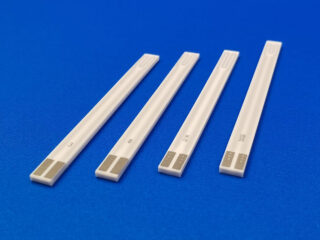
To increase the compressive strength, INNOVACERA increases the thickness of the ceramic insulator layer
from 0.38mm to 0.50mm for a high power heater tube. (Such as 90105 series).

Pls check as below picture:
Heating Layer

This time, a total of 0.12mm of ceramic insulation layer thickness increased, and other production processes and manufacturing techniques remained unchanged, with no negative impact on the product.

The appearance of the product is changed as follows for reference.
Ceramic Insulator Layer

The change will begin from Jan. 2020,please note!


Where are aluminum nitride ceramics used?

Aluminum Nitride Ceramics

With the development of the electric components, smaller but better performance and lower energy cost elements are pressing demand. The high dense, high power, and a high-frequency component may generate as much as 100W/cm2 heat, such as high bright LED, MOSFET, IGBT, and laser elements. The longer those elements work, the more the heat accumulated. Due to the limited room in the package, if the heat could not have been diffused in time, it would highly affect the elements’ life, performance, and reliability. So, it is important to introduce a good cooling package design and high thermal conductivity ceramic materials into these industries.

Different applications in general

  • High brightness high power LED
  • Microwave wireless communication and semiconductor equipment
  • Automobile
  • Energy
  • IGBT Module
  • IPM Module

Application of aluminum nitride ceramics


Ceramic Heater – The Secret of Keeping The Intelligent Toilet Lid Warm

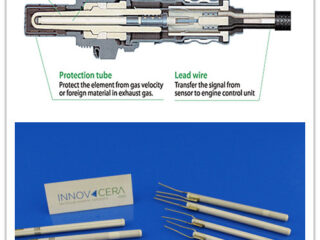
ceramic heater tube

When you are in Japan, you must know that the intelligent toilet is trendy, because there is one unforgettable and very human function which is the heating function. Today I will tell you the secret of keeping the intelligent toilet lid warm. Actually, it is a ceramic heater.

At present, the heating function of the intelligent toilet lid is the following: 1. Warm buttock washing function, female washing function and reciprocating cleaning function all need water heating; 2 toilet seat heating function; 3. Realise the purpose of paperless warm air drying for toilet, and the realisation of these functions requires the support of heating components.

1. The current heating mode of intelligent toilet is two kinds. One is thermal storage type another is the instantaneous water heater.
The thermal storage type is the most mainstream way of heating in an early time. It is similar to the water heater. In the intelligent toilet back, there is a storage tank, which will deposit a certain amount of water, after the heating, the water temperature will drop to natural, and when it drops to a specific temperature, the seat will heat again at a constant temperature. Because of the hot water reserves and heating speed is limited, users will feel the water temperature is not stable. And instantaneous water heater type is to heat the water flow direction, so it can avoid breeding bacteria and harm the water quality due to long-term storage of water, and more healthy.

2. The heating body of the core component of the intelligent toilet generally adopts a ceramic heating body, and the preparation cost is also relatively high. At present, the common ceramic heating elements include MCH ceramic heating element and PTC ceramic heating element.

PTC ceramic heating body: ceramic PTC is composed of barium titanate (or strontium, lead) as the main component, with a small amount of rare earth (Y, Nb, Bi, Sb), acceptor (Mn, Fe) elements, as well as glass (silica, alumina) and other additives, sintered semiconductor ceramics. PTC heating element is using PTC ceramic heating element and aluminium tube. This type of PTC heating element has the advantages of small thermal resistance and high heat exchange efficiency. The outstanding characteristic lies in the safety performance, under any application will not produce such as the electric heat pipe heater surface “redness” phenomenon, thus causing scald, fire, and other safety hazards.

MCH ceramic heating element: MCH is the abbreviation of Metal Ceramics Heater, which means cermet heating element. The MCH ceramic heating element is by sintering the electric heating element and the ceramic at a high temperature to form a ceramic heating element.

Generally, metal tungsten or molybdenum-manganese paste is printed on the ceramic casting body, laminated by hot pressing, and then protected by a hydrogen atmosphere at 1600°C. The ceramic and metal sinter together to form a ceramic heating body. The advantages of the MCH heater are corrosion resistance, high-temperature resistance, long life, high energy efficiency, uniform temperature, good thermal conductivity, and fast thermal compensation Environmental requirements. And it does not contain harmful substances, comply with EU RoHS and other environmental conditions. MCH ceramic heating element is a new type of high-efficiency ecological protection and energy-saving ceramic heating element. Compared with the PTC ceramic heating element, it can save 20-30% of electricity under the same heating effect, and there is no massive problem of power attenuation of PTC for a long time.

There are mainly two types of ceramics used in MCH ceramic heating elements: alumina ceramics and silicon nitride ceramics. These two ceramic materials are the most widely used in the field of electric heating elements. Both have excellent high temperature and acid and alkali resistance. However, silicon nitride ceramics have greater hardness and higher production costs than alumina ceramics. Therefore, the ceramic heating bodies currently on the market are mainly alumina, including the alumina ceramic materials, including the template drawings attached to the context.


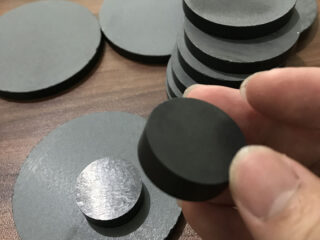
How to process the porous ceramic disc and points for attention?

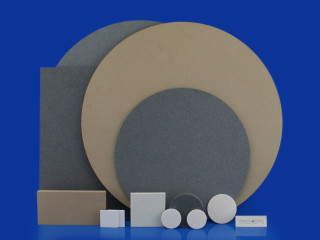
Alumina And Silicon Carbide Porous Ceramic Discs And Plates

Innovacera have more than 7 years experience in producing porous ceramic part for vacuum chuck, filters, air bearings for semiconductor and pharmaceutical industry.

The range of Innovacera porous ceramic filters is made from aluminum oxide and silicon carbide. The strong, uniform porous ceramic has 40-50% open porosity with a tortuous pore structure and is available in pore sizes ranging from 1 to 100 microns. Monolithic, single grade, aluminum oxide porous ceramic is available in 6, 15, 30, 50, 60, and 100 microns pore sizes.

The porous ceramic disc processing is not the same as other ceramics, such as alumina ceramic, zirconia ceramics because of its properties of pores, so when you process the porous ceramics disc, here are 4 points you need to pay attention to:

  1. Put the porous ceramic plate into the water for five minutes.
  2. Ensure the porous plate be full of water to avoid oil contamination permeate into pores.
  3. Cut the plate with the blade only, and then grind it with a grinding wheel or grinding head.
  4. Do not use oil coolant for the machine, or it will be tough to clean.
  5. Clean the plate with neutral detergent by ultrasonic.
  6. Dry by airing or electric fan, and then baking under 100℃ for dead dry.

If you have any problems or inquiries about porous ceramics, welcome to contact us.


Energy solutions – biomass boiler system igniter by ceramic pellet heater

Biomass Boiler System is also called Wood-fueled heating systems, wooden pellet stove. By burning logs, pellets or chips with ceramic pellet igniter, it’s able to provide enough warmth in a single room or to central power heating and hot water boilers.

We’ll introduce not a biomass boiler system but its igniter – Alumina Ceramic Pellet Igniter.

Energy solutions - biomass boiler system igniter by ceramic pellet heaterINNOVACERA ceramic pellet igniter is used by a fraction of energy came out from hot air fans and ignition blowers, and it will ignite all the fuel types, including logs, corn, pellets or chips. Ignition times is shorted to 60 seconds and has a higher temperature. It’s an ideal energy-saving igniter for a Biomass boiler system.

Technical alumina ceramic heater – make life better
– Ignition through hot air fans or ignition blower, energy-saving
– An ideal igniter to burn all fuel types
– Shorter ignition time, only need 60 seconds
– Installed easily and comfortably. It is available for 230 Volts as well as for 120 Volts
– High operation temperature from 800℃ (1472℉) to 1100℃ (2012℉)
– Long working lifetime up to 10,000 cycles
– Detachable igniter or with 3/8 inch thread igniter
– Oxidation and corrosion-resistant


Happy Chinese New Year 2020!

The bell of the New Year rang, time passed so quickly. It’s another traditional Chinese New Year coming around the corner.

In this hopeful winter, all employees of Xiamen INNOVACERA Advanced Materials wish everyone a Happy New Year.

A Year-End Dinner for Employees

Thank you for your support and encouragement to us over the past year.

We hope our performance can live up to the expectations and bring you good memories of 2019.

We also hope that in the coming new year, we will continue our efforts to bring better service and higher quality to more friends.

For the friends who already have had a pleasant cooperation with us, hope that in the new year, we can reach a more harmonious, mutually beneficial cooperative relationship and get long-term development.

During the Chinese New Year, there will be a long holiday from Jan 22 to Jan 31, all of us will be back working on Feb 1. Please kindly note.


INNOVACERA Annual Company Party

A Year-End Dinner for Employees

厦门英诺华新材料有限公司自2012年成立至今已8年有余,不断发展壮大。在鼠年春节来临之际,为慰劳员工一年来的辛勤工作,对2019年表现出色的团队及个人予以表彰,英诺华举办了尾牙晚宴,也叫做年会。旨在创造公司全体员工同乐的浓烈氛围,让员工感受到公司的企业文化,并展望2020年的目标和战略。

Xiamen Innovacera advanced materials co., ltd has been in development for more than 8 years since its establishment in 2012. As the Chinese New Year of the Rat approaches, to comfort employees for their hard work over the past year, the team and individuals who have performed well in 2019 are commended, Innovacera hosted a year-end dinner for employees, also known as the annual company party. To create a strong atmosphere for all employees of the company to have fun, let employees feel the company’s corporate culture, and look forward to 2020 goals and strategies.


Silence friend of laboratory – Crucible

Ceramic Crucibles

Our customers come from all walks of life, and a large part of them come from laboratories in universities or research centers. For these researchers, our most suitable and standard product is the ceramic crucible. This word may be new to the general public. Still, crucibles are good friends of the lab and a loyal helper of researchers to do experiments. Clays originally made crucibles, and one of the earliest uses of platinum was also making crucibles. However, with the development of preparation technology, crucibles can now be composed of any material that can melt or change its contents.


Image by Skieze from Pixabay

What is a crucible?

Crucibles are vessels made of extremely refractory materials such as clay, graphite, porcelain… Its role is to melt and refine metallic liquids, and also as a solid-liquid heating and reaction vessel. Crucibles belong to chemical instruments. When we heat solid by fire, we must use crucibles because they can withstand higher temperatures than glassware. There are mainly two ways of crucible usage. The first one is the burning of solid materials, and the second is the evaporation, concentration, or crystallization of solutions.

Different kinds of crucible

Corundum crucible, scientific name alumina crucible, people usually call crucibles with alumina content above 95% as corundum crucible. Corundum crucibles are reliable and resistant to melting, high temperature, acid and alkali, cold and extreme heat, and chemical corrosion. It is suitable for melting samples with some weakly alkaline substances such as anhydrous Na2CO3, but not ideal for using Na2O2, NaOH, etc. Strongly alkaline substances and acidic substances are used as fluxes to melt samples.


Image by Brennan Emerson from Pixabay


Image by Valeryna from Pixabay

BN (Boron nitride) ceramics have excellent heat resistance, thermal stability, thermal conductivity, and high-temperature dielectric strength, making them ideal heat dissipation materials and high-temperature insulation materials. Because of its unique chemical stability, BN can resist the corrosion of most molten metals. Because of the high-temperature insulation characteristics, high thermal conductivity, and low thermal expansion properties mentioned above, it is most suitable as an austere environment in semiconductor manufacturing and other situations. BN crucible is commonly used for smelting metals and semiconductors. Under vacuum, it can bear a temperature of up to 1800 degrees and under gas protection at a temperature of up to 2100 degrees. It is generally protected with nitrogen or argon (atmosphere protection is to prevent the crucible from oxidation ).

Zirconia has a high melting point and reaches 2700 degrees. It is one of the best refractory materials in nature. Even if heated to 1900 degrees, it will not interact with molten aluminum, iron, nickel, platinum, and other metals, as well as silicates and acids. So crucibles made of zirconia materials can successfully smelt platinum group precious metals such as platinum, palladium, ruthenium, cesium, and their alloys.

Graphite crucible is a refractory crucible made of natural crystalline graphite and plastic refractory clay as a binder. It is mainly used for smelting special alloy steel, non-ferrous metals, and their alloys, and is used in combination with different types of clinker. It maintains the fundamental physical and chemical properties of natural inks. That is, it has excellent thermal conductivity and high-temperature resistance.


Why do you need to use Silicon Nitride rollers?

Nowadays more and more companies use Silicon Nitride rollers instead of metal rollers.

There are some advantages of Silicon Nitride you need to know.
– Silicon Nitride resists corrosion. It can work in seawater without any rust.
– Silicon Nitride rod is with excellent wear resistance. Its working life is 2-10 times that metal’s life.
– Silicon Nitride ceramic surface is smooth. It can work without lubricant.

The price of the Silicon Nitride Rod looks higher than the metal roller. Actually, it’s much economical than the metal roller. Let’s see why it’s more economical. The steel roller will be rusting after working in one week in seawater. It requests lubricant every week. Instead, Silicon Nitride Rollers don’t need any lubricant during their working life. Even you want to do lubricant for silicon nitride rollers, the frequency is much lower than metal rollers. So Silicon Nitride can keep long-lasting work in the sea. And it can save much labour cost for maintenance and work longer than metal rollers.

So Silicon Nitride rollers are a better choice for you compared with metal rollers.

Silicon Nitride Ceramic Roller Tubes


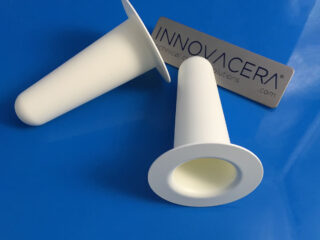
Alumina Ceramic Crucibles

Alumina Ceramic Crucibles And Insulator Tubes

Alumina ceramic crucibles are used in scientific experiments and materials such as molten metals.

Made of 95 alumina ceramics, it has high temperature and corrosion resistance and lasts longer than other materials.

In addition to alumina crucibles, we also have zirconia.

We offer a wide range of ceramic melting enamels to meet all your smelting or casting needs.

Custom-sized ceramic enamels are also available upon request.


Enquiry