technical ceramic solutions

News

Category Archives: News

Vacuum Interrupter Ceramic Tube

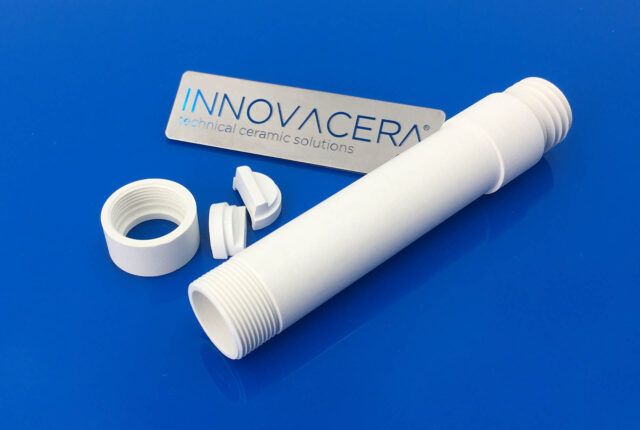
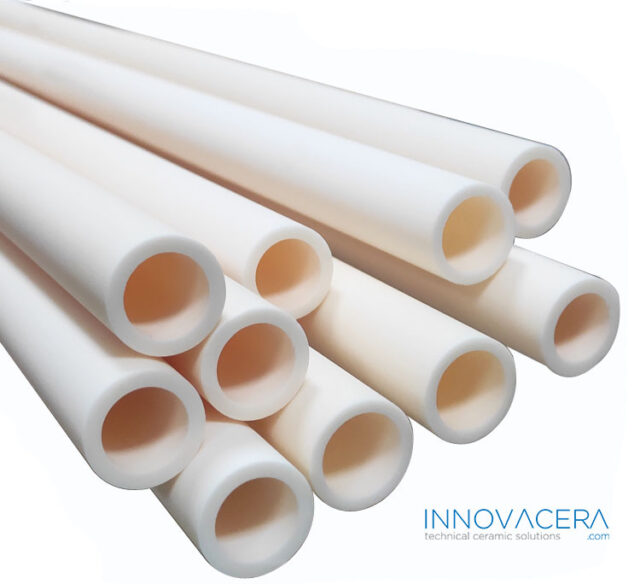
Ceramic Insulator Tubes are used in vacuum interrupters for medium voltage switch gears (approx. 6kV to 80kV). It is a specialized Alumina material with high insulation resistance, good mechanical strength, and so on.

The Mo-Mn metallization with nickel plating allows customers to assemble hermetically sealed products and In-house electrode brazing capability.

Our factory has dedicated production lines, capable of high quality and mass production.

Any specific requirements, pls feel free to contact us.

Vacuum Interrupter Ceramic Tube

Vacuum Interrupter Ceramic Tube

Material Properties: 

PROPERTY UNITS 95%Al2O3 99%Al2O3
Dielectric Strength kv/mm 18 20
Dielectric Loss 25°C @ 1MHz 0.0004 0.0002
Volume Resistivity 25°C ohm-cm >1014 >1014
Bulk Density G/cm3 3.8 3.9
Thermal Conductivity W/mk 24 28

Applications:

  • Vacuum interrupters of switchgear, medium voltage range (approx. 6KV to 80KV)
  • Vacuum switch
  • Vacuum relay

Aluminum Nitride Materials Used As Heat Resistant Material

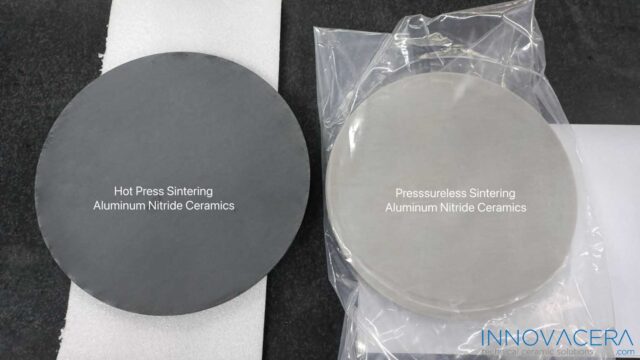
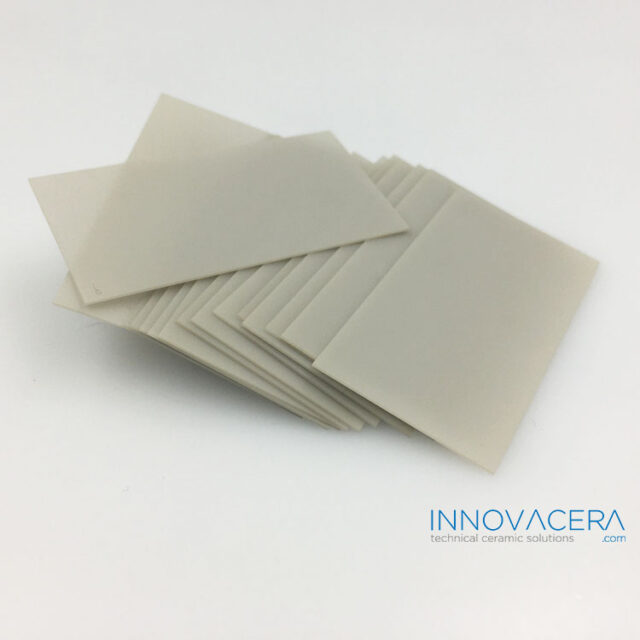
Aluminum nitride materials can be used as high-temperature insulating parts because of their excellent insulating properties and thermal stability.

In addition, aluminum nitride and metals such as aluminum, copper, silver, and platinum and semiconductor materials such as gallium arsenide are difficult to infiltrate. It is suitable for crucibles, thermocouple protection tubes, and sintering utensils, and can also be used as containers and treatment of corrosive substances. device.

In addition, aluminum nitride is very stable to molten salt, and it is expected to be used as a high-temperature gas turbine for corrosion-resistant parts such as magnetic fluid power generation (MHD). Since aluminum nitride has a low vapor pressure in a vacuum and is not easy to volatilize at high temperatures, it can be used as an evaporator such as gold.

Aluminum nitride is very stable up to 2000°C in a non-oxidizing atmosphere, so it can be used as an aggregate of refractory materials used in a non-oxidizing atmosphere.

Below is the properties of Aluminum Nitride materials:

Chemical formula AlN
Color Gray
Density 3.3  g/cm 3
Thermal conductivity 160 ~ 190   W/m. K
Thermal Expansion ( x10 -6 / ℃ ) 2-3.5
Dielectric strength ≥17KV/MM
Dielectric Constant (at 1MHZ) 8-10
Loss Tangent (x10 -4 @1MHZ) 2.0
Volume Resistivity ≥10^14 ohm-cm

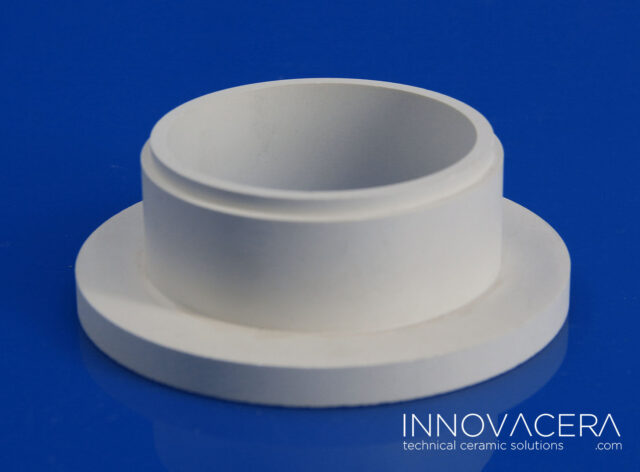
Below is the aluminum nitride crucible we make, any other customized shape could be made. For more information, pls consult with us.

Aluminum Nitride Materials Used As Heat Resistant Material

Aluminum Nitride Materials Used As Heat Resistant Material


POROUS CERAMIC VACUUM CHUCK

  1. Characteristics of porous ceramic vacuum chuck

1). Ceramic Material: SiC, Al2O3; Base material: stainless steel/aluminum alloy, ceramic, marble

2). Porous Ceramic Porosity: 40%

3). Porous Ceramic Pore Size: 1-100μm

4). Size customization; flatness≤3μm;

5)  The unique air circuit design and packaging process of aviation aluminum alloy base can realize selective vacuum area adsorption.

  1. Application field of porous ceramic vacuum chuck

1). It can absorb OLED, LCD, wafers, and other smooth and flat objects.

Please note: the contact area between the adsorbed substance and the ceramic should not be less than 10*10mm (the larger the adsorption area, the stronger the adsorption force).

When absorbing objects, it is not necessary to cover the unused area.

2). It can be used in both directions. Adsorption by vacuum and suspension of objects by positive pressure

Porous Ceramic Steel Disc

Porous Ceramic Steel Disc

  1. How to use the porous ceramic vacuum chuck

As shown in the figure, the internal structure of the vacuum chuck is divided into three areas: A, B, and C. When each area is vacuumed separately, the area covered by the ceramic can form a strong negative pressure.

Connect the three area air pipes in parallel to a vacuum generator, and install a solenoid valve as required.

Connect the air source (above 0.6Mpa), and open the air circuit in the corresponding area according to the size of the object.

POROUS CERAMIC VACUUM CHUCK Equipment

POROUS CERAMIC VACUUM CHUCK Equipment

  1. Precautions in the use of porous ceramic vacuum chuck

1). Do not blow air under positive pressure. (If there is a need for air suspension, it can be customized)

2). Handle with care, do not scratch or hit the ceramic surface with hard objects, to prevent deformation from affecting accuracy and ceramic cracking.

3). Do not heat, the thermal shrinkage of the aluminum alloy /stainless steel base may cause the ceramic extrusion to crack.

4). It should not be contaminated with oil, glue, paint, and other pollutants, and should be used in a dust-free and oil-free environment as much as possible to prevent micropore blockage.

5). If there is dust and dirt on the surface, it can be pasted and removed with non-residual adhesive tape multiple times, or washed with a high-pressure water gun.


What are the advantages of zirconia ceramics over alumina ceramics?

  1. Ceramic toughness: The toughness of zirconia ceramics is 4 times that of alumina ceramics. At the same time, when zirconia is dropped freely from a height of one meter, there will be some gaps, and the alumina will be broken.
  2. Density: The density of zirconia ceramics is twice that of alumina ceramics. In contrast, zirconia has better compressive properties.
  3. Friction coefficient: The friction coefficient of zirconia ceramics is only half of that of alumina ceramics, and the elastic modulus and hardness are mainly considered in the actual use process.
  4. Density and surface finish: The density of zirconia ceramic structural parts is higher than that of alumina ceramics. After grinding, the surface finish is higher, up to Ra0.2 or more, mirror-like, extremely smooth, and has a smaller friction coefficient.
  5. The lattice of zirconia ceramics is stable at high temperatures, and the lattice phase is damaged once it reaches normal temperatures. Therefore, 94.8% of zirconia reaches a stable state at room temperature, and a 5.2% stabilizer must be added. The powder is dry-pressed and sintered at 1560 ℃, the hardness and toughness will exceed 99% alumina ceramics, and its wear resistance and impact resistance will exceed 99% alumina ceramics. If no stabilizer is added, the ceramic is easy to crack, so zirconia balls are used as abrasive materials because they have great hardness and toughness.

    What are the advantages of zirconia ceramics over alumina ceramics?

    What are the advantages of zirconia ceramics over alumina ceramics?

Contact us if you want to know how our materials can offer you a solution.


Manufacturing and Application of Boron Nitride Ceramics

  1. Boron nitride ceramic structure

There are three variants: hexagonal, hexagonal close-packed, and cubic.Hexagonal crystal BN is a stable phase at normal pressure;close-packed hexagonal crystal BN and cubic crystal BN are stable phases at high pressure, and metastable phases at normal pressure;

hexagonal crystal boron nitride transforms into cubic crystal nitrogen at high temperature and high-pressure boron nitride or close-packed hexagonal crystal boron nitride.

Boron Nitride Ceramics

Boron Nitride Ceramics

Hexagonal boron nitride Ceramic

Hexagonal crystal boron nitride has a layered structure similar to graphite, its color is white, and its performance has many similarities, so it is also called “white graphite”.

  1. The manufacturing process of boron nitride ceramics

(1) Preparation of boron nitride powder:

① boron halide method

This method is also called the gas-phase synthesis method. The boron halide reacts with ammonia to form an intermediate amino complex, and then the intermediate is processed at a high temperature to obtain BN. At 125~130°C, the intermediate object decomposes into B2(NH)3, and when it is heated to 900~1200°C, B2(NH)3 is decomposed into BN.

② Boron anhydride method

By reacting boron anhydride with ammonia at high temperatures,

By reacting boric anhydride with sodium cyanide (calcium),

By reducing boron anhydride with graphite in a graphite crucible

③ Borax method

Borax-ammonium chloride method: Na2B4O7+2NH4Cl+2NH3—4BN+2NaCl+7H2O

Borax-urea method: Na2B4O7+2(NH2)2CO—4BN+Na2O+4H2O+2CO2

(2) Forming of boron nitride ceramics

In order to obtain dense boron nitride, hot pressing is mainly used. Boron nitride ceramics can also be formed by various molding methods according to different shapes and sizes.

(3) Sintering of boron nitride ceramics

In order to facilitate the sintering of boron nitride, a certain amount of additives can be added. Commonly used additives include B203, Si3N4, AIPO4, BaCO3, etc.

The amount of B2O3 added to the additive should be appropriate. The presence of B2O3 will cause the boron nitride ceramics to absorb moisture and lead to a sharp deterioration in electrical and thermal properties;

If BaCO3 is added, the performance of hot-pressed boron nitride ceramic products can be improved.

  1. Properties and applications of Hexagonal boron nitride Ceramic
Properties Applications
White in color, stable in performance, and good in machinability used as a high-temperature lubricant
high-temperature resistance and insulation used as an electrical insulation material
Thermal conductivity and penetrating performance to microwave radiation used as a transmission window for radar in the electronics industry


High melting point, small thermal expansion coefficient, and stable to almost all molten metals,

used as a high-temperature metal smelting crucible, heat-resistant material
Used as a heat sink and heat conduction material (temperature up to 2800°C in the neutral or reducing atmosphere)
used to make the separation ring of the crystallizer in the billet horizontal continuous casting technology in the metallurgical industry
The best material for manufacturing engine parts, widely used in aerospace
Manufacturing and Application of Boron Nitride Ceramics

Manufacturing and Application of Boron Nitride Ceramics


Waterjet Zirconia Ceramic Plunger

Innovacera develops many kinds of Zirconia ceramic parts for all kinds of pumps & valves. Such as waterjet zirconia ceramic plunger for severe service and high-pressure systems.

Ceramic pumps and plungers are the ideal replacements for the metal in high pressure, high wear, high temperature, saltwater, chemical, and metering applications.

The waterjet intensifier ceramic plunger for the water jet is used on 60k ultra high-pressure intensifier waterjet pump 50HP, 60HP,100HP, 40KPSI, and 60KPSI.

The max pressure it undertakes can be 60 Kpsi , voltage of 220v/380v.

The ceramic connects with the metal cap by heat shrinkage,  it is the strongest assembling ceramic to metal, and not easy to fall apart.  The surface of the zirconia rod is mirror polished, with fine surface roughness, so it is wear-resistant and can work for a long time.  And zirconia ceramic material with good toughness and fracture strength.  Below is the waterjet cutter machine intensifier pump structure with a zirconia ceramic plunger for reference:

pressure-matters-in-abrasive-waterjet-cutting-

pressure-matters-in-abrasive-waterjet-cutting

waterjet-spare-parts-dardi-G9-intensifier-pump-assembly-for-water-cutting-machine

waterjet-spare-parts-dardi-G9-intensifier-pump-assembly-for-water-cutting-machine

Zirconia Ceramic Material Properties:

Zirconia Ceramic Material Properties
Technical Parameter Technical Item Unit Value
Physical Properties Major content % ZrO2+HfO2: 94.65%
Density g/cm3 ≥6.0
Water absorption % 0.00
Mechanical Properties Hardness HV 1,400.00
Bending Strength Kgf/mm2 11.00
Compressive Strength Kgf/mm2 25.00
Temperature Properties Thermal Expansion Coefficient (0-1000℃) (10-6/K) 9.5*10-6
Thermal Shock Resistance T(℃) 360.00
Thermal Conductivity W/m.k 3.00
Volume Resistance Rate
(20℃)
 (Ω·cm) >10 12
Remark: The value is just for review, different using conditions will have a little difference.
 

Innovacera Waterjet Zirconia Ceramic Plunger Features:

Mirror polished
High-pressure resistant
Wear and corrosion resistant
Long Service Life & improve seal life
Good toughness and fracture strength
10 years of expertise in manufacturing zirconia pump components for OEMs

Waterjet Zirconia Ceramic Plunger Size Specifications:

22.22*207mm
22.22*318mm
22.22*236mm

We provide zirconia ceramic plungers for below-water jet cutters equipment:

FLOW, KMT, OMAX, YONG DA, BOAO,
WSI, HUAZHEN, DA DI, JINJIAN.

Waterjet Zirconia Ceramic Plunger

Waterjet Zirconia Ceramic Plunger


What Is The Outstanding Characteristics for ZTA?

ZTA (Zirconia Toughened Alumina) is a composite material made from alumina and zirconia. It combines the outstanding characteristics of both materials.

Compared to conventional alumina, ZTA possesses superior hardness, higher flexural strength, and similar density. Compared to conventional zirconia, it possesses a lower coefficient of linear thermal expansion and higher thermal conductivity.

By leveraging these features, ZTA has been widely adopted in milling parts and wear-resistant parts that require cooling.

 ZTA (Zirconia Toughened Alumina)

ZTA (Zirconia Toughened Alumina)

Features:

  • High Stiffness and Outstanding Wear Resistance
  • Stiffer than alumina with outstanding wear resistance equivalent to zirconia.
  • High Thermal Conductivity and Low Thermal Expansion
  • Suppresses thermal deformation through thermal conductivity and low thermal expansion equivalent to alumina. Suitable for components requiring a cooling Mechanism.
  • High Strength and Specific Rigidity
  • Approximately twice as strong as alumina and contributes to low-weight design through high specific rigidity.


Below is the material properties for ZTA:

Properties Unit ZTA ceramic
Zirconia Content % 20%
Color white
Volume density g /cm3 4.1
Water Absorption % 0
Crystal Size(Grain Size) μm 5-6
Vickers Hardness, HV1.0 Gpa ≥15
Flexural Strength Mpa ≥500
Coefficient of linear expansion 20-500℃ 1×10⁻⁶mm/℃ 6.5~7.5
20-800℃ 6.5~8.0
Thermal conductivity W/m·K( 20℃) ≥20.9
Specific Heat Capacity KJ/(kg*K) ≥0.8
Dielectric Strength KV/mm ≥9
Volume resistivity Ω·cm 20℃ ≥1014
Ω·cm 300℃ ≥1011
Ω·cm 500℃ ≥109
Dielectric Constant 1MHz 9-10
Tangent Of Dielectric Loss 1MHz ≤5×10⁻⁴
Surface Roughness μm 0.1-0.4 after the machine


How to use boron nitride crucible?

The working temperature of the boron nitride ceramic crucible is 1900°C under vacuum and 2100°C under atmosphere protection. Nitrogen or argon atmospheres are best, it makes have the longest life.

The boron nitride crucible has strong thermal shock resistance, 1500°C fast cooling without cracking, and 1000°C furnace holding for 20 minutes, taking it out and blowing and fast cooling for hundreds of times continuously without cracking.

Note:

1. The use temperature in the air should not be more than 900 °C, and the surface of boron nitride and oxygen will be oxidized and peeled if it exceeds 900 °C.

2. Boron nitride is easy to absorb moisture. The crucible can’t be stored in wet areas and can’t be washed with water. It can be directly wiped with sandpaper or scrubbed with alcohol.

3. Application direction of boron nitride crucible

【Available materials】:

  1. Ferrous metals: iron, copper, aluminum, nickel, magnesium, bismuth, zinc, etc., alloy FE-CO-NI-SI CO-ZR-NB
  2. No reaction between water and acid at room temperature. Slowly hydrolyze with water to produce boric acid and ammonia
  3. Rare Earth, Nitride

【Material not available】:

  1. Antimony trioxide, chromium heptaoxide, molybdenum trioxide, arsenic trioxide, titanium carbide, etc.
  2. High lead glass glaze will corrode BN when melted in the air at 800-950 °C, but it will not react under the protection of nitrogen or inert gas.
  3. Boron phosphate corrodes boron nitride in nitrogen at 1400 °C and reacts with hot concentrated or molten alkali and hot chlorine gas.
    BN Crucible

    Boron Nitride Ceramic Crucibles

    Boron Nitride Ceramic Crucibles

    Boron Nitride Ceramic Crucible


The History of Technical Ceramics

The story of advanced ceramics is an interesting story of how the creation of technical ceramics and the discovery of the potential for various uses of technical ceramics can influence the development of many different industries that use advanced ceramics in their everyday operations. Continue reading


Enquiry