technical ceramic solutions

News

Category Archives: News

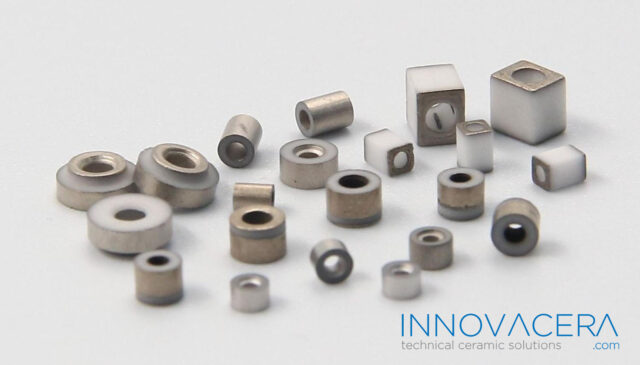
Ceramic to Metal Assemblies are produced by Innovacera

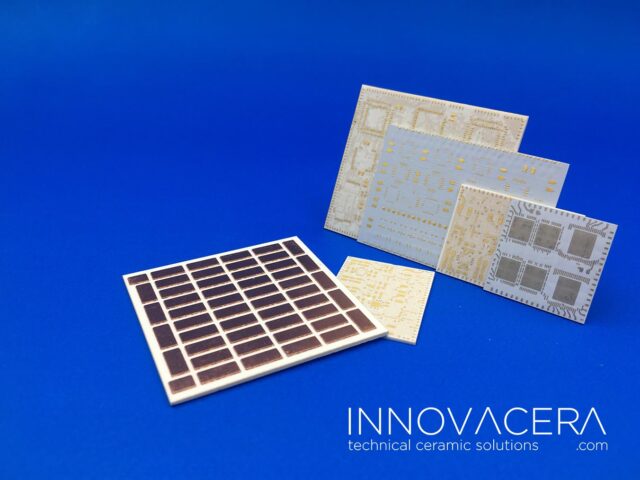
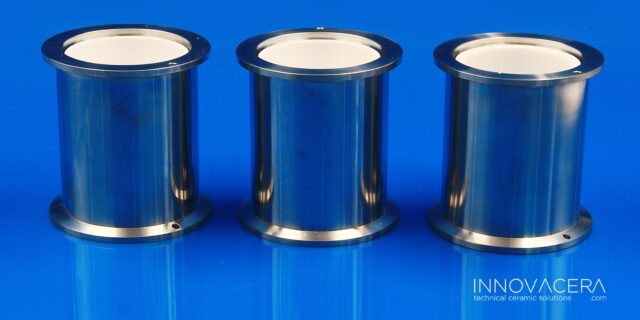
With the development of technology, metal-ceramic composites have become more and more popular in the application of vacuum feedthrough, co2 lasers, and printing of circuit boards, high power microwave environment, which requires high purity alumina ceramic transmit microwave power well. It requires the ceramic dielectric constant in a stable range. Innovacera ceramic parts have made the parts successfully to meet the customer application requests.

There are many metal-ceramic composites such as thyristors and vacuum interrupters used in high vacuum technology(HVDC-high voltage direct current transmission, vacuum technology ). Using primarily aluminum oxide ceramics and various non-ferrous metals, such as OF Cu( oxygen-free copper ) or Nico(nickel-cobalt ), soft magnetic alloys, NiFe (nickel-iron ), or stainless steel ( 316L),  as connecting agents. As a material–logical connecting technology, both passive and active brazing techniques are used,  with this, high-strength composites can be produced which are permanently proof and vacuum-tight in the temperature range from -150℃ up to +500℃.

If you want to know more information, pls contact with us.

Ceramic to Metal Assemblies are produced by Innovacera

Ceramic to Metal Assemblies are produced by Innovacera


TO-3P/220/247/254/257/258/264 Aluminum Nitride Ceramic Thermal Pads For MOSFET Transistor IGBT Transistor Heat Sink

Innovacera Ceramic Thermally Conductive Interface Pads are designed to provide a preferential heat-transfer path between heat-generating components, heat sinks, and other cooling devices. The pads are used to fill air gaps caused by imperfectly flat or smooth surfaces which should be in thermal contact. The pads are made of ceramic materials such as alumina ceramic and aluminum nitride, which help in providing enhanced thermal conductivity and excellent insulation performance. Typical applications include Power Devices, Integrated Circuit (IC) chip packaging heat conduction,  MOSFET Transistor, IGBT Transistor Heat Sink, MOS Transistor, heat sink interface, LED board Thermal Interface Material (TIM), Chip ON Film (COF) heat conduction.

TO-3P-220-247-254-257-258-264 Aluminum Nitride Ceramic Thermal Pads Without Hole For MOSFET Transistor IGBT Transistor Heat Sink

TO-3P-220-247-254-257-258-264 Aluminum Nitride Ceramic Thermal Pads Without Hole For MOSFET Transistor IGBT Transistor Heat Sink

A ceramic heat sink is a device that dissipates heat-dissipating electronic components in an electrical appliance.

The whole structure of the ceramic heat sink increases the heat dissipation area in contact with the air, which greatly enhances the heat dissipation effect, and the heat dissipation effect is better than that of the super copper and aluminum.

Ceramics are insulated, resistant to high temperatures, oxidation, acid and alkali, cold and thermal shock, and low coefficient of thermal expansion, ensuring stability in high and low temperatures or other harsh environments.

Ceramics can withstand high current, can be high voltage, can prevent leakage breakdown, no noise, will not generate coupling parasitic capacitance with power tubes such as MOS, and thus simplify the filtering process.

Aluminum nitride ceramic thermal insulator pads are ceramic materials with outstanding properties such as high thermal conductivity and high electrical resistance. In addition, it is featured advantages such as high hardness, corrosion resistance, low dielectric constant and dielectric loss, and low CTE. Aluminum nitride ceramics have excellent thermal conductivity (7-10 times that of alumina ceramics),  as the thermal expansion coefficient of silicon is similar, as a new generation of ceramic materials, more and more people pay attention to it.

Ceramic Thermal Pads Installation Steps:
①Clean the target surface: Clean the dust or stains on the surface of the object to be installed, and then align the hole position of the ceramic insulating sheet;
②Power tube bonding: Stick the power tube on the  ceramic insulating sheet;
③Fixed the insulation sheet: Use screws to fix the power tube and ceramic insulating sheet on the installation object.

Regular Size

For Package Type: TO-3P / TO-220 / TO-247 / TO-264 / TO-3/TO-254/TO-257/TO-258, With Hole  or Without Hole.

TO – 3P,  25*20*1mm (other thickness is available, too);

TO-220,  20*14*1mm (other thickness is available, too);
TO-247,  22*17*0.635mm (other thickness is available, too);

TO-264,  28*22*1mm (other thickness is available, too);

TO-3,      39.7*26.67*1mm (Rhombus shape).

TO-254, 34*24*1mm (other thickness is available, too);

TO-257, 40*28*1mm (other thickness is available, too);

TO-258, 50.8*50.8*1mm (other thickness is available, too);

Other standard sizes:

25.4*25.4mm;

114.3*114.3mm;

152*152mm;

190.5*138mm…..;

Customized sizes are available.

Regular Size drawing:

TO-3P/220/247/254/257/258/264 Aluminum Nitride Ceramic Thermal Pads For MOSFET Transistor
TO-3P/220/247/254/257/258/264 Aluminum Nitride Ceramic Thermal Pads For MOSFET Transistor IGBT Transistor Heat Sink

Machine detail

Technology data Name Technology requirement Remark
1 Machine size Thickness  as per drawing
2 Flatness 0.01
3 Camber ≤2‰
4 Surface roughness Ra≤0.5
5 Appearance request Smooth surface, no dirt, water stains, watermarks,  no chip, cracks, edge breakage, scratches, and other defects
6 Clean request After ultrasonic cleaning, clean again with alcohol, dry, and bake in time to ensure that there are no water stains and watermarks on the surface
7 Package request After machining, products are placed in special pearl-cotton packaging boxes as required for turnover and transportation to avoid defects such as bruises and scratches.

ALN Product Package requirement:

(1) The product is cleaned according to the requirements, after completely dried, placed in the special pearl cotton packaging box,

(2) One group of 100 pieces of products is placed in the small cells in the packaging box. There are 5 cells in each packaging box, and 500 pieces can be placed in total (as shown in the picture).

(3) After each version of the packaging box is filled with products, it needs to wrap the film tightly, and attach the quantity label (Picture);

(4) Put the pearl-cotton packing box into the outer carton, and paste the specification and quantity label on the surface.

(5) Package carton size: 21*21*12cm

(6) Gross weight: 1.5kgs

TO-3P-220-247-254-257-258-264 Aluminum Nitride Ceramic Thermal Pads Without Hole For MOSFET Transistor IGBT Transistor Heat Sink Package

TO-3P-220-247-254-257-258-264 Aluminum Nitride Ceramic Thermal Pads Without Hole For MOSFET Transistor IGBT Transistor Heat Sink Package


Electronic ceramics market will reach 100 billion in 2022

Special ceramics have the advantages of high hardness, wear resistance, and high fracture toughness, the characteristics of ceramics and more than this, many ceramic materials also have extremely broad electrical characteristics, from insulators to semiconductors, conductors, and even superconductors are possible. Because of this, ceramic materials are widely used in the electronics industry.

The ceramic materials that can be used in electronic technology to prepare various electronic components are called “electronic ceramics”. Electronic ceramics also have the characteristics of high dielectric constant, low dielectric loss, small temperature coefficient, and so on, which can well meet the conditions of miniaturization and integration of the electronic industry. Therefore, electronic ceramics are very promising in the 5G era and are widely used in energy, household appliances, automobiles, and other aspects.

According to the data of relevant institutions, the market size of China’s electronic ceramics industry was 65.77 billion yuan in 2019, and CAGR reached 13.7% from 2014 to 2019. In the future, with the commercialization of 5G communications and the construction of data centers, the demand for electronic components, new energy fuels, and other fields increases, and the superposition of the domestic substitution trend of electronic ceramics, it is expected that the market size of China’s electronic ceramics industry will continue to maintain a rapid growth trend, and is expected to exceed 114.5 billion yuan in 2022.

Electronic ceramics refers to the use of electrical and magnetic ceramics in the electronics industry. The upstream of the electronic ceramics industry includes electronic ceramics base powder, formula powder, metal materials, chemical materials, etc. The middle reaches are electronic ceramic equipment and electronic ceramic materials. The downstream of electronic ceramics are mainly electronic components, which are eventually applied in terminal products. Its application fields are very broad, including optical communication, wireless communications, industrial laser, consumer electronics, automotive electronics, etc., and it is mainly used in the oscillating, coupling, filtering, and other circuits in all kinds of electronic whole machines.

Under the background of strong support of industrial policies, China’s electronic ceramics industry has developed rapidly, and the technical level of some electronic ceramic shell products has reached or approached the international advanced level, and the market share of Chinese manufacturers will be further expanded in the future.

Electronic ceramics market will reach 100 billion in 2022

Electronic ceramics market will reach 100 billion in 2022


“Fast heating” elements

With the development of the times, the demand for fast-heating elements in all walks of life is increasing.

INNOVACERA’s ceramic heater is widely used in industrial and automotive applications. Our heater can deliver robust quality with outstanding performance. The highly reliable ceramic heaters allow customers to minimize the size of the heater while maintaining maximum wattage to support a rapid heating rate.

  • Ceramic pellet igniter
  • E-cig/3D Printer heating element
  • Ceramic heater for Oxygen Sensor
  • Smart Bidet/Instant water heater element
  • Ceramic heater for soldering Iron/Station
Fast heating elements

Fast heating elements

INNOVACERA works with each customer to provide open-source tools or customized designs to meet your unique performance needs.


Solid-state Yellow Glazed Alumina Ceramic Concentrating Cavity / Laser Reflector

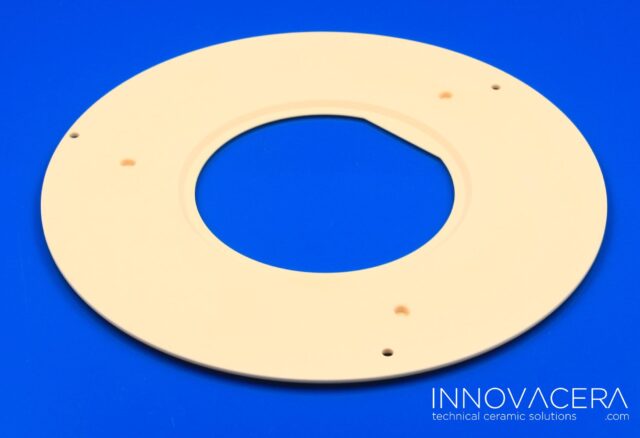
The yellow-glazed ceramic concentrating cavity exhibits high reflectivity in the main absorption band of the solid-state laser, and at the same time exhibits the function of reducing the reflectivity in the ineffective absorption band. In contrast, the diffuse reflective ceramic condenser cavity has high reflectivity in the non-absorptive ultraviolet band of the laser crystal, but it cannot effectively filter out the ultraviolet light that produces a harmful color center to the laser crystal. The highly reflective, UV-absorbing ceramic glaze can obviously improve the shortcomings of ordinary ceramic condenser cavities. It has the characteristics of strong laser radiation resistance, high insulation, corrosion resistance, easy cleaning, and UV absorption.

Solid-state Yellow Glazed Alumina Ceramic Concentrating Cavity Laser Reflector

Solid-state Yellow Glazed Alumina Ceramic Concentrating Cavity Laser Reflector


Ceramic Plungers – The Best Choice For Industrial Pumps

In the process of material transportation in chemical engineering, metal smelting, mining, and other industries, the delivery pump often needs to be subjected to the impact of the slurry containing solid particles, the erosion of corrosive processes, and the impact of high-temperature fluids. These working conditions are potentially destructive. , It is easy to have a major impact on the delivery pump, and even affect the normal operation of the delivery pump or cause medium pollution to the transmission medium.

In order to ensure the stable progress of the process in extreme working conditions, the selection of pump components, such as pump plungers, is very important. The plunger reciprocates in the plunger cylinder for a long time. They must have high hardness, high melting point, low wear, acid, and alkali corrosion resistance, etc., otherwise, they cannot be supported.

Ceramic Plungers - The Best Choice For Industrial Pumps

Ceramic Plungers – The Best Choice For Industrial Pumps

Ceramic Plungers - The Best Choice For Industrial Pumps

Ceramic Plungers – The Best Choice For Industrial Pumps

Advanced ceramics that can maintain these characteristics at high temperatures are quite suitable choices. The ceramic plungers are made of high-performance technical ceramic material, which has the properties of high hardness, wear resistance, high-temperature resistance, and corrosion resistance. The working surface of ceramic plungers is processed with a “mirror” surface and has a good self-lubricating effect. Tests have proved that the high wear resistance of the ceramic plunger is much higher than that of the traditional metal plunger, and it is an ideal substitute for the metal plunger, which greatly extends the service life of related parts.


Advanced Ceramics Is The Most Potential Development In New Materials Field

According to the preparation technology and application field of ceramics, ceramics can be divided into traditional ceramic materials and advanced ceramic materials. Advanced ceramics have gradually become an important part of new materials.

Advanced ceramics: according to chemical composition can be divided into oxide ceramics, nitride ceramics, carbide ceramics, boride ceramics, silicide ceramics, fluoride ceramics, sulfide ceramics, and so on. According to its properties and uses, it can be divided into two categories: energy ceramics and structural ceramics. Functional ceramics are mainly based on the special functions of materials, with electrical properties, magnetic properties, biological properties, thermal sensitivity, optical properties, and other characteristics, mainly including insulating and dielectric ceramics, ferroelectric ceramics, piezoelectric ceramics, semiconductor, and sensitive ceramics, etc. Structural ceramics are mainly based on the mechanical and structural uses of materials, with high strength, high hardness, high-temperature resistance, corrosion resistance, oxidation resistance, and other characteristics.

Advanced Ceramics Is The Most Potential Development In New Materials Field

Advanced Ceramics Is The Most Potential Development In New Materials Field

Structural ceramics with their excellent mechanical and thermal properties become an important branch of ceramic materials, accounting for about 30% of the whole ceramic market. In nearly 20 years, the national major projects and cutting-edge technology in ceramic material and its preparation technology is also put forward higher demands and challenges, such as aerospace rocket liquid hydrogen in liquid oxygen turbine pump use of silicon nitride ceramic bearings under the condition of low-temperature extremes no-slip condition at high speed, requirements at the beginning of the ceramic bearing high strength, good, wear resistance, surface processing of high precision. In particular, the silicon carbide ceramic reflector used in the ground monitoring of the earth satellite shooting targets, in addition to high elastic modulus, low thermal expansion coefficient, and lightweight, requires high precision ultra-mirror and large size. This is a challenge to the molding technology, sintering technology, and processing technology of large-size structure ceramic materials. In optical communication, the inner hole of the optical fiber connector is 125 microns, and it requires a very high surface finish, dimensional accuracy, and concentricity. So Structural ceramics is the most promising quality material in an extreme environment.

For the oxide ceramics, nitride ceramics in structural ceramics, below is their feature:

Alumina ceramics: the earliest and most widely used structural ceramics

Zirconia ceramics: high-performance structural ceramics, toughening is the key to preparation

Silicon nitride ceramics: one of the materials with the best comprehensive properties in advanced ceramics

Aluminum nitride ceramics: ideal structural material for microelectronics industry circuit board and packaging

Boron nitride ceramics: soft ceramics in ceramic materials, good machinability


Global Active Metal Brazed (AMB) Ceramic Substrate Market

Global Active Metal Brazed (AMB) Ceramic Substrate Market to reach USD 1.52 billion by 2027. The global Active Metal Brazed (AMB) Ceramic Substrate Market is valued at approximately USD 1.07 billion in 2020 and is anticipated to grow with a healthy growth rate of more than 5.45% over the forecast period 2021-2027.

AMB Ceramic Substrate is a type of soldering in which metal is brazed to ceramic without metallization. increasing government initiatives in the automotive sector, increasing demand for medium and high voltage systems, and Increasing demand for home and electronic appliances are factors contributing to the market growth.

Global Active Metal Brazed (AMB) Ceramic Substrate Market AMB

Global Active Metal Brazed (AMB) Ceramic Substrate Market AMB

Aluminum Nitride AMB Substrate Advantage:

The combination is achieved by a chemical reaction between ceramic and active metal solder paste at high temperatures, so its bonding strength is higher and reliability is better contributing to the market growth.

Disadvantage:

The reliability of the AMB process depends largely on the composition of active filler metal, the brazing process, the brazing layer structure, and many other key factors

AMB Substrate Application:

Ceramic coppered substrate for packaging IGBT modules for electric vehicles and motor vehicles


Advantages Of AlN Ceramic Materials Used As Copper Clad Substrate Materials

At present, high-performance aluminum nitride ceramic plates are used as thermal conductive substrates in advanced packaging processes, and copper is directly bonded on aluminum nitride to further design circuits, surface mount transistors, and power diodes. Due to its good thermal and electrical properties, AlN has gradually become the preferred material for this type of substrate design and can be used as insulating substrates for high-power devices, heat dissipation substrates for VLSI and packaging substrates, etc.

AlN Ceramic DBC

Advantages Of AlN Ceramic Materials Used As Copper Clad Substrate Materials

Aluminum nitride copper-clad laminate has the thermal conductivity and mechanical strength of aluminum nitride, as well as the thermal conductivity and electrical conductivity of copper, so it has great application potential in the aerospace field. In addition, the “copper-aluminum nitride-copper” sandwich structure can play a key role in the modularization and integration of electronic systems, serving as mechanical support, electrical isolation, and heat dissipation paths for power modules. It is worth noting that in the application of aluminum nitride copper clad laminate, the interface bonding between AlN and Cu is very important, and the interface phase determines the bonding force between the ceramic and the metal copper layer. The conventional preparation process of aluminum nitride copper-clad laminate includes the hot pressing method and the direct copper cladding method (DBC).

The hot pressing method requires sputtering a metal layer on the surface of AlN by magnetron sputtering and then introducing copper sheets for hot pressing. The DBC method requires pre-oxidation of AlN ceramics and Cu sheets, and then heat treatment to bond. The peel strength of the substrate prepared by the DBC method is about 4 times that of the hot pressing method, and Cu and AlN can form a stronger bonding force, which has better application prospects in the aerospace field with harsh service environments.


Ceramic Nozzle For Atomization Of Steel

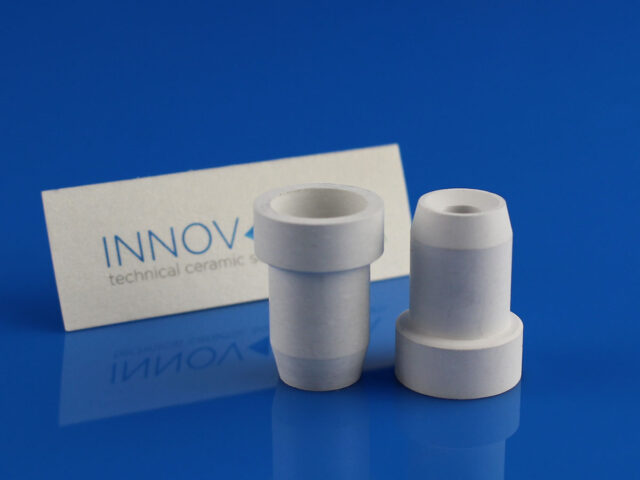
Boron Nitride ceramic nozzles are widely used in the processing of atomization of steel. As its high strength, high melting point, high toughness, and outstanding thermal shock resistance, steel powder manufacturers use Boron Nitride material to make the atomizing nozzle. Also, BN material has no reaction or wetting with molten metals.

INNOVACERA developed a wide range of BN grades for the nozzles to meet the needs of different end users. When you send an inquiry, we’ll give you a suitable solution.

Ceramic Nozzle For Atomization Of Steel

Ceramic Nozzle For Atomization Of Steelatomization

Grade BN997 BN99 BN-SI BN-AL BN-SIC BN-ZR BN-ALN
Main Composition BN>99.7% BN>99% BN+AL+SI BN+ZR+AL BN+SIC BN+ZRO2 BN+ALN
Bonding Composition B2O3 B2O3 Boron oxide silicon Boron oxide aluminum Boron oxide aluminum B2O3 Boron oxide aluminum
Density (g/cm3) 1.6 2 2.2-2.3 2.25-2.35 2.4-2.5 2.8-2.9 2.8-2.9
Room Temperature Electric Resistivity (Ω·cm) >1014 >1014 >1013 >1013 >1012 >1012 >1013
Max Using Temperature (°C)
In Atmosphere
In Inactive Gas
In High Vacuum (Long Time)
900
2100
1800
900
2100
1800
900
1750
1750
900
1750
1750
900
1800
1800
900
1800
1800
900
1750
1750
Three-Point Bending Strength (MPA) 18 35 65 65 80 90 90
Compressive Strength (MPA) 45 85 145 145 175 220 220
Thermal Expansion Coefficient (20-1000°C)
(10-6/K)
1.5 1.8 2.0 2.0 2.8 3.5 2.8
Thermal Conductivity (W/m·k) 35 40 35 35 45 30 85


Enquiry